Ștefan Cel Mare ruled Moldova from 1457 to 1504, a period that became known as the golden age of the Moldavian principality.
He came to power after the assassination of his father, Bogdan II of Moldavia, and spent the early years of his reign securing his position and stabilizing the country.
What followed was one of the most remarkable reigns in Eastern European history.
Ștefan led numerous military campaigns, defending Moldova against powerful enemies, including the Ottoman Empire, Hungary, and Poland.
Despite being a relatively small state, Moldova under Ștefan became known for its strength, resilience, and strategic leadership.
One of his most famous victories was at the Battle of Vaslui (1475), where he defeated a much larger Ottoman army - a victory that gained him recognition across Europe.
But Ștefan was not only a warrior, but he was also a builder and protector of culture and faith.
He founded and supported many monasteries and churches, including the famous Putna Monastery, which became a spiritual center and later his burial place.
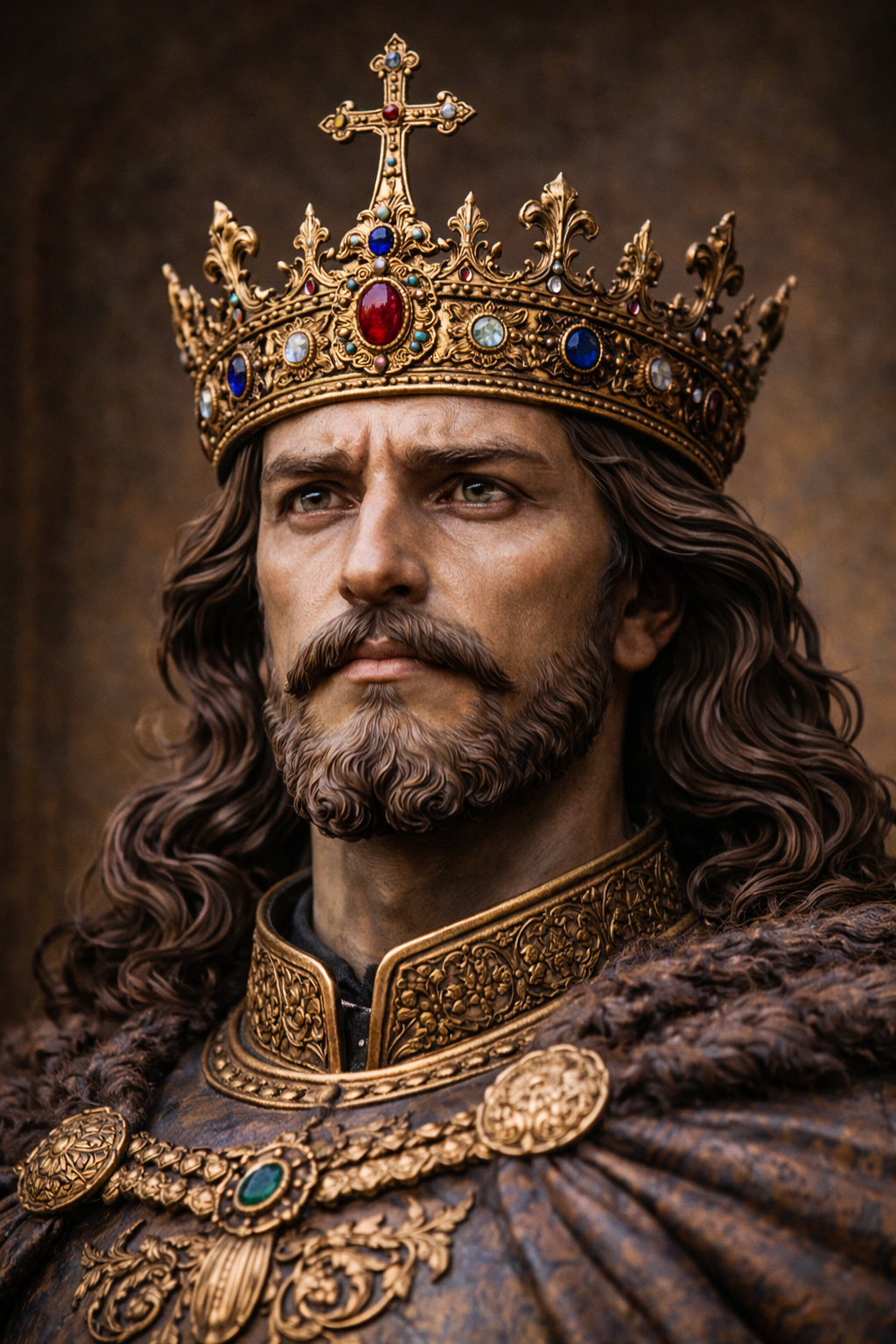
Ștefan Cel Mare (Stephan The Great) is the most important
and respected ruler in Moldova’s history.
He ruled for nearly half a century and is remembered as
a defender, builder, and symbol of national identity.
His reign brought:
- Stability.
- Strong leadership.
- Cultural development.
- A clear Moldavian identity.
Ștefan cel Mare represents the peak of Moldavian strength and identity.
He stands for:
- Defense of the country.
- Strong and stable leadership.
- Cultural and religious development.
- National pride.
Ștefan Cel Mare
(Stephan The Great)
Father:
Son
Son
Portrait
Ștefan Cel Mare had three wives during his lifetime.
These marriages were important not
only personally but also politically, as they helped form alliances with
powerful neighboring families and states.
Elena Voloshanka
Married around 1459 -1460
Background:
Elena was a
noblewoman from the region of Volhynia (in modern Ukraine).
Why this
marriage mattered:
It
strengthened alliances with Polish-Lithuanian nobles andt helped
Stephen build political stability early in his reign.
Children:
-Bălașa
(daughter)
- Bogdan
(son)
Maria of Mangup
Married around 1472
Background:
Maria was
from the Crimean Tatar princely family of Mangup, which was connected to the
Genoese colonies in Crimea.
Why this
marriage mattered:
It
strengthened alliances with the Crimean Tatars, which helped
Moldavia secure support against the Ottomans.
Children:
-Alexandru
(son)
-Bogdan
(son)
Mărușca of
Bulgaria
Married:
around 1480 - 1482
Background:
Mărușca was
a noblewoman of Bulgarian origin.
Why this
marriage mattered:
It
strengthened ties with the Balkan region, which also
helped Moldavia resist
Ottoman influence.
Children:
-Petru (son)
-Iliaș (son)
Legends
Elena Voloshanka
Elena is
often portrayed as the “wise and calm” wife who helped Stephen through early
political struggles.
She is said
to have encouraged him to be patient and strategic rather than impulsive.
Popular story:
When
Stephen was young and threatened by enemies, Elena allegedly helped hide him in
a monastery and gave him advice on how to escape safely.
Maria of
Mangup
Maria is
often connected to the Crimean Tatar influence and is described in folklore as
a “mysterious princess from the Black Sea.”
Popular story:
Some tales
say she brought Genoese-style architecture and influenced the cultural
development of Moldavia.
While not
historically proven, this legend highlights the importance of the
Crimean
connection.
Mărușca of
Bulgaria
Mărușca is
remembered as the beautiful and strong Balkan princess and stories say
she inspired Stephen to build churches and strengthen Moldavia’s faith.
Popular story:
One legend
claims she prayed daily for the safety of Moldavia and became a symbol of hope
and spiritual strength.
There are
no authentic contemporary portraits of Stephen’s wives, because Medieval
Moldavia did not have portrait tradition like Western Europe.
Most images
were created centuries later, but you can find reconstructions and artistic depictions in, museums of
Moldova, in romanian
historical museums and orthodox
church collections.