
Lațcu’s role was to maintain and strengthen this independence.
Unlike earlier rulers who operated under foreign influence, Lațcu governed a Moldova that was now its own state.
His leadership focused on keeping internal order and building relationships with surrounding powers.
One of the most notable aspects of his rule was his openness to Western influence.
Lațcu is believed to have had connections with the Catholic Church and even accepted Catholicism for a period.
This was unusual in a region where Orthodox Christianity was dominant, and it shows that Moldova was already navigating between different cultural and political spheres.
Although his reign was not marked by major wars or dramatic events, it was important for stabilizing the young state.
He helped ensure that the independence achieved by his father did not collapse.Sample text. Click to select the Text Element.
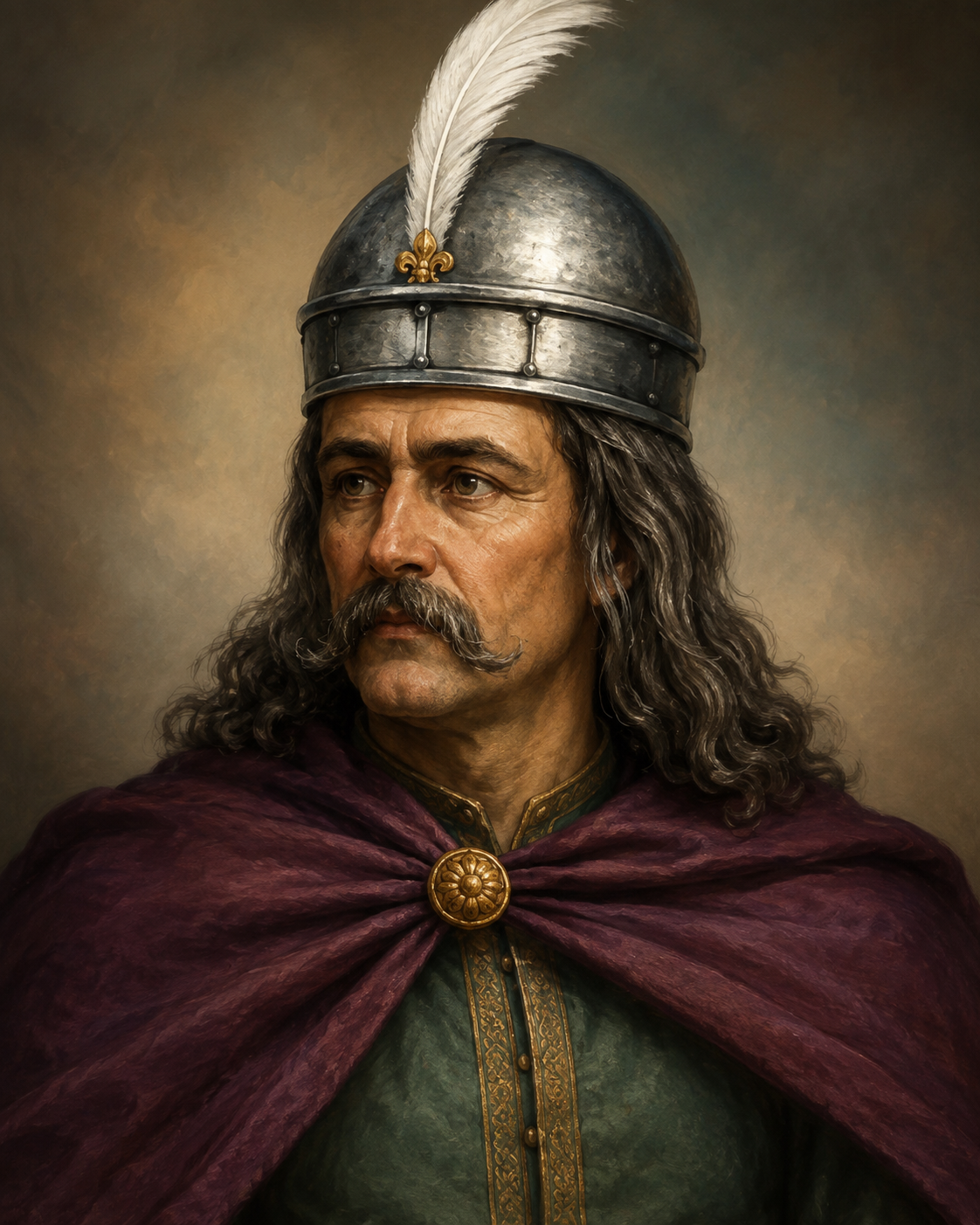
Lațcu ruled Moldova at a time when the country had just gained independence and needed stability.
His father, Bogdan I, had broken away from Hungarian control and created an independent principality, but this independence was still new and not fully secure.
- Around 1365: Lațcu becomes ruler after Bogdan I.
- Late 1360's–early 1370's: Maintains independence and builds diplomatic ties.
- Around 1375: His rule likely endsSample text. Click to select the Text Element.
Lațcu represents the first generation of rulers of an independent Moldova.
He stands for:
- Stability after independence.
- Early diplomacy and external relations.
- The shaping of Moldova’s identity between East and West.
Lațcu Voda of Moldavia
Father:
Next:
<< Back Home >>