You don't have to travel very far through Moldova before you notice how much of the country is used for agriculture
Fields stretch across the hills, vineyards follow the slopes, sunflowers, wheat and corn appear beside orchards, vegetable gardens and grazing land.
A large part of the reason is underneath your feet and Moldova has some remarkably
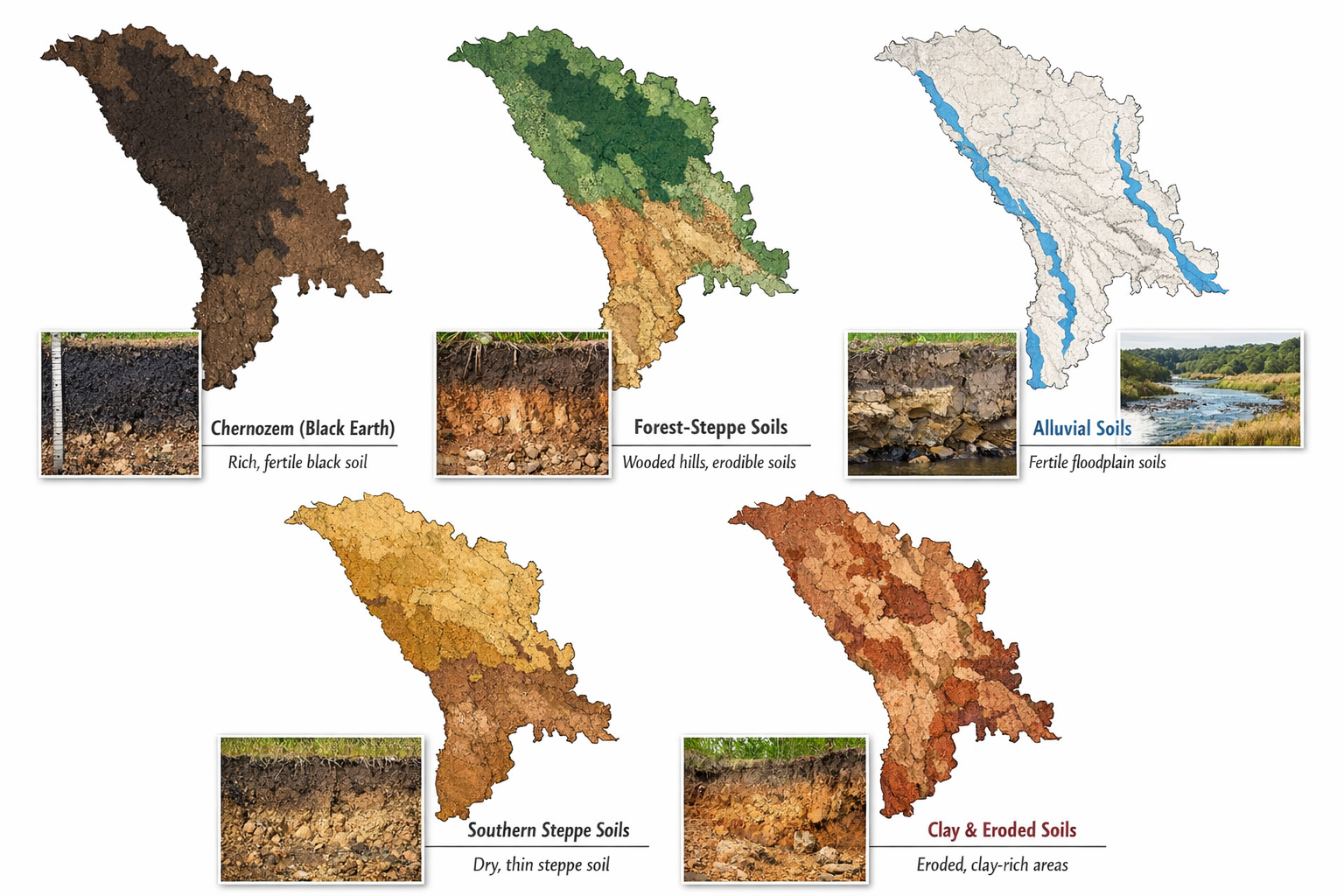
fertile soil, particularly its chernozem, or black soil.
Chernozem is dark, rich in organic matter and naturally fertile.
It covers large parts of Moldova and has helped make agriculture important here
for generations.
But Moldova does not have only one type of soil.
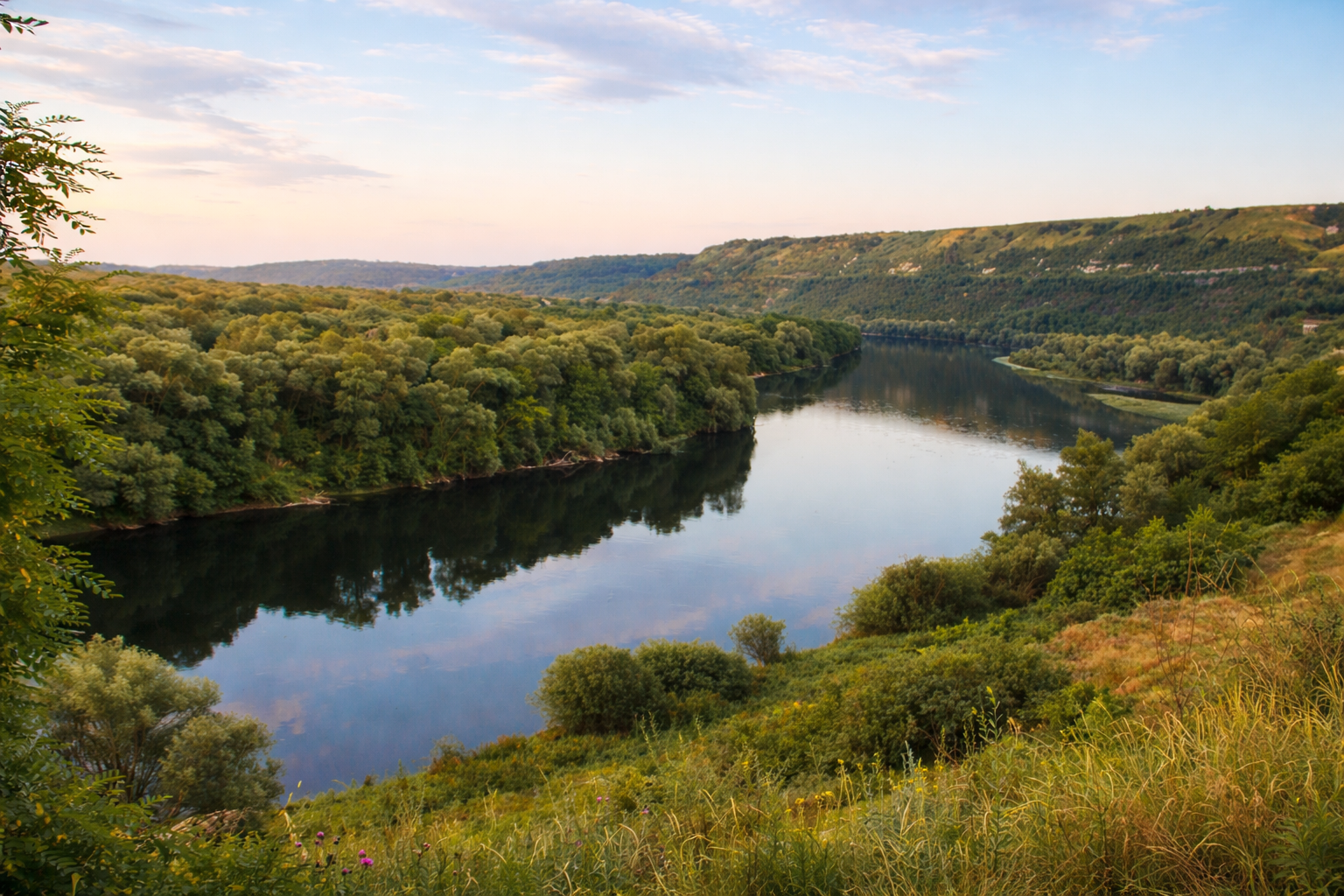
Depending on where you travel, you can also find clay-rich soils, limestone and calcareous soils, sandy areas and alluvial soils deposited along river valleys.
That variation matters.
Different crops prefer different conditions, and farmers have learned over generations what works well in different parts of the country.
And, of course, there are the grapes.
Wine regions are influenced not only by climate and grape varieties, but also by what lies beneath the vines.
Soil affects drainage, how water is retained and how the roots develop.
That is one reason vineyards in different parts of Moldova can produce very different wines.
Perhaps the importance of Moldova's soil is easiest to understand without studying
it at all.
Visit a market and take a look at the tomatoes, peppers, cherries, apricots, plums, together with the walnuts, grapes and watermelons.
Then drive outside the city and look at the fields and gardens they came from and you'll see and exsperience a surprisingly large part of Moldova's story begins in the soil.
Varietatea solurilor din Moldova a contribuit la ceea ce crește aici, de la culturi
agricole și livezi până la podgorii și grădini.
-
The variety of soil across Moldova has helped shape what grows here, from
crops and orchards to vineyards and gardens.