Less Common, but Present
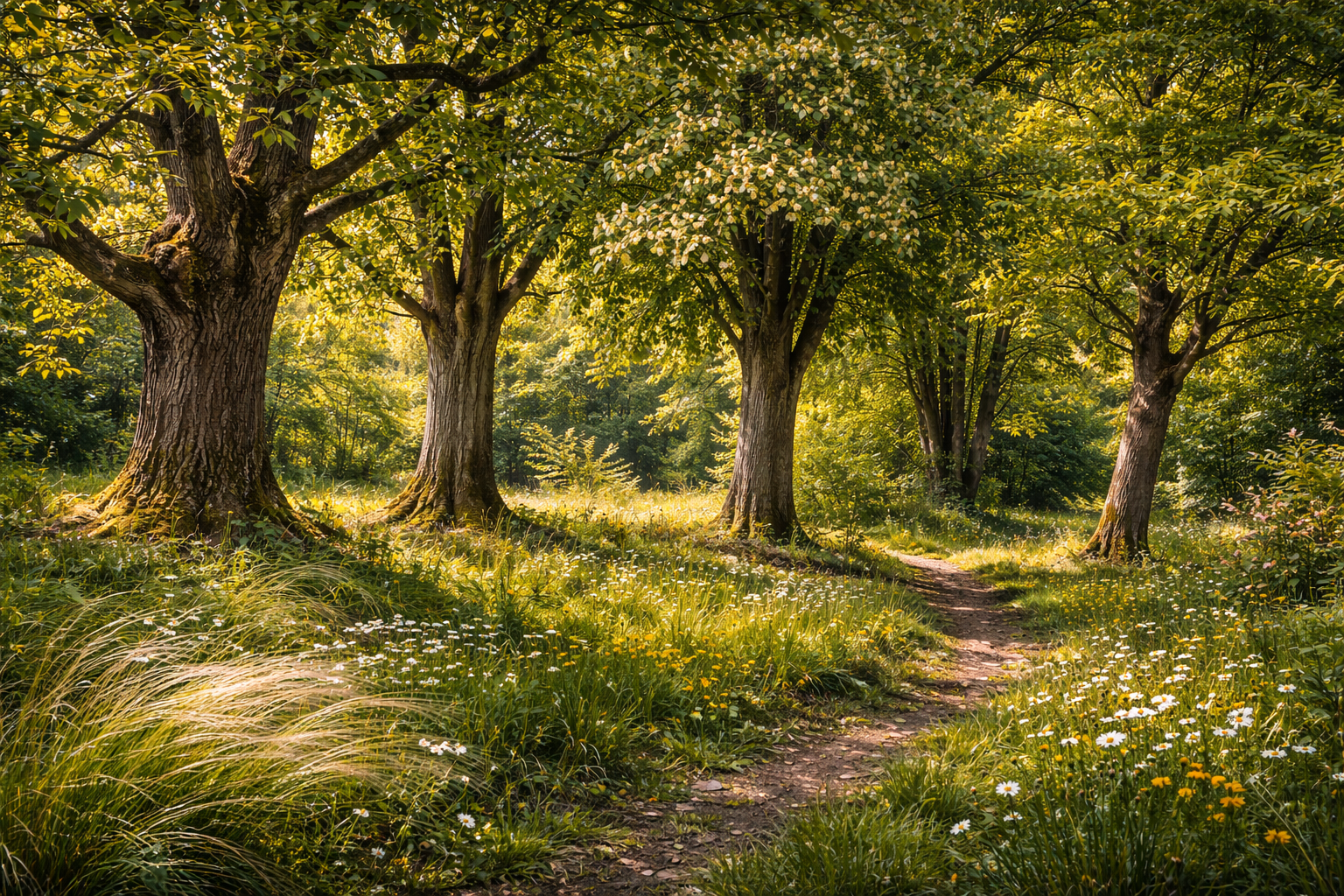
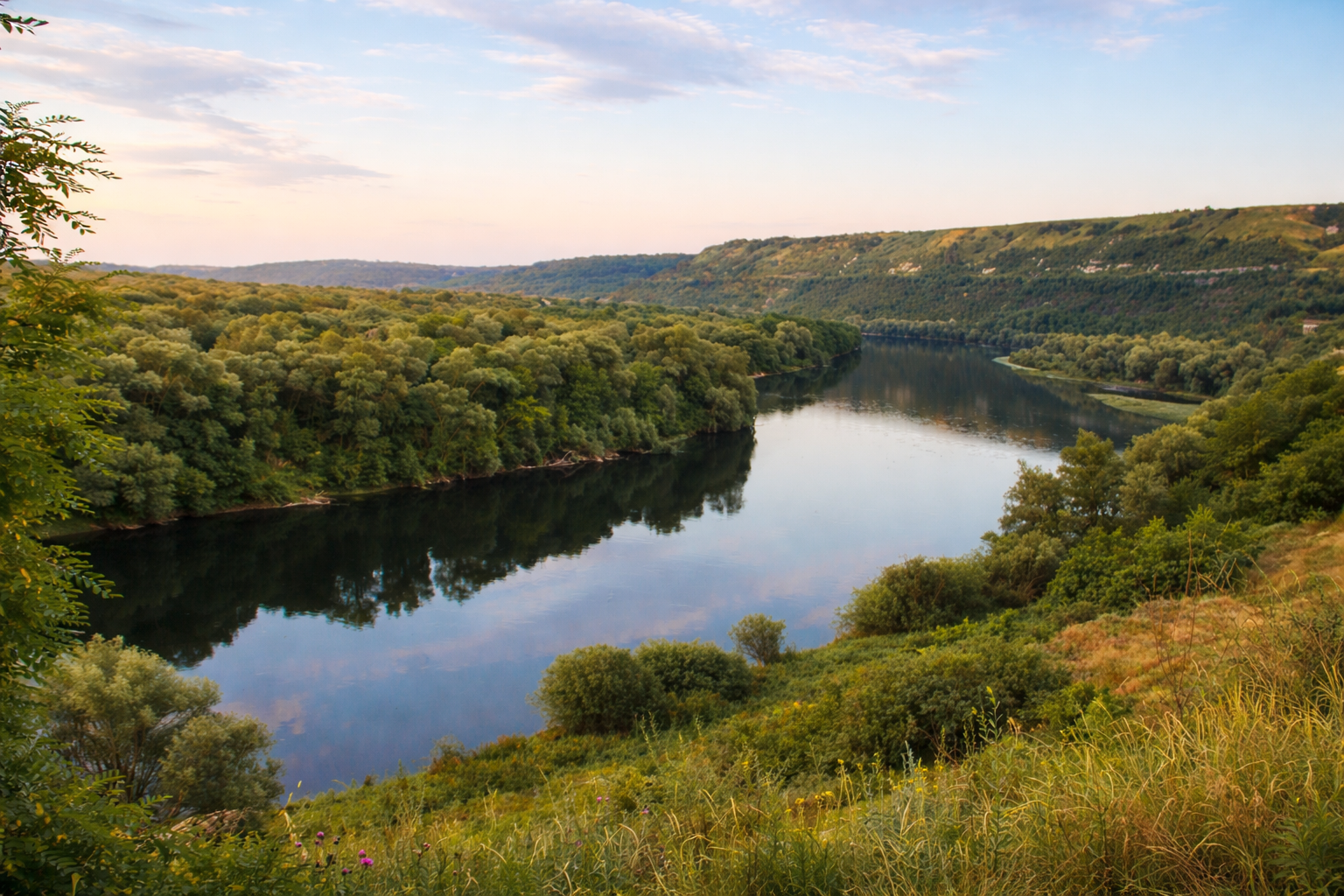
The trees do not really catch your attention, at first because they are such a natural part of the landscape that you almost take them for granted. - shaping the land, holding the edges of fields, standing along roads, or gathering in quiet forests.
They give height to the horizon, they change the light and they create places where you can slow down without really thinking about it.
And slowly, without separating them, you begin to recognize them.
Walnut Tree
The walnut tree is also a very familiar sight in Moldova, especially around houses and gardens and with its wide crown and large branches, an old walnut tree can provide plenty of shade during the hot summer months.
In autumn, the walnuts are collected and used in cooking and baking, including many traditional Moldovan dishes.
An old walnut tree is worth keeping, not only for its nuts, but also for the shade it provides.
Oak
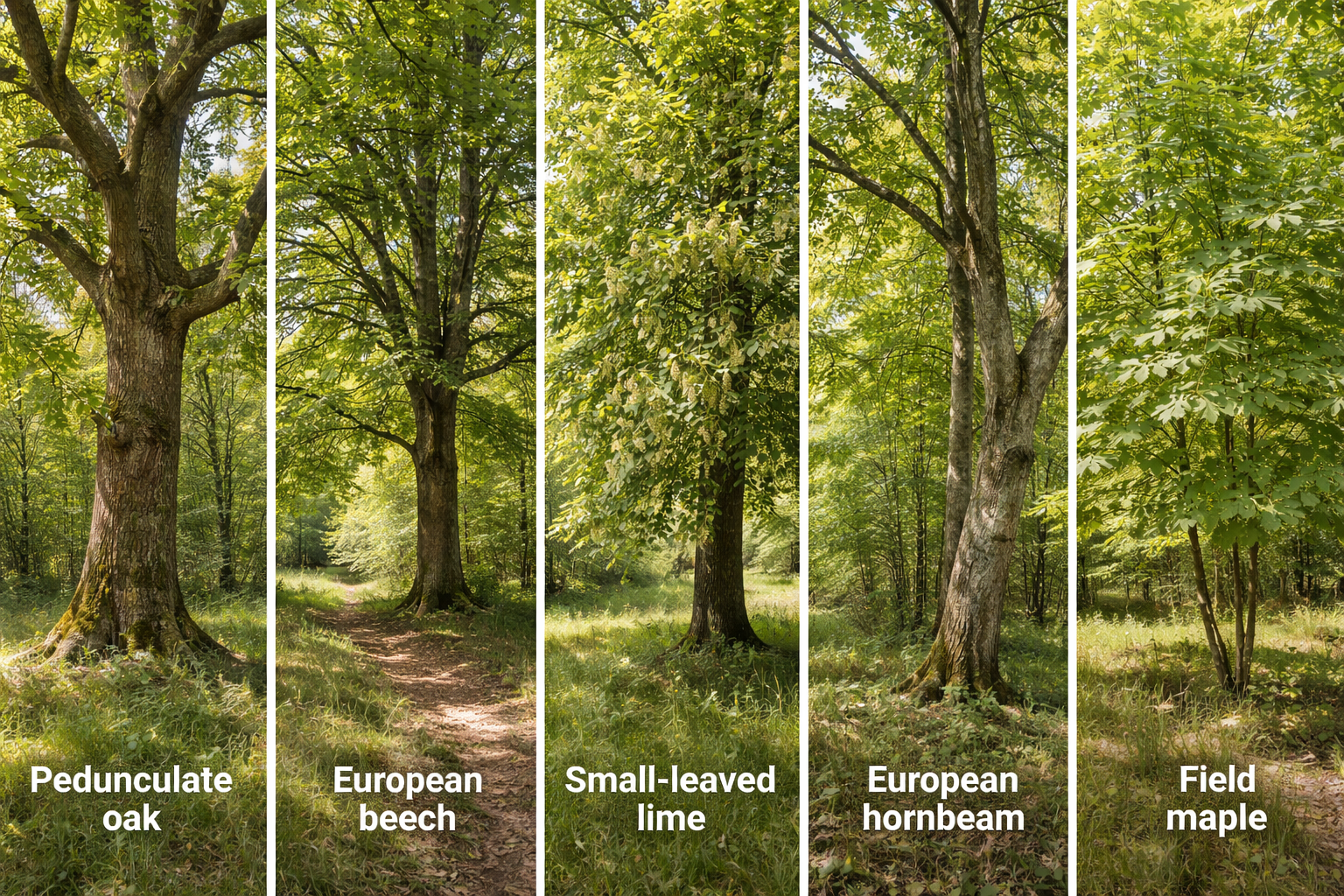
There is something special about an old oak.
Whether it stands alone in a field or among other trees in a forest, its thick trunk and large branches it is difficult to overlook.
When you come across a very old one, it is worth stopping for taking a closer look.
Wild Cherry
The wild cherry is particularly a beautiful and lovely sight during spring.
For a short period, its branches are covered with small white flowers, making it easy to notice among the other trees.
Later, the flowers disappear and are replaced by leaves and eventually small
cherries, which are also eaten by birds.
Its flowering season does not last long, so it is worth enjoying it while it is there.
Beech
Beech trees are easy to recognize by their smooth, grey trunks and often they grow tall and close together, with branches forming a thick cover overhead.
In summer, their leaves provide plenty of shade, while the ground beneath is often covered with fallen leaves from previous years.
It is worth looking up when walking through a beech forest.
Linden
The linden is a tree you very often find in villages and towns.
It grows near houses, along roads and in parks and during summer, its small yellowish flowers give off a pleasant, sweet smell, especially on warm days.
The flowers are also collected and dried to make linden tea, something many Moldovan families are familiar with.
When the linden is flowering, you can often smell it long before you see it.
Poplar
Poplars are among the tallest trees you will see in Moldova.
They are often found along roads, near villages and in rows beside the fields and their
tall, straight trunks and narrow crowns make them easy to recognize, even from a distance.
On windy days, you can hear the leaves rustling, sometimes quite loudly and when you see a long row of poplars, it is very difficult not to notice them.
Willow
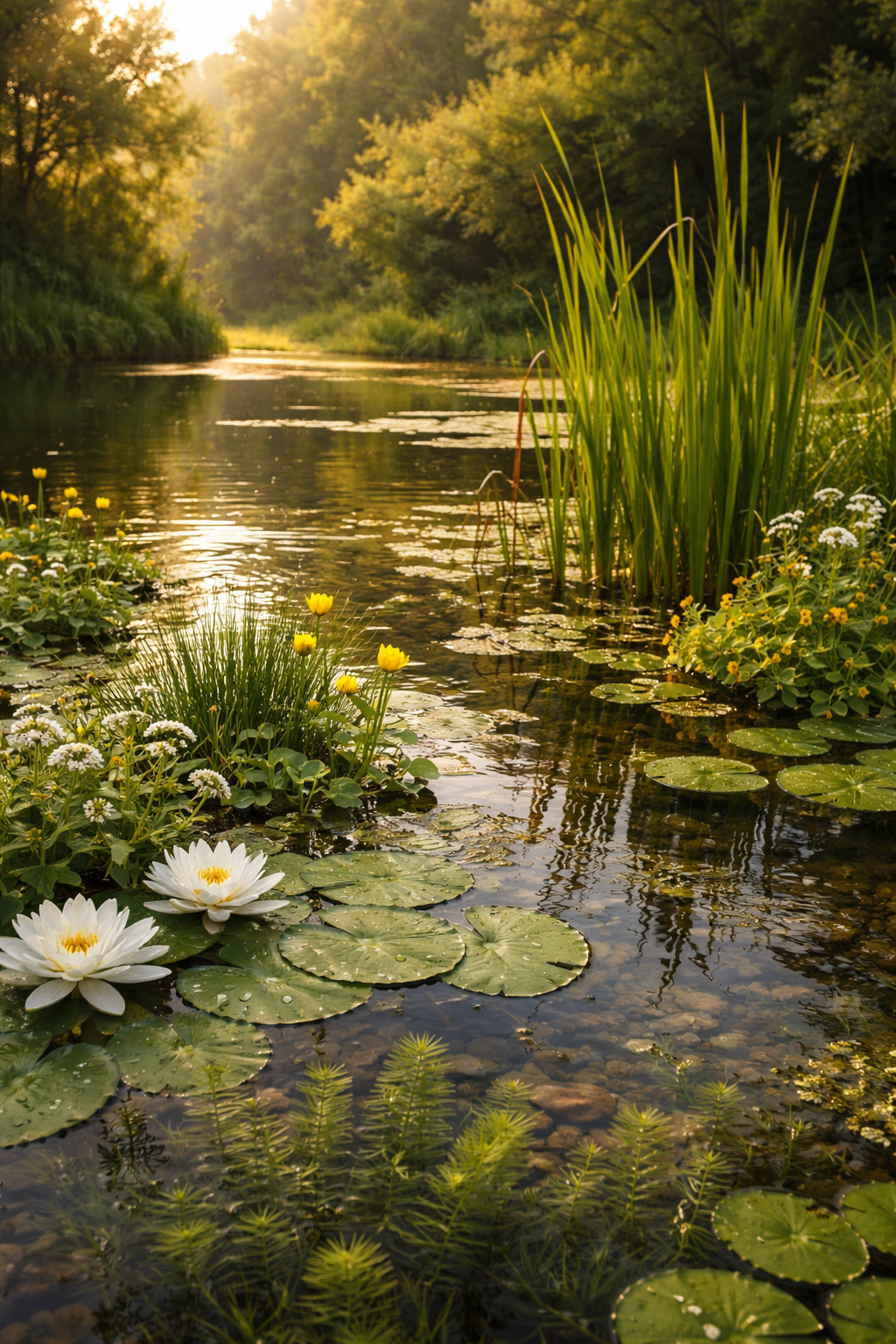
Willow trees are a familiar sight along rivers and lakes in Moldova.
They often grow close to the water, with long, hanging branches that sometimes reach almost down to the surface and older willows can have thick, twisted trunks, and their branches provide plenty of shade during summer.
On a warm day, sitting beneath a willow beside the water is not a bad place be and to
spend an hour.
Local Sayings
Oak
“Stejarul nu se teme de vânt.”
-
The oak does not fear the wind.
Linden
“Sub tei, omul își găsește liniștea.”
-
Under the linden, a person finds peace.
Pomul se cunoaște după roade, iar
omul după fapte.
-
A tree is known by its fruit, and a
person by their deeds.
Willow
“Salcia plânge, dar nu cade.”
-
The willow bends, but it does not break.
Cherry
“Cireșul înflorește, dar nu rămâne.”
-
The cherry blooms, but it does not stay.