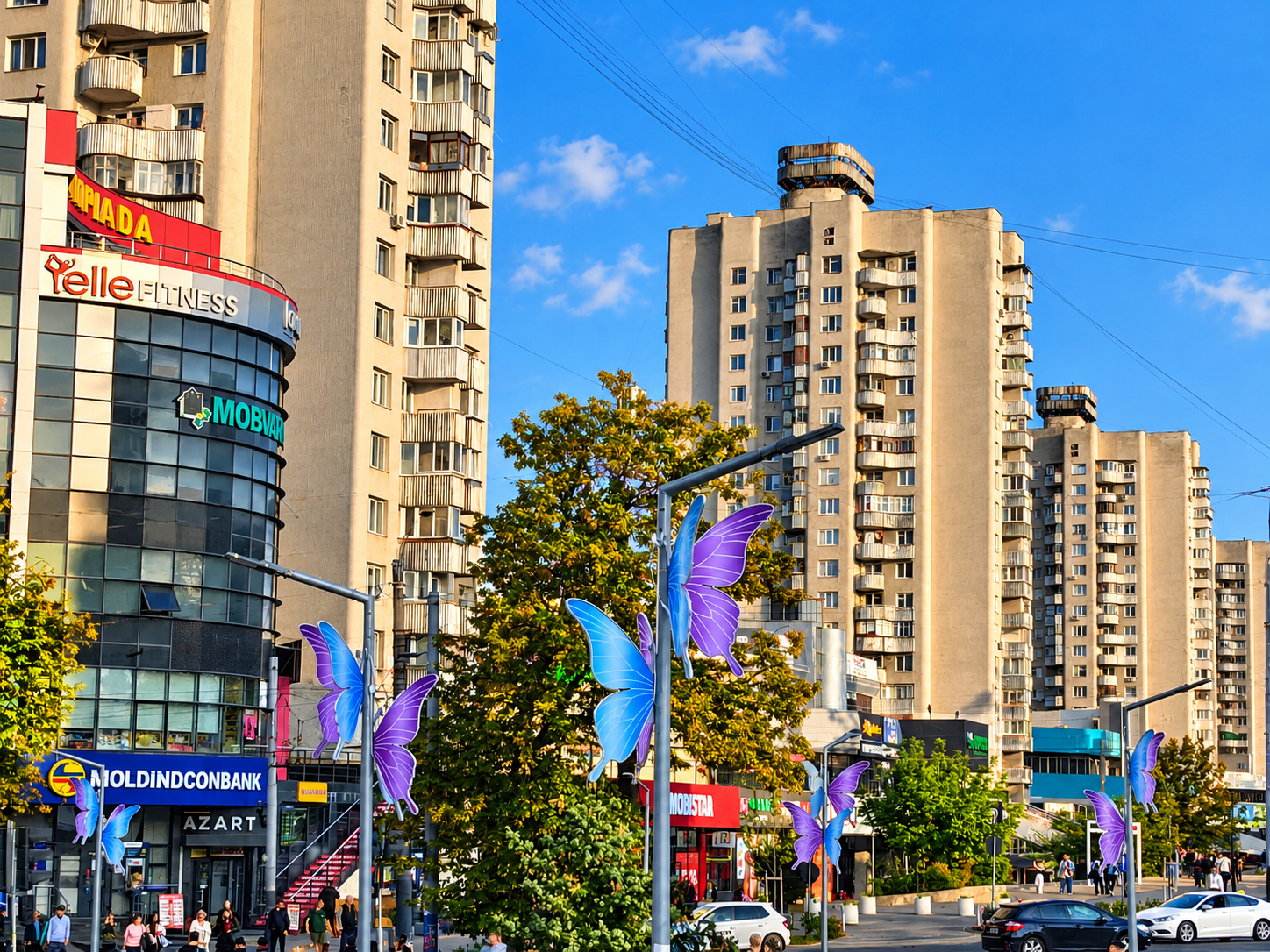
The sector never feels quite the same from one street to the next.
A quiet courtyard can suddenly open onto a busy boulevard, and the atmosphere changes throughout the day as people move between work, home, cafés, parks, and shops.
Along Dacia Boulevard, life rarely stops completly.
Trolleybuses glide beneath the overhead wires while cars move steadily along the wide roads.
Between the apartment buildings are bakeries, flower kiosks, pharmacies, cafés, together with supermarkets, small minimarkets, and countless everyday businesses that locals pass without a second thought.
In the early morning, especially during autumn and winter, Botanica often wakes up slowly.
Before sunrise, fog sometimes hangs between the apartment blocks and softens the outlines of the buildings.
Lights glow behind café windows while the smell of fresh bread, pastries, coffee, and warm dough drifts onto the sidewalks.
People stop for a quick espresso, a covrig, or a sandwich before continuing on their way and in every direction.
Some head toward trolleybus stops, others disappear into the underground passages beneath the larger roads.
Within an hour the sector is fully awake, and the familiar rhythm of the day begins again.
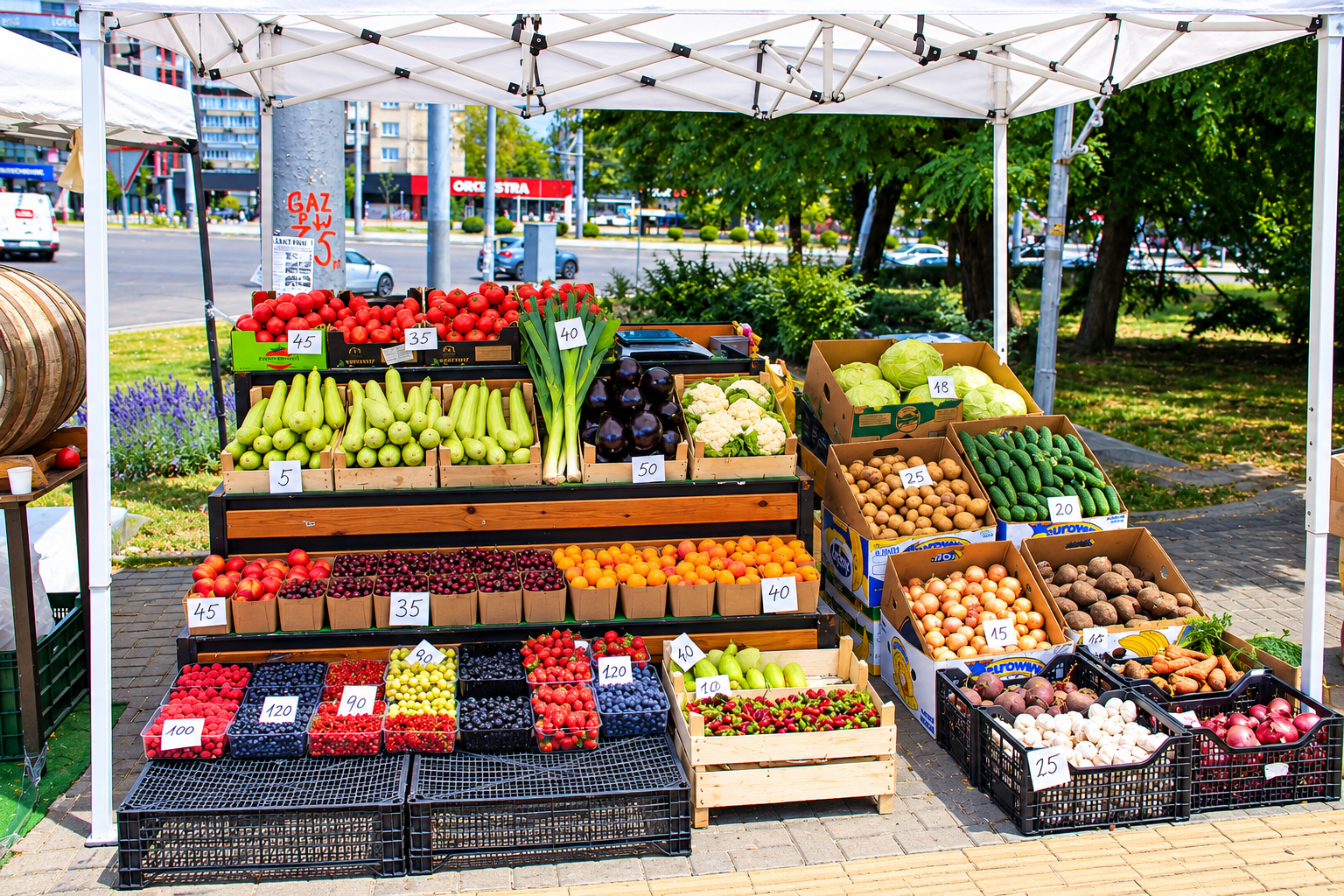
As the morning moves on, people begin returning from nearby markets with bags full of everyday things for the day ahead.
Bread sticks out from shopping bags, flowers are carried carefully home, and bunches of parsley and dill peek out between fruit, vegetables, and other groceries.
Outside the shops, delivery vans stand with their rear doors open while workers carry boxes and crates through side entrances.
Store owners prepare for the day, arrange displays, and greet familiar faces as
they pass by.
Before the sidewalks become busy, street cleaners move quietly along the
roads, sweeping away leaves, dust, and whatever the wind left behind during the night.
It is the ordinary start of another day in Botanica, repeated thousands of times, yet somehow never exactly the same.
Near some of the apartment entrances, small flower gardens appear beside the stairways.
Many were created by residents years ago and are still cared for today.
Roses, tulips, and lilies, painted stones, small fences, old tires turned into flower beds, and handmade decorations add colour to spaces that would otherwise be plain concrete.
Some of these gardens have clearly been growing for decades, changing a little from year to year as neighbours add something new or replace what has worn out.
In the evenings, especially during the warmer months, it is still common to see residents outside watering flowers, pulling weeds, or stopping to admire what is blooming before heading back upstairs.
They are small details, easy to miss when passing through, but they give many parts of Botanica a personal touch that cannot be planned or built by the city itself.
Cats sleep beneath stairways or under parked cars, finding the coolest places during the warmer parts of the day.
Pigeons gather near entrances and benches, waiting patiently in the hope that somebody might drop a few crumbs.
In some courtyards, older men sit quietly on benches for hours, watching people come and go, greeting familiar faces with a nod, and following the small events of the day without seeming to be in any particular rush.
And above it all, the balconies tell their own stories. Laundry hangs drying in the
sun, flower pots fill the railings with colour, and open windows reveal
voices, music, televisions, and the sounds of dinner being prepared.
As the day moves toward evening, more people step outside onto their balconies, looking down at the courtyards below or simply enjoying the cooler air before night arrives.
But once you leave the larger boulevards behind, things begin to feel much different.
The traffic is more calm, but it becomes more distant, hidden behind rows of apartment blocks and trees.
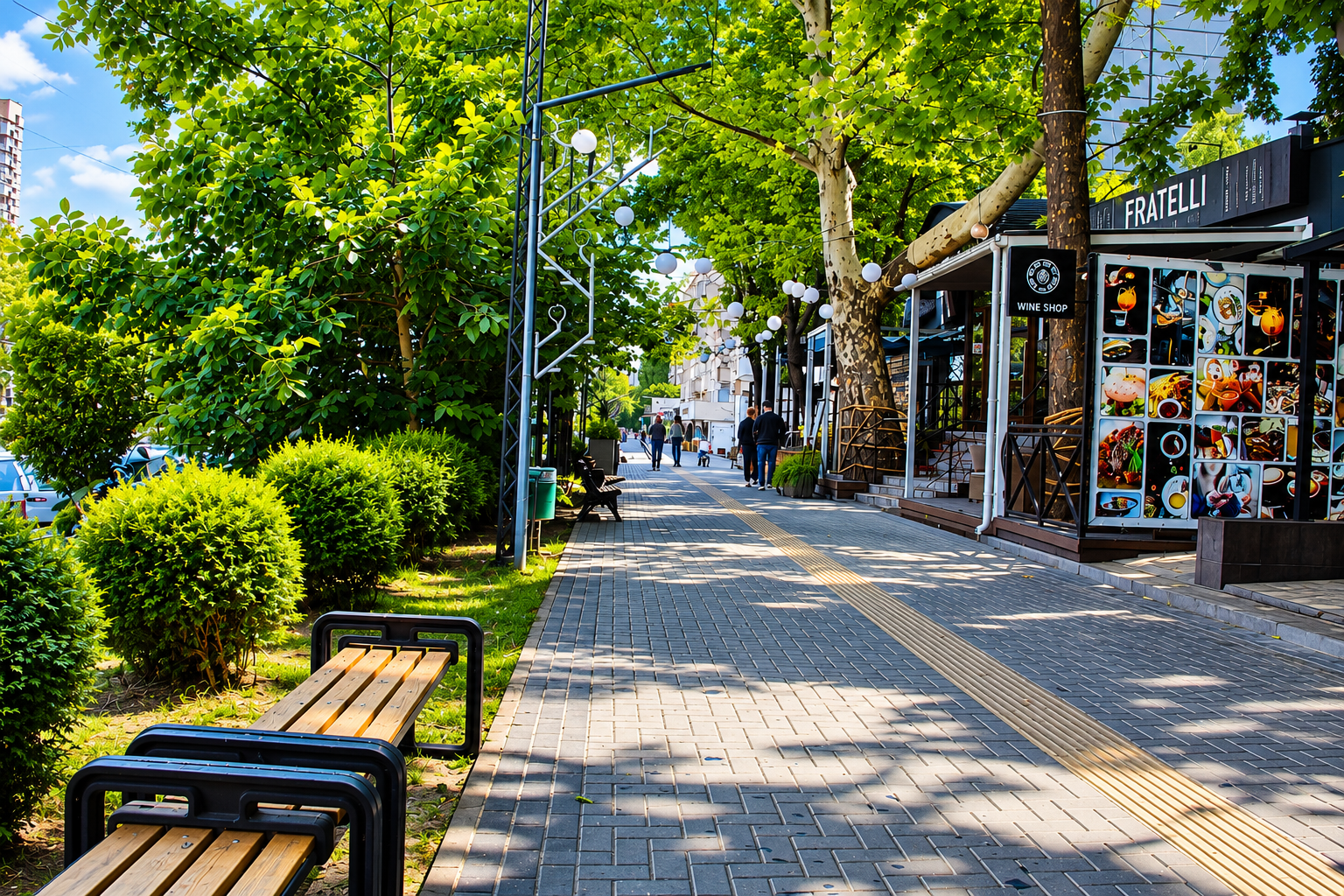
Chestnut trees line the smaller streets, and narrow footpaths lead between
courtyards, playgrounds, garages, and benches where neighbours often stop for
a conversation.
The smell changes too.
Instead of the main roads, you notice warm concrete after a sunny day, dust from the paths, flowering trees in spring, smoke from someone grilling nearby, the scent of gasoline around older garages, and food drifting from open kitchen windows several floors above.
These are the parts of Botanica many visitors never really or ever see.
Children play between the buildings, dogs are walked before dinner, and voices drift across the courtyards from open balconies.
It is here, away from the main roads, that the sector often feels most like a neighbourhood rather than a district of a capital city.
Some apartment entrances still carry traces of another era.
Faded mosaics, cracked tiles, decorative metalwork, old lamps, worn building numbers, and handrails polished smooth by countless hands over the years.
Rain, snow, summer heat, and winter cold have left their marks on almost every surface.Inside, many stairwells have a familiar smell that is difficult to describe but instantly recognizable to anyone who grew up in this part of Europe.
Old concrete, dust, cooked food from nearby apartments, and the faint scent of damp air that lingers during the colder months.
Some buildings have been renovated, others less so, but each entrance seems to carry its own history, quietly visible in the details that residents pass every day without thinking much about them.
Some balconies are enclosed with older glass panels that catch the evening light and reflect it across the courtyard.
Others seem to have become small extensions of the apartments themselves, filled with flowerpots, bicycles, shelves, curtains, jars, old chairs, and all the small things that no longer fit inside.
As evening arrives, balcony doors open and people begin stepping outside.
Some water their plants, some lean on the railings for a few minutes after work, and others simply sit quietly watching the courtyard below.
From open windows come the sounds of conversations, television programs, clattering dishes, and everyday life continuing behind the walls.
As darkness slowly settles over Botanica, the glow from apartment windows begins replacing the daylight, and the balconies become small islands of light hanging above the courtyards.
In the shift towards evening, Botanica changes again.
The sunlight becomes softer between the apartment buildings, and one by one the windows begin lighting up above the courtyards.
People return from work, shops become busier for a while, and cafés fill with conversations that spill out onto terraces and sidewalks.
Flower kiosks remain open beneath the trees, their colours standing out against the fading daylight, while shop windows continue glowing along the streets.
On the larger roads, like bulevardul Dacia (Boulevard Dacia) trolleybuses moves steadily through the evening as they have all day, carrying people home across the city.
After rain, the pavement reflects the lights from the passing cars, open cafés, the always busy supermarkets, and pharmacies.
The reflections stretches across the wet streets and sidewalks, turning ordinary corners into something unexpectedly beautiful for a few hours.
As darkness settles over the sector, the courtyards do not become silent.
Open windows, distant conversations, barking dogs, and the occasional trolleybus continue long into the evening.
Botanica never really falls asleep.
Instead, it slowly grows quieter, apartment by apartment, courtyard by courtyard, until another morning begins.
And after some time in Botanica, the sounds start to become familiar as well.
A dog barking somewhere beyond the next courtyard, a television playing through an open window. Music drifting softly from a balcony on a warm summer evening, the sound of an old entrance door opening and closing downstairs, children laughing near a playground hidden between the apartment blocks.
Plates and cutlery clattering from kitchens above, conversations floating through the trees from neighbours sitting outside long after sunset.
By afternoon, the parks begin filling with people again.
Parents push strollers along the paths, pensioners occupy their favourite
benches, teenagers gather in small groups, and dog walkers make their usual rounds.
People simply do as they always have done
That is often what s remembered by visitors after spending time in Botanica.
Not a particular building or monument, but the feeling of an ordinary neighbourhood living its everyday life.
The sounds, smells, courtyards, balconies, and small details slowly come together and create a picture of the sector that cannot be understood from a map alone.
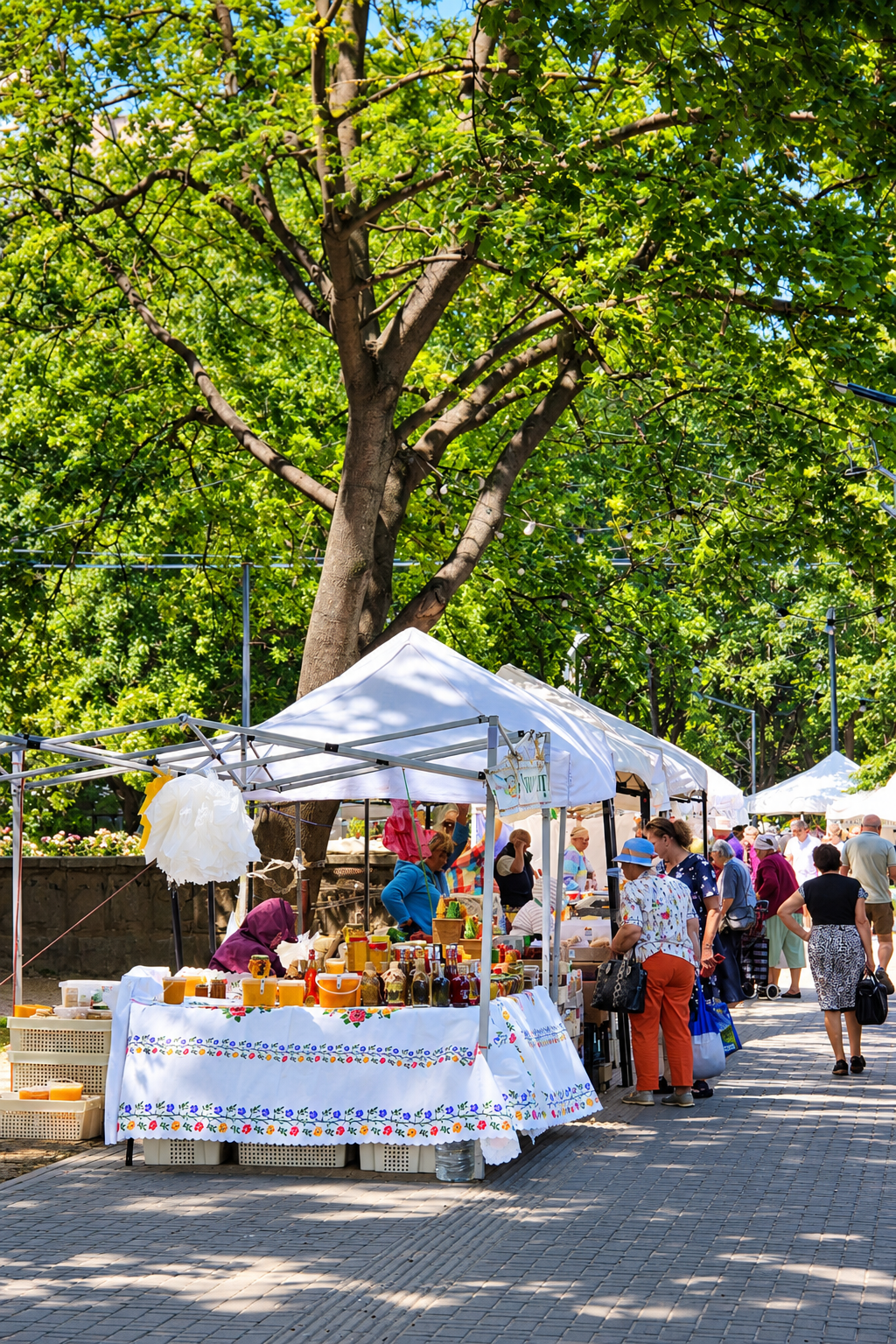
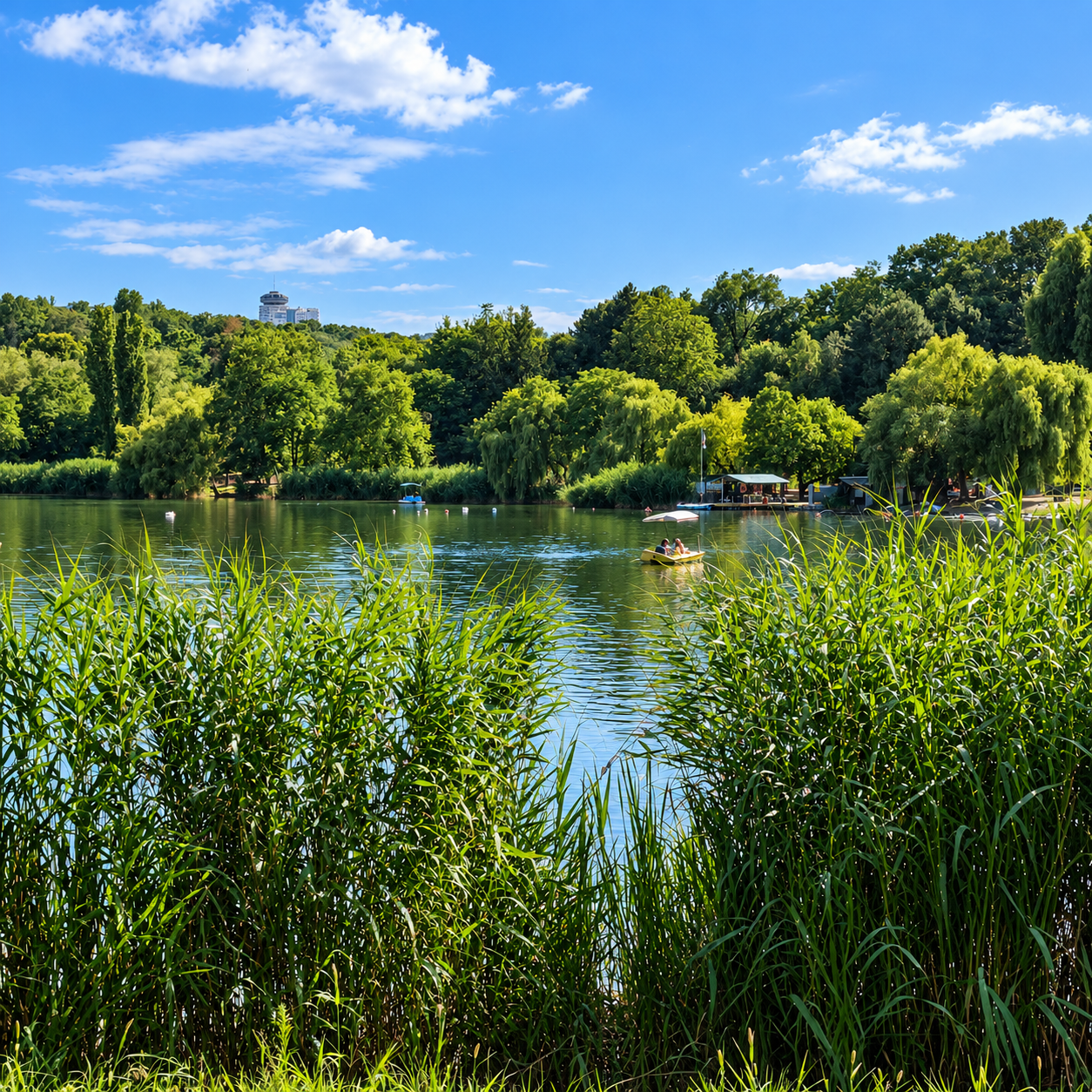
Around Valea Trandafirilor, families walk beside the lakes carrying coffee, pizza-
slices, pastries, plăcinte, sandwiches, sunflower seeds, or ice cream.
Children run between amusement rides holding balloons while fishermen sit quietly near the water beneath the trees surrounding the lakes.
Further into the sector, Valea Crucii Park feels quieter and more local.
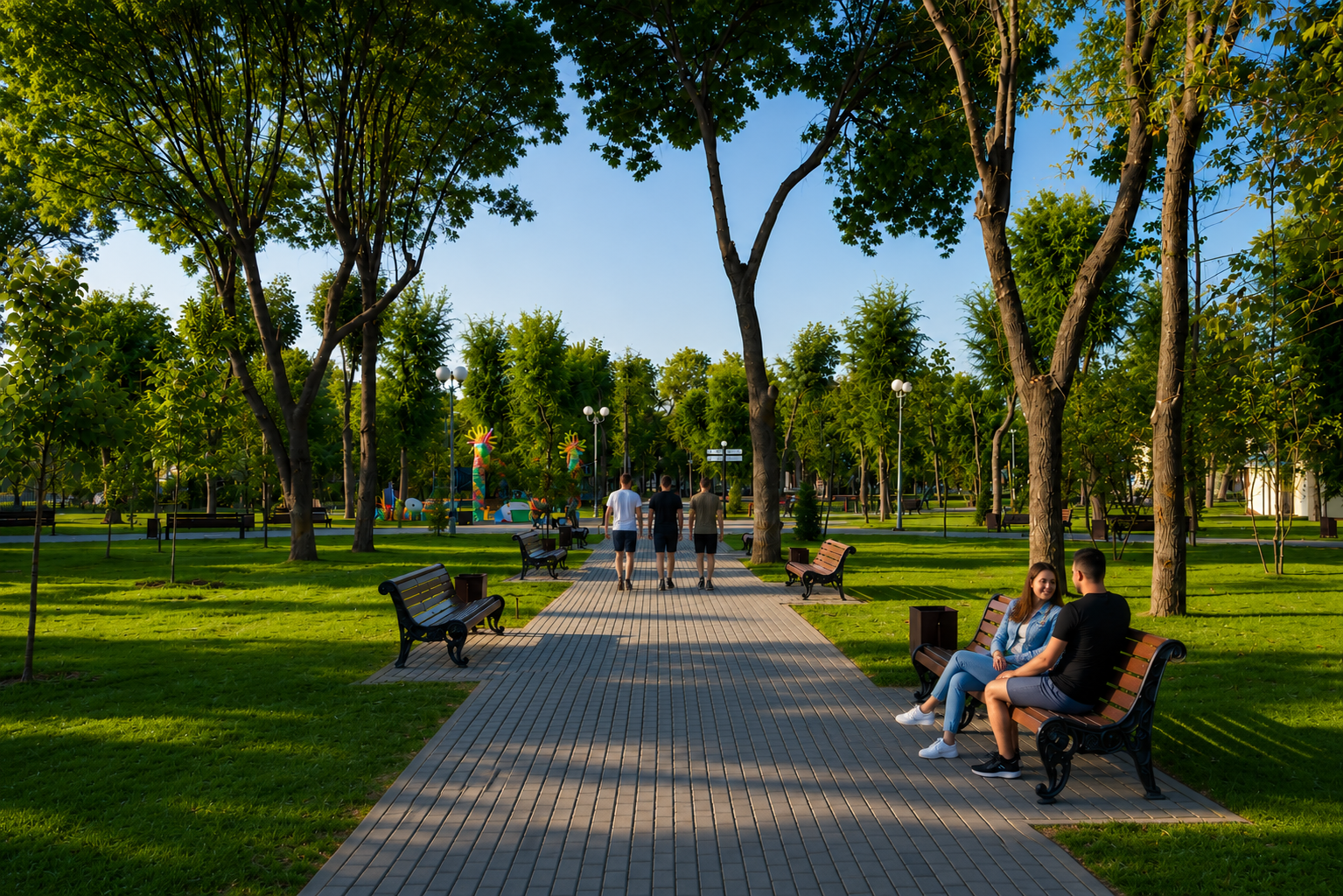
Residents walk dogs beneath older trees while smaller paths disappear deeper into the greenery away from the larger roads and apartment districts.
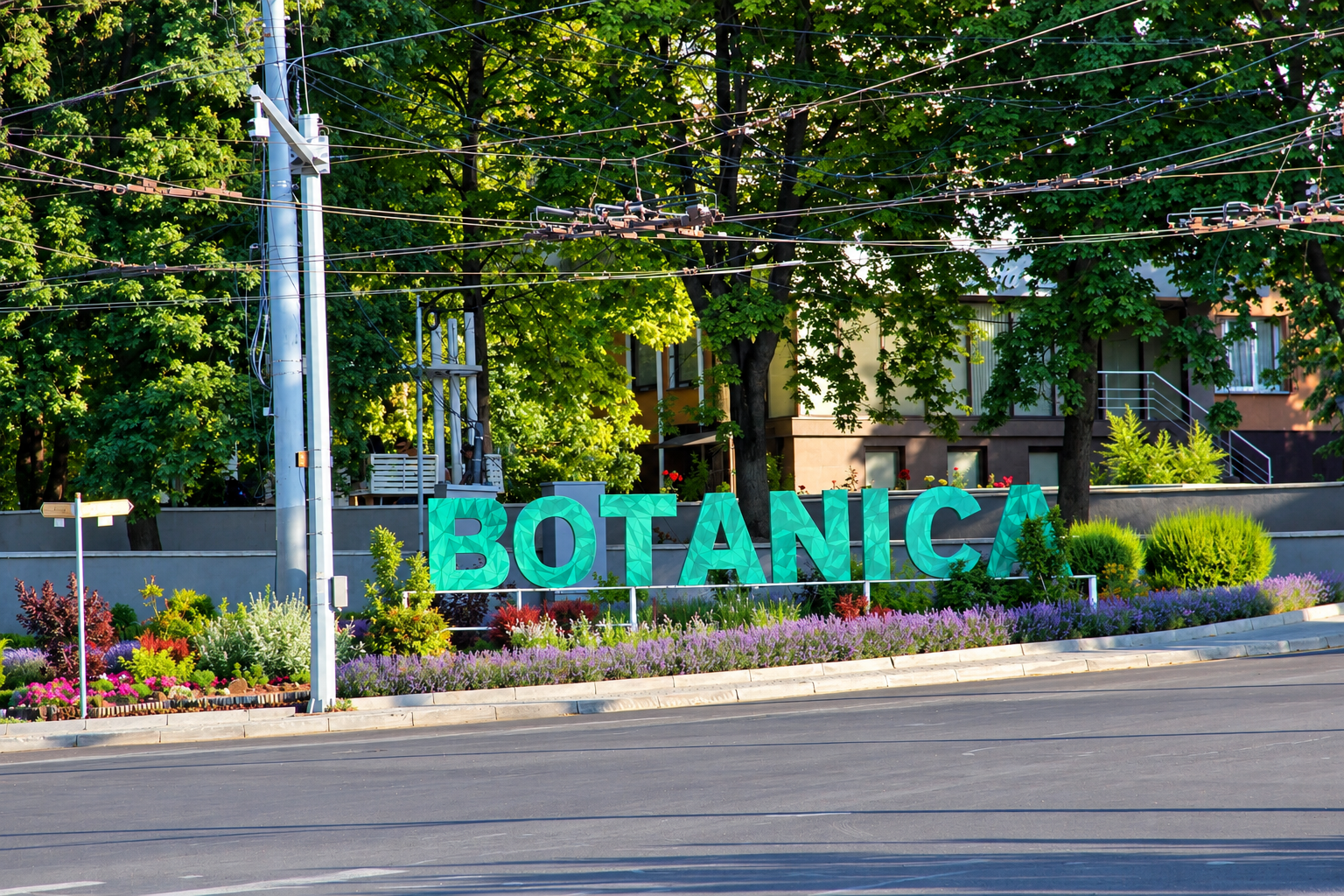
One of the strongest impressions of Botanica in the evening is often bulevardul Dacia (Boulevard Dacia) itself.
As darkness arrives, the boulevard takes on a different appearance.
The trees in the central median glow beneath green lights, creating a long ribbon of colour stretching into the distance.
Trolleybuses continue floating beneath the wires overhead, their windows glowing softly as they pass through the evening traffic.
People are still out and about long after the working day has ended. people walk home carrying a loaf of bread, flowers, takeaway coffee, pastries, or a pizza box.
Others stop at small shops on their way home or linger outside apartment entrances talking with neighbours.,
Near cafés and terraces, conversations continues into the evening, teenagers gather around benches and playgrounds, friends meet beneath the trees, and people sit outside enjoying the cooler air after the heat of the day, there is movement
everywhere, but rarely any hurry.
For many people, this is Botanica at its most familiar.
The lights, the trolleybuses, the apartment windows glowing above the trees, and the steady flow of people returning home create a scene that feels less like a city landmark and more like everyday life unfolding around one of Chișinău's main boulevards.
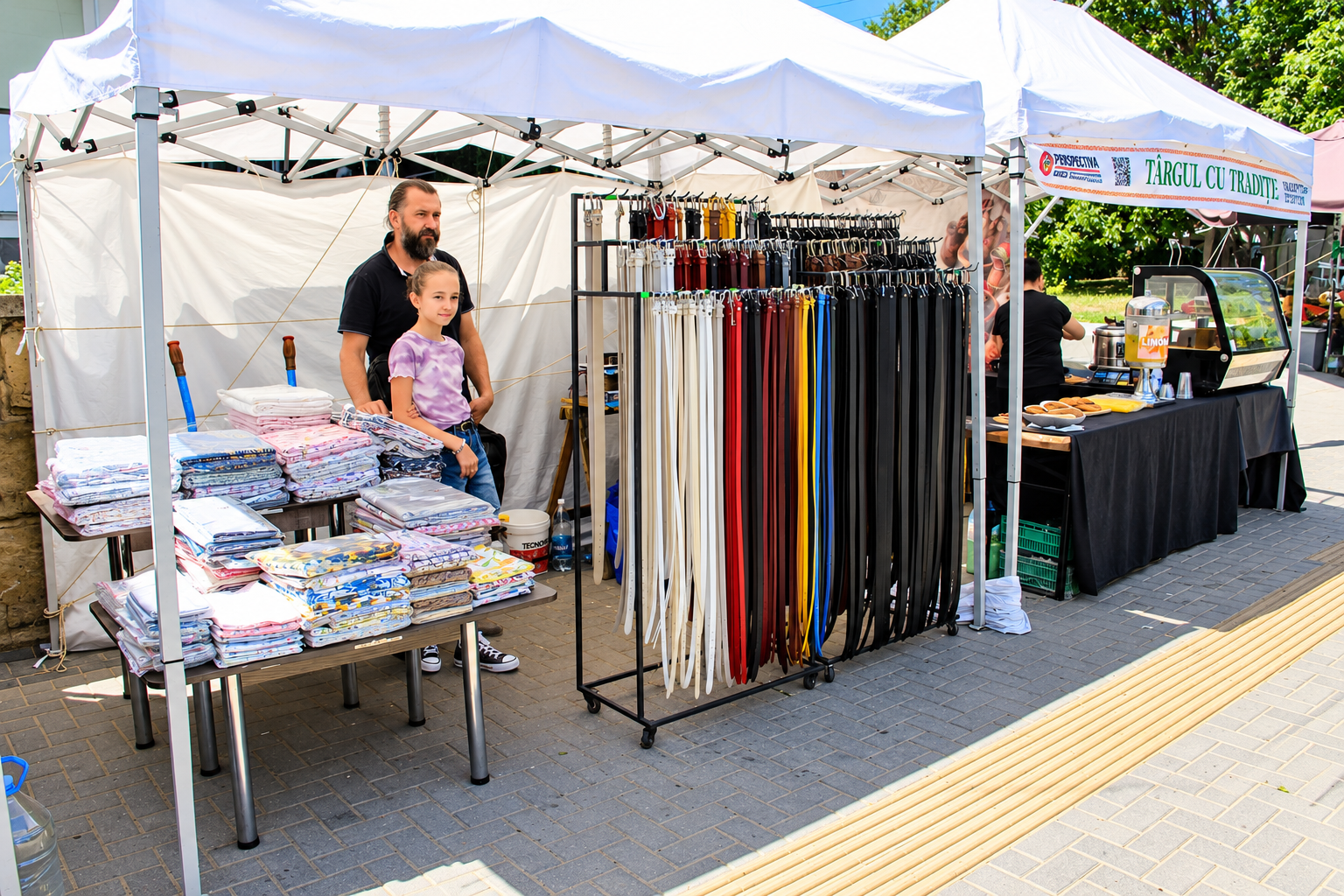
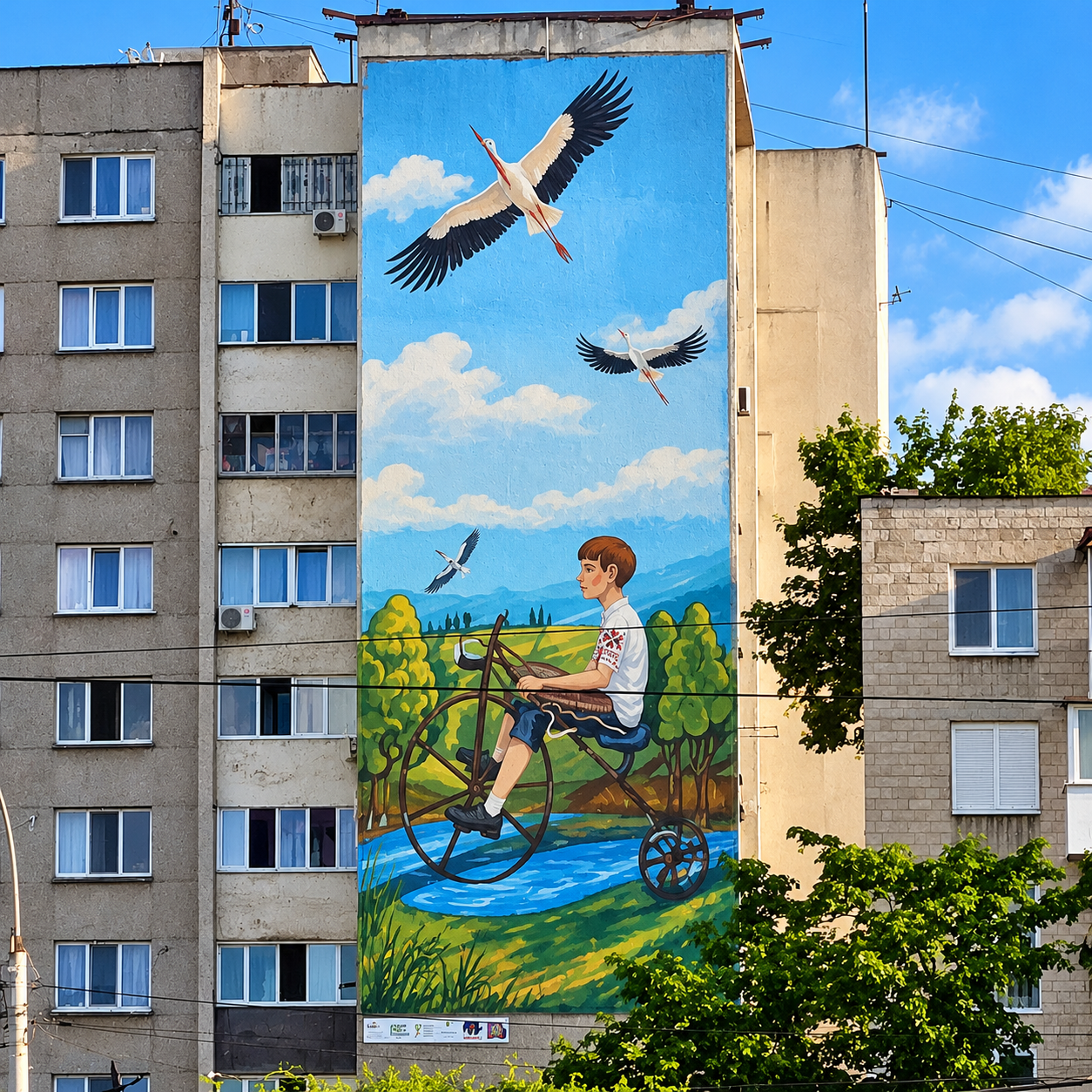
Music drifts through the evening from somewhere nearby, a car parked between the apartment blocks, an open café terrace, a balcony several floors above, or a window left open to let the cooler air inside.
Dogs wander slowly through the courtyards while neighbours stop each other for what was meant to be a quick greeting but turns into a longer conversation.
Laughter comes from somewhere near a kiosk.
A man sits quietly smoking beneath a balcony. Near one entrance, somebody waters flowers before gathering the watering can and heading back upstairs for the night.
None of it is remarkable on its own. Yet together, these small moments create the atmosphere many people remember from Botanica.
The sector is not defined by a single landmark or building, but by thousands of ordinary scenes unfolding at the same time as evening settles over the neighbourhood.
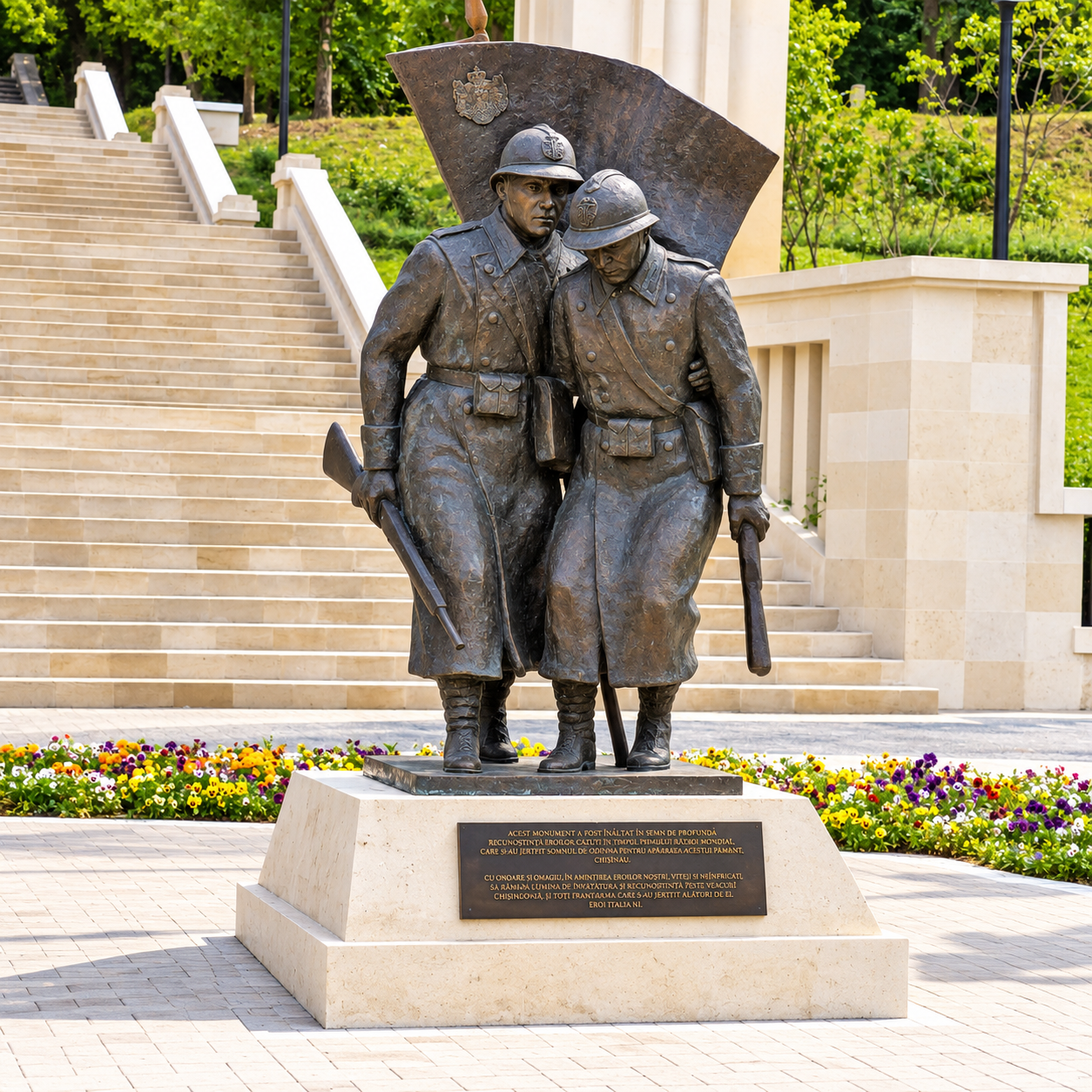
The underground passages beneath the larger boulevards are also part of everyday life in Botanica.
From early morning until late evening, people move constantly through them carrying flowers, groceries, takeaway food, umbrellas, or shopping bags on their way across the district.
While traffic flows overhead, life continues below at its own pace.
Along the tiled walls, small kiosks stand side by side, packed into almost every available space.
Fresh pastries, coffee, newspapers, flowers, bottled water, sweets, phone accessories, SIM cards, batteries, and dozens of other everyday items are sold from counters that often seem far too small for everything they contain.
For many locals, these tunnels are more than just a way to cross the road.
They are familiar meeting points, shortcuts, and small shopping streets hidden beneath the city.
Some people pass through without slowing down, while others stop for a coffee, a pastry, flowers on the way home, or whatever they suddenly realize they need before continuing back into the daylight above.
And during the summer especially, Botanica can become surprisingly difficult to leave behind and simply go home from.
Even long after sunset, the air often remains warm enough for people to stay
outside, the courtyards are still active, benches are still occupied, and conversations continue beneath the trees while apartment windows glow above the streets.
Couples walk slowly toward Valea Trandafirilor carrying coffee or ice cream.
Teenagers remain gathered near playgrounds, garages, kiosks, and apartment entrances, talking about whatever seems important that evening.
People continue strolling without any particular destination, taking the longer route home simply because the evening is pleasant and there is no reason to hurry.
The city becomes quieter, but it never feels empty.
Music drifts from somewhere in the distance, trolleybuses still pass along the boulevards, and lights reflect from balconies and windows across the courtyards.
On evenings like these, Botanica feels less like a district people pass through and more like a place where people choose to stay a little longer before finally heading home.
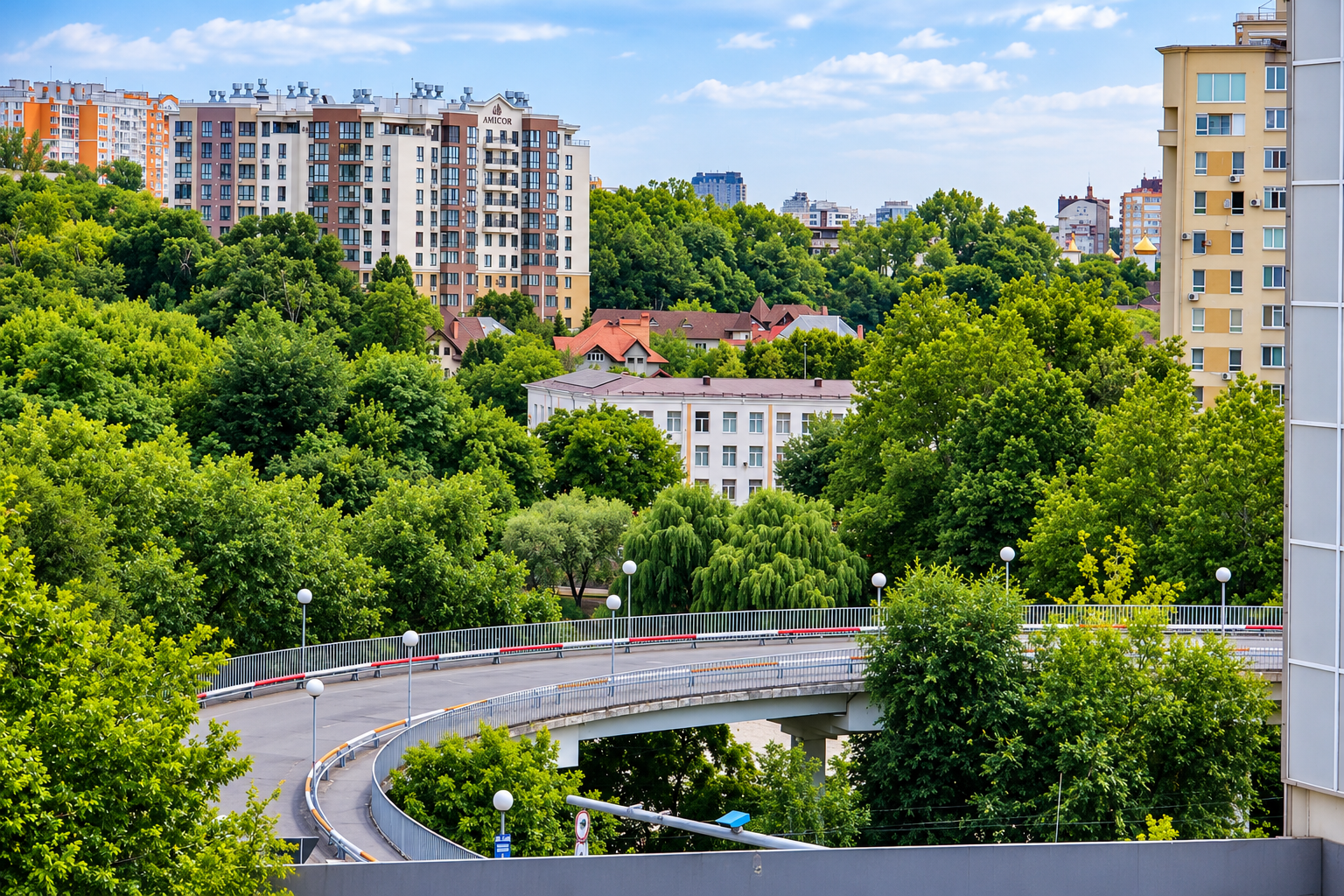
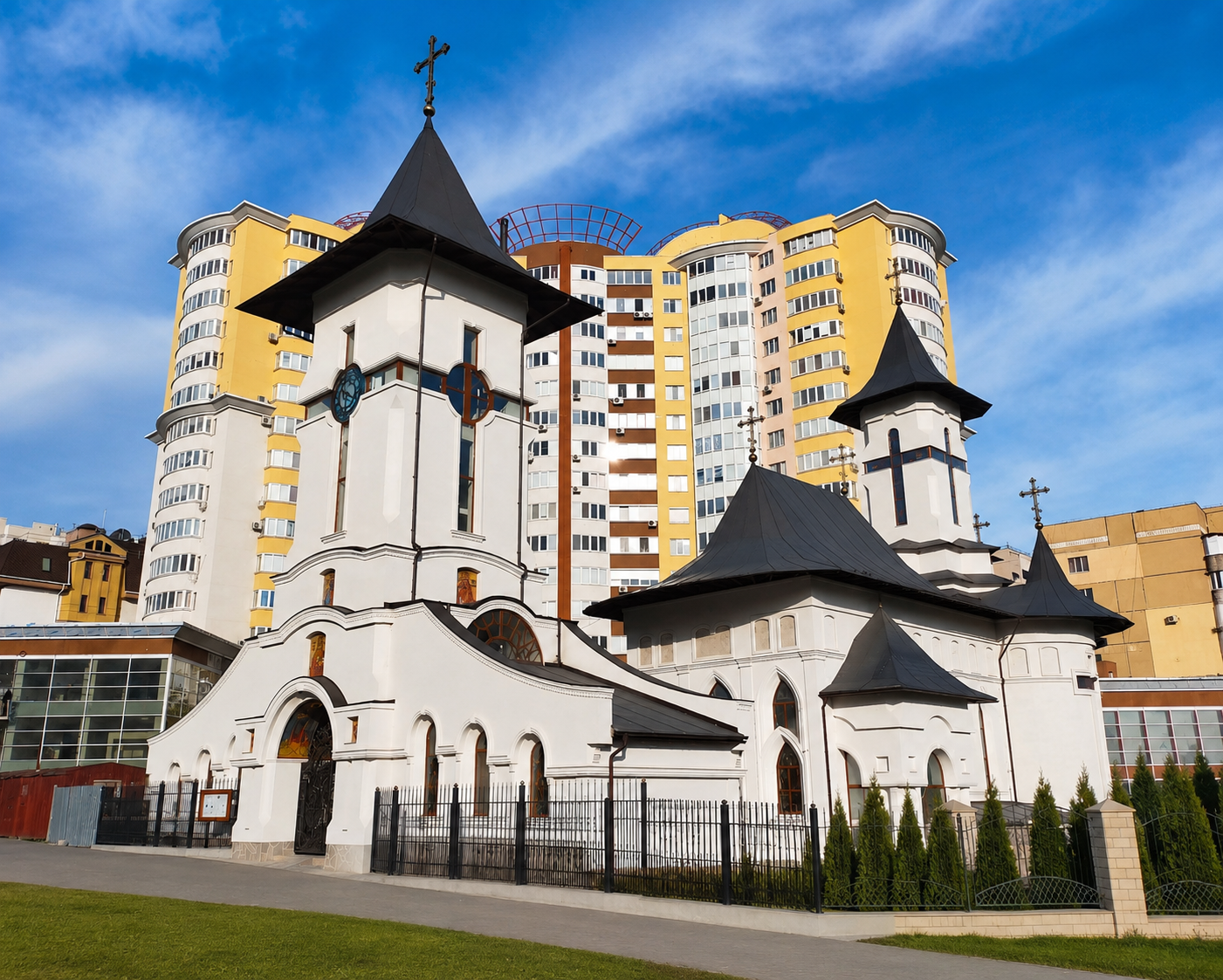
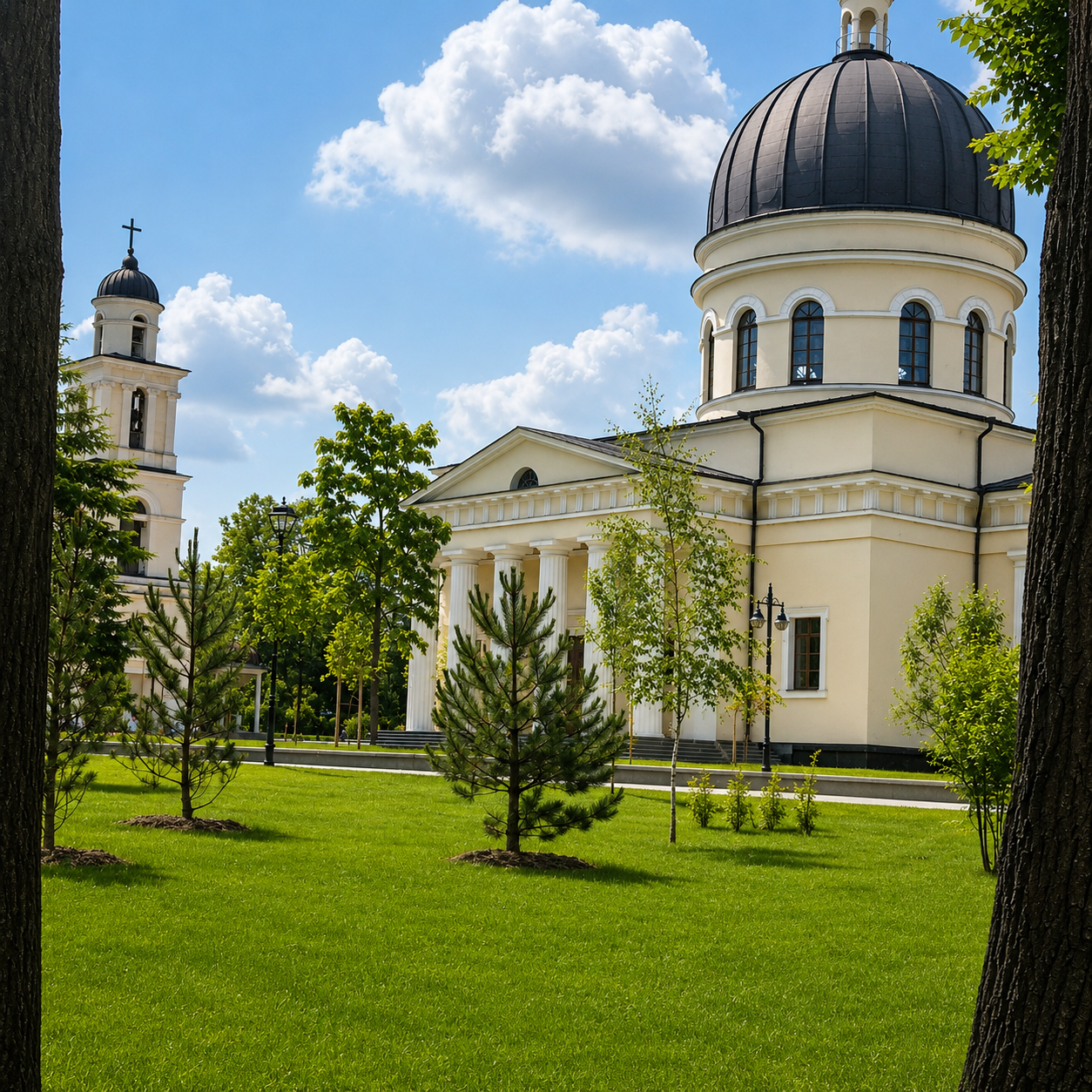
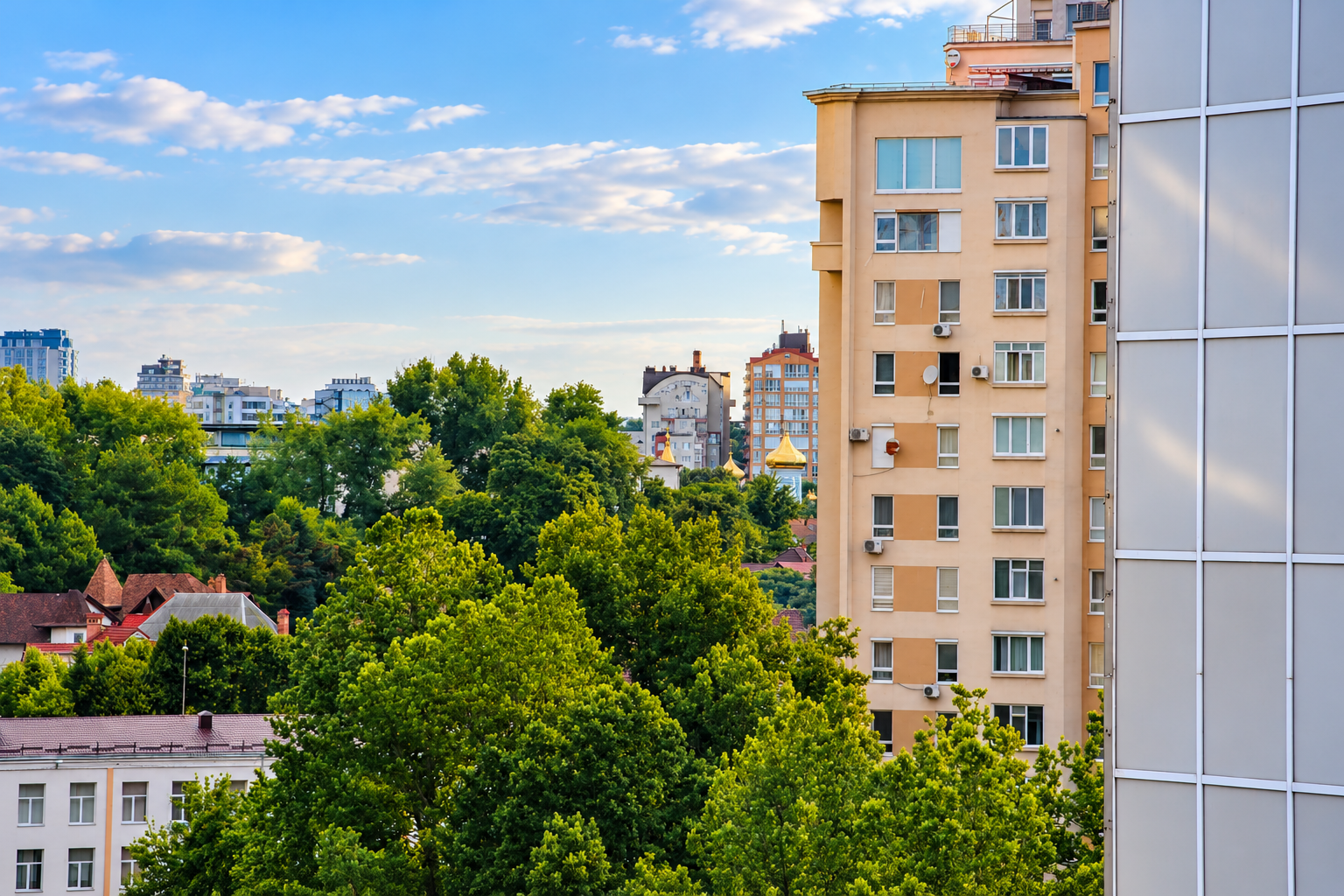
Between the apartment blocks and busy roads, the golden domes of Ciuflea Monastery rise above the surrounding streets and are visible from many parts of Botanica.
The monastery was founded in 1858 by the Armenian merchant brothers Teodor and Anastasie Ciufli and remains one of the district's oldest landmarks.
For many residents, the monastery is simply part of the landscape.
People pass it on their way to work, glimpse its domes from trolleybuses and car windows, or see them shining in the afternoon sun above the traffic.
Yet despite the traffic around it, the monastery grounds feel noticeably calmer than the streets outside.
Its golden domes, white walls, and bell towers create a striking contrast to the apartment buildings and wide boulevards that surround it.
For more than a century and a half, Ciuflea Monastery has remained a familiar presence in a part of the city that has otherwise changed dramatically around it.
Inside the monastery grounds, the atmosphere changes.T
The sound from the surrounding roads seems more distant, replaced by quieter sounds from the courtyard and the church itself.
People speak more softly, slow their pace, and for a moment the city outside feels further away than it really is.
Inside the church, candlelight flickers beneath painted icons that have watched over generations of worshippers.
The scent of incense hangs in the air while visitors stand quietly in prayer or
reflection, older women cross themselves before entering, light candles, and move respectfully between the icons, following traditions they have known their entire lives.
Even for those who come only to look, there is a sense of calm inside the monastery.
Beyond the apartment blocks, traffic, and busy boulevards, Ciuflea remains a place where life moves a little more slowly and where the rhythm of the city briefly gives way to something older and quieter.
Outside the monastery walls, Botanica is still there, almost to move from one world to another.
The sound of traffic returns, trolleybuses passes, marshrutkas stop to pick up passengers, and people continue along the sidewalks carrying groceries, coffee, or bags on their way home.
Cafés remain busy, kiosks continue serving customers as evening settles across
the city.
As the hours pass, the pace gradually slows, again the the traffic becomes lighter, fewer people walk the streets, and one by one the lights in the apartment buildings begin to disappear.
At Botanica after midnight, there are small reminders that life is still continuing behind the illuminated windows scattered across the sector.
3 Facts
Before the CityCu mult înainte ca Botanica să devină parte a Chișinăului, zona era acoperită de vii, grădini și terenuri agricole, lucrate de locuitorii satelor din apropiere.
Long before Botanica became part of Chișinău, the area was covered with vineyards, gardens, and farmland cultivated by nearby villagers.
-
Old Trade RoutesVechile drumuri comerciale traversau zona Botanica, unde negustorii transportau vin, cereale și alte mărfuri cu cai și căruțe, inclusiv spre Bender.
Old trade routes crossed Botanica, with merchants transporting wine, grain, and other goods by horse and cart, including toward Bender.
-
An Older HistoryDescoperirile arheologice din împrejurimi arată că oamenii locuiau în această regiune cu mult înainte de dezvoltarea Chișinăului modern.
Archaeological discoveries in the surrounding area show that people lived in this
region long before modern Chișinău developed.