Buiucani are different than both the center and districts like Rîșcani, but the feeling is difficult to explain.
The district breathes differently.
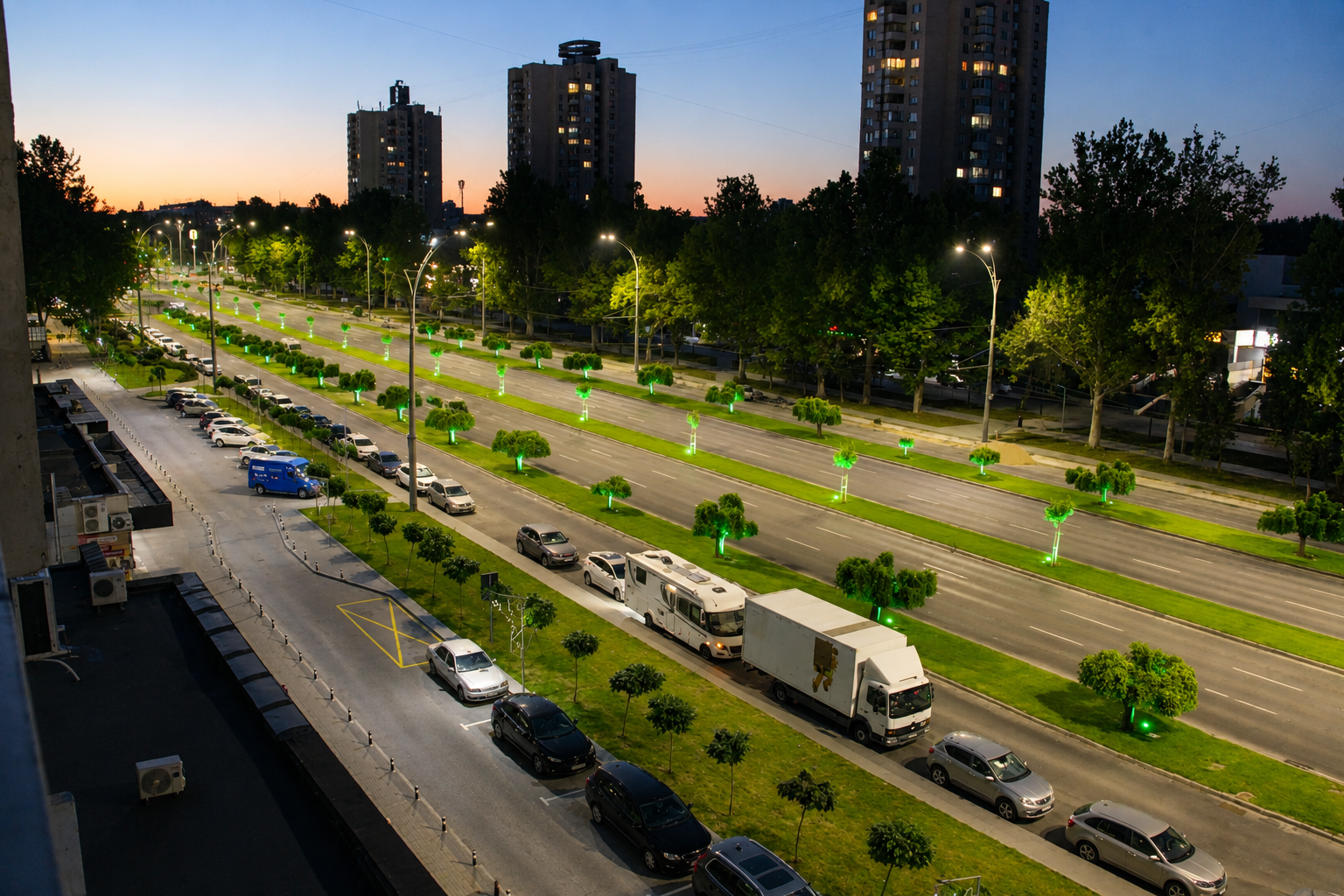
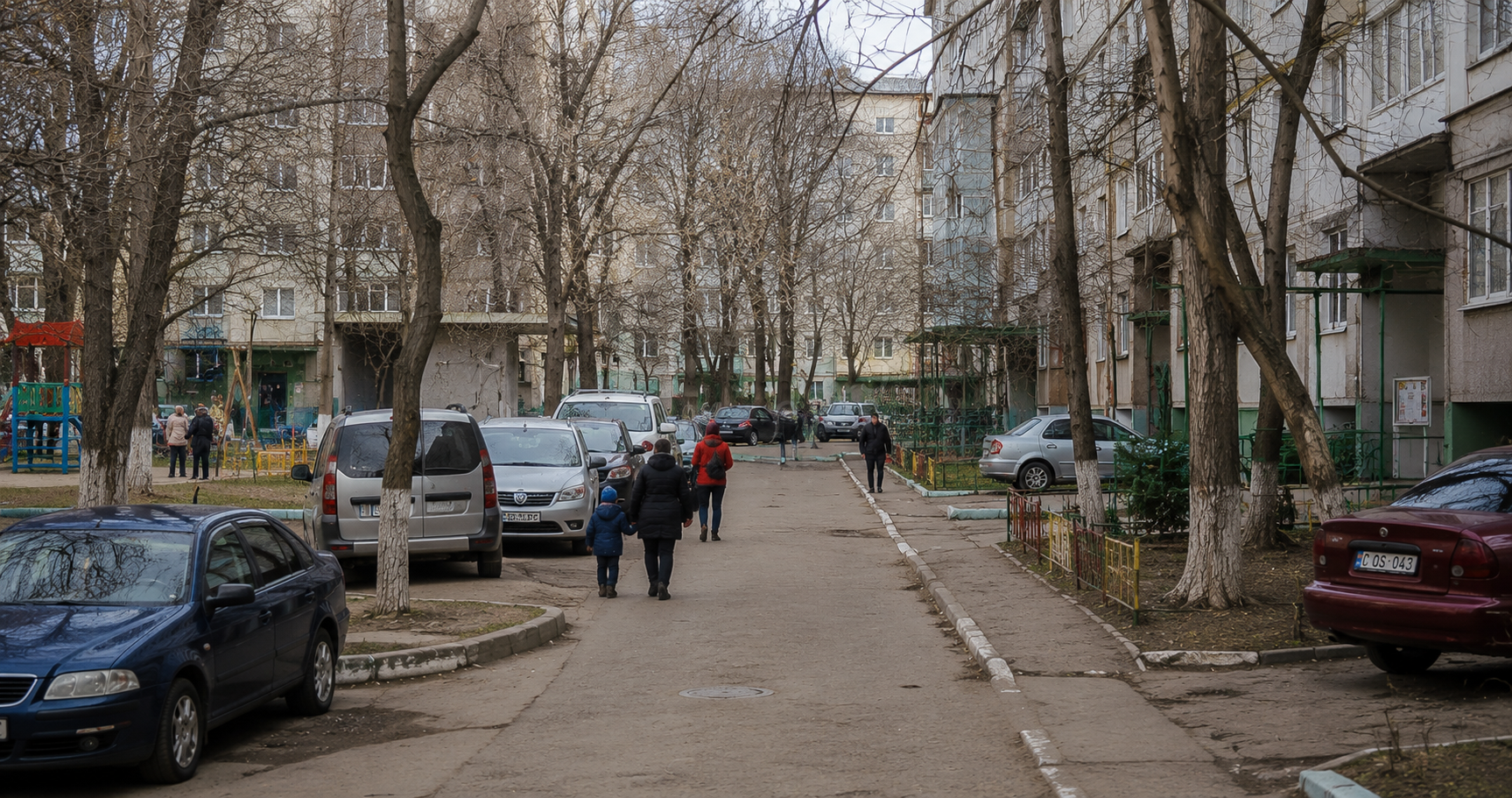
The roads feel wider in some places, then suddenly narrower again beneath older trees and apartment blocks standing further apart from each other than in many other parts of the city.
Around roads such as Calea Ieșilor, Strada Alba Iulia, Strada Ion Creangă, Strada Onisifor Ghibu and Șoseaua Balcani, the district slowly rises and falls across higher ground west of the older center of Chișinău
Courtyards, side streets, green areas, garages, apartment blocks, lower residential houses, and older trees spreads between the larger roads.
But the smaller streets are what gives Buiucani its soul.
Along streets such as Strada Vasile Lupu, Strada Paris, Strada Nicolae Costin, Strada Liviu Deleanu and Strada Ion Luca Caragiale, the district feels quieter and more residential beneath the hills and trees.
Some roads curve gently upward between apartment blocks and older houses while others disappear beneath large chestnut trees where sidewalks lean slightly from roots pushing through the pavement over decades.
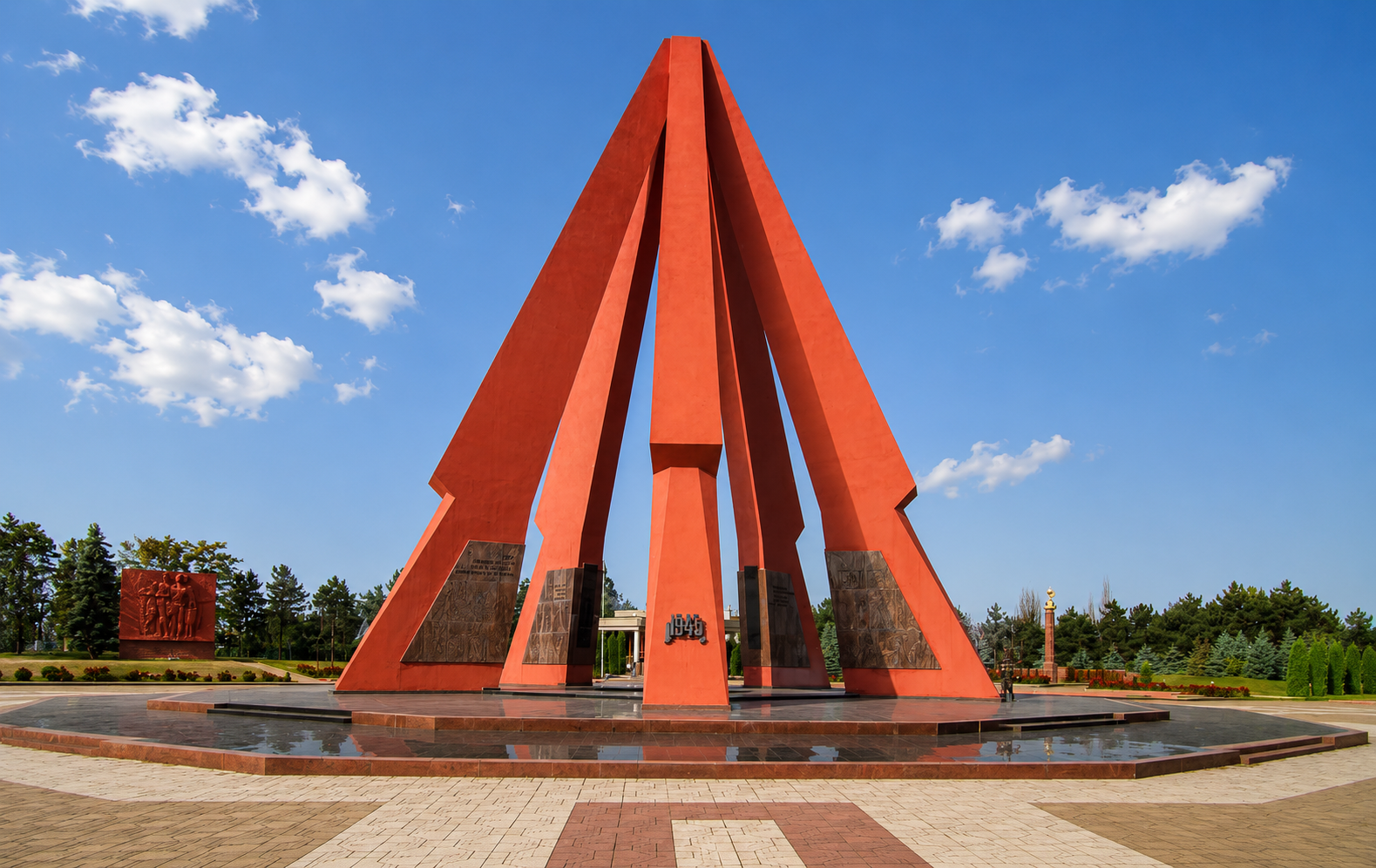
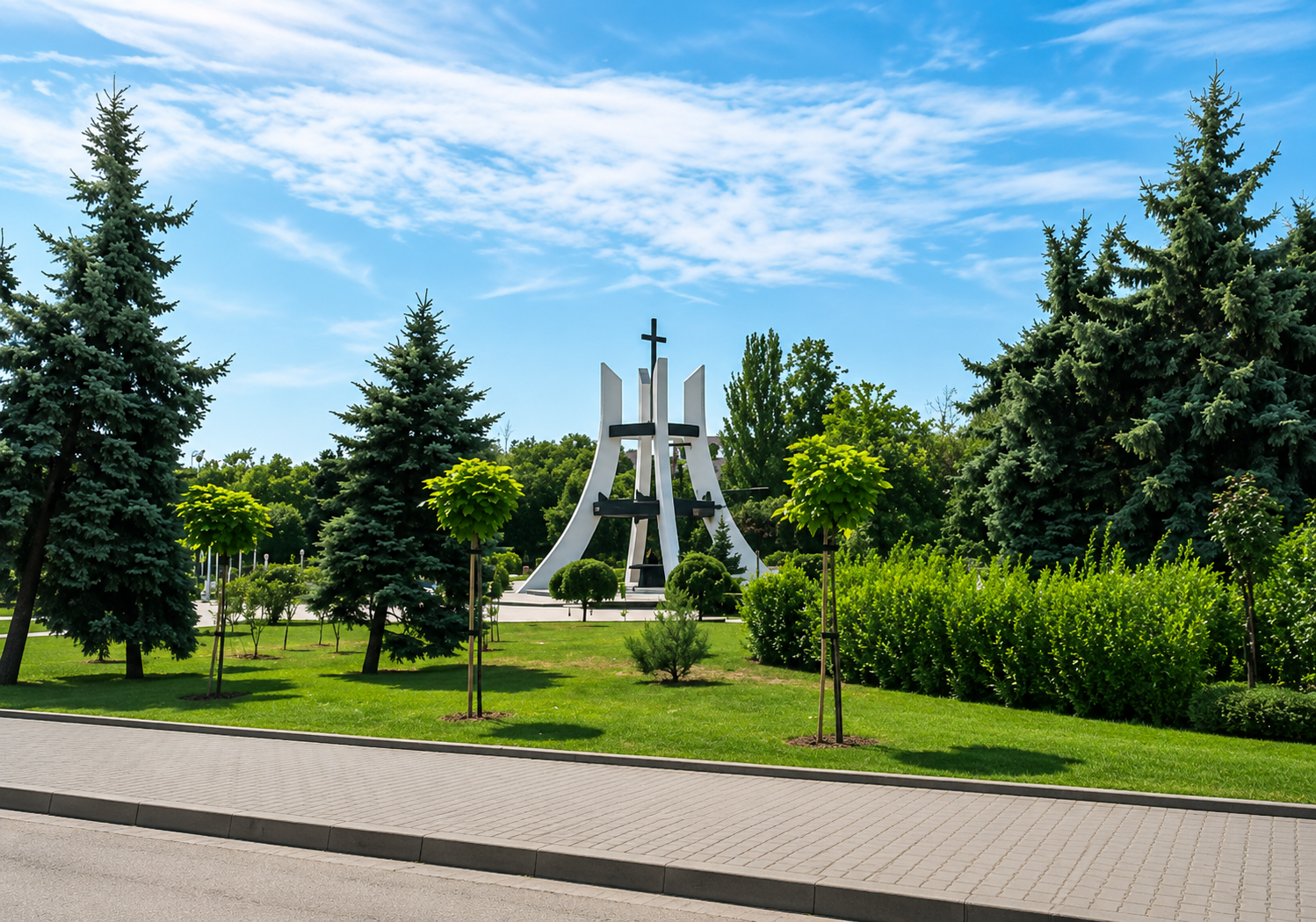
Near Dendrariu Park and areas leading toward Valea Morilor Park, older stone stairways, Soviet-era monuments, memorial plaques.
Institutional buildings still carry traces of different political periods the city lived through during the twentieth century.
And Buiucani also carries some of the most important green areas in Chișinău.
Inside Dendrariu Park, the atmosphere changes completely beneath enormous
trees, winding paths, ponds, and botanical collections gathered there over decades.
The city noise softens beneath the leaves while runners move through the pathways during evenings.
Students sit together beneath the trees speaking quietly, and photographers stop along the water trying to catch reflections moving through the branches above the ponds.
Unlike the center, where the city constantly pulls people forward, Buiucani often feels as if life pauses slightly longer in certain places.
Not slow. Just in a more calm way.
In the mornings, people move quickly to the Trolleybuses and buses while cars continues to drive steadily toward the center through the larger roads.
Somebody rushes across the street carrying coffee while another person closes a kiosk shutter halfway before opening it again properly for the day.
Delivery vans stop beside apartment blocks while bakery smells drift outward into the colder morning air and people carrying bread or flowers disappear quickly through entrances before work.
Not far away, Valea Morilor Park opens between the hills almost like another world inside the city.
Long stairways descend toward the lake while people walk, run, cycle, fish, sit beside the water, or remain quietly watching reflections move across the surface beneath the evening light.
During warmer evenings especially, the entire area feels alive with
footsteps, conversations, bicycle wheels, distant music, people exercising beside
the lake.
Couples leaning quietly against the railings above the water, and soft wind moving upward from the lake itself.
Because Buiucani rises and falls across west of the city center, the evening light behaves differently there too.
And then only an hour later, the atmosphere changes again.
Children pass through courtyards with backpacks bouncing against their shoulders while teenagers gather near smaller shops buying energy drinks or pastries before school.
Somewhere between the apartment blocks, somebody practices piano behind an open window while construction sounds echo briefly from another courtyard before disappearing again beneath the trees.
Certain entrances still carry faded Soviet-era mosaics beside stairways with geometric patterns, colored stone pieces, stars, or decorative concrete details partly worn away by rain, dust, snow, and winter frost.
Older stairways still hold cracked marble steps, worn railings polished smooth by generations of hands, exposed pipes, peeling paint, textured glass windows, weak yellow lamps, and apartment numbers hanging beside heavy metal doors.
Streets fall into shadow beneath the trees while apartment windows higher above still glow gold from the setting sun.
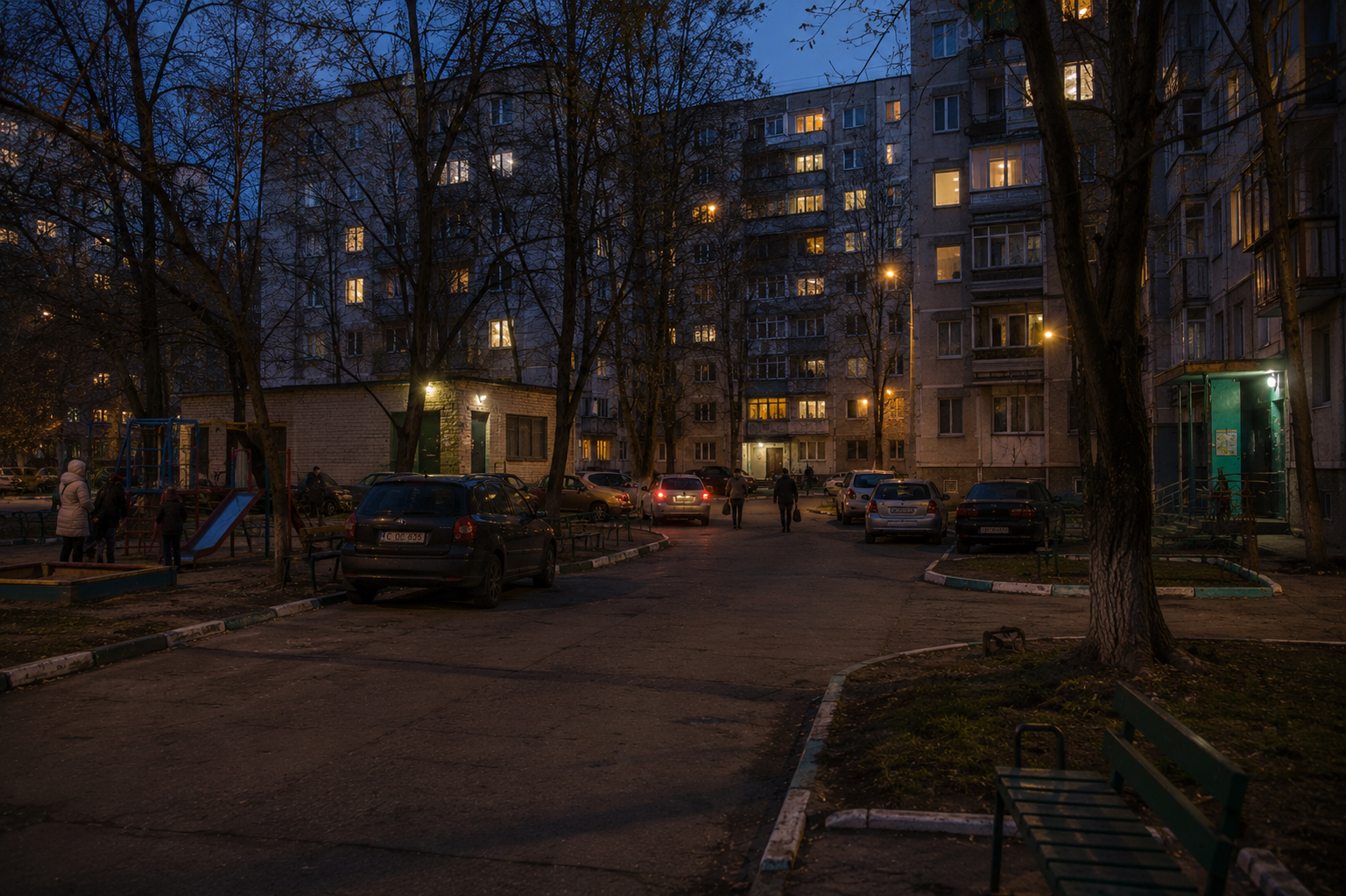
Older streetlights appear beneath the branches while warm orange light spreads unevenly across sidewalks, parked cars, stairways, cracked walls, garages, and entrances.
Later at night, Buiucani becomes quieter than many other parts of Chișinău.
At larger roads buses and cars are driving home through the district, but deeper between the buildings the atmosphere softens beneath the trees while open windows glow above the courtyards and voices drift quietly from balconies into the
warm night air.
The air are slightly different.
Especially during evenings.
In summer, warm air rises from the roads after hot days, but beneath the large chestnut, poplar, and linden trees the air becomes cooler and heavier with leaves, bark, earth, dust, and moisture lingering beneath the shade.
After rain, the smell changes completely while wet asphalt, soaked soil, trees, and fresh grass drift together through the courtyards and sidewalks.
At the larger roads cars still driving home through the sector while buses continues to pass the apartment blocks, but between the buildings the light becomes softer and quieter.
Streetlights throw warm orange light across sidewalks, entrances, benches, garages and trees. Parked cars shadows from the branches which moves slowly across the facades above the courtyards.
The sidewalks themselves feel shaped by decades of ordinary life.
Certain sections remain smooth from newer repairs while others already crack again beneath tree roots slowly pushing through the pavement year after year.
Some paths tilt slightly downhill toward lower courtyards while narrow shortcuts cut diagonally between apartment blocks exactly where people have walked for generations instead of following the original planned routes.
Somebody jogs slowly uphill beside the sidewalks near the parks before disappearing around the next corner.
A food courier crosses the district on a scooter carrying late evening orders through the quieter streets.
A television flickers softly behind curtains somewhere above the
courtyards.
Somewhere higher along the hills of Buiucani, another balcony window suddenly opens while the warm evening air drifting slowly through the district below.
The buildings in Buiucani feel different than many of the other districts.
There are still long apartment blocks from the Soviet decades, but they are broken apart more often by older houses, smaller buildings, gardens, trees, slopes, and quieter residential corners that survived the expansion of the city.
And the longer you are there, the more details begin appearing across the facades.
Certain apartment entrances still carry decorative mosaics or geometric concrete patterns while older stairways hold worn marble steps, textured glass, faded tiles, old iron
railings, cracked paint, and heavy entrance doors shaped by decades of weather and use.
And some of the older buildings feel almost forgotten by time.
Small balconies with faded green wood.
Old plants climbing upward beside cracked walls. Stone stairways slowly worn smooth beneath countless footsteps. Cellar windows sitting low beneath the sidewalks.
Tiny gardens made by residents beside entrances using old bricks, painted tires, flowers, broken stones, and improvised fences.
And because Buiucani also carries older residential areas mixed together with Soviet apartment districts, parts of the sector feels older than people expect.
Near some quieter streets, older one-floor and two-floor houses still remain behind fences beneath fruit trees and gardens while narrow roads curve gently uphill between them.
During spring and summer, parts of those streets smell of flowers, warm grass, soil, and fruit trees hanging above older gates and walls.
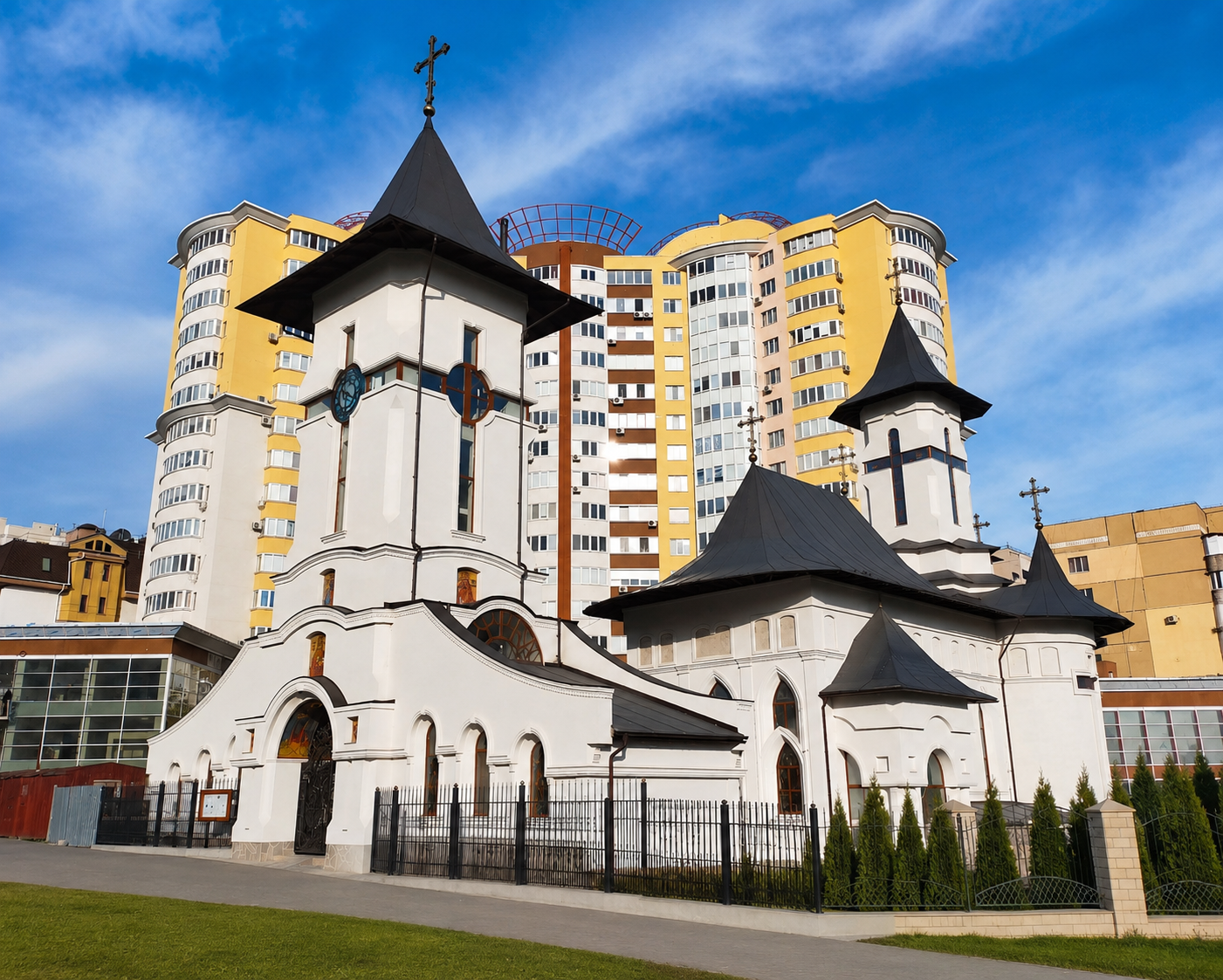
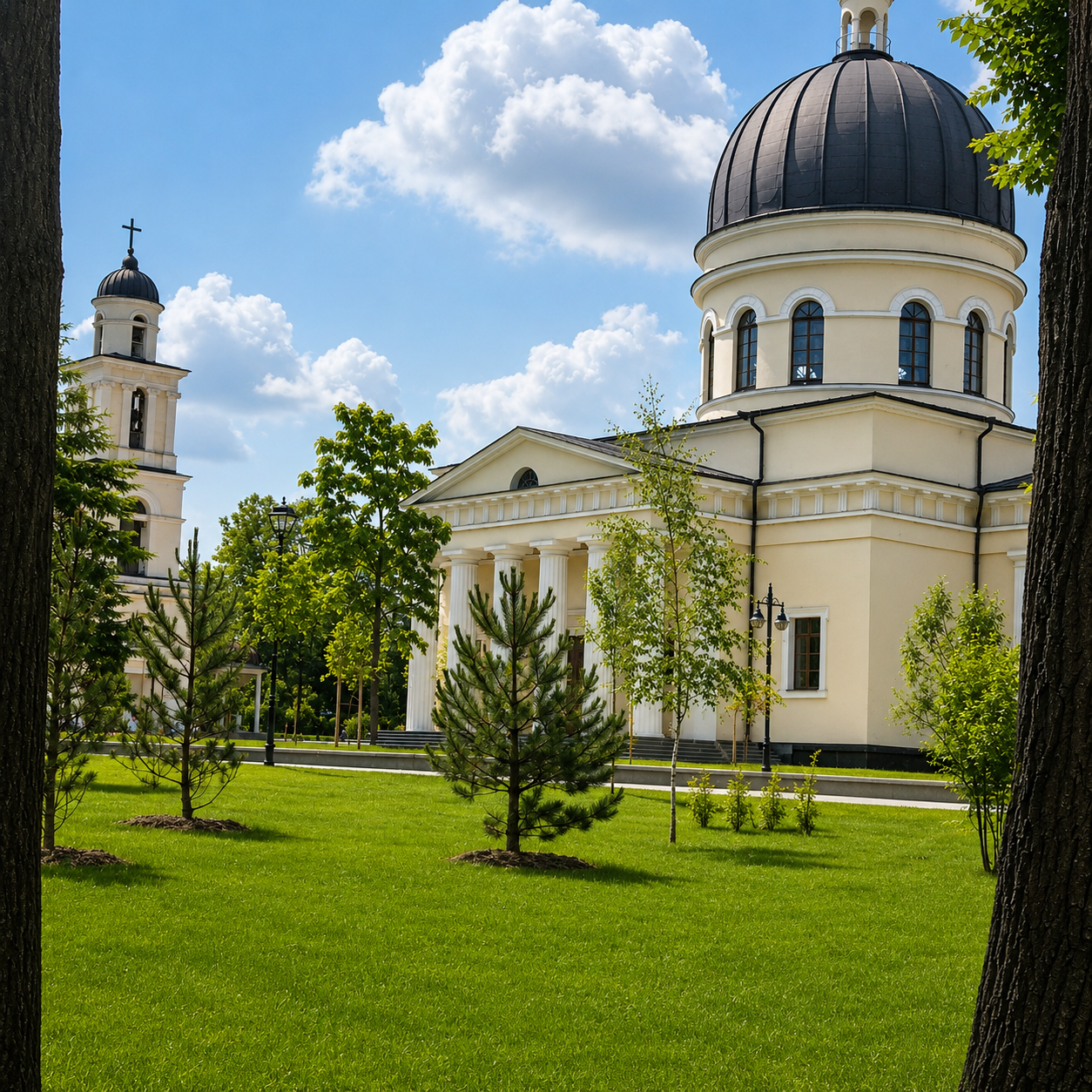
And churches quietly appear between the apartment blocks and trees in ways that soften the district even more.
Near Church of Saint Nicholas and smaller Orthodox churches hidden inside residential streets, golden domes rise above the trees while bells drift softly across the district during mornings, weekends, and religious holidays.
Women carrying scarves and flowers walks slowly toward services while candles flicker behind open church doors carrying the smell of wax and incense out into the cooler air.
And history quietly appear visible in different parts of the district too.
3 Facts
Numele Buiucani provine din vechiul sat Buiucani, care exista aici cu mult înainte ca Chișinăul să se extindă și să transforme zona într-un sector urban al capitalei.
The name Buiucani comes from the old village of Buiucani, which existed long before Chișinău expanded and transformed the area into an urban sector of the capital.
-
În trecut, părți din Buiucani erau cunoscute pentru livezi, vii și terenuri agricole aflate pe dealurile vestice ale Chișinăului, iar unele drumuri ale sectorului urmează încă relieful
vechi al acestor coline.
In earlier centuries, parts of Buiucani were known for orchards, vineyards, and agricultural land spread across the western hills of Chișinău, and some of the district’s roads still follow the older natural shape of those hills today.
-
În secolele XVIII–XIX, drumul care trecea prin zona actualului Buiucani era una dintre căile importante spre vest, în direcția Iași și România de astăzi, motiv pentru care zona s-a dezvoltat treptat în jurul rutelor comerciale și de intrare în oraș.
During the 18th and 19th centuries, the road passing through what is now Buiucani was an important western route toward Iași and present-day Romania, which helped the area gradually develop around trade routes and entrances leading into the city.