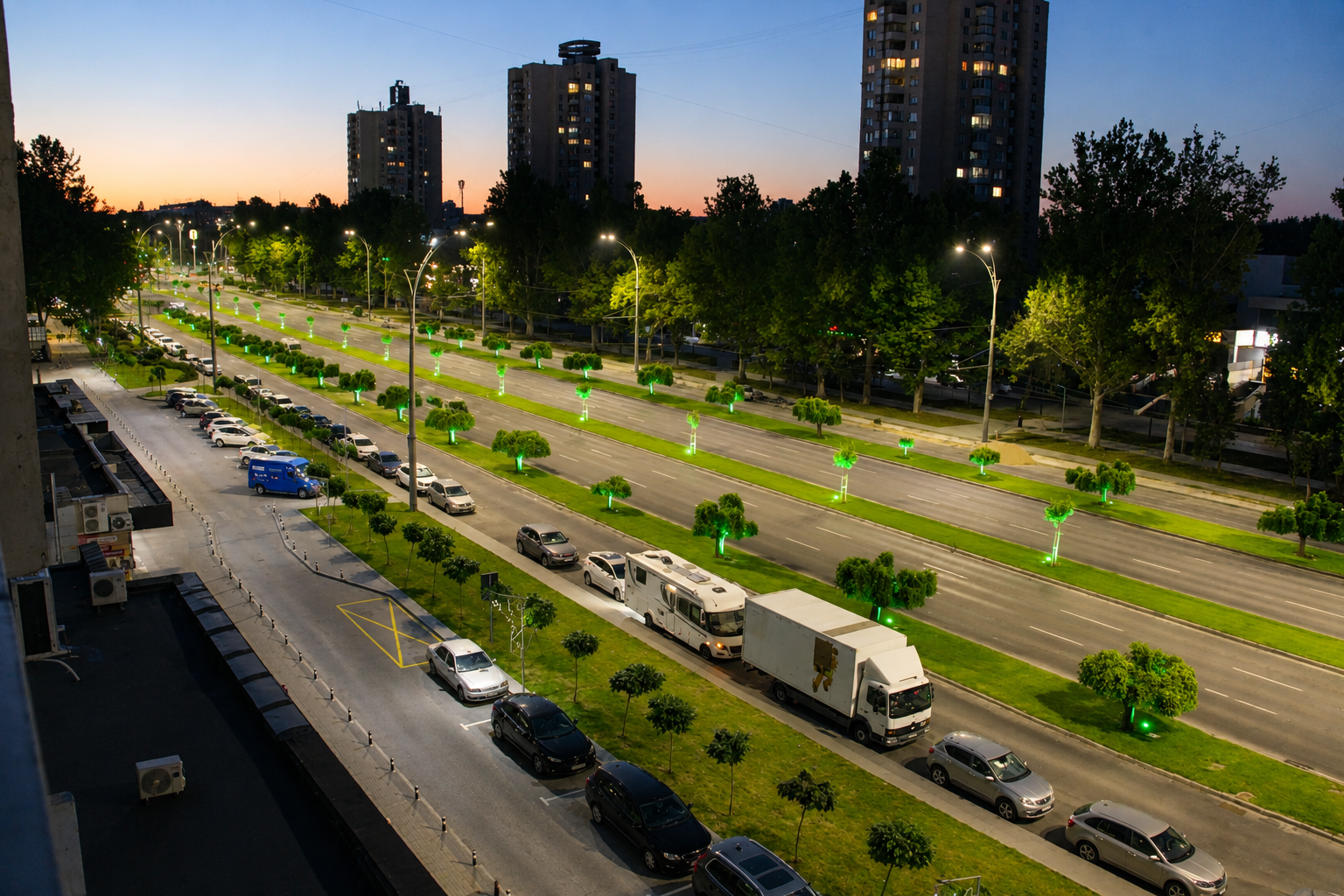
In Centru, not two streets feel the same.
A broad boulevard can suddenly lead to a small side street, a hidden courtyard, a
park, or a row of older buildings that seem untouched by the traffic nearby.
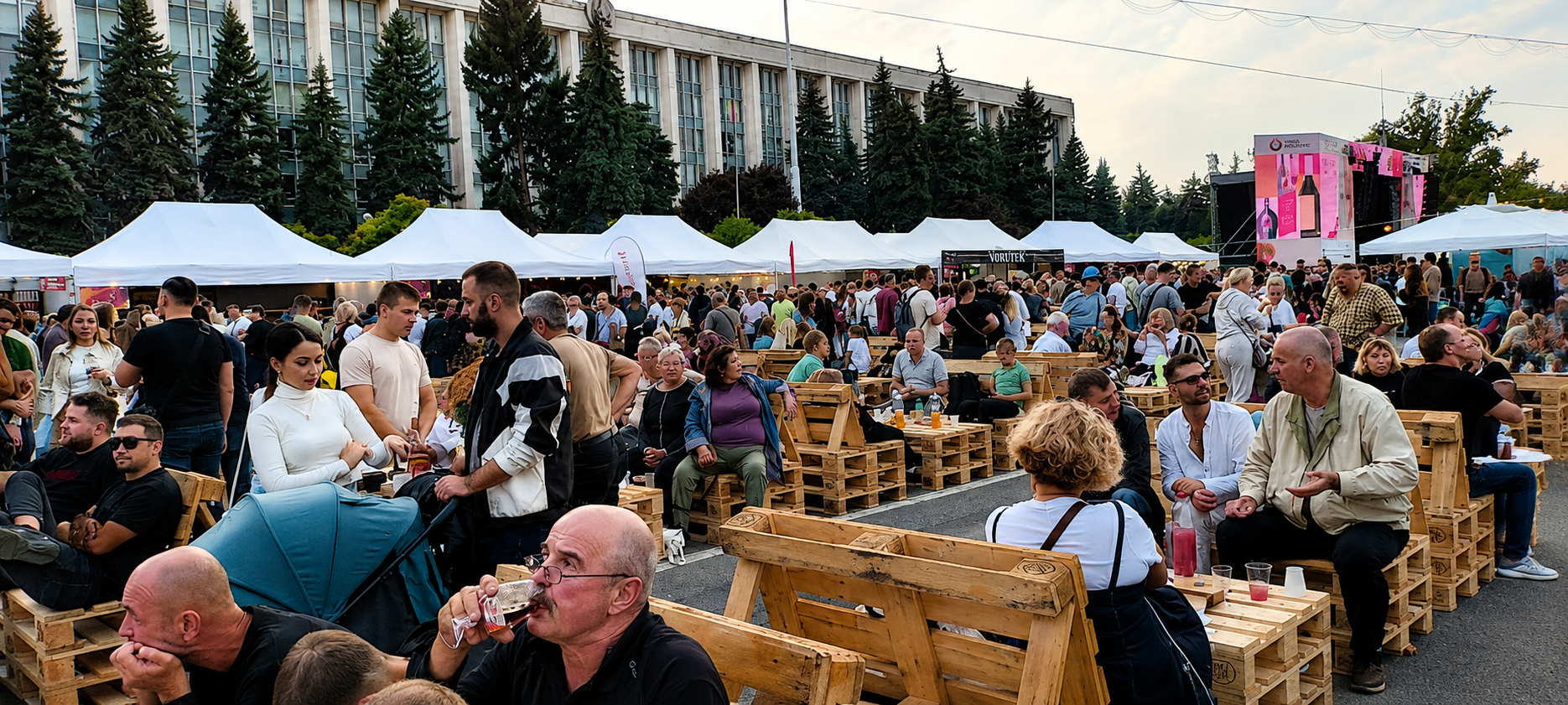
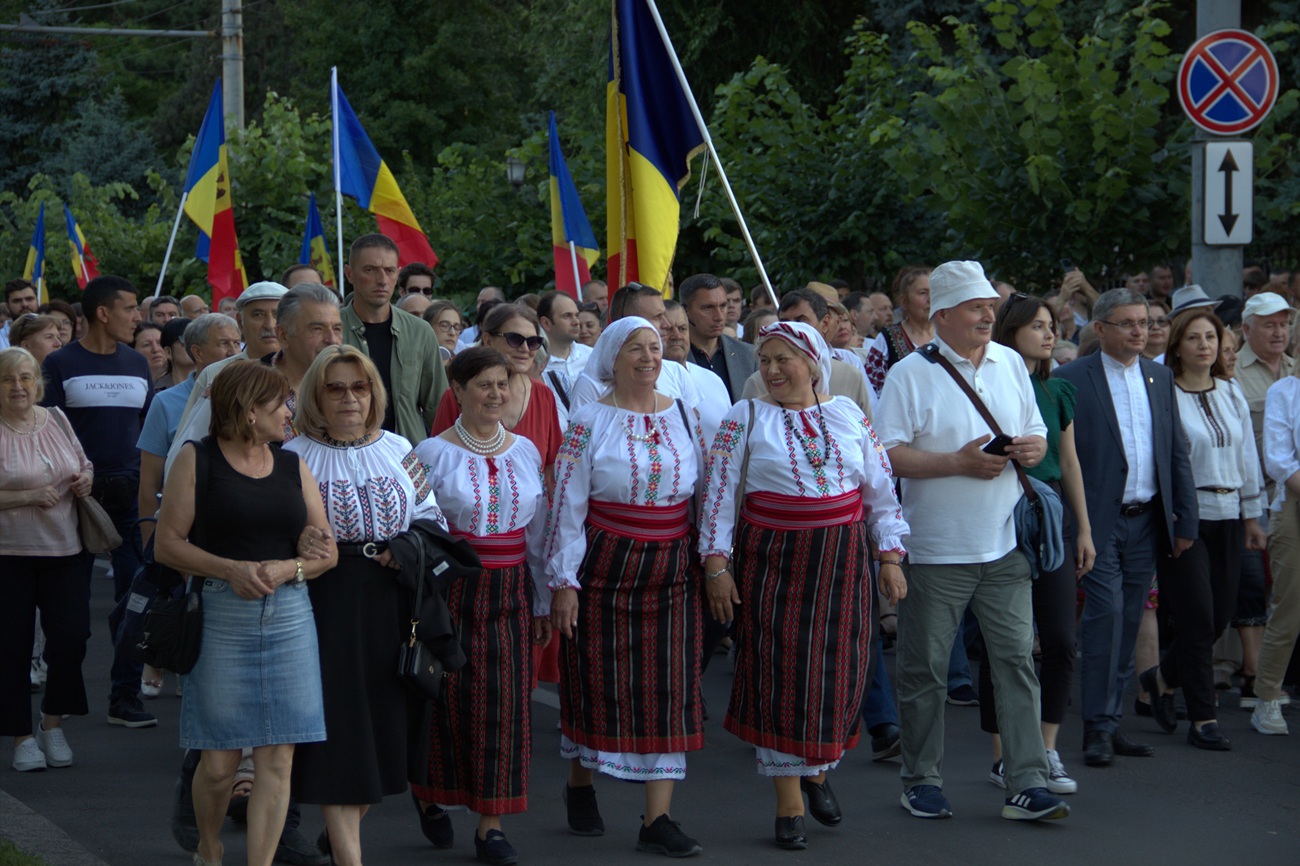
One moment you are standing beneath the trolleybus wires along
Bulevardul Ștefan cel Mare și Sfânt, surrounded by traffic, cafés, flower kiosks, with churches, terraces, bookstores, and people moving through the center of the city.
Then you turn onto a side street and the surroundings immidiatly change.
The sounds of the boulevard fade into the background, older buildings line the sidewalks, and behind them small courtyards, entrance gates, and apartment windows reveal a quieter side of the capital.
Not one building. Not one monument. Not one square.Instead, it is the experience of walking through Centru that people often remember.
Turning a corner and finding something different.
Leaving a busy boulevard behind and discovering a quiet street. Moving between the
historic, the modern, and the everyday within only a few minutes.
During mornings, especially in autumn and winter, parts of Centru can still feel half asleep before the city fully wakes up.
Street cleaners wash the sidewalks while delivery vans stand outside cafés unloading bread, pastries, flowers, vegetables, and drinks through side entrances still warm from the kitchens inside.
People hurry toward trolleybus stops carrying coffee cups and breakfast pastries while shop owners prepare for the day ahead.
The smells change from one street to the next.
Fresh coffee drifts out from cafés, warm plăcinte come from kiosks near the crossings, and for a moment the scent of perfume, wet streets, or fresh bread passes by before being replaced by something else further along the boulevard.
Certain entrances still carry faded mosaics, cracked tiles, decorative metalwork, old lamps, worn apartment numbers, and railings shaped by decades of rain, snow, summer heat, and winter cold.
Some stairways still carry the faint smell of dust, damp air, and cooked food drifting from apartments above.
These are small details, easy to overlook while passing by.
Yet they are part of what gives Centru its character and without them, many of the streets would lose some of the warmth, familiarity, and quiet charm that make them feel distinctly Chișinău.
When you stand there, you'll feel the soul, calmness and the feeling of finding a peace you rarely find elsewhere
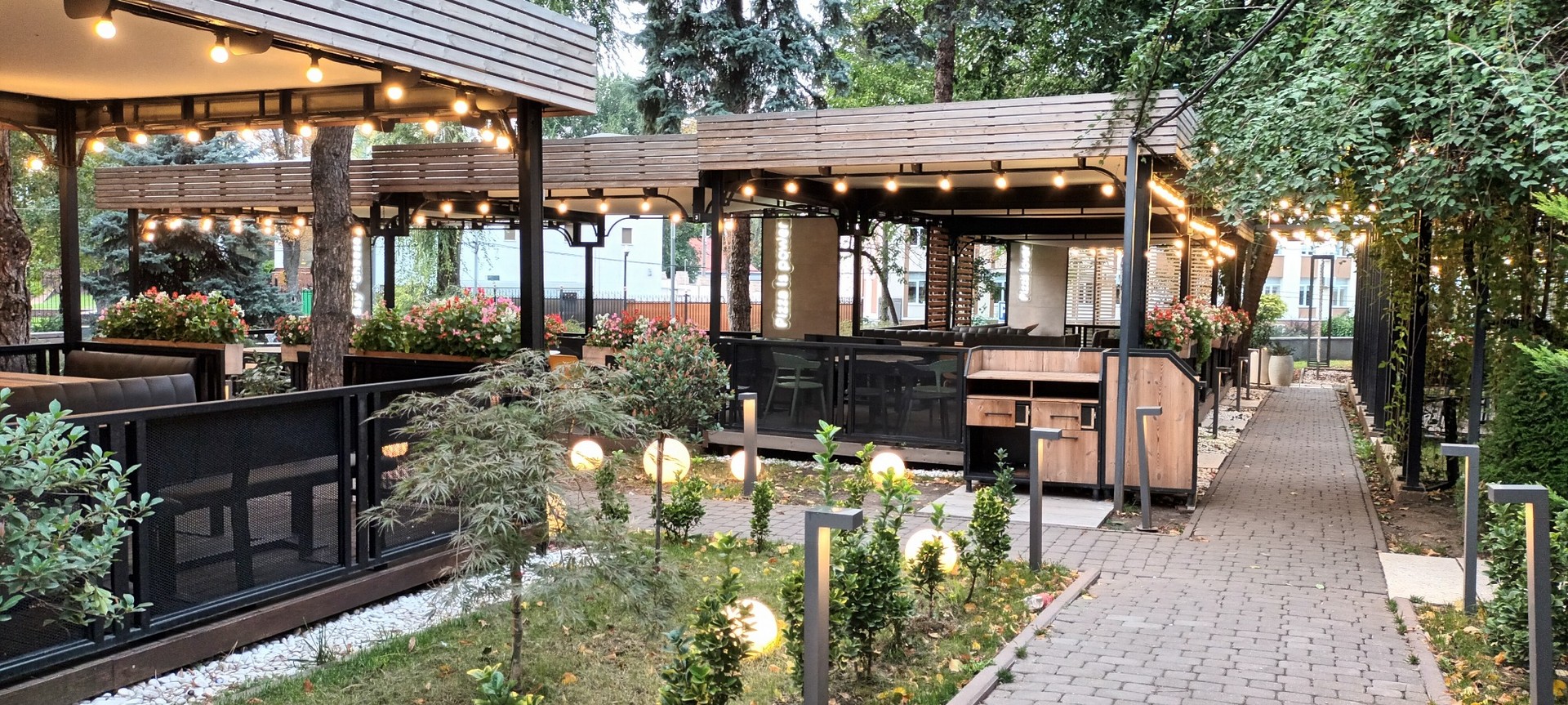
Sometimes street dogs wander quietly through the courtyards or sleep beneath benches near the entrances.
Residents pass them on their way home, often barely reacting, as both seem perfectly accustomed to sharing the same space.
For some visitors, the street dogs can seem intimidating at first.
In reality, most spend their days sleeping in the shade, wandering quietly through the courtyards, or watching the world go by.
The best approach is simply to leave them alone, because they are usually far more interested in resting than interacting with people.
If you feel uncomfortable, just choose another path and continue on your way.
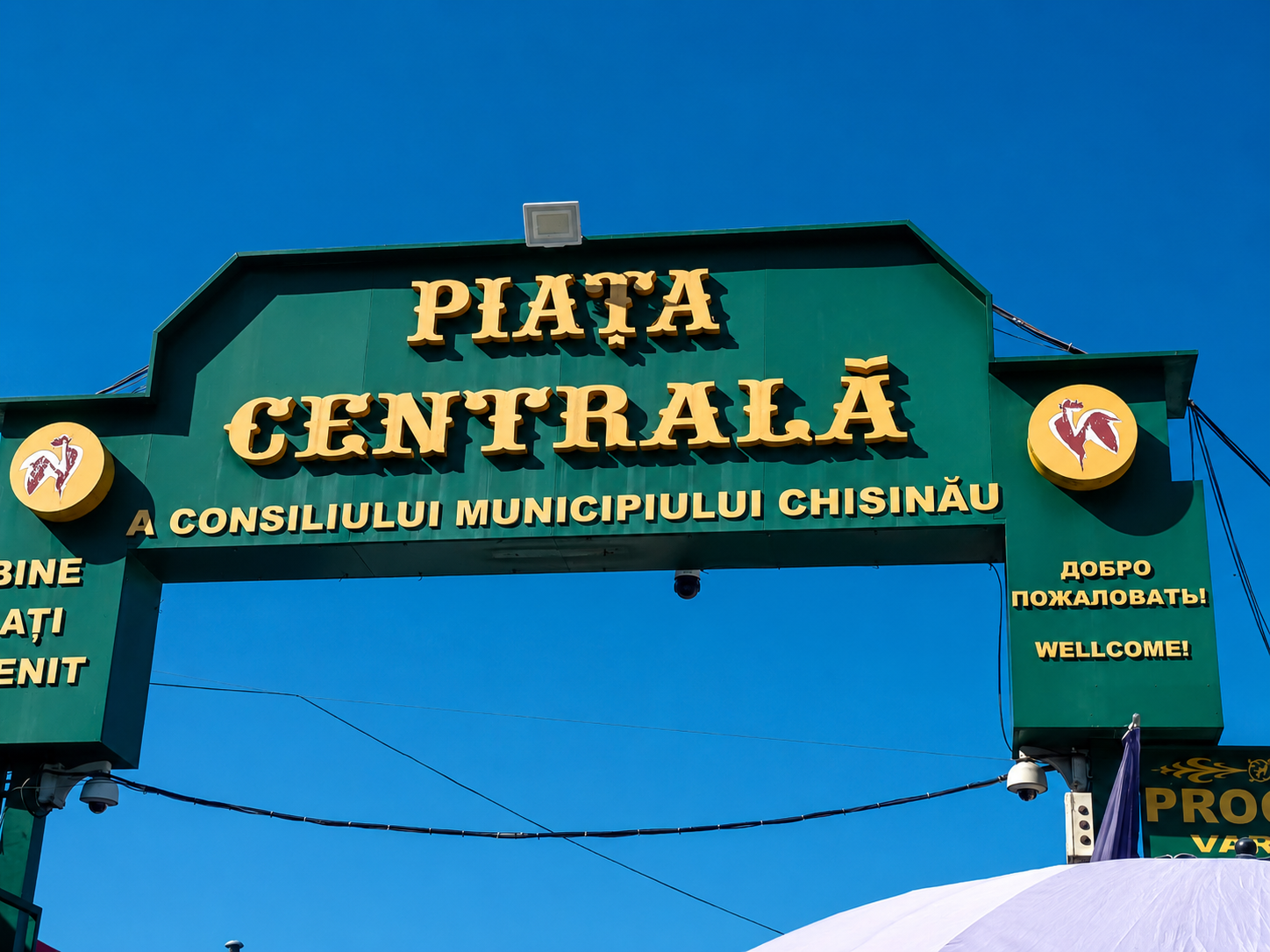
As you get closer, the more obvious it becomes, that the central market
Piața Centrală is nearby.
The closer the roads get's more narrower, everything seems closer together.
Small shops fill the buildings, signs hang above entrances in every direction, and narrow staircases climb toward tailoring workshops, cafés, beauty salons, electronics
stores, currency exchange offices, and phone repair shops tucked away on upper floors.
People walk constantly between the shops, carrying flowers, groceries, clothing, and parcels through the crowded streets.
Some pause at one of the small coffee stands, holding a paper cup while watching people rush or slowly move around them before continuing on their way to- or from.
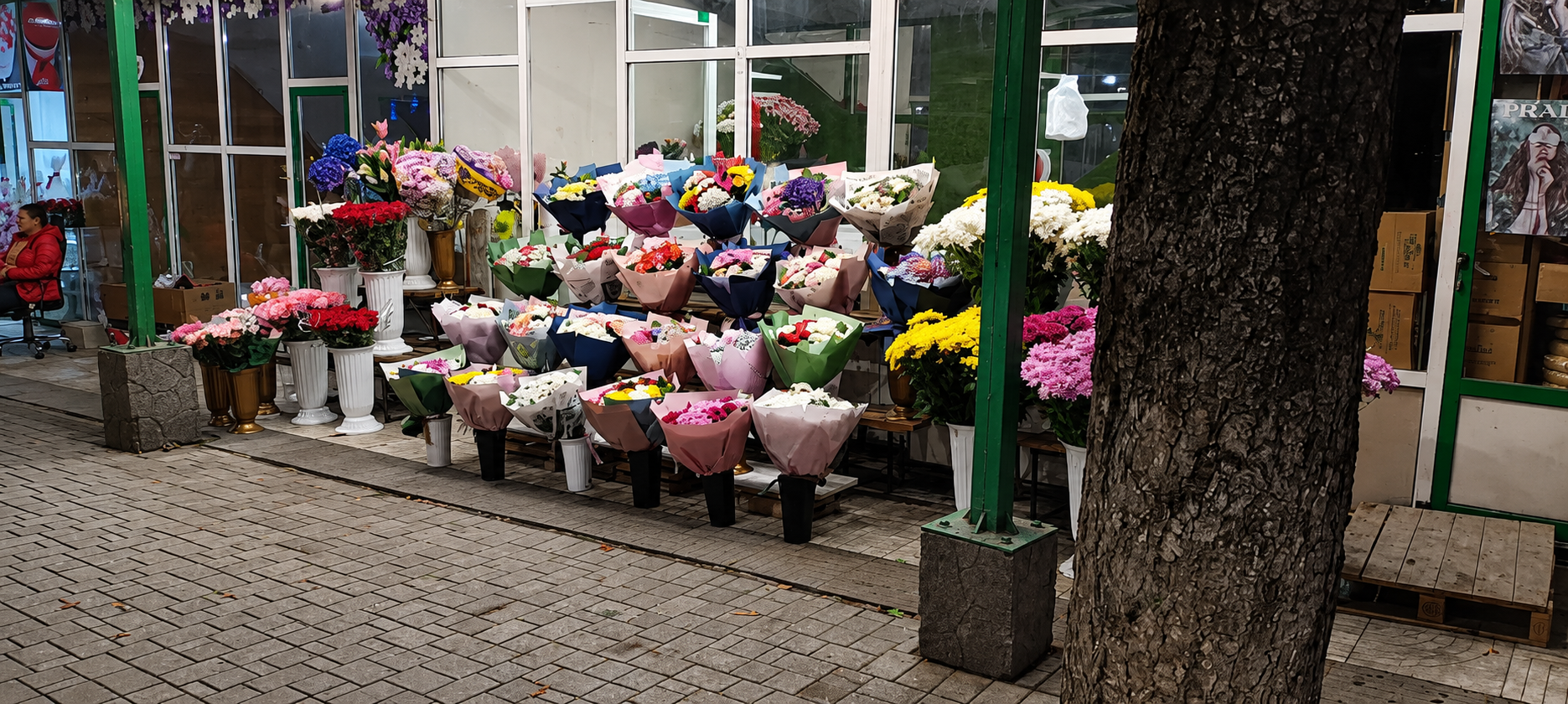
Older and younger women stand beside buckets filled with roses, chrysanthemums, and seasonal flowers wrapped in paper while trolleybuses glide beneath the wires above the streets.
Some people hurry past carrying takeaway coffee or shopping bags on their way to
work, while others have already settled onto café with a hot drink, even when the morning air still feels cold.
Around them, the city gradually becomes busier as more people arrive, shops open their doors, and the streets fill with life.
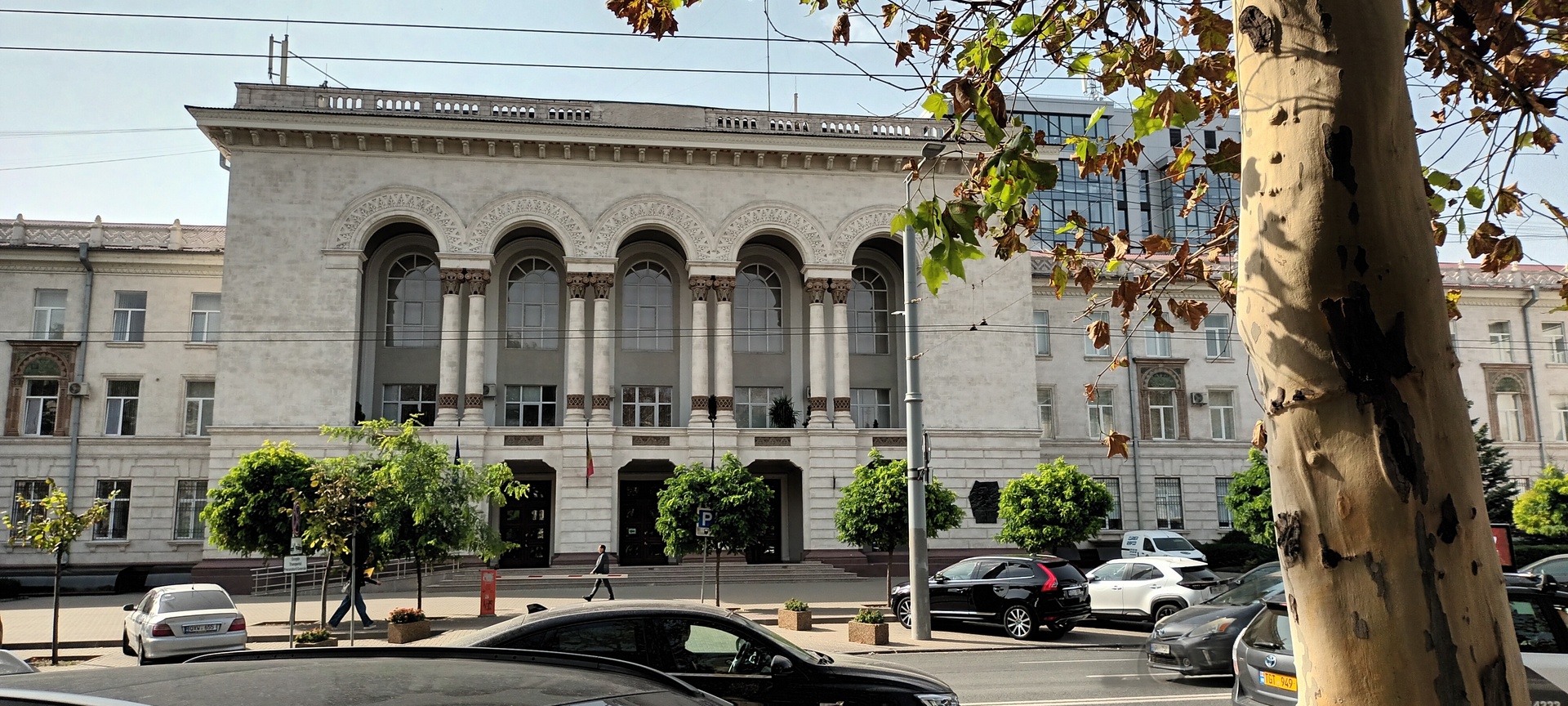
The eyes slowly stop looking only forward, because the buildings themselves begin drawing attention upward.
Between the trees and above the shop windows, old details appear along the façades.
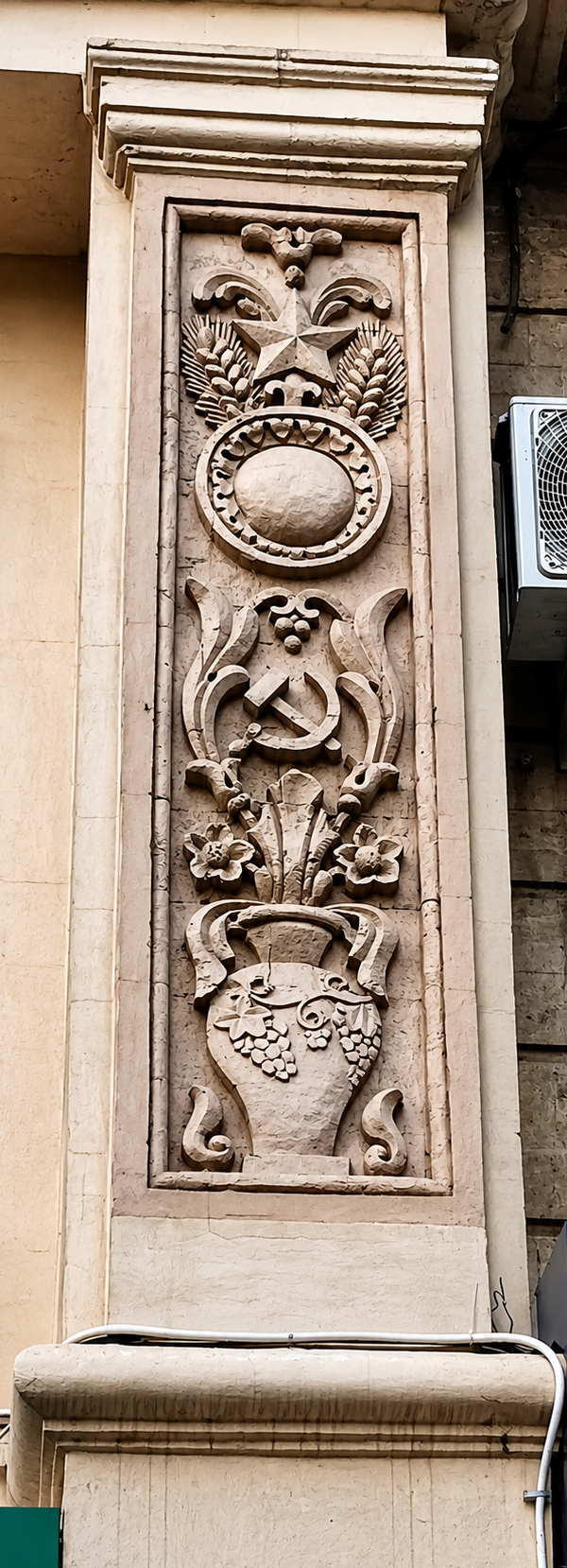
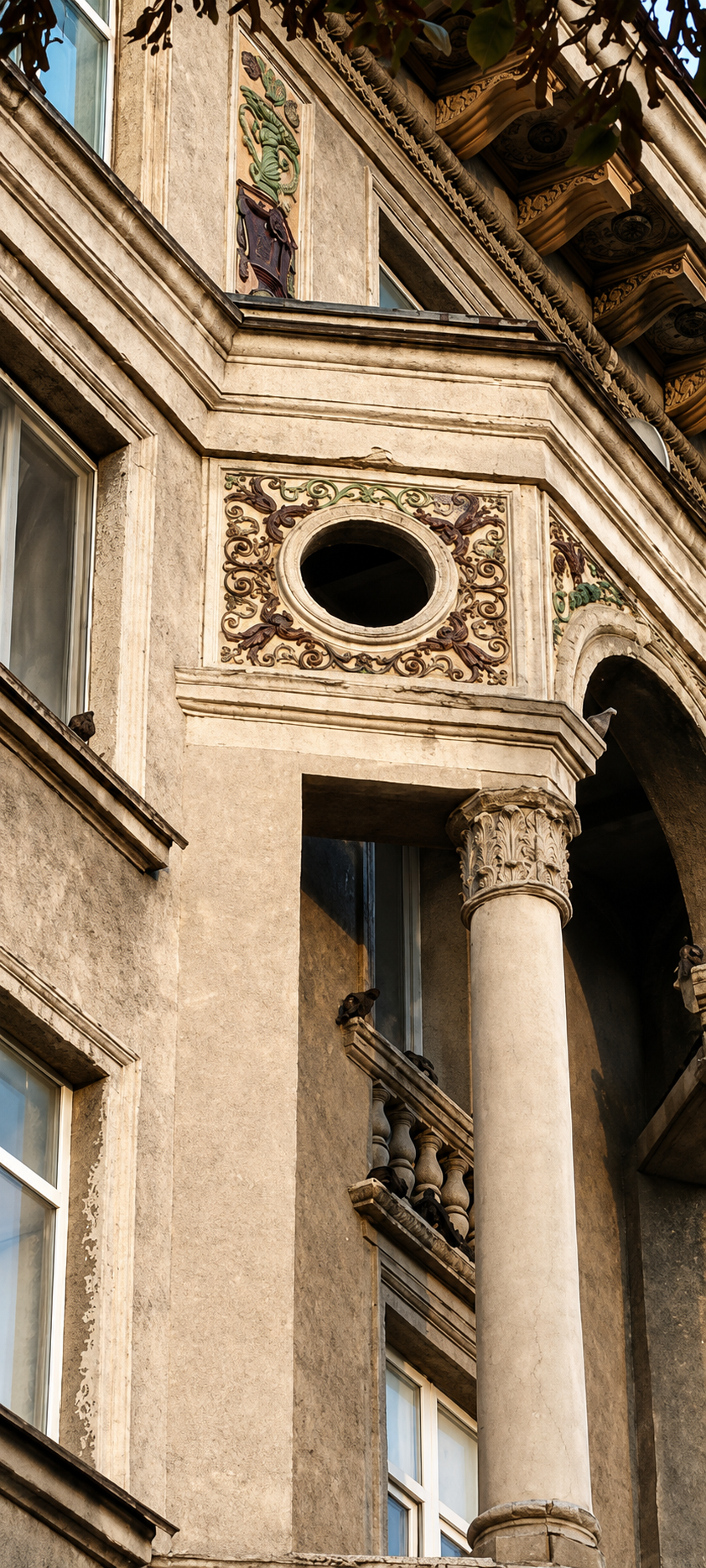
Stone flowers, grape clusters, decorative columns, faded initials, weathered carvings, and ornaments shaped by another time still remain where architects and craftsmen once placed them.
Iron balconies bent into elegant curves hang above entrances darkened by decades of rain, snow, summer heat, and passing years.
Paint has faded, stone has worn, and some details are easy to miss unless you stop and look for them.
Yet these small details are part of what gives Centru its character.
They connect today's city with the generations that came before and add a layer of beauty that cannot be recreated with modern glass and concrete.
Without them, Centru would still be the center of Chișinău, but it would not feel quite the same.
And without Centru, Chișinău would not be Chișinău.
Some corridors almost feel maze-like beneath fluorescent lights and crowded signs hanging above the staircases.
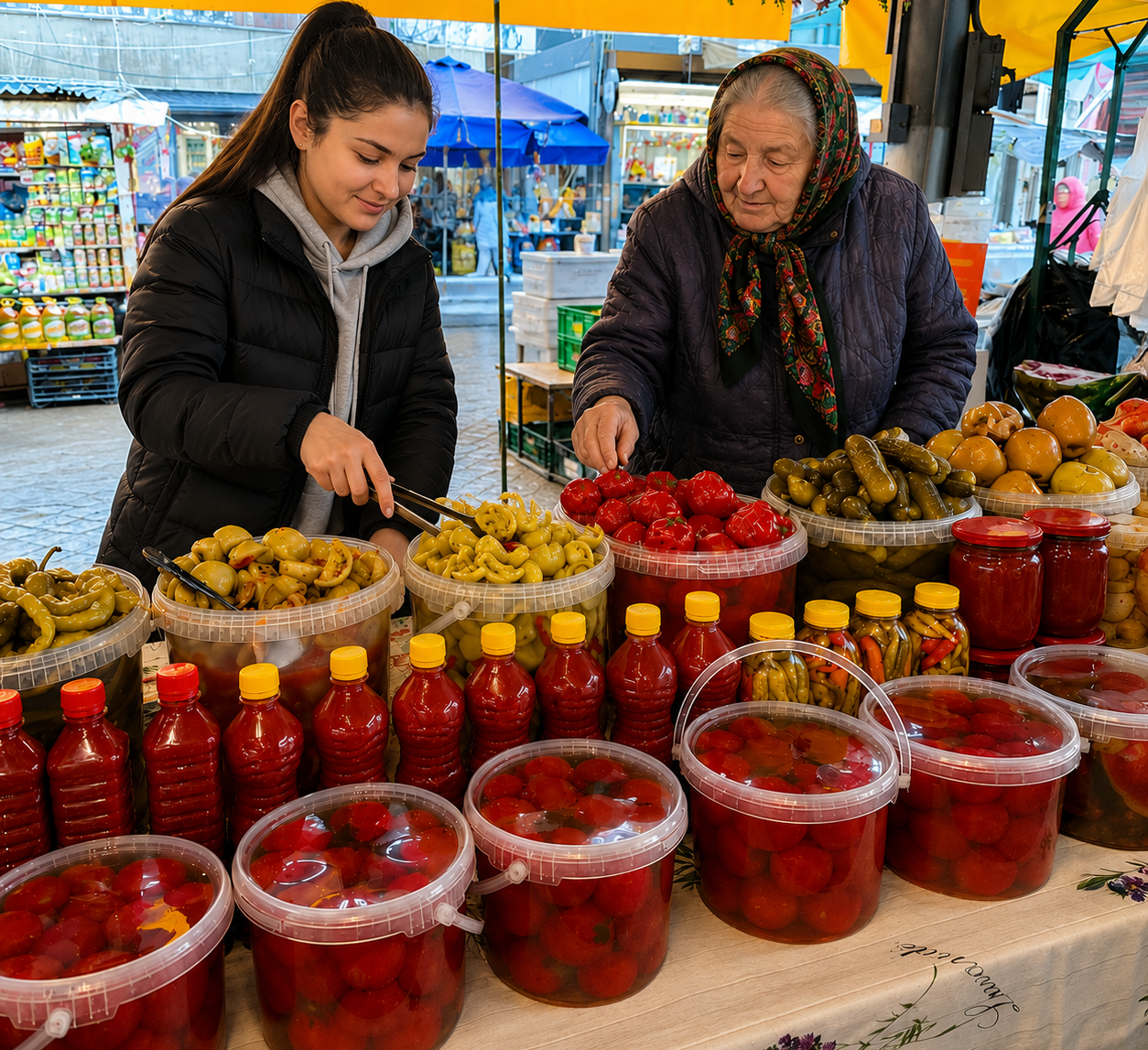
Outside, sellers stand along the streets leading toward the market with flowers, herbs together with pastries, fruit, mushrooms, garlic, sunflower seeds, berries, homemade
preserves, clothing, slippers, umbrellas, hats, and countless other everyday items.
Nearby, key makers sit behind small worktables covered with tools and key
blanks, carefully shaping new keys while customers stop to ask questions or wait for a copy to be finished.
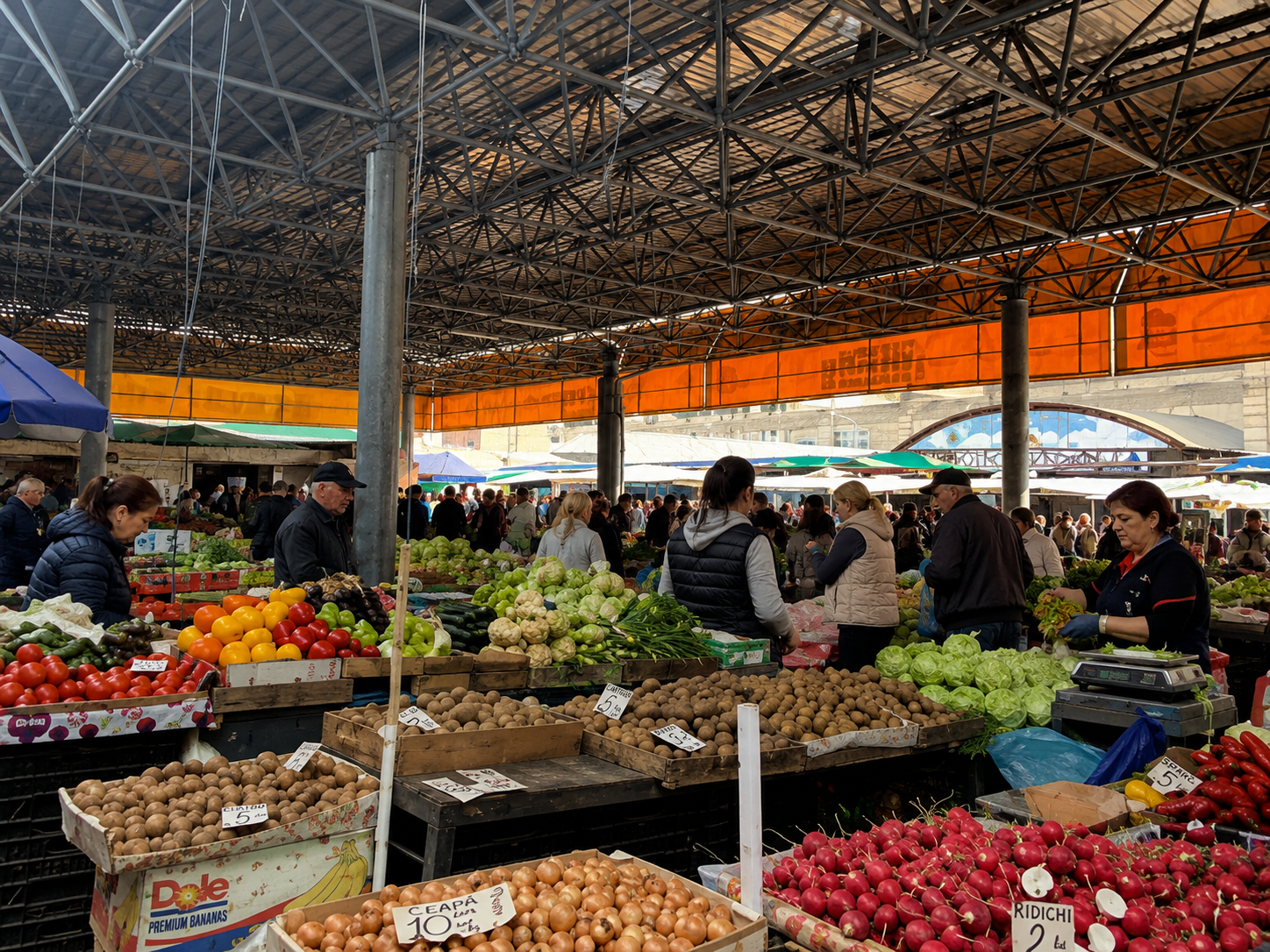
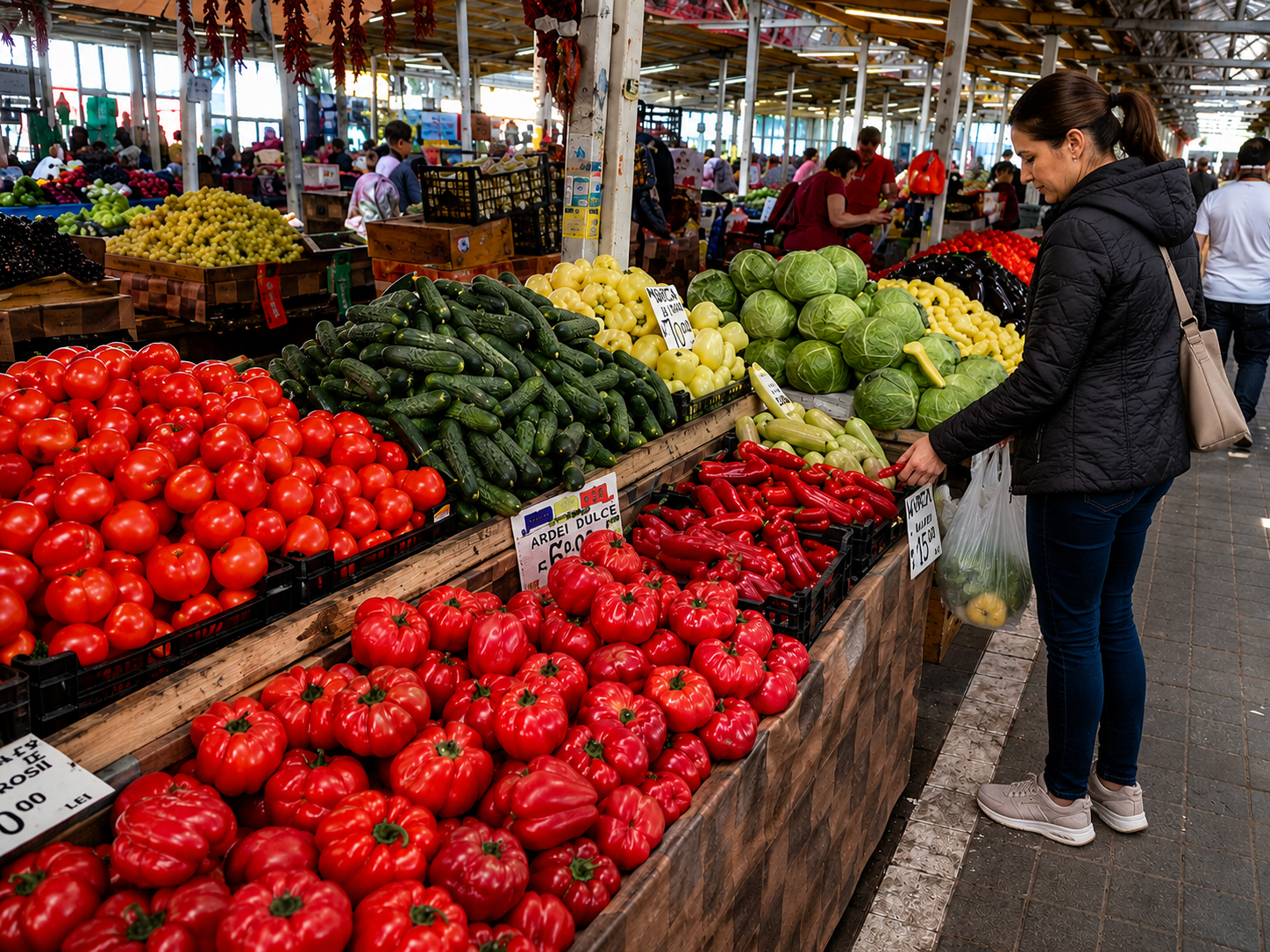
Along the way, seasonal products fill tables and stands wherever space can be found.
The smells change every few meters once again.
Fresh parsley, dill, garlic, spices, vegetables, grilled meat, warm plăcinte, flowers, fruit, rainwater, and summer dust blend together in the air around the market entrances.
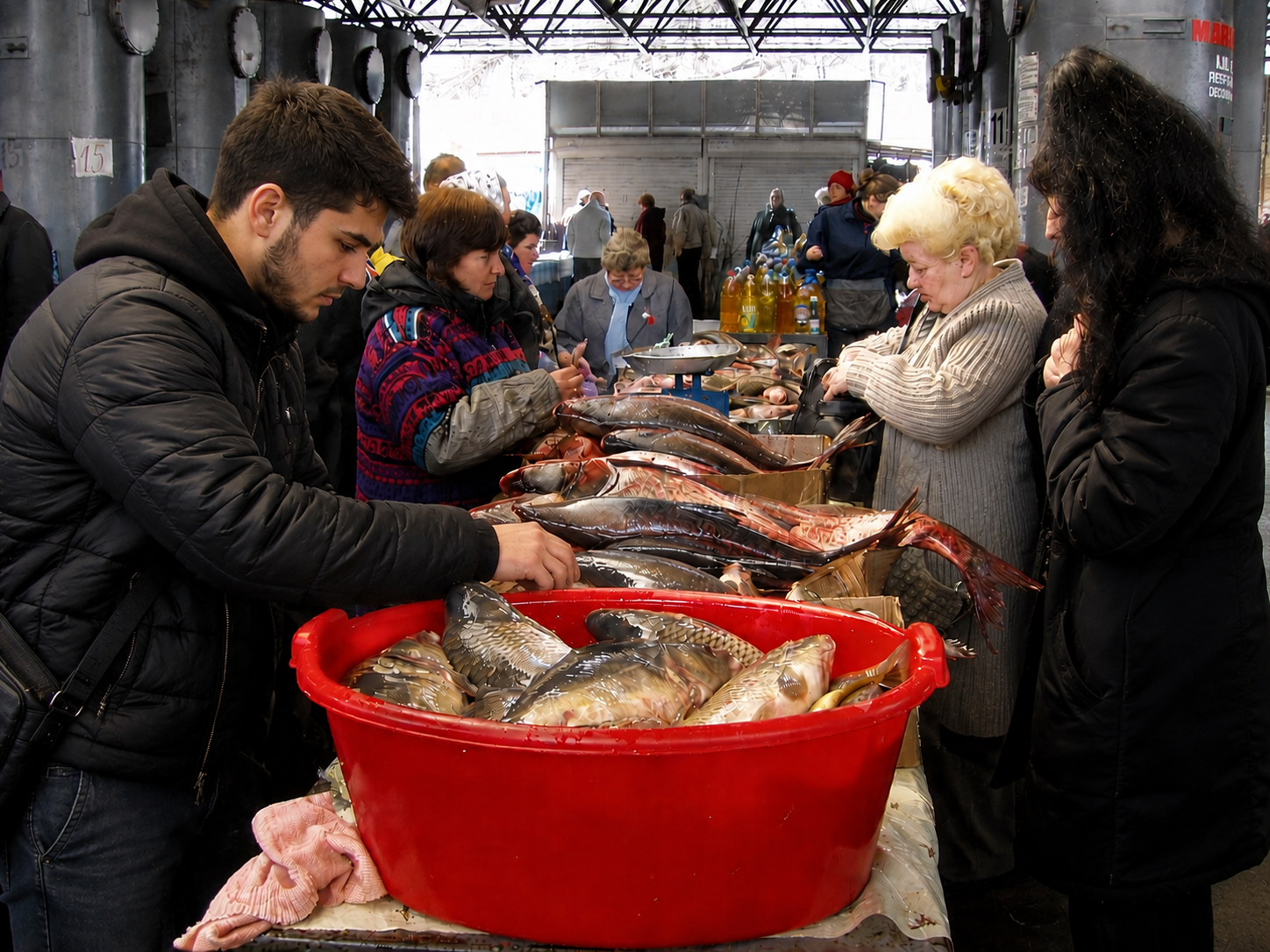
From time to time, a faint trace from the nearby fish market drifts through the streets before disappearing among the many other scents surrounding the market.
Women and men sell garlic, mushrooms, herbs, berries, walnuts, homemade
cheese and flowers, while others sell preserved vegetables or fresh produced from their own gardens, and seasonal goods.
At the same time, people carrying heavy shopping bags squeeze past one another through the crowded streets.
Around Hotel Chișinău and Cosmos Hotel, the area becomes busier again with transport, kiosks, cafés, office buildings, luggage, trolleybuses, taxis, and people arriving from or leaving for different parts of the city.
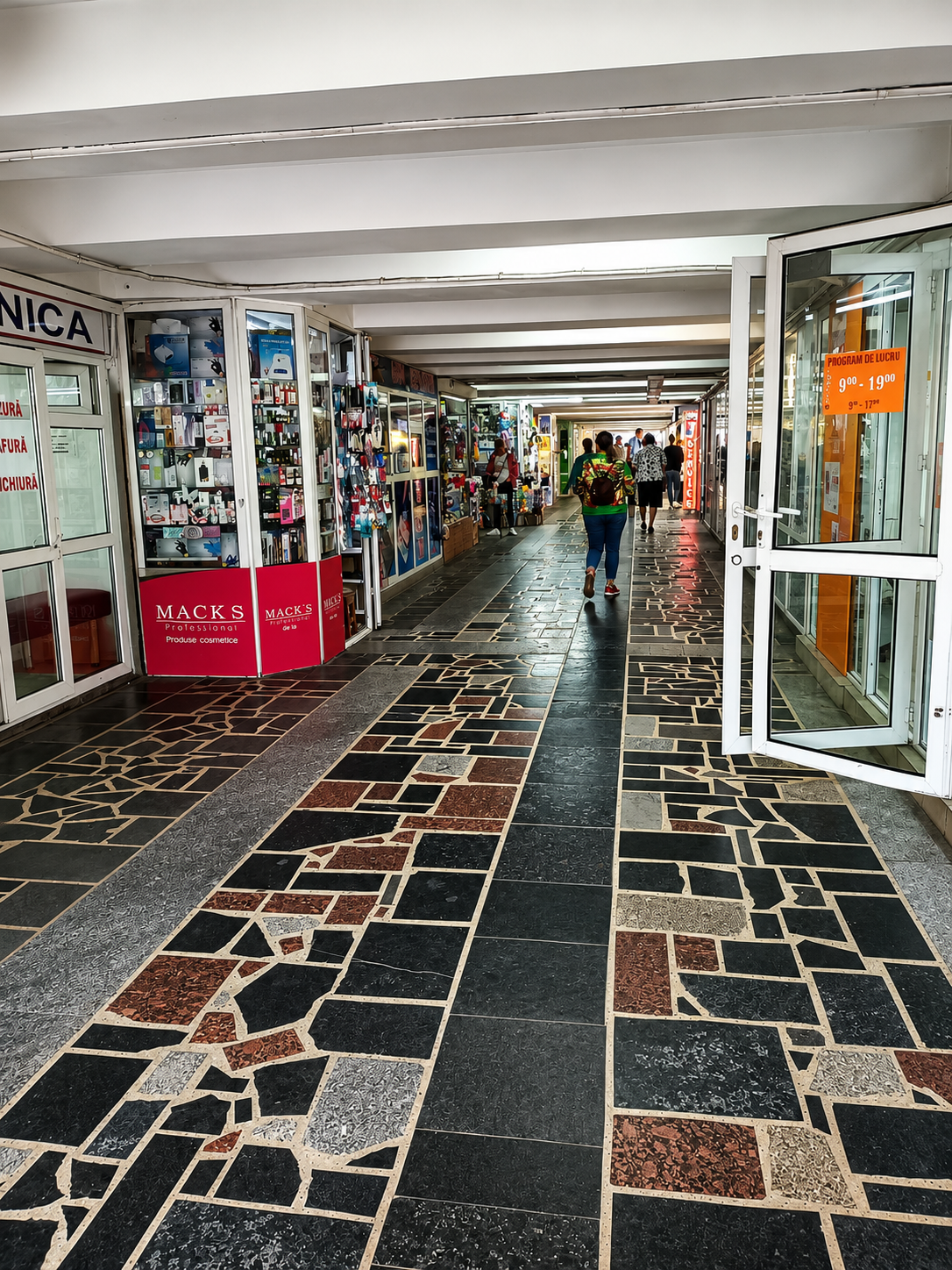
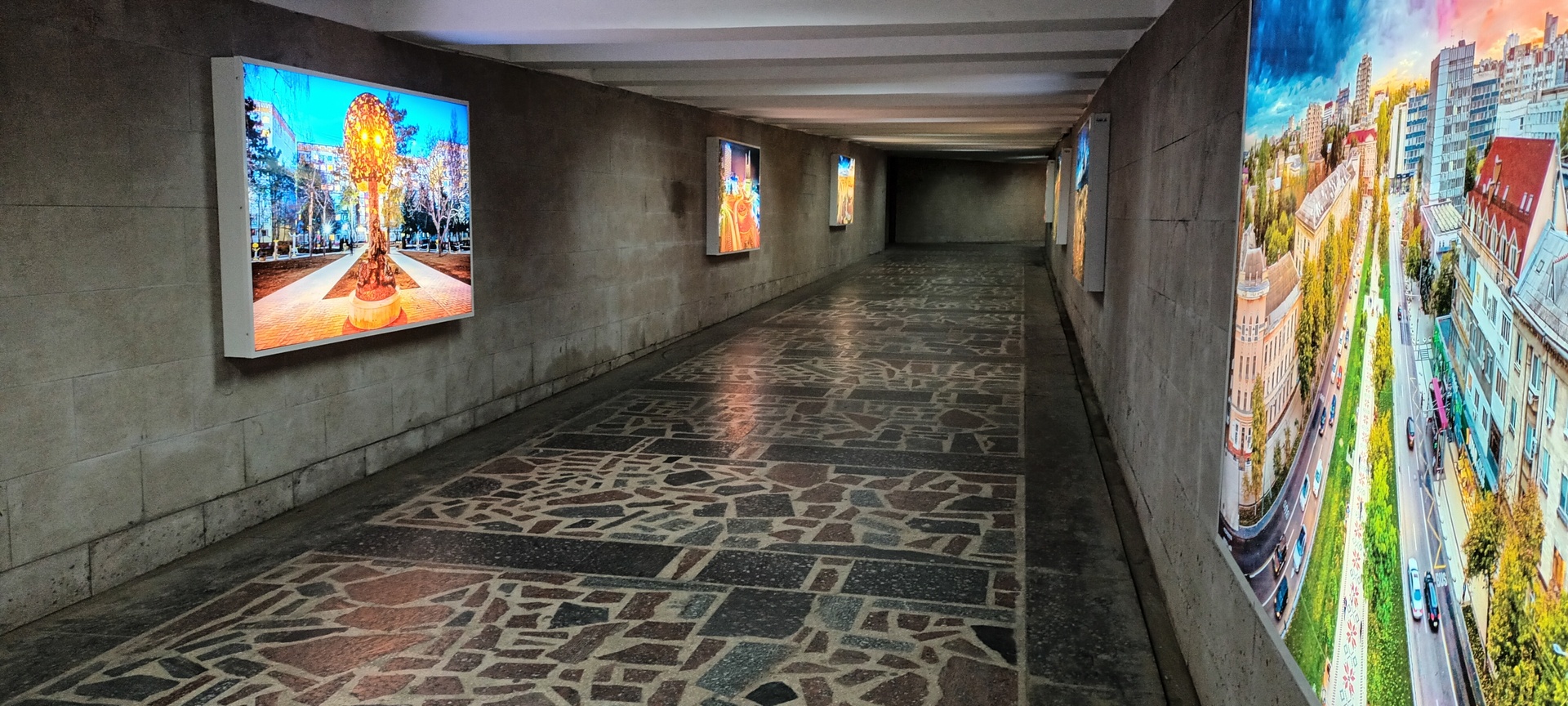
Beneath the larger intersections, underground walkways carry a steady stream of people between the streets above.
Some hurry toward trolleybus stops or the railway station, others emerge carrying shopping bags, suitcases, or briefcases before disappearing into nearby
offices, hotels, or apartment buildings.
Hotel Chișinău, completed in 1977, and Cosmos Hotel, completed in 1983, remain among the most recognizable landmarks of this part of the city, reflecting a period when much of the surrounding district was being developed and expanded.
One entrance might have marble stairs worn smooth by generations, while the next doorway carries the faint smell of dust, old wood, damp walls, cooked food, and ageing pipes rising and falling through the building from apartments above.
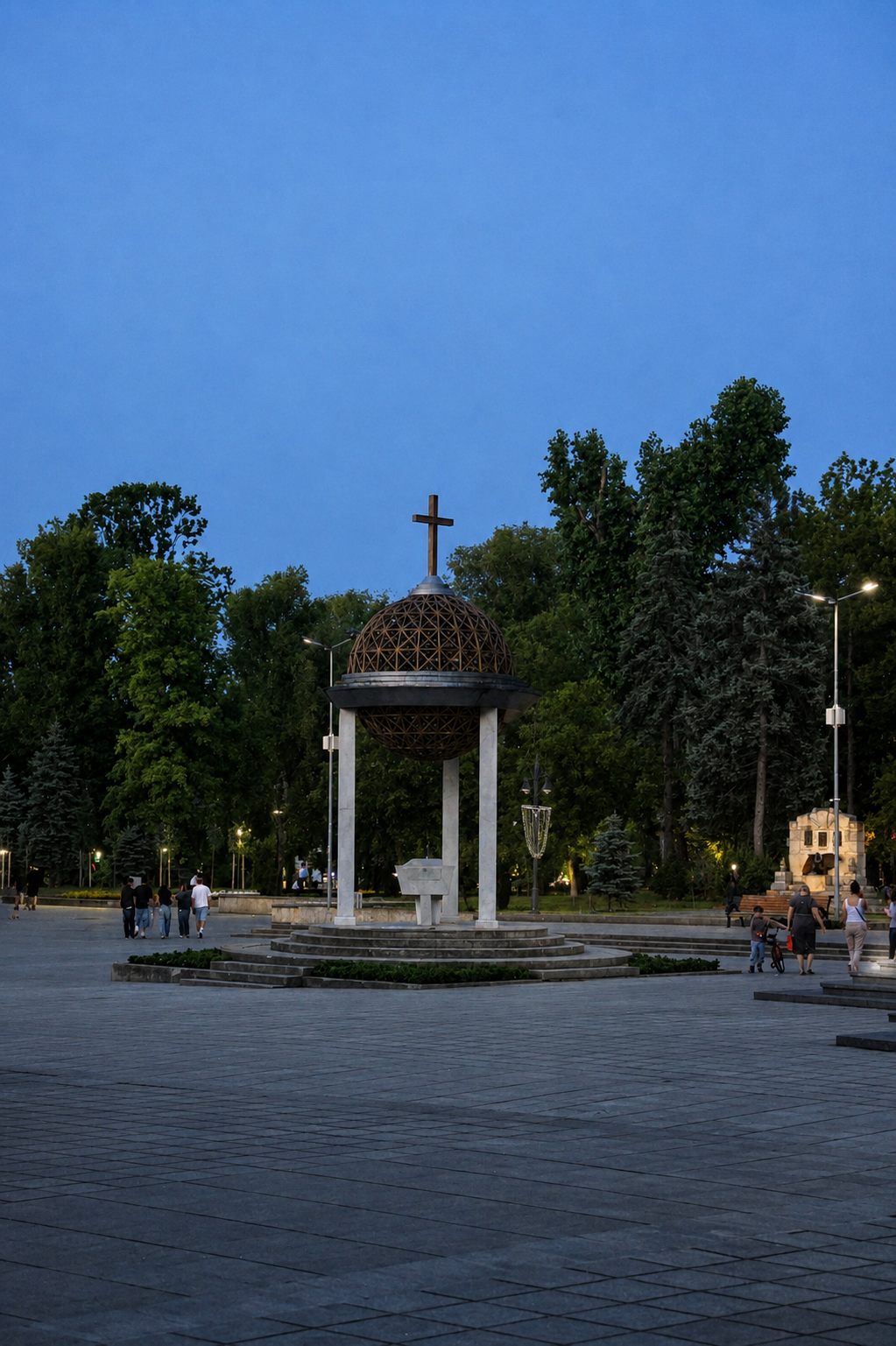
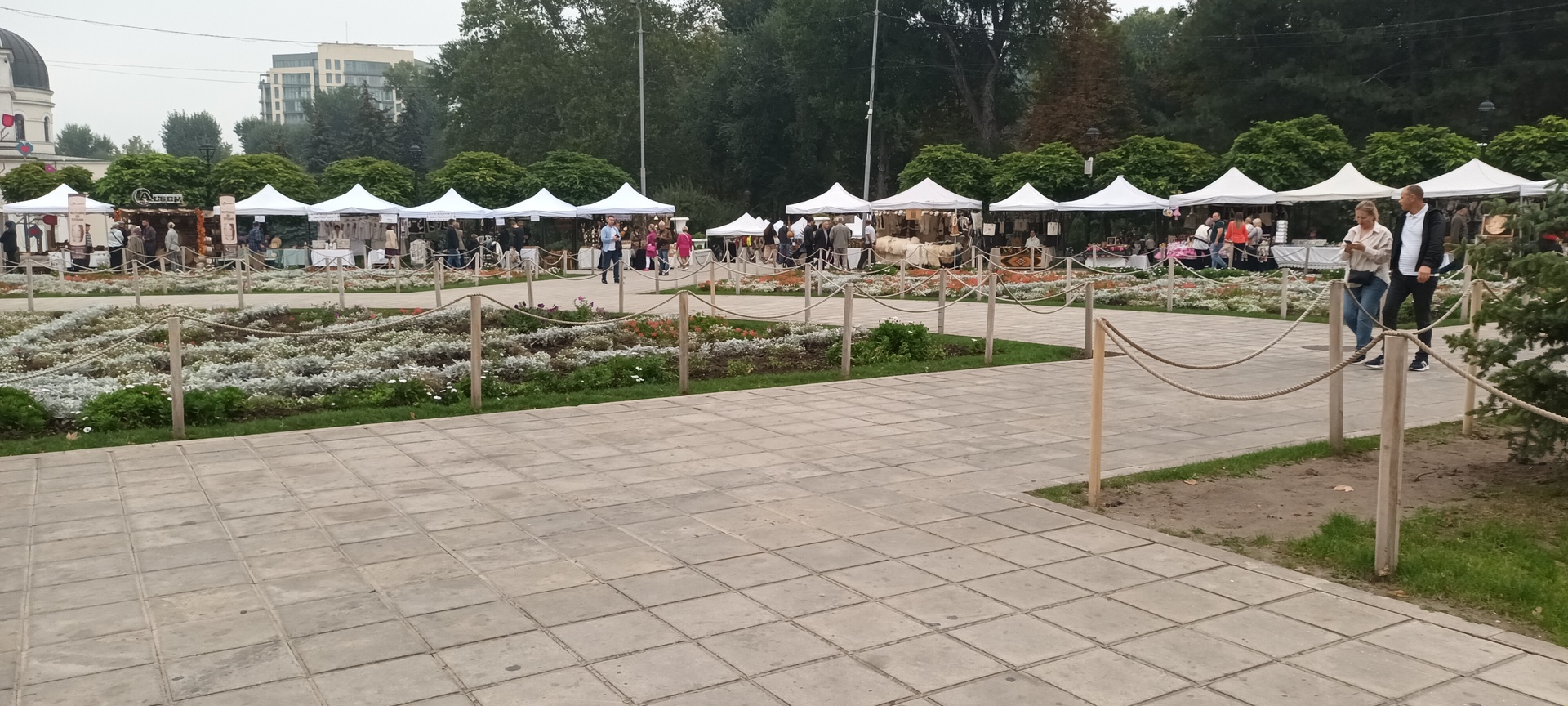
Further along, near Parcul Central „Ștefan cel Mare” (Stephen the Great Central Park)
and Scuarul Catedralei (Cathedral Square), the pace of the streets feels different beneath the trees.
The white domes of the Nativity Cathedral rise above the park while church bells carry across the square from time to time.
Around them, people sit on benches, cross the pathways, feed pigeons, meet friends, or simply spend time in the shade.
The sounds of traffic never disappear completely, but they share the space with
fountains, footsteps, conversations, and music drifting through the trees.
On the Cathedral Square, children run after pigeons scattering, while visitors stop to take photographs of the cathedral and its surroundings.
Just beyond the square, the park fills with people of different generations.
Teenagers gather with friends, families stroll beneath the trees, and older residents sit on benches watching the movement around them.
Together they create the everyday story of one of Chișinău's best-known public spaces.
Along the paths, smaller details become part of the experience as well.
A man sells roasted sunflower seeds from paper cups near a bench while paintings lean against the trees beside artists quietly watching the people passing by.
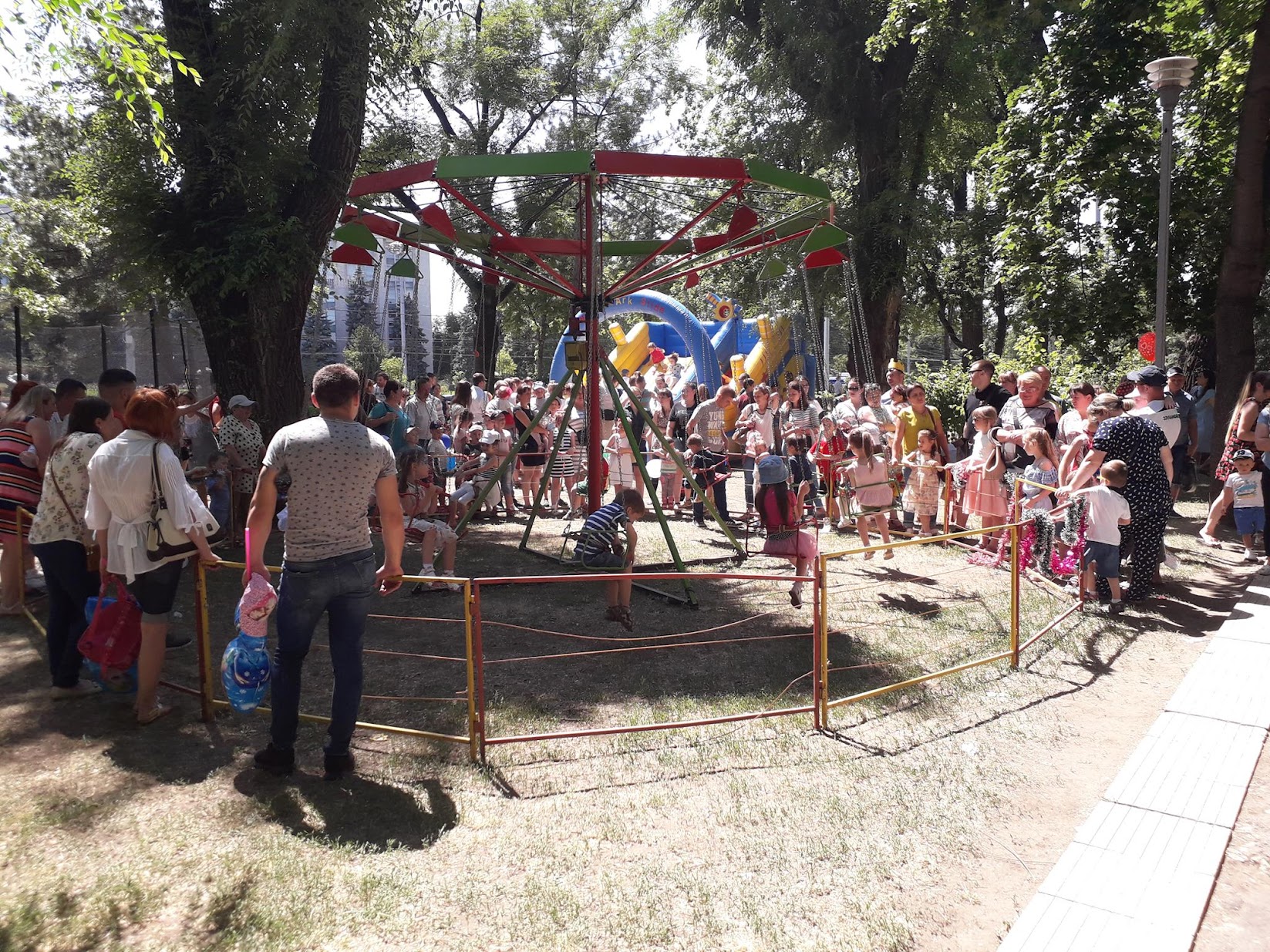
Children run after soap bubbles drifting through the air, and from time to time the sound of a violin, song, a guitar or an accordion carries through the park.
Together with the conversations, footsteps, and the distant hum of trolleybuses along the boulevard, these small moments help create the atmosphere that makes this part of the city feel so familiar.
As afternoon turns into evening, the light changes first.
The upper floors of the buildings still glow orange in the last sunlight while the streets below have already fallen into shadow.
Trolleybus wires cut dark lines across the evening sky, and warm yellow light gradually begins appearing behind apartment windows above the streets.
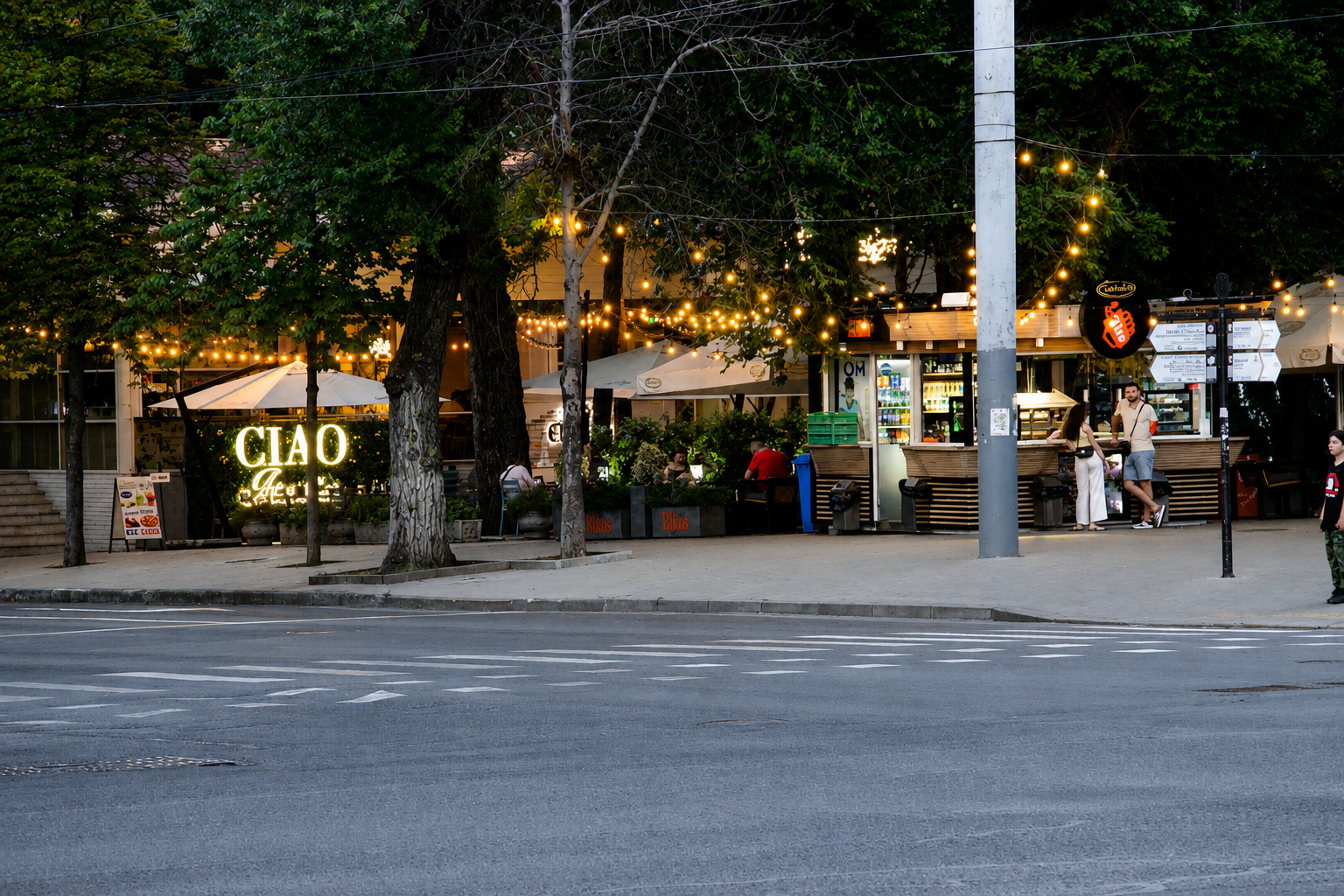
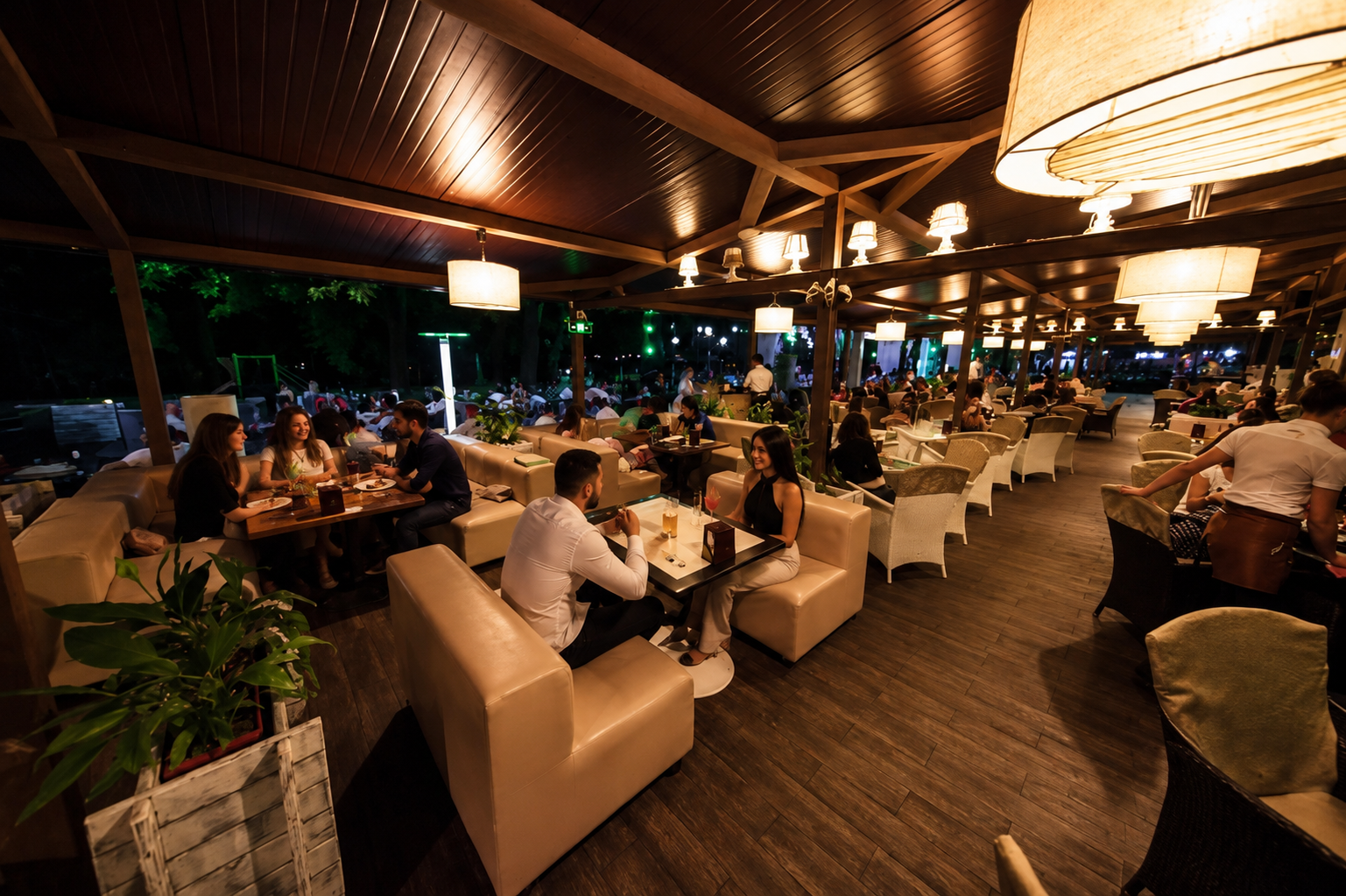
Street lamps switch on one after another across the boulevard while terraces begin glowing beneath hanging lights, lanterns, candles, and neon signs reflected in glasses, bottles, and old windows.
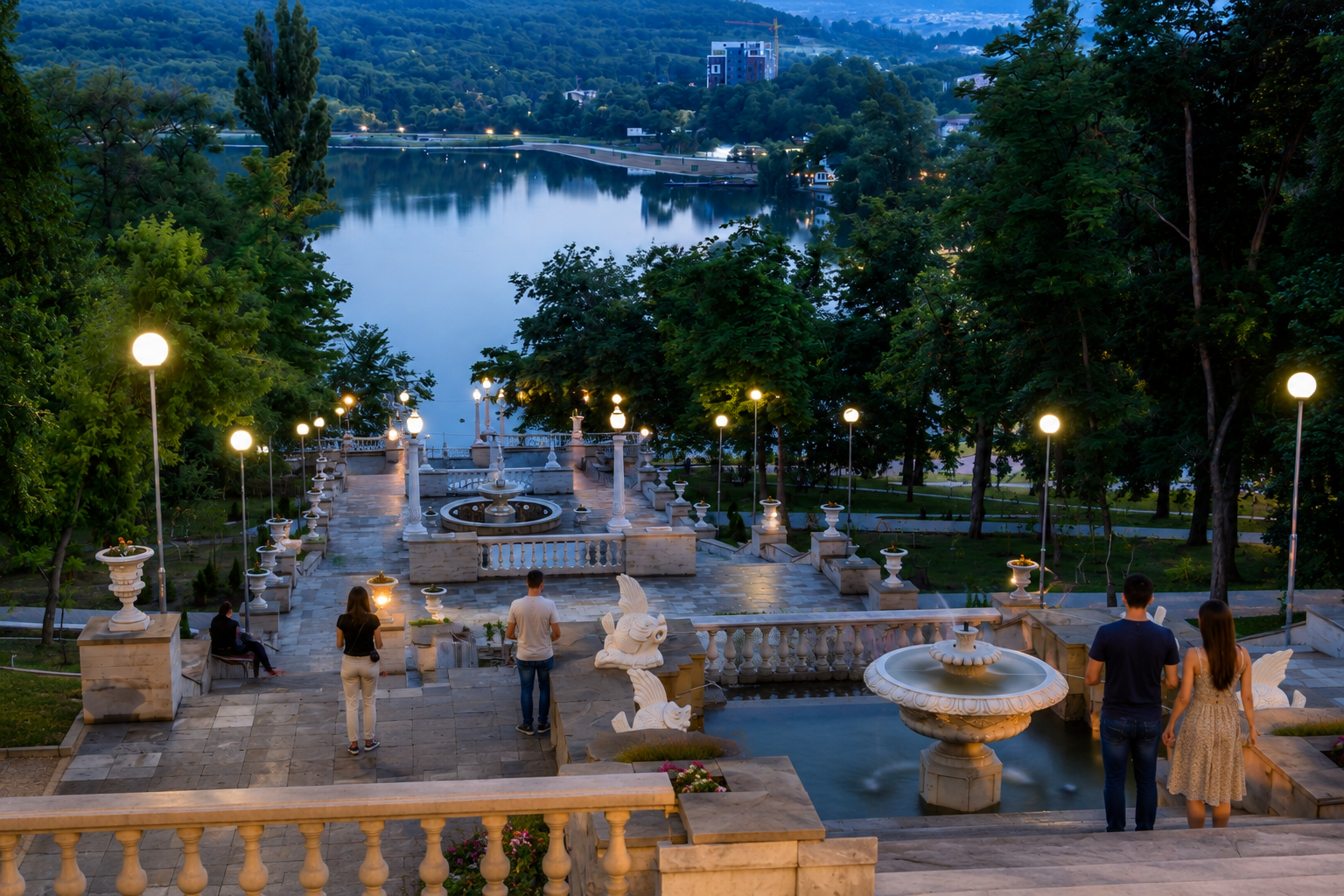
In the parks, it can almost feel like stepping into another world. Lamps illuminate the pathways beneath the trees, fountains shimmer beneath the evening lights, and cafés hidden among the greenery glow warmly from within.
Reflections dance across the water, conversations drift through the darkness, and the city beyond seems to fade into the background.
There is something almost magical about these evenings, a feeling that is difficult to explain until you experience it for yourself.
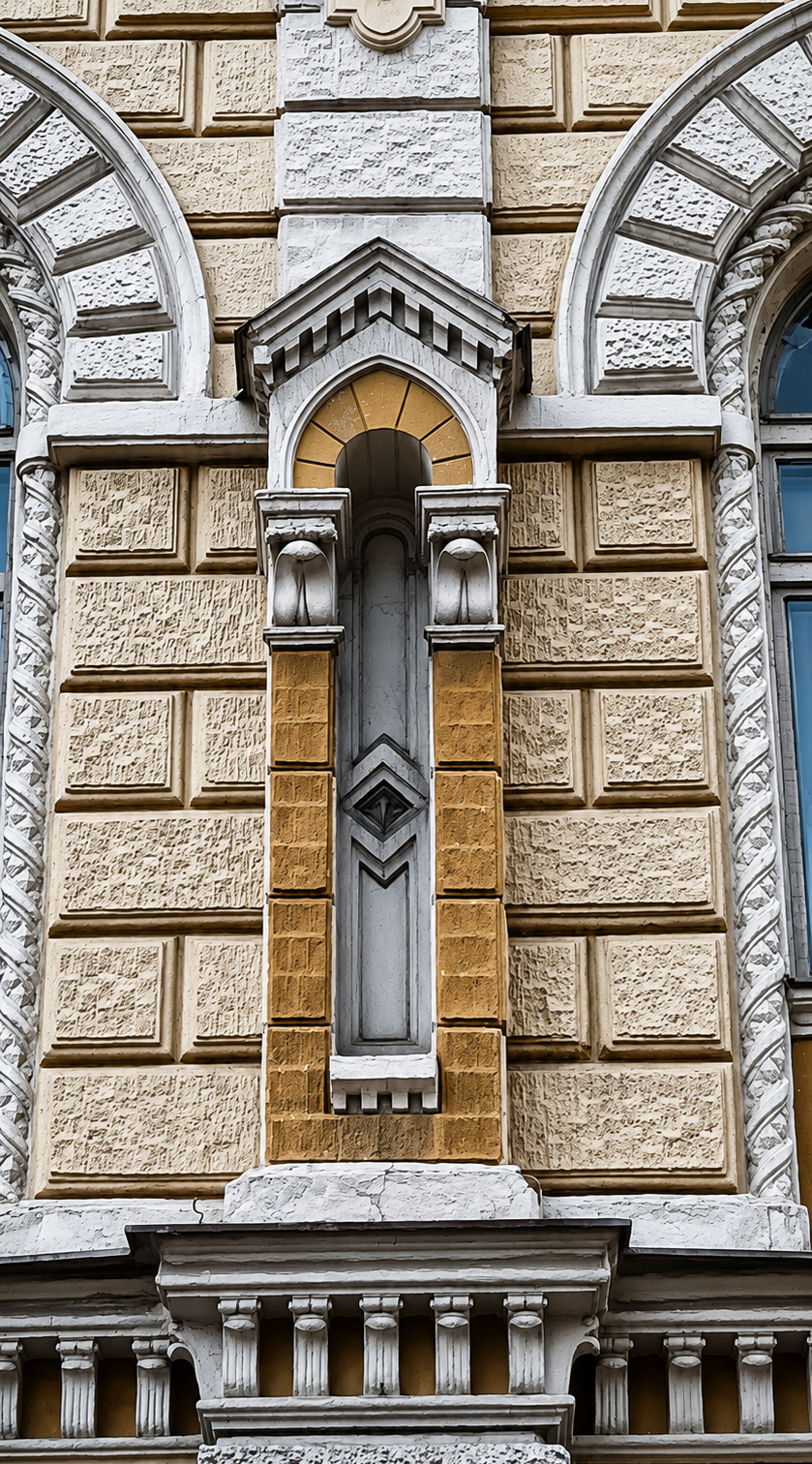
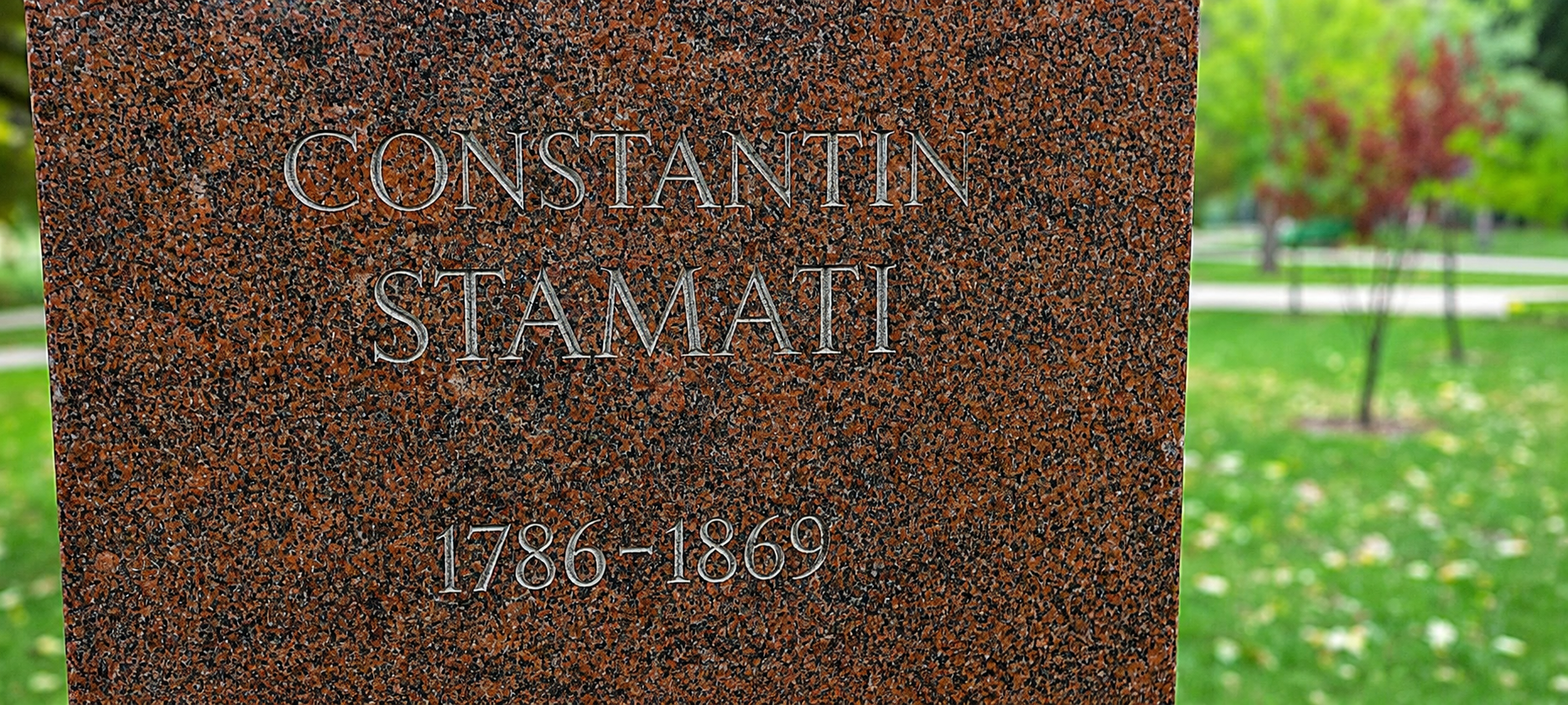
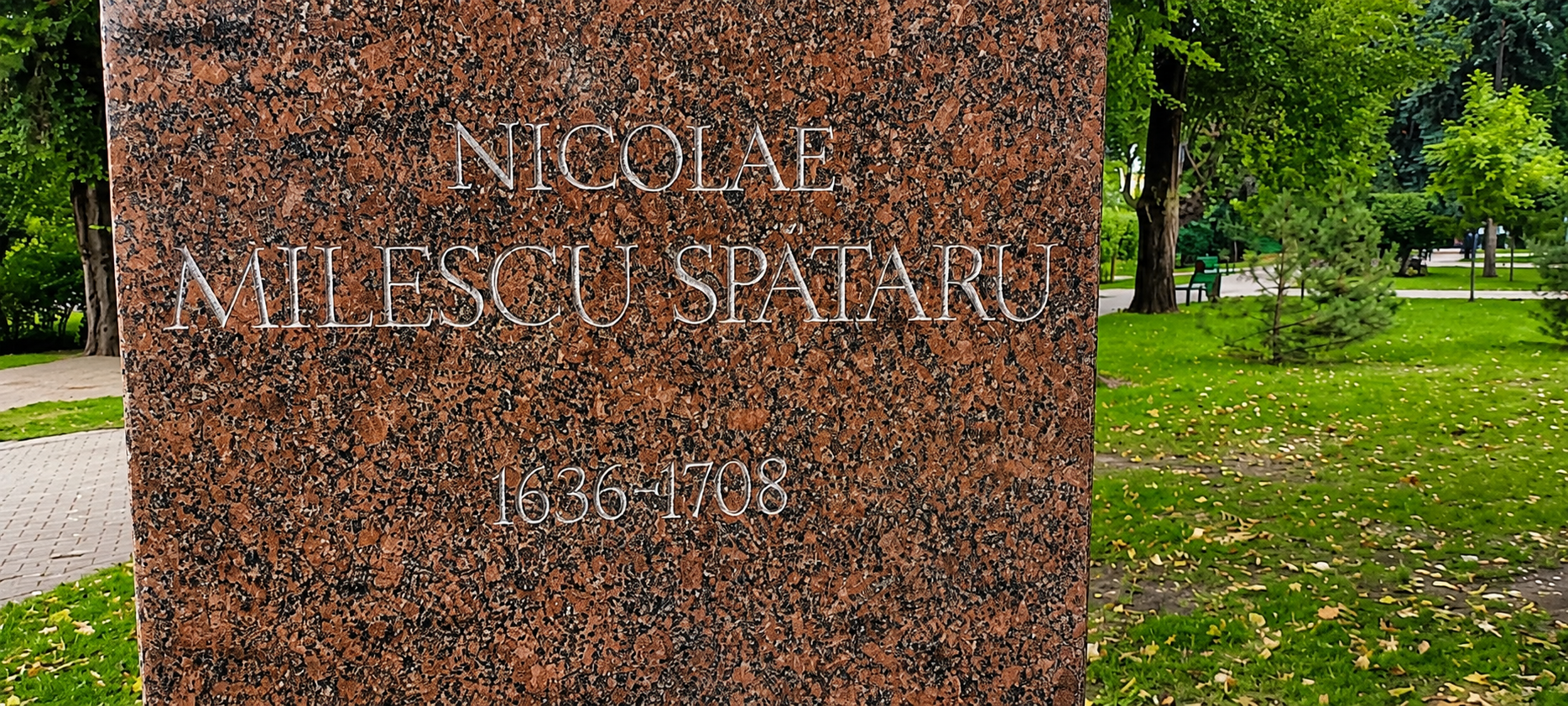
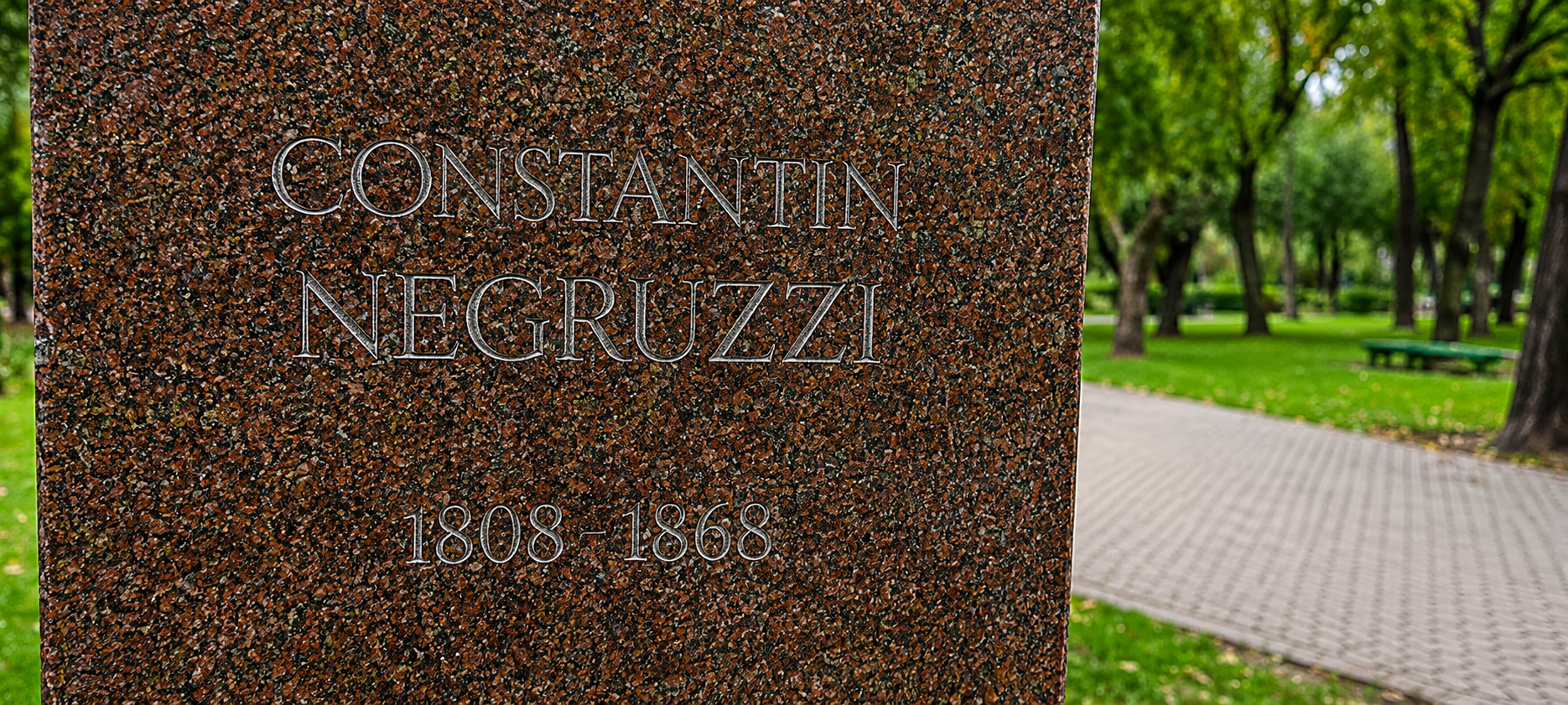
And suddenly the old buildings look completely different.
Warm light falls across balconies, columns, ornaments, and façades, while shadows gather beneath trees, entrances, and courtyards stretching deeper between the buildings.
Details that were easy to miss during the day become more noticeable in the evening
light, giving the streets a character that feels both familiar and entirely new at the same time.
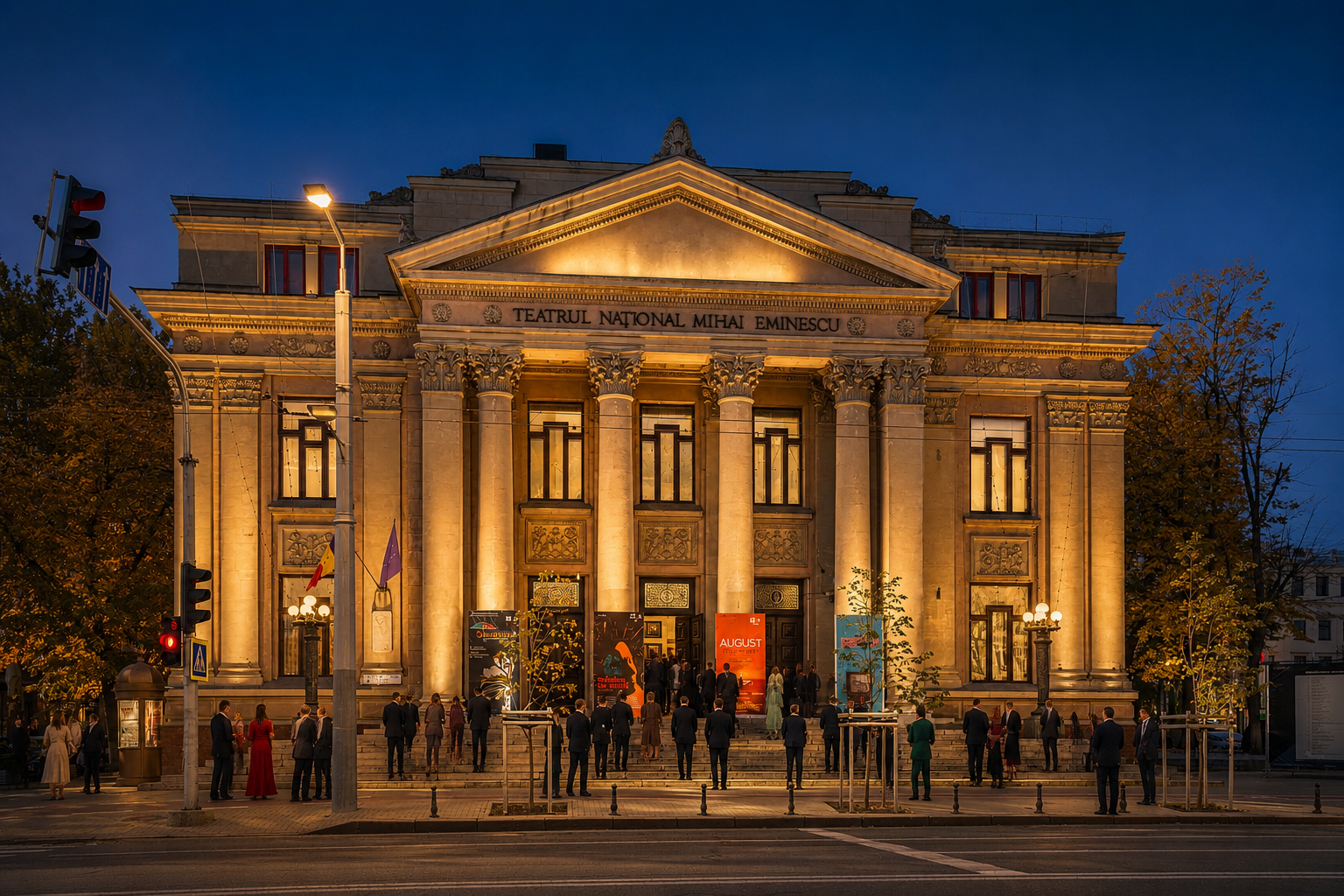
Around Teatrul Național Mihai Eminescu (National Theatre Mihai Eminescu)
and Sala cu Orgă (Organ Hall), people arrive dressed for performances while taxis stop beside the sidewalks and conversations continue beneath the lights outside long after the shows have ended.
Teatrul Național Mihai Eminescu occupies one of the most important cultural buildings in Chișinău.
Construction of the neoclassical building began in the early 1930s after a design by Romanian architect Nicolae Stănescu and was later completed in the 1950s and are today one of the most important landmarks of the City.
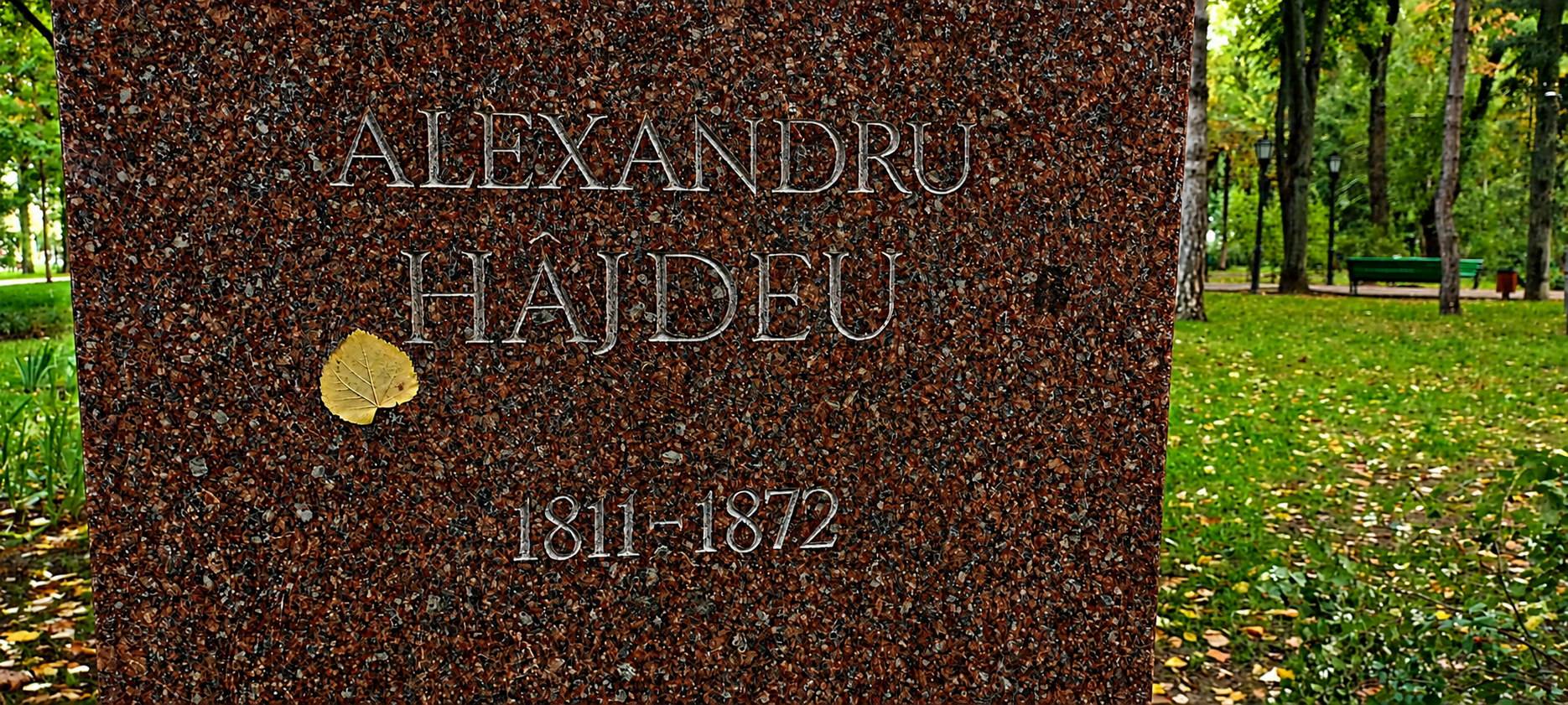
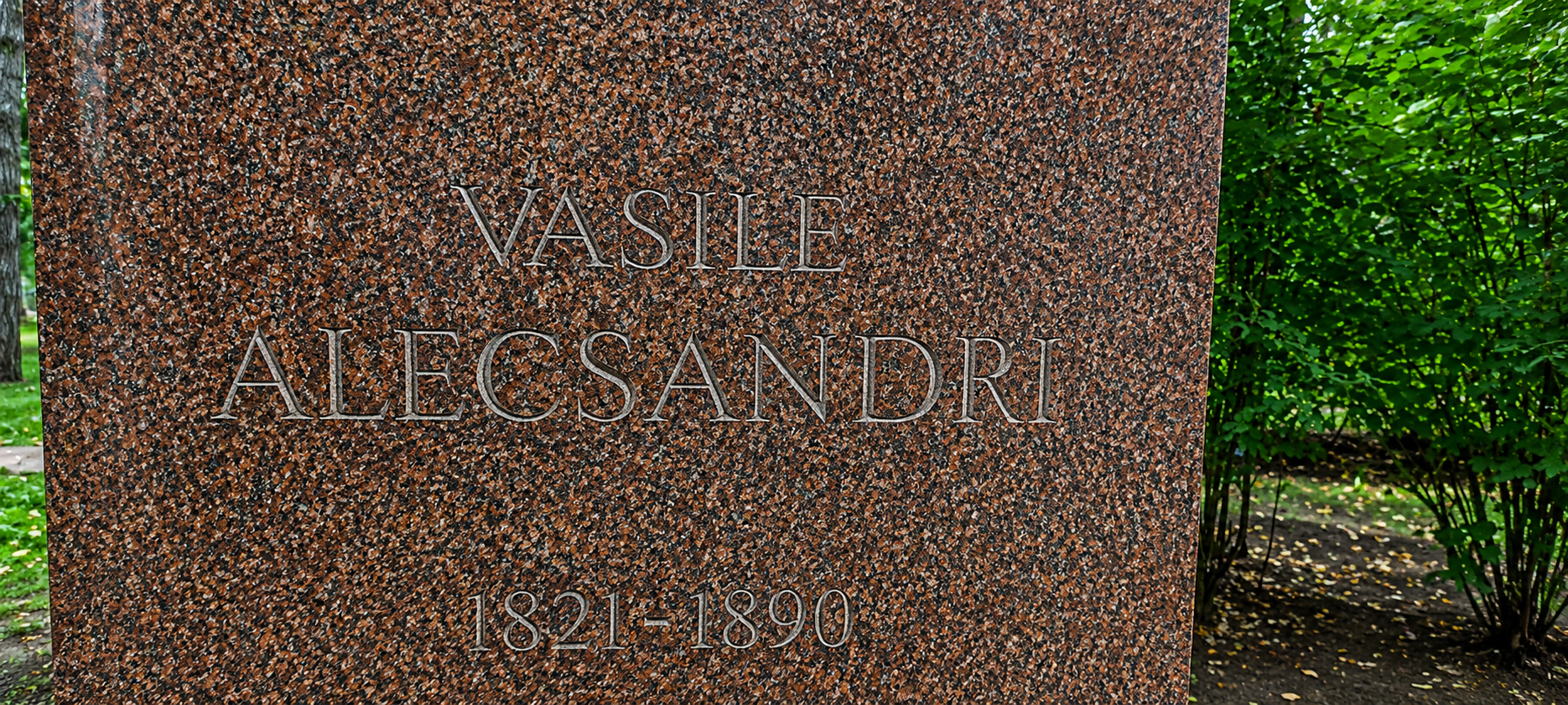
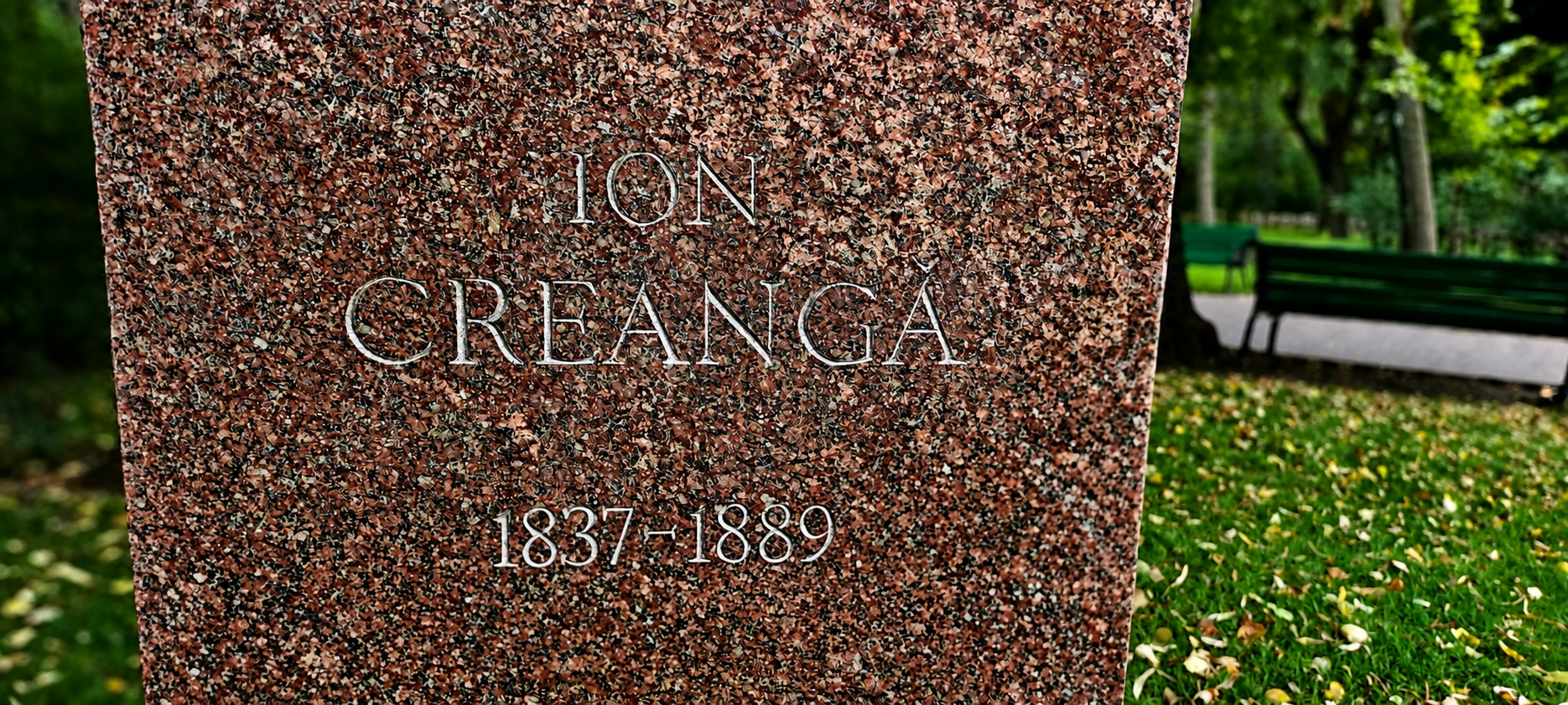
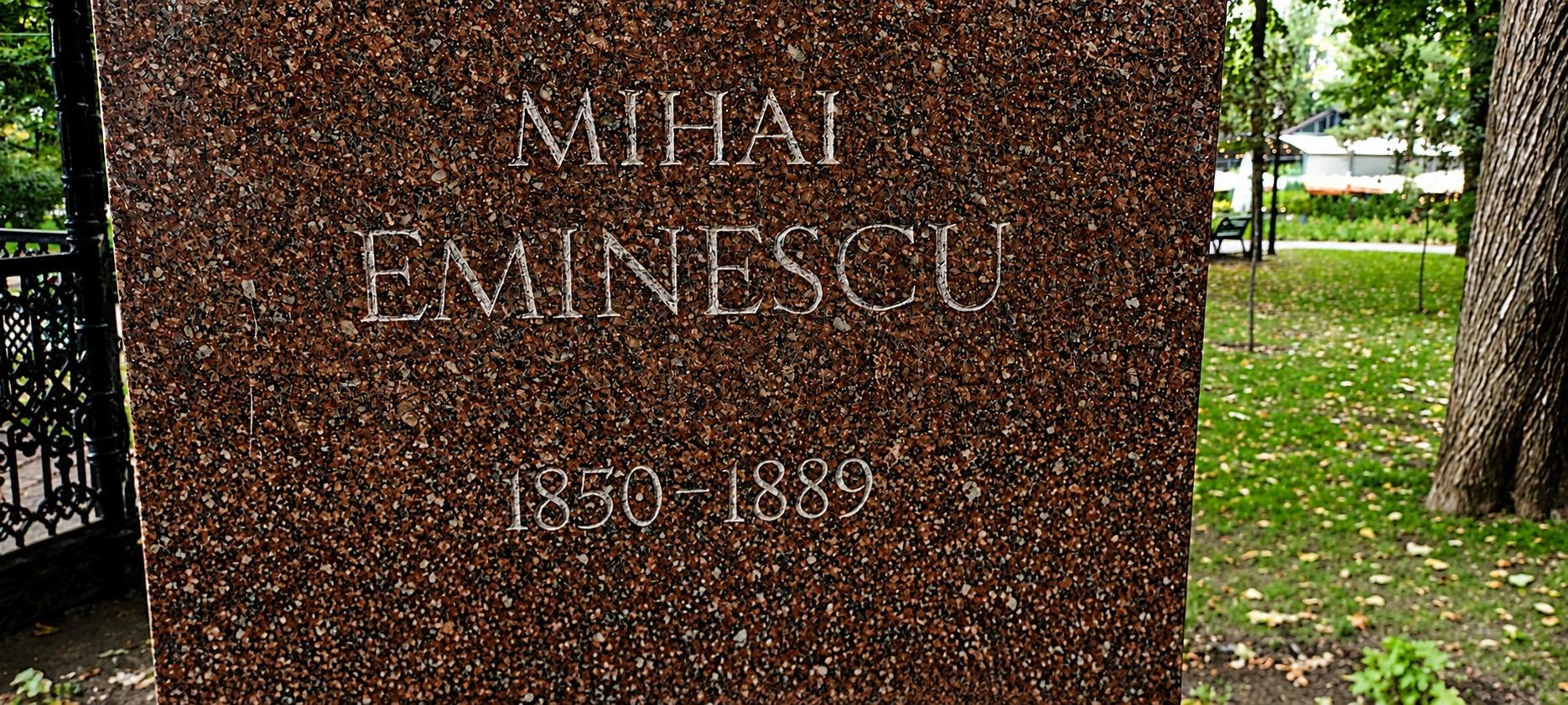
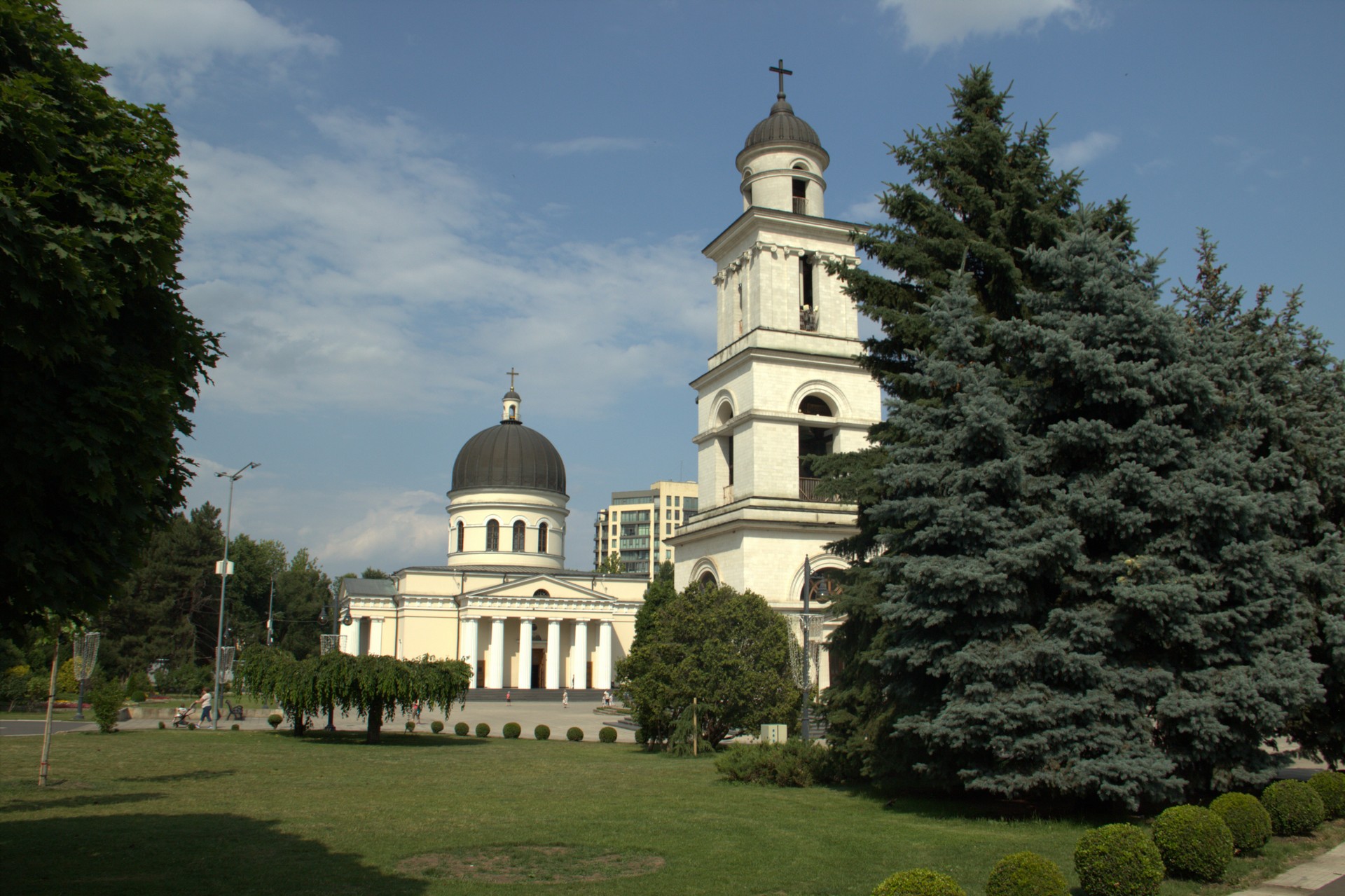
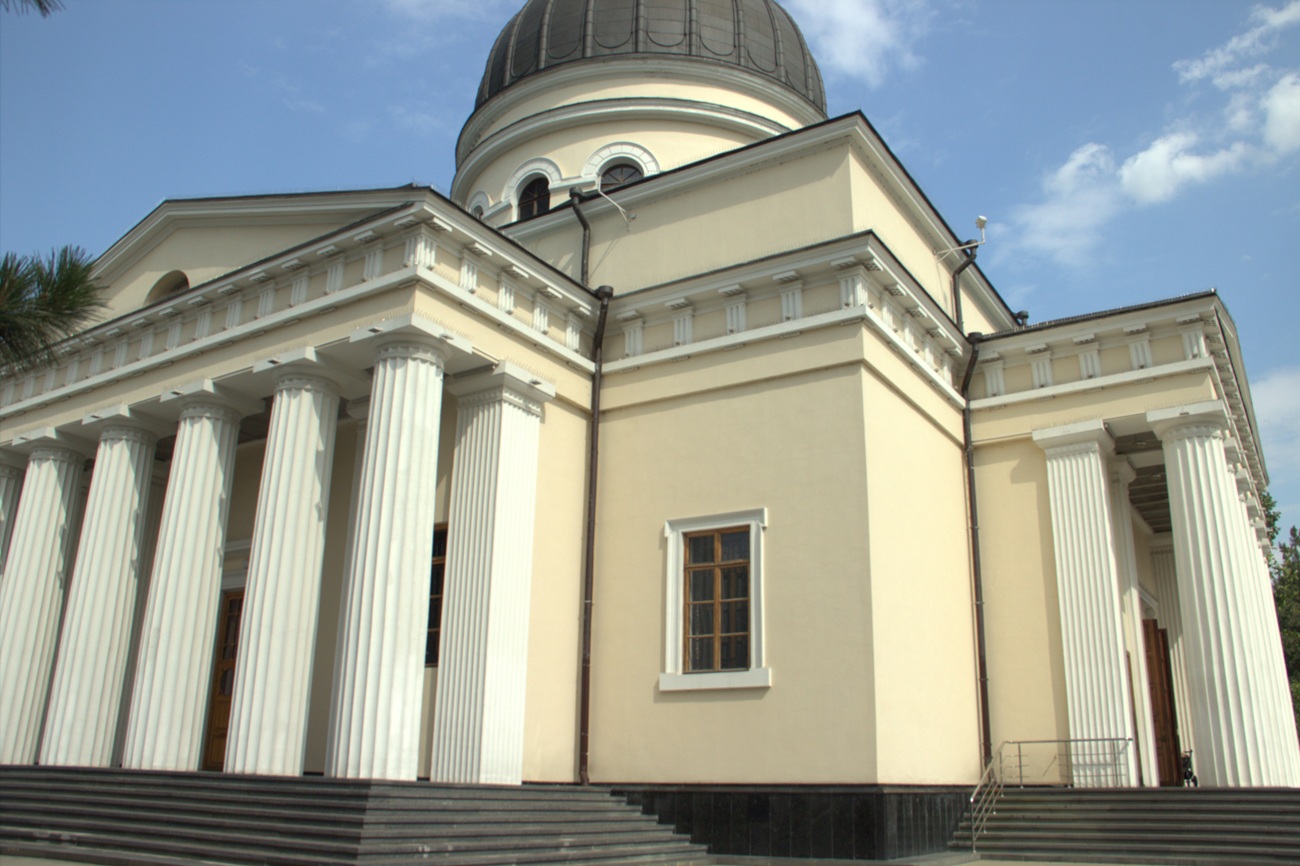
The white Catedrala Mitropolitană „Nașterea Domnului (Cathedral of Christ's Nativity) rises above the square with its green dome and long columns facing the open space.
Built between 1830 and 1836 under Metropolitan Gavriil Bănulescu-Bodoni and designed by the architect Avraam Melnikov, it remains one of the most recognizable landmarks in Chișinău.
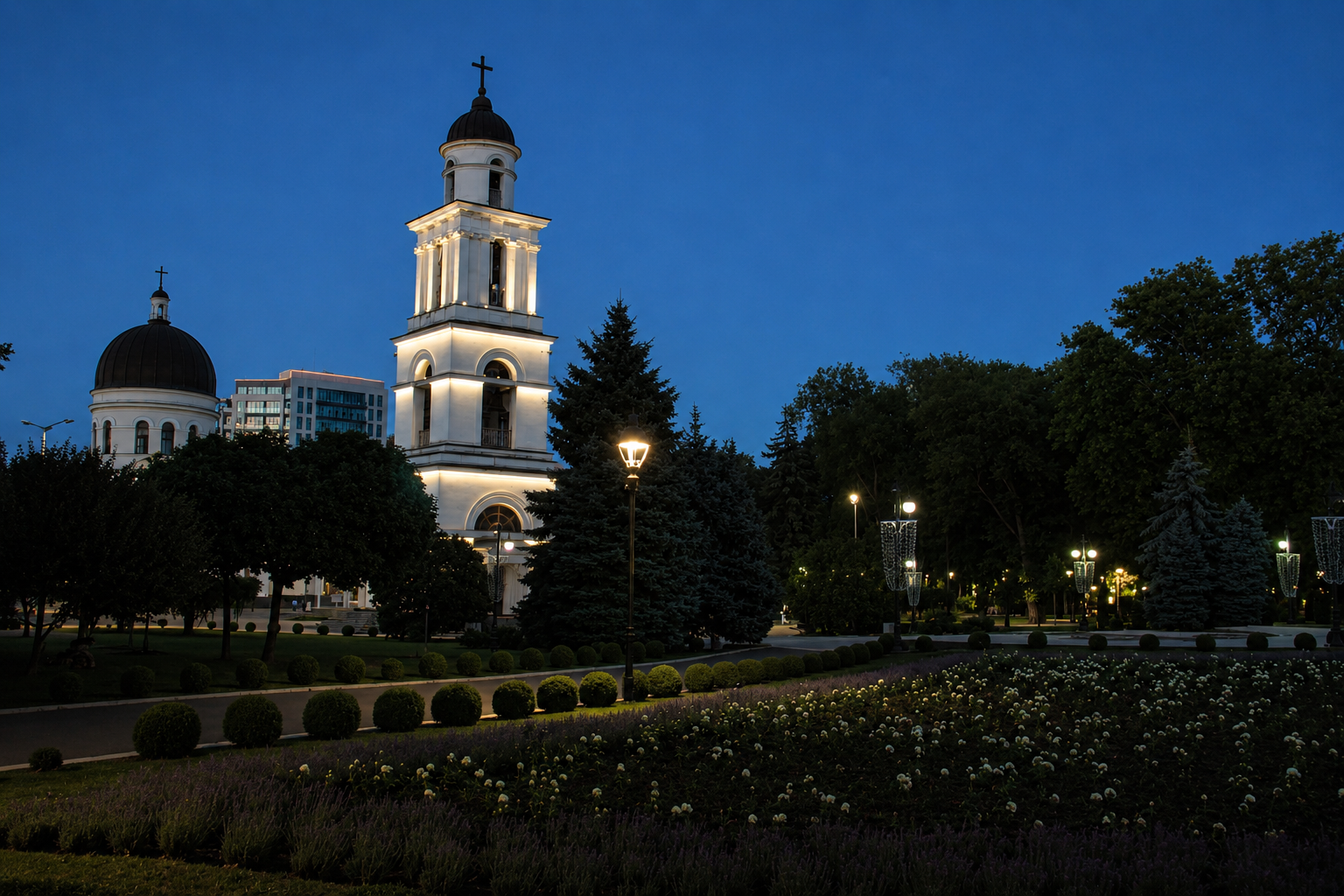
Nearby stands the bell tower, rebuilt after its destruction during the Soviet period.
Together, the cathedral and bell tower form one of the most important religious and historical landmarks in Moldova.
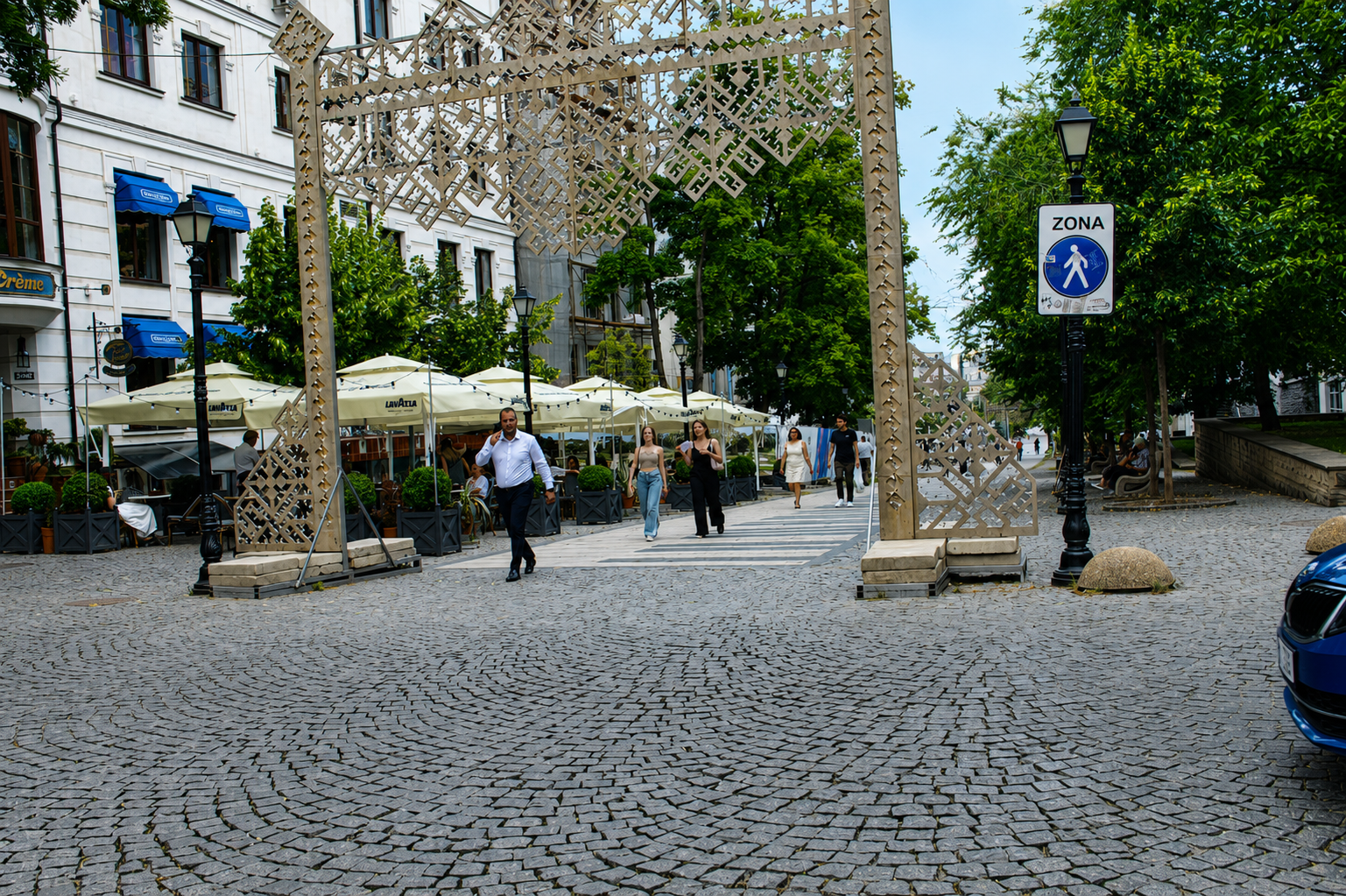
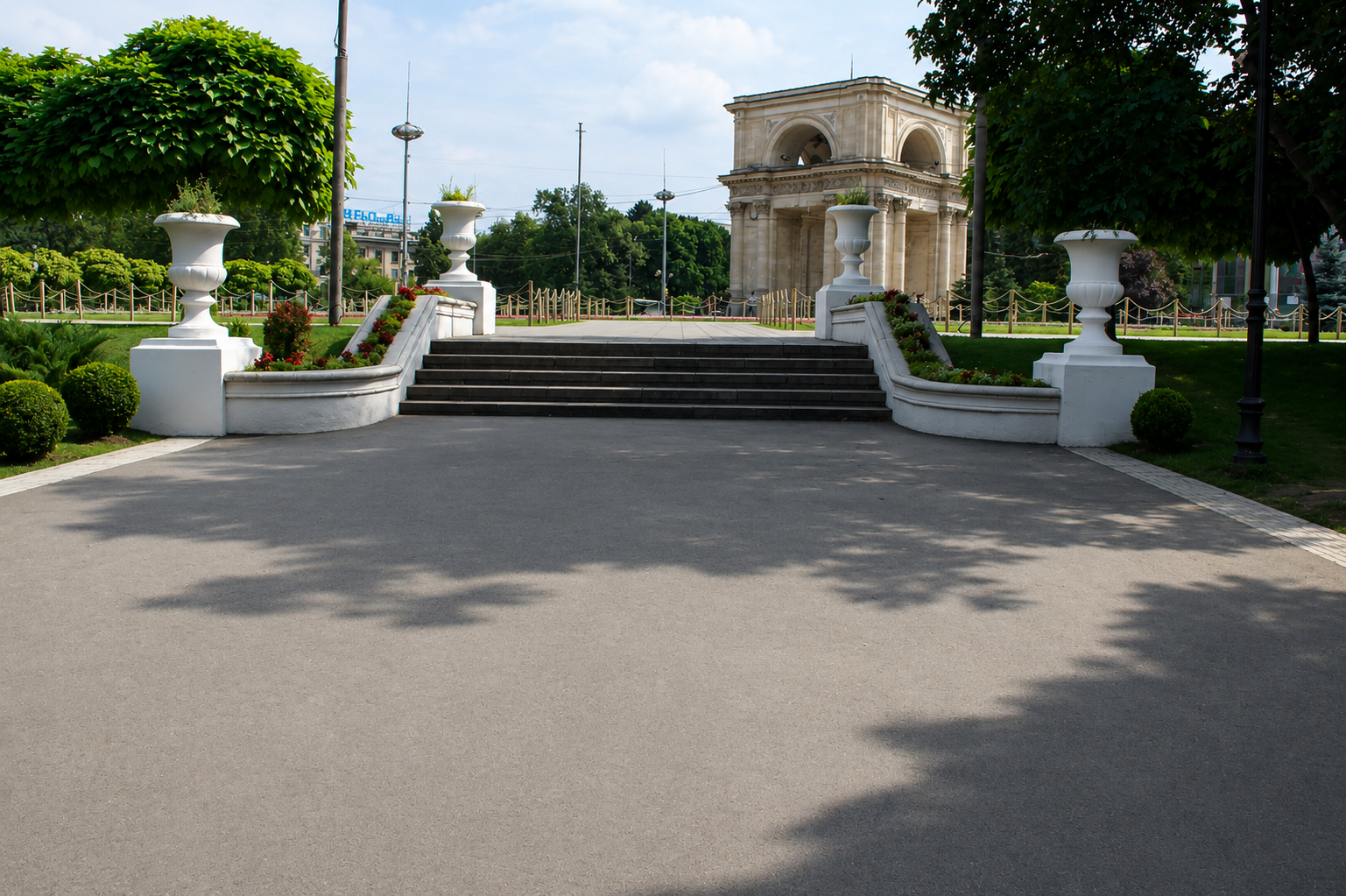
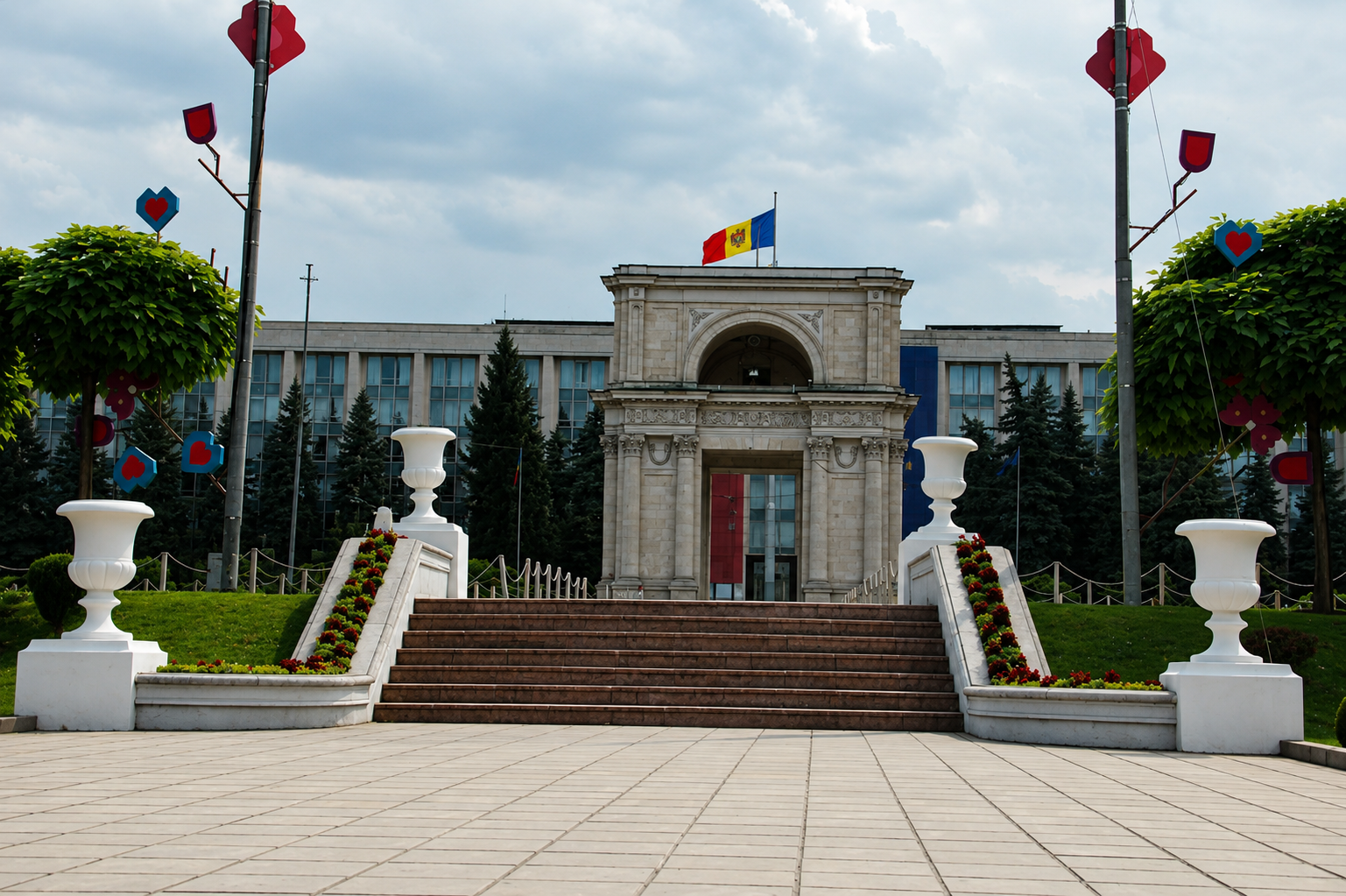
Near Scuarul Catedralei stands the old Triumphal Arch, one of the most recognizable landmarks in Chișinău.
For generations it has marked the heart of the city, standing between the cathedral grounds and Bulevardul Ștefan cel Mare și Sfânt.
A short walk away, at the entrance to Parcul Ștefan cel Mare (Park of Stephen the Great) stands the monument of Ștefan cel Mare prominently on the square.
For generations, it has been one of the city's best-known landmarks and a natural meeting point for residents and visitors alike.
Perhaps the most photographed monument in Moldova
Young couples walk between the terraces while groups of teenagers gather near kiosks and benches, laughing beneath the trees.
Elder residents continue their evening walks through the streets, while somewhere in the distance a musician still plays near one of the parks or squares.
For a few hours, much of the city seems to remain outside, enjoying the evening
before gradually disappearing behind apartment doors and glowing windows
above the streets.
And once the brighter roads are left behind, quieter streets appear beneath older balconies and trees.
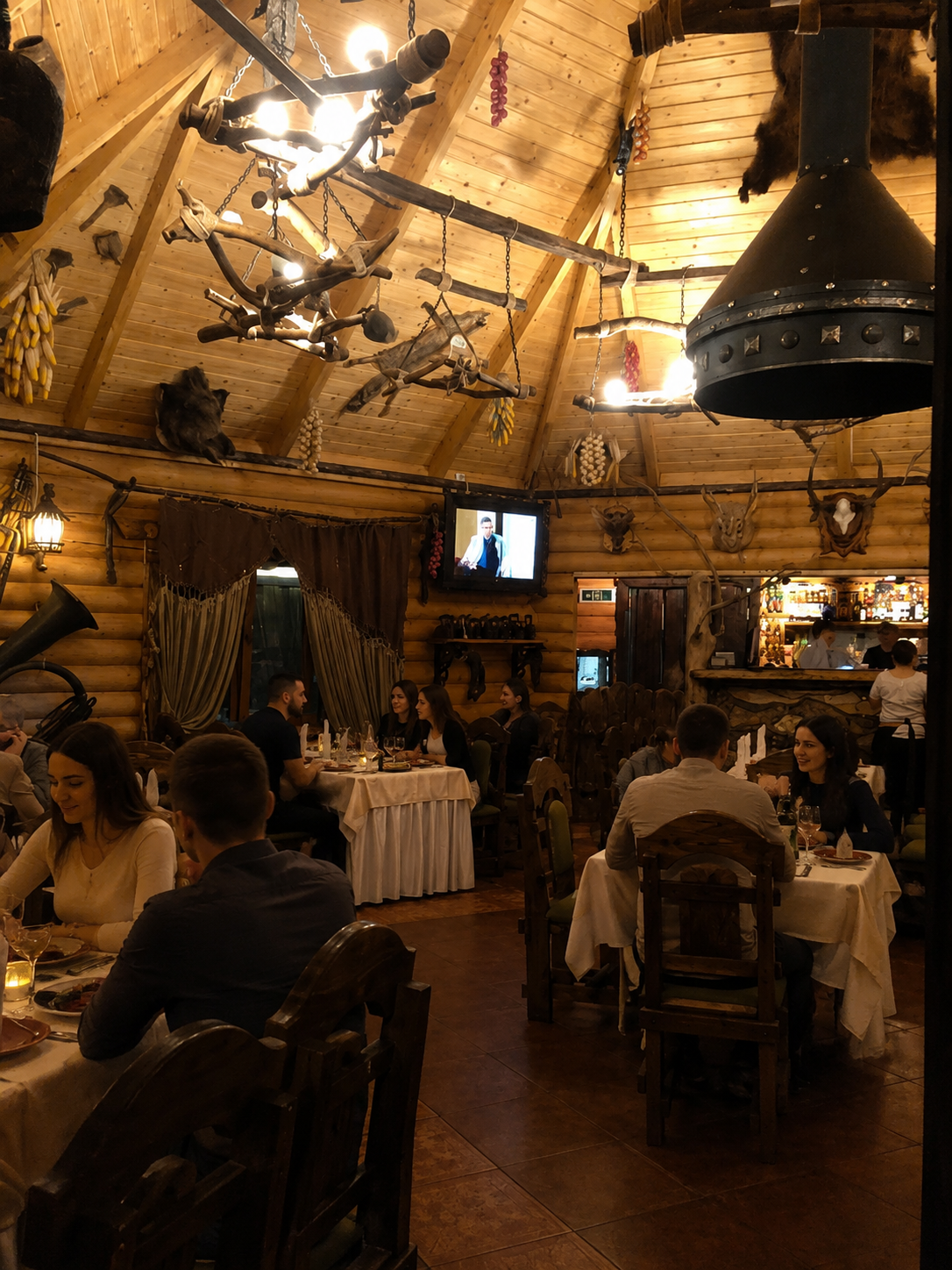
Yellow apartment windows glow above hidden courtyards while music softly comes from bars, terraces, cafés, basement restaurants, and apartment windows somewhere deeper between the buildings.
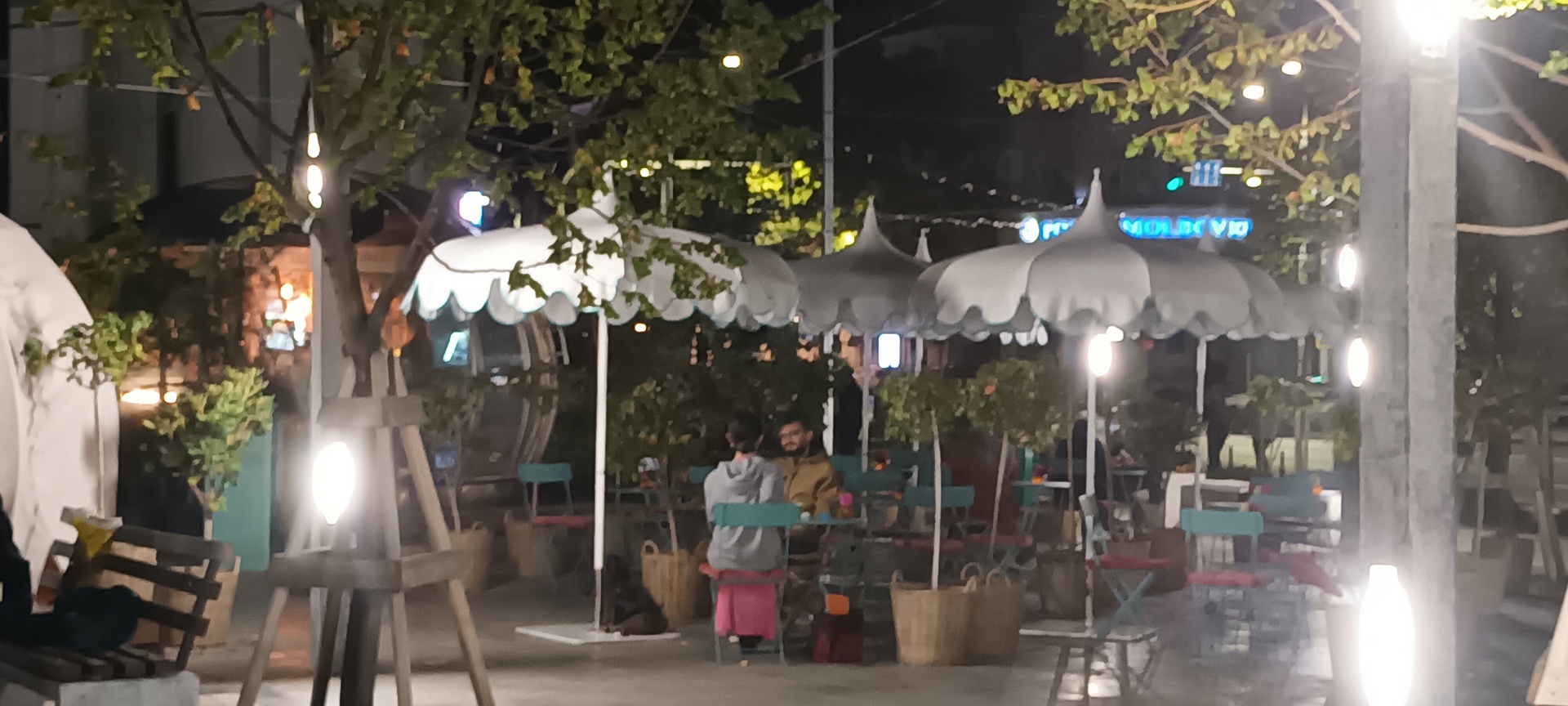
A terrace still remains filled beneath hanging plants while a cat moves silently through a courtyard beneath the balconies above.
A couple walks slowly through the streets without seeming in any hurry to get
home, while plates clink softly behind an open kitchen window somewhere
above the street.
Even late at night, Centru never sleeps.
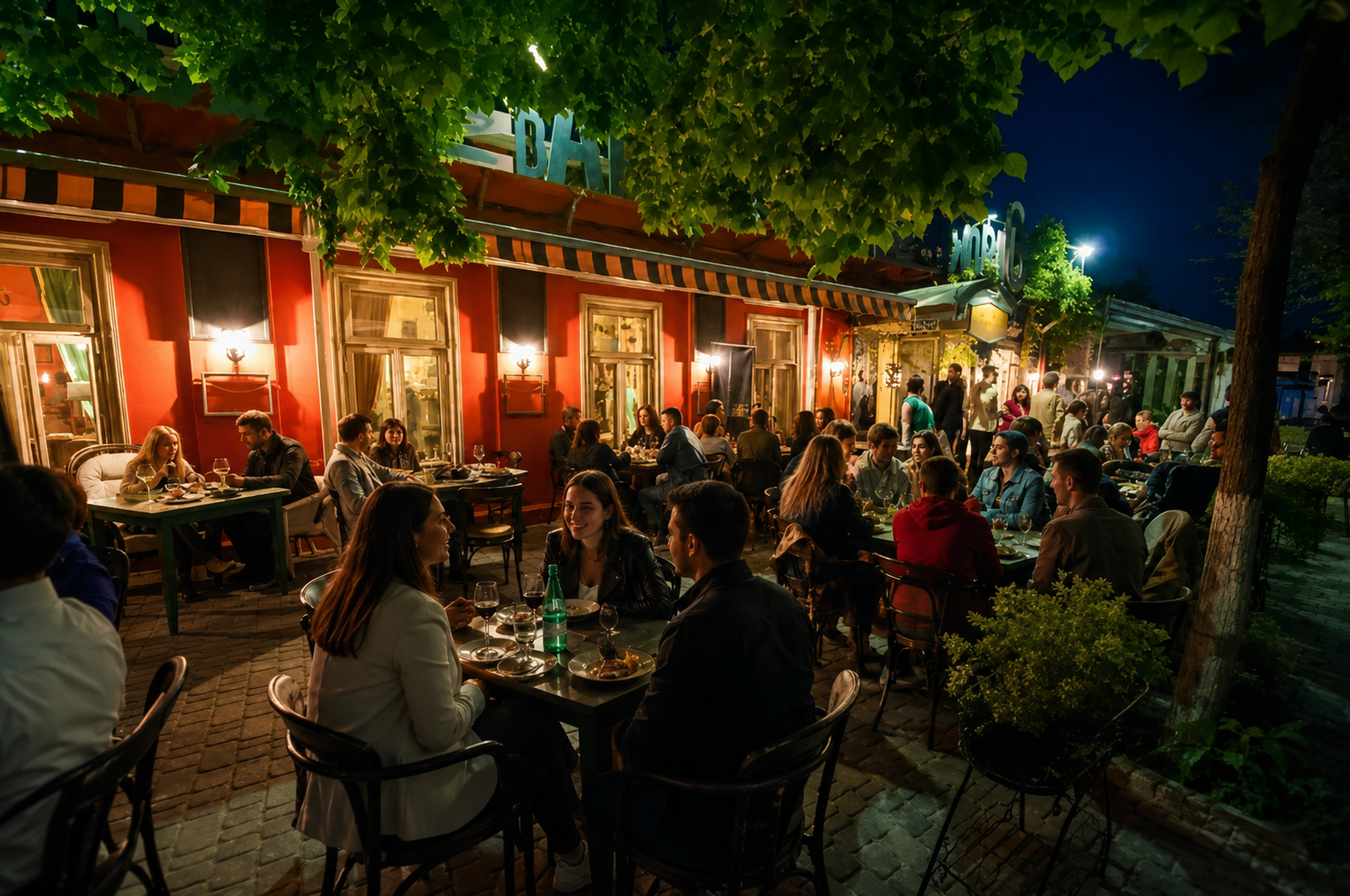
Near terraces and cafés, conversations continue beneath hanging lights while waiters slowly clear tables around groups of friends and couples still sitting with
wine, beer, coffee, and food long after midnight.
Elsewhere, headlights continue moving through the streets, people walk home beneath the trees, and the city quietly carries on through the night.
Road crews repaint lane markings, repair sections of the streets, or work beneath temporary lights while most residents are asleep.
There is always something happening somewhere, even in the hours when the
city is at its quietest.
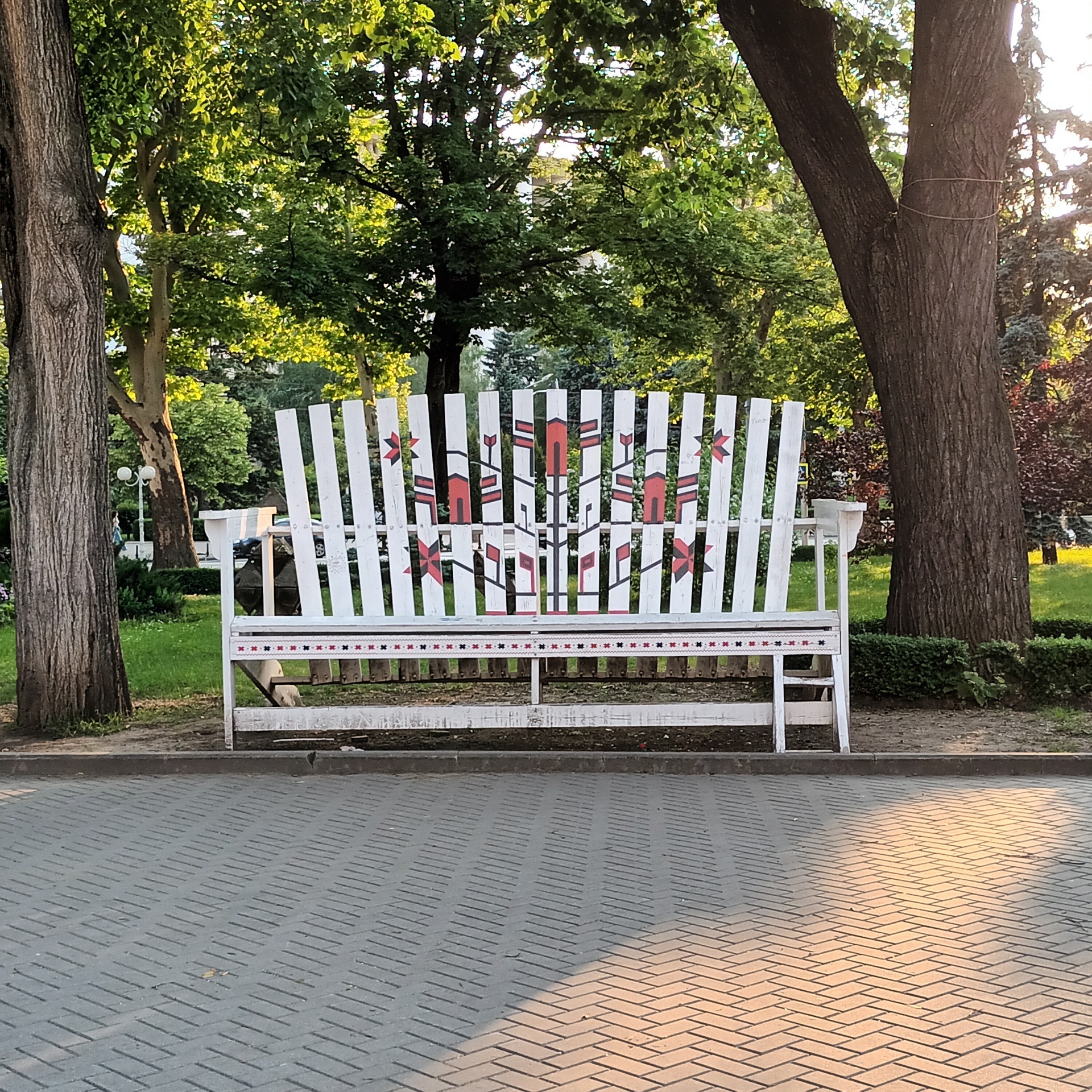
Culture is an important part of Centru.
Alongside Sala cu Orgă and Teatrul Național Mihai Eminescu stands Teatrul Național de Operă și Balet „Maria Bieșu" (Maria Bieșu National Opera and Ballet Theatre), whose performances have drawn audiences from across Moldova for decades.
On performance evenings, the surrounding streets fill with visitors arriving dressed for concerts, opera, and ballet before the lights come on inside.
Teatrul Național de Operă și Balet „Maria Bieșu" (Maria Bieșu National Opera and Ballet Theatre) traces its origins to 1957, when Moldova's national opera and ballet company was officially established.
As the ensemble grew in size and reputation, a dedicated theatre building was planned in the center of Chișinău.
The current building was completed in 1980 and has since served as the home of opera and ballet in Moldova, hosting generations of performers and becoming one of the country's most important cultural landmarks.
Near Piața Centrală, smaller diners still serve customers late into the night while workers begin cleaning parts of the market in preparation for the next day.
Boxes are moved, stalls are tidied, and gradually the first signs of a new morning begin to appear long before the city has fully gone to sleep.
Once the larger boulevards are left behind again, the Apartment windows still glow above the façades.
Televisions flicker behind curtains, conversations drift softly downward from
balconies, and somewhere a resident returns home carrying takeaway food
late at night.
In the distance, the last trolleybuses and marshrutkas continue through the city while the wires above the streets disappear deeper into the darkness over Centru.
Even at this hour, there is a sense that the city is still awake. Not busy in the same way as during the day, but quietly continuing behind illuminated windows, beneath balconies, and along streets that will begin filling again with the first light of morning.
Leaving the boulevard behind, the streets become narrower and the buildings stand closer together.
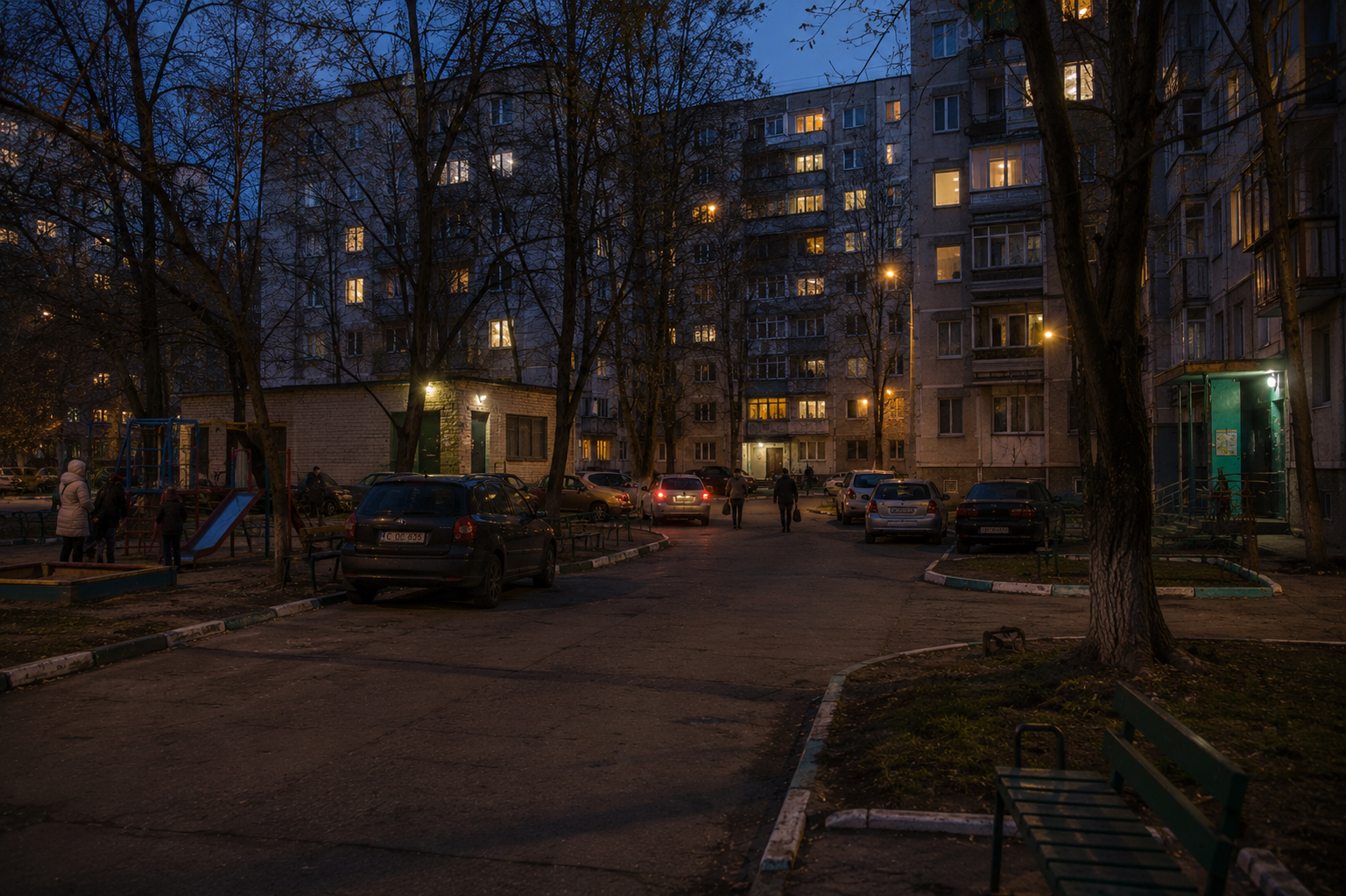
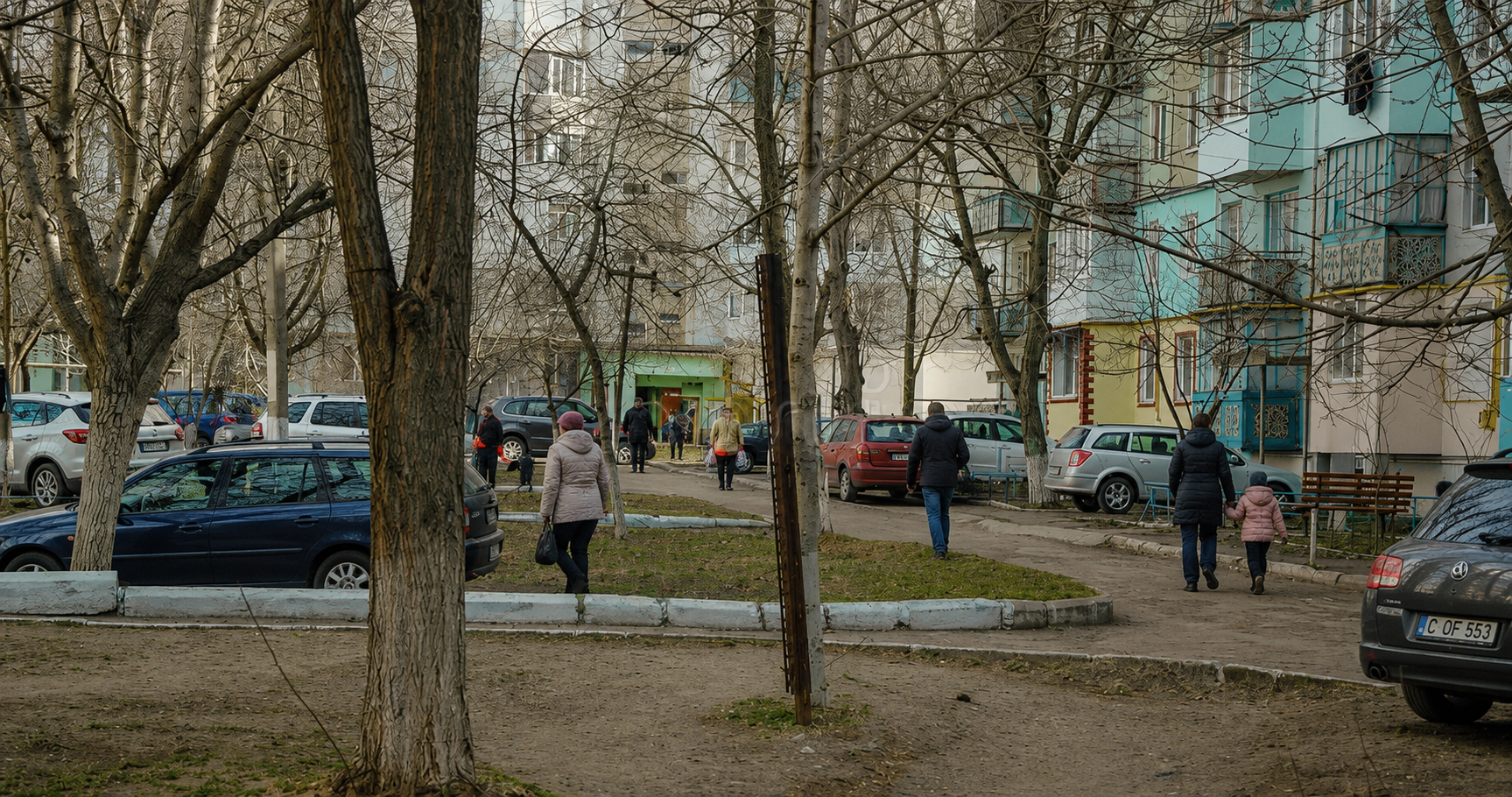
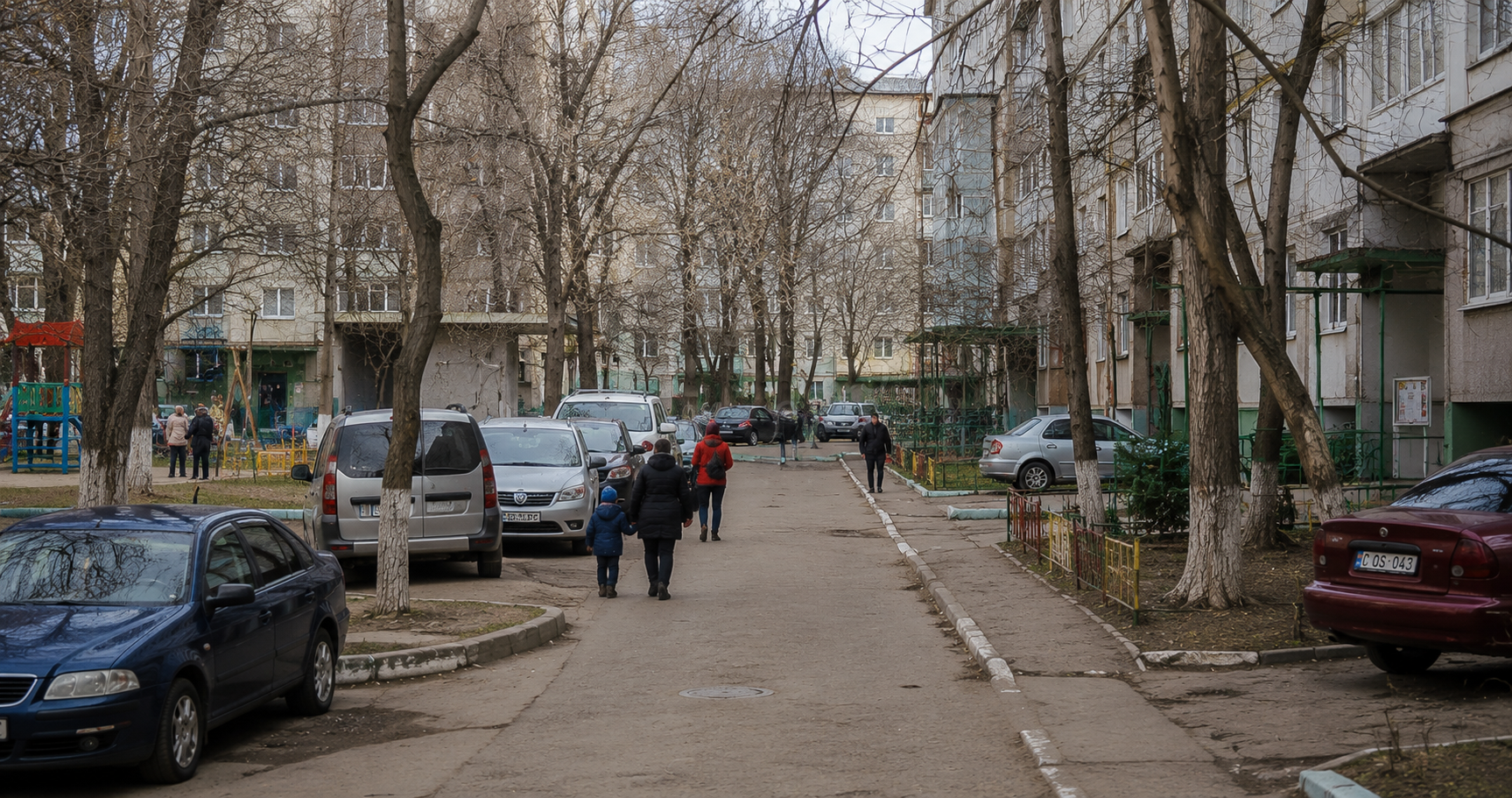
Behind entranceways, courtyards open between the apartment blocks where flower beds, benches and small gardens have been cared for by residents over many years.
Open windows carry the sounds of televisions, conversations, and cooking from apartments above, while neighbours stop to exchange a few words before continuing on their way.
Some entrances sit a few steps above ground level, while others open directly onto the courtyard.
The stone steps have been worn smooth by generations of residents coming and going through the buildings over the years.
Inside the courtyards, narrow driveways wind between apartment blocks, trees, and parked cars.
In the middle, there is often a patch of green with a few benches and a playground where children play beneath the trees while neighbours pass through on their way from- and to home.
Above them, balconies and apartment windows overlook the space, giving the courtyards a feeling of being shared by everyone who lives around them.
3 Facts
Zona unde se află astăzi Chișinău a fost atractivă pentru așezări cu mult înainte ca orașul modern să existe, datorită izvoarelor naturale, râurilor mici, solului fertil, pădurilor și văilor adăpostite.
Apa era esențială pentru supraviețuire, iar primele comunități s-au format în jurul izvoarelor și surselor de apă de care depindeau atât oamenii, cât și animalele.
-
The area where Chișinău stands today was attractive to settlements long before the modern city itself appeared because of its natural springs, small rivers, fertile soil, forests, and sheltered valleys.
Water was especially important, and several of the earliest communities formed around springs and water sources that people and animals depended on for survival.
-
Chișinăul s-a dezvoltat într-o regiune aflată timp de secole între mari puteri, drumuri comerciale și trasee de migrație care legau Balcanii, regiunea Mării Negre, Europa Centrală, lumea otomană și stepele din est.
Negustori, călători, soldați, meșteșugari și agricultori treceau prin această zonă cu mult înainte ca actuala capitală să existe, iar acest lucru a ajutat micile așezări să crească treptat într-un important centru comercial și administrativ.
-
Chișinău developed in a region that for centuries stood between larger powers, trade routes, and migration paths moving between the Balkans, the Black Sea region, Central Europe, the Ottoman world, and the eastern steppes.
Merchants, travelers, soldiers, craftsmen, and farmers all passed through the area long before the modern capital existed, which helped smaller settlements gradually grow into a larger trading and administrative center.
-
Mulți istorici și lingviști consideră că numele Chișinău provine din cuvinte românești vechi legate de izvoare sau surse de apă, ceea ce reflectă cât de important era accesul la apă pentru primele așezări din zonă.
Chiar și astăzi, anumite părți ale orașului urmează încă văile și relieful modelat de aceste vechi trasee naturale ale apei, cu mult înainte ca bulevardele moderne și cartierele de blocuri să apară.
-
The name Chișinău is believed by many historians and linguists to come from older Romanian words connected to springs or water sources, which reflects how important natural water access was for the earliest settlements in the area.
Even today, parts of the city still follow the older valleys and landscape shaped by those natural water routes centuries before modern boulevards and apartment districts appeared.