At first, many people only notice the apartment blocks standing beside the roads and think the district will feel cold or repetitive.
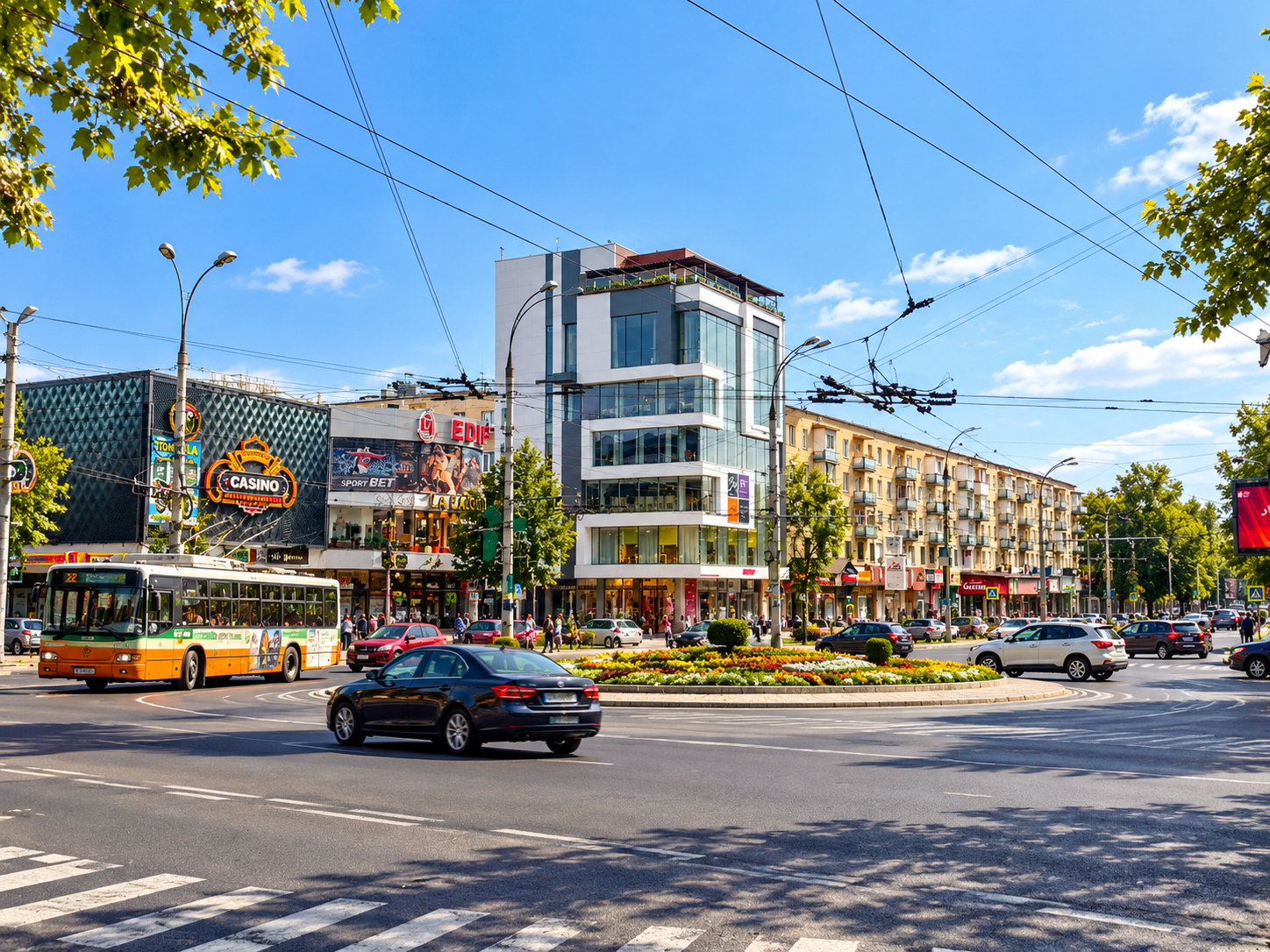
Long facades stretch beside trolleybuses driving through the larger streets such as Bulevardul Moscova, Strada Kiev, Strada Alecu Russo and Strada Bogdan Voievod while garages, kiosks, playgrounds, markets, parked cars, and rows of balconies continue between the buildings.
But after some time there, the eyes slowly stop looking at Rîșcani from far away but Instead, the smaller details appear.
The streets are not perfectly flat or completely straight the way many people imagine before being there.
Some roads stretch alongside the apartment blocks before the ground slowly rises and then falls again toward another courtyard or crossing further ahead.
Around certain parts of Strada Alecu Russo and the smaller roads disappearing deeper behind Bulevardul Moscova, the sidewalks lean slightly beneath old tree roots that have slowly pushed the pavement upward over decades.
Narrow walking paths cut diagonally through the courtyards exactly where people actually chose to walk instead of where planners once imagined they would.
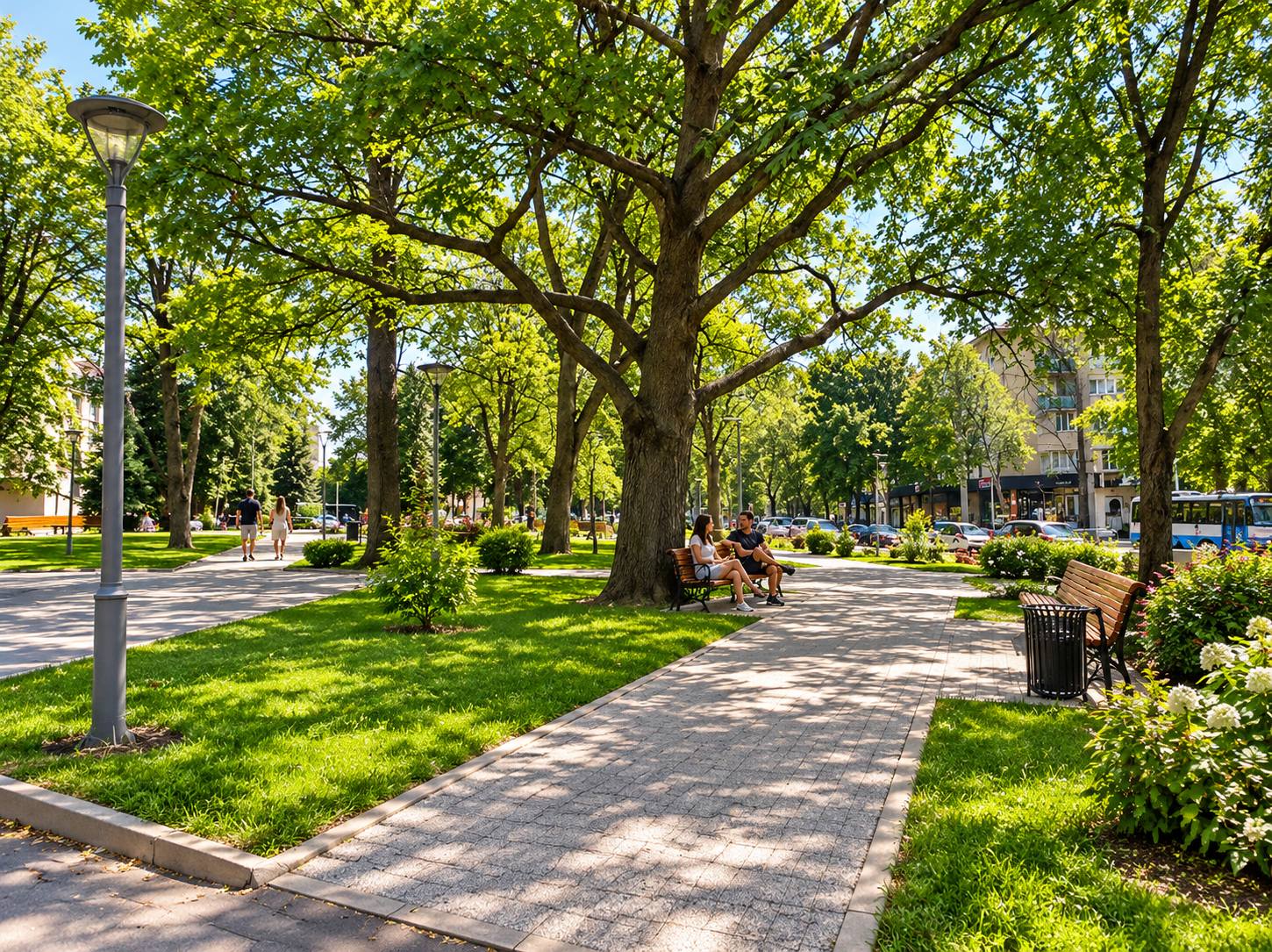
The trees change the feeling of the district more than many people first will notice.
Some were planted decades ago and now rise so high above the apartment blocks that during summer parts of the facades almost disappear beneath the leaves.
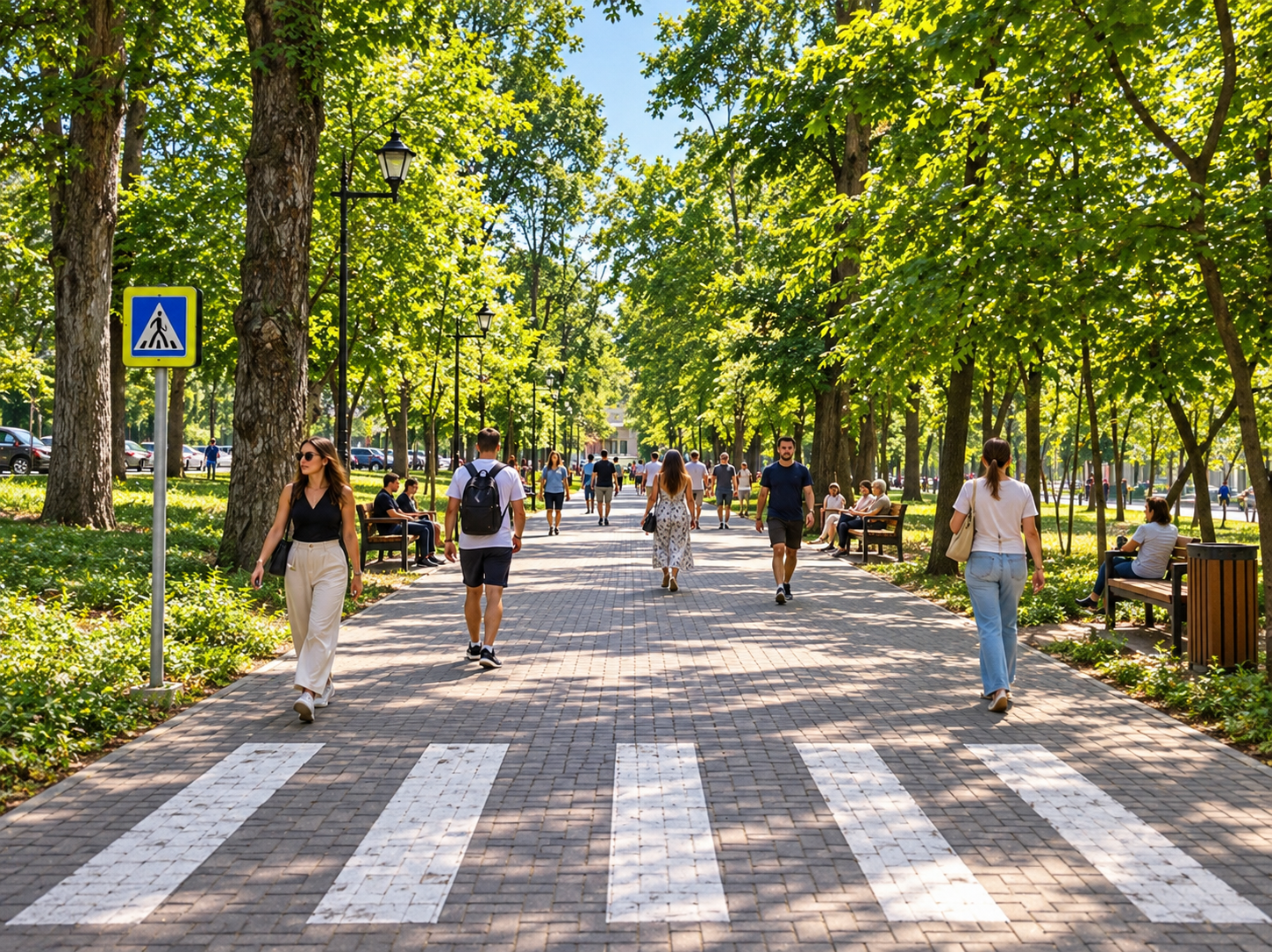
Around areas near Afgan Park and smaller green spaces between Strada Kiev and Bulevardul Moscova, the city suddenly feels softer and cooler beneath the trees.
The sidewalks themselves feel worn in a very human way.. Not destroyed, not beautiful. but Just used for a very long time.
The sidewalk changes constantly beneath your feet while walking there.
One section suddenly feels smoother from newer repairs while the next already becomes older and uneven again with cracks from winter frost, faded paint
lines, patched asphalt, loose stones, and edges softened by decades
of rain, snow, heat, dust, and people returning home every day across the same paths.
Somehow that is exactly what makes the buildings interesting and gives them an inexplicable beauty.
Nothing are feeling perfectly planned anymore because generations slowly changed small parts of the buildings little by little while continuing to live there.
And because the trees are so large, the evening light never falls evenly there.
Streetlights break apart through the branches while parts of the courtyards almost disappear beneath leaves and darkness even though apartment windows still glow softly higher above the trees.
When walking beneath those trees during warm evenings, the air changes completely.
You can smell leaves, earth, warm concrete still holding the heat from the
day, dust, bark, and food drifting downward from kitchen windows somewhere above the courtyards.
Sunlight moves through the branches in slow patterns across cracked
sidewalks, benches, garages, parked cars, and old concrete walls while shadows slowly shift across the facades above.
Near Afgan Park, the atmosphere softens.
Elderly men remain sitting beneath the shade for hours simply watching people continue through the park.
Pigeons fly and moves across the pathways near the memorial areas.
Children ride bicycles there while younger couples sit together beneath the lamps during evenings and older women slowly continue home carrying flowers or shopping bags toward the apartment blocks surrounding the park.
Near certain entrances along roads like Strada Bogdan Voievod or smaller streets disappearing in between the apartment blocks, the pavement sinks slightly where rainwater gathers after storms reflecting apartment windows, balconies, trees, and evening lights above the courtyards.
The apartment blocks themselves slowly begin showing details the longer you
walk there.
At first, many of them appear almost similar from a distance, especially along
the larger roads.
After enough time the buildings slowly separate themselves from each other because every facade carries traces of the decades people have lived there.
Certain entrances still carry faded Soviet-era mosaics beside stairways with geometric patterns, colored stone pieces, stars, or decorative concrete details partly worn away by rain, dust, snow, and winter frost.
Older stairways still hold cracked marble steps, worn railings polished smooth by generations of hands, exposed pipes, peeling paint, textured glass windows, weak yellow lamps, and apartment numbers hanging beside heavy metal doors.
Then there are the balconies outside on the facades, beside each other.
Some still look nearly untouched from another era with faded green wood, old painted metal railings, flowerpots, curtains behind thin glass, and small hooks where people once hung carpets or blankets out beneath the sun.
Right beside them, some suddenly appear rebuilt with white plastic windows, glass panels, improvised insulation, satellite dishes, or extra rooms people slowly added over time without everything ever fully matching together.
And the park itself carries history many visitors never fully understand at first.
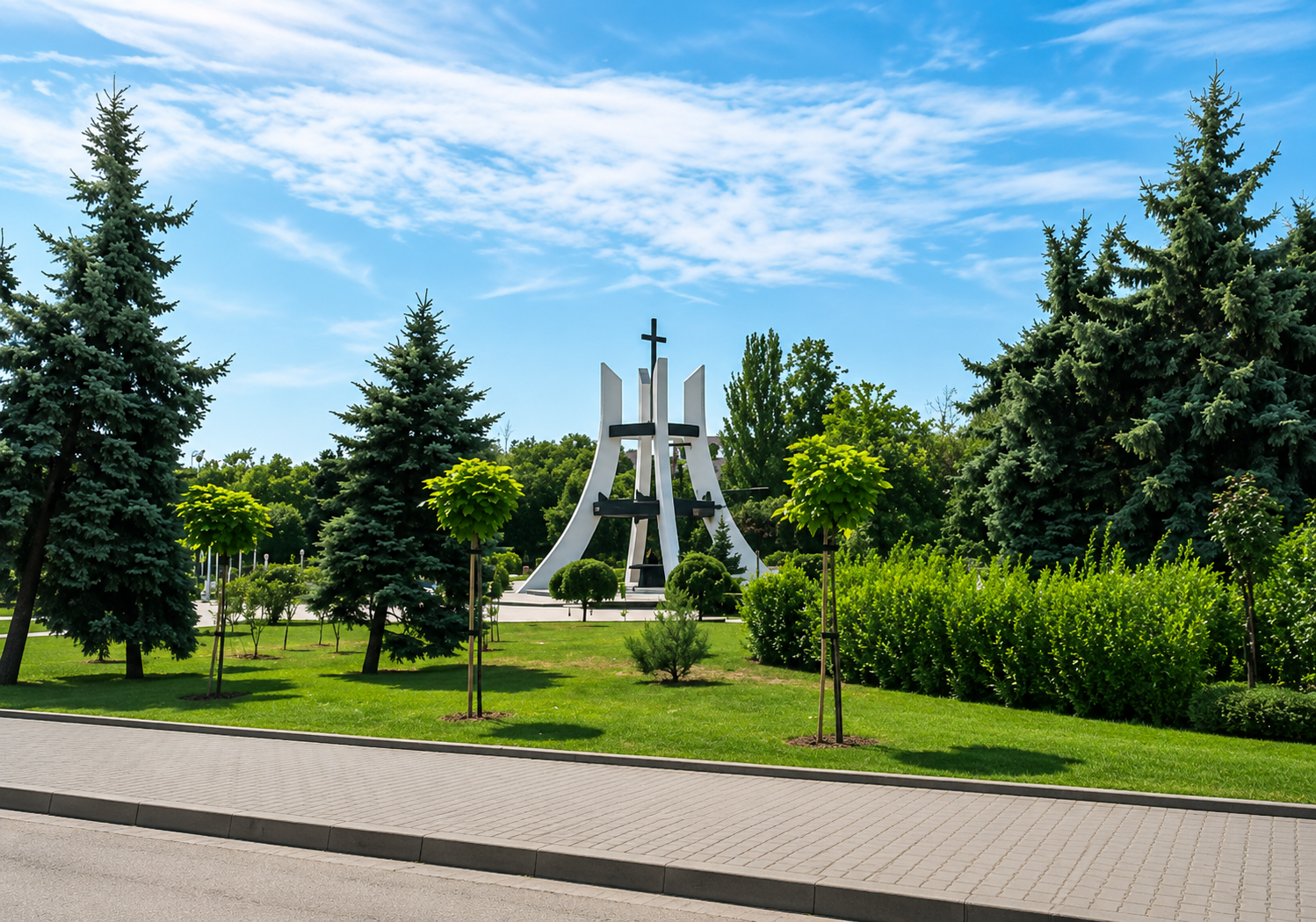
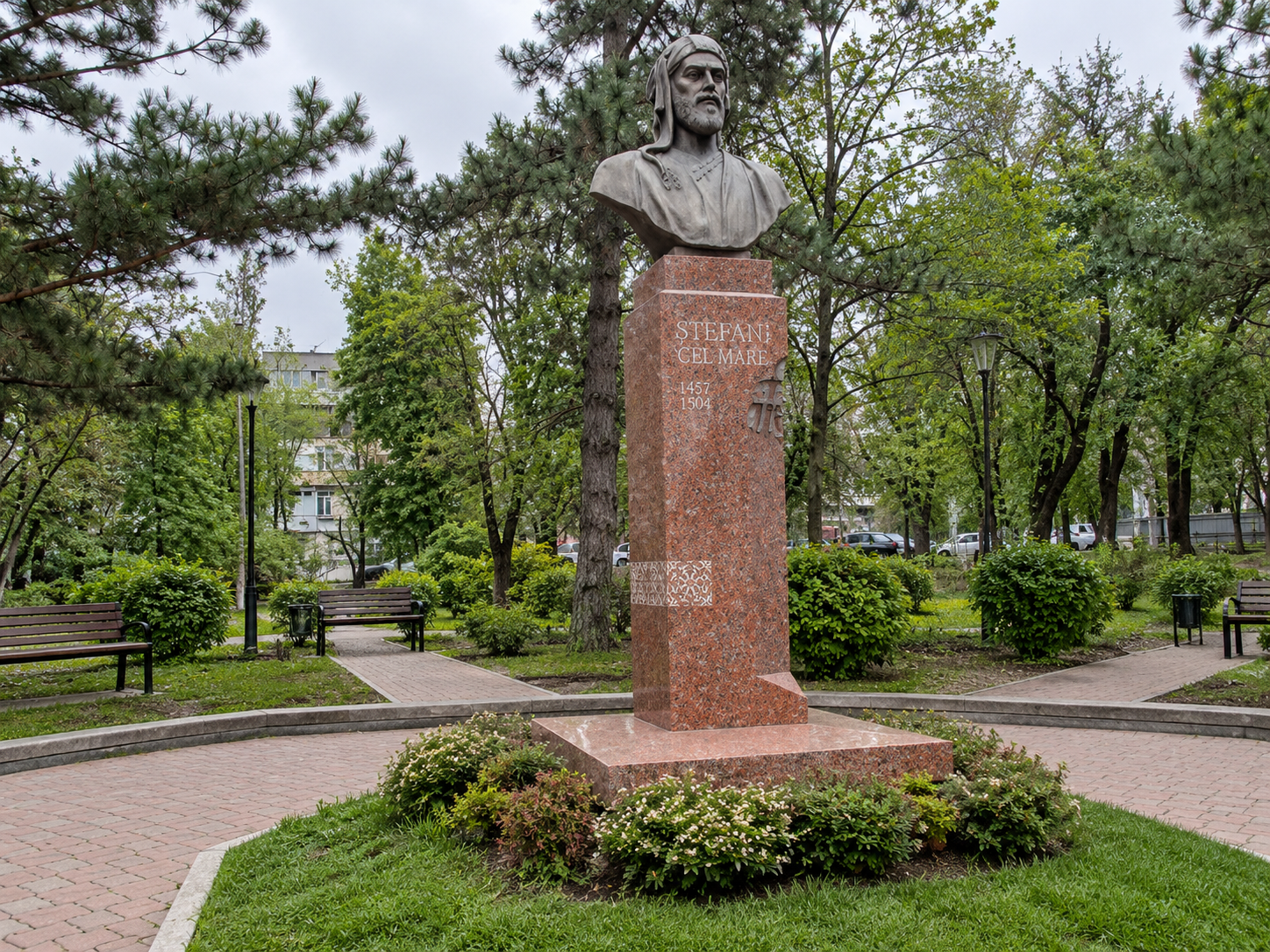
At the heart of Afgan Park stands the “Feciorilor Patriei – Sfântă Amintire” Memorial Complex, dedicated to soldiers who died during the Soviet–Afghan War of 1979–1989.
Granite plaques around the memorial carry the names of soldiers who never
returned home.
Because of that, parts of the park feel quieter than ordinary city parks even when children still ride bicycles nearby and people continue through the pathways
beneath the trees.
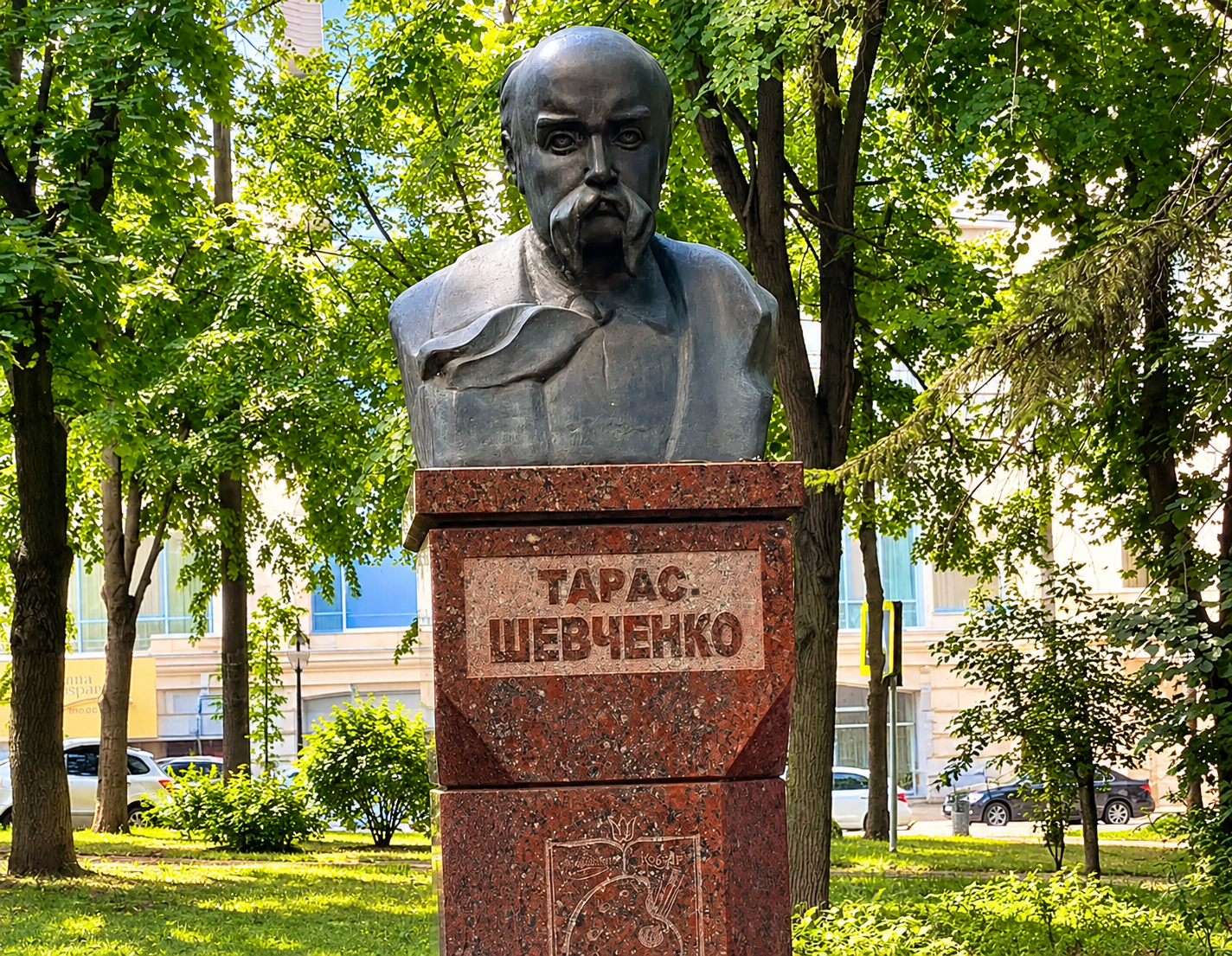
And smaller memorials quietly appear in other parts of Rîșcani too.
Old plaques on apartment buildings remembering former residents. Soviet memorial stones near courtyards or schools.
Small statues and monuments connected to workers, soldiers, engineers, or local historical figures from another era.
Certain facades still carry decorative concrete details many people no longer notice unless they stop and look upward.
Small patterns above entrances. Colored tile work hidden beneath newer repairs. Iron railings shaped differently from building to building because sections were repaired at different times by different people.
And then the smaller details begin appearing everywhere.
Plants climbing cracked walls. Old benches repaired over and over again beneath entrances. Flowerbeds built from painted tires.
Handwritten notices beside doors. Tiny gardens made from broken bricks and old stones. Small cellar windows sitting half beneath the ground.
Trees growing so close to certain buildings that branches brush against balconies during summer.
And they all fit somehow naturally into the district because Rîșcani does not feel staged or polished.
It feels like different periods have simply been layered on top of each other while people continue living between the apartment blocks, trees, garages, parks, sidewalks and courtyards around them.
And when evening slowly turns into night, Rîșcani changes again.
Some apartment blocks also still carry small memorial plaques for former residents - veterans, engineers, professors, artists, or workers connected to the district decades ago.
Most people pass them without looking up anymore, but they quietly remain part of the buildings themselves.
And after enough time walking there, the roads stop becoming the most important thing because the life between the buildings slowly takes over everything else.
Along the larger roads, cars are still driving home through the sector while buses continue to pass the apartment blocks, but between the buildings the light becomes softer and quieter.
Streetlights throw warm orange light across sidewalks, entrances, benches, garages and trees.
Parked cars sit beneath shadows from the branches, which move slowly across the facades above the courtyards.
Children kick footballs across the courtyards, playing on a playground between the trees.
Some women and men sit beneath the trees already knowing exactly which child belongs to which apartment.
Somewhere above, a balcony window suddenly opens and somebody calls that dinner is ready while another voice answers from somewhere between the buildings.
Near the garages, two older men stand beside a car with the hood open. One points seriously into the engine while the other mostly seems interested in talking.
They have probably been standing there for over an hour already while people continue to walk past them carrying bread, groceries, flowers, or bags from the market through the courtyards.
While the light from televisions continues somewhere inside behind thin curtains while the light from television continues somewhere inside the apartments above the courtyards.
Beneath the trees, people are still sitting outside because the warm air trapped inside the buildings feels heavier than the cooler evening air below the branches.
Somebody walks home carrying fresh bread and groceries through the narrow paths between the apartment blocks.
A voice suddenly drifts down from a balcony somewhere higher above before the night slowly becomes quiet again around the courtyards of Rîșcani.
And there is almost always movement somewhere in Rîșcani.
Teenagers sitting beside kiosks laughing loudly while music escapes softly from somebody’s phone.
Children riding bicycles too fast between parked cars while somebody shouts after them from a bench beneath the trees.
A grandmother walking home slowly from the market carrying bags heavy enough to force her to stop every few minutes.
Dogs sleeping beside entrances where everybody already seems to know them.
Young couples walk between terraces while groups of teenagers gather near kiosks and benches laughing loudly beneath the trees.
Elderly people still walk slowly through the evening streets while musicians continue playing somewhere near the parks and squares.
3 Facts
Rîșcani și-a primit numele de la familia boierească Râșcanu, care deținea
terenuri în zonă în secolul al XIX-lea.
-
Rîșcani takes its name from the Râșcanu boyar family, who
owned land in the area during the 19th century.
- - - -
Rîșcani se întinde pe un teren deluros, iar multe străzi și
curți urcă și coboară.
-
Rîșcani stretches across hilly ground, with many streets and-
courtyards rising and falling.
- - - -
O mare parte din Rîșcani s-a dezvoltat în perioada sovietică, în
special între anii 1960 și 1980.
-
Much of Rîșcani developed during the Soviet period, particularly
between the 1960s and 1980s.