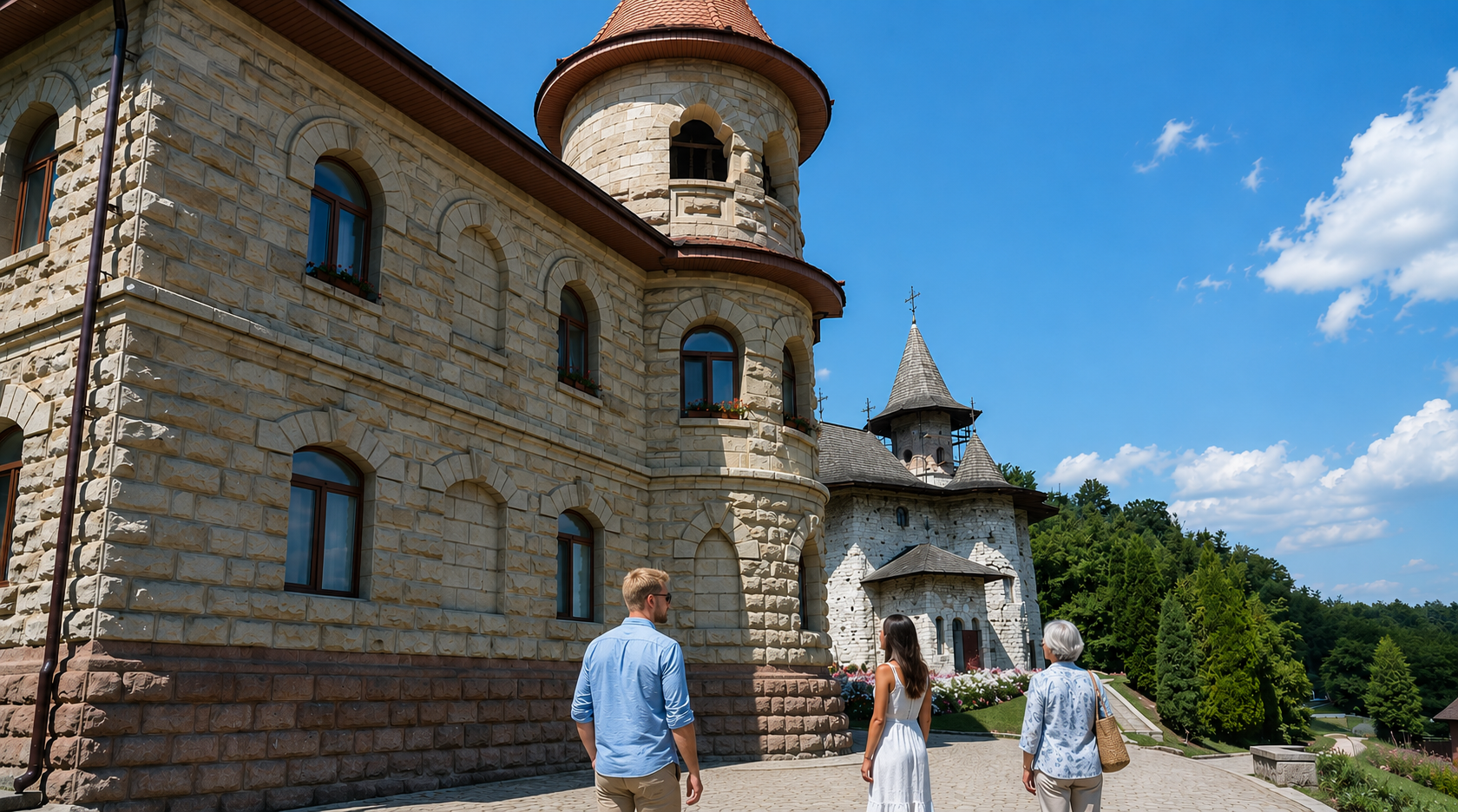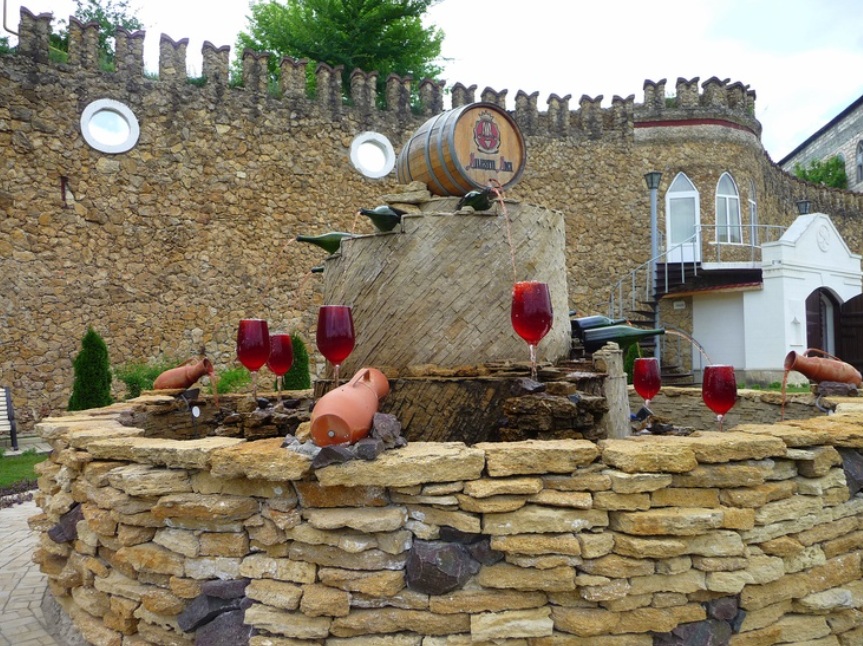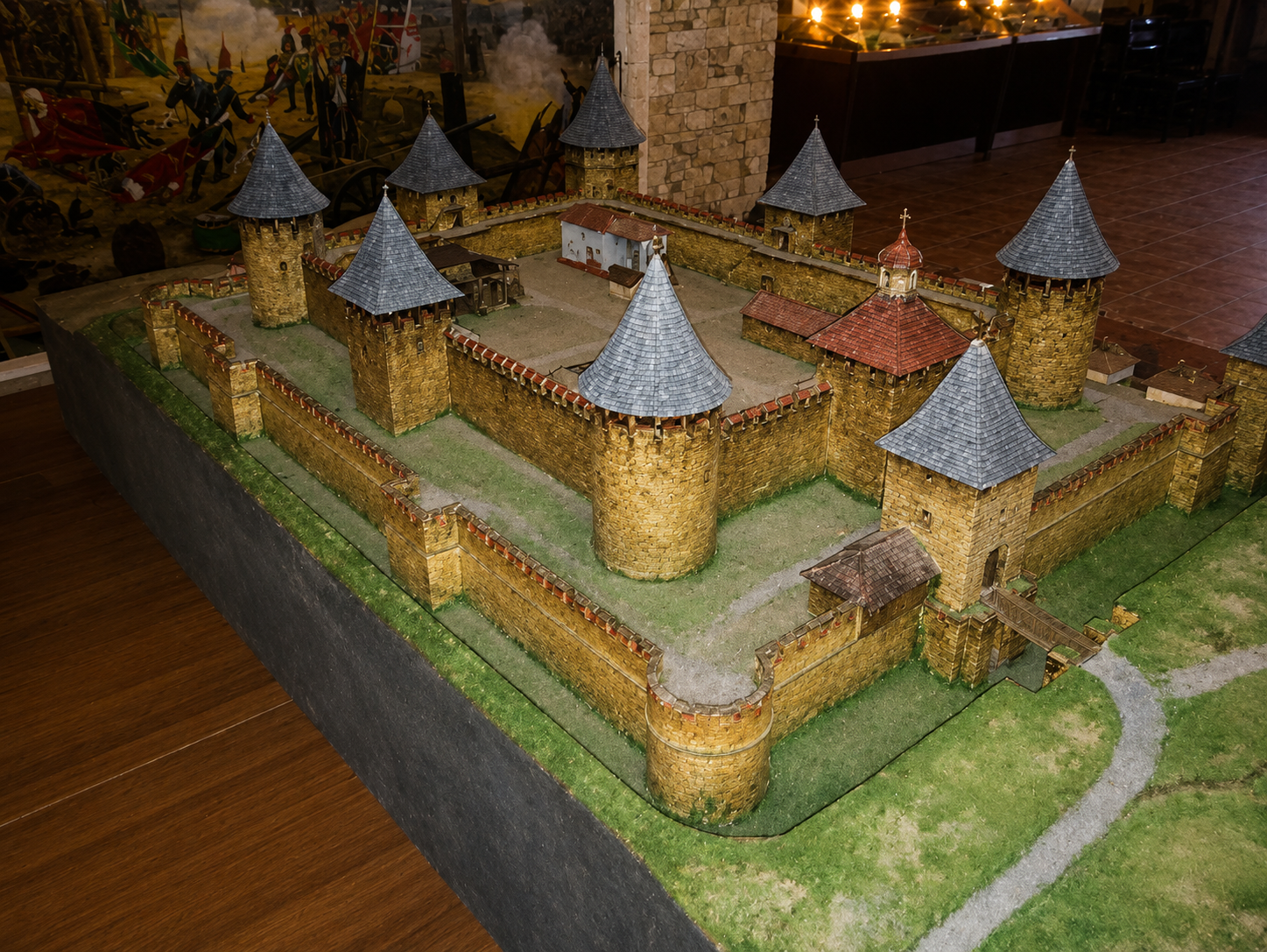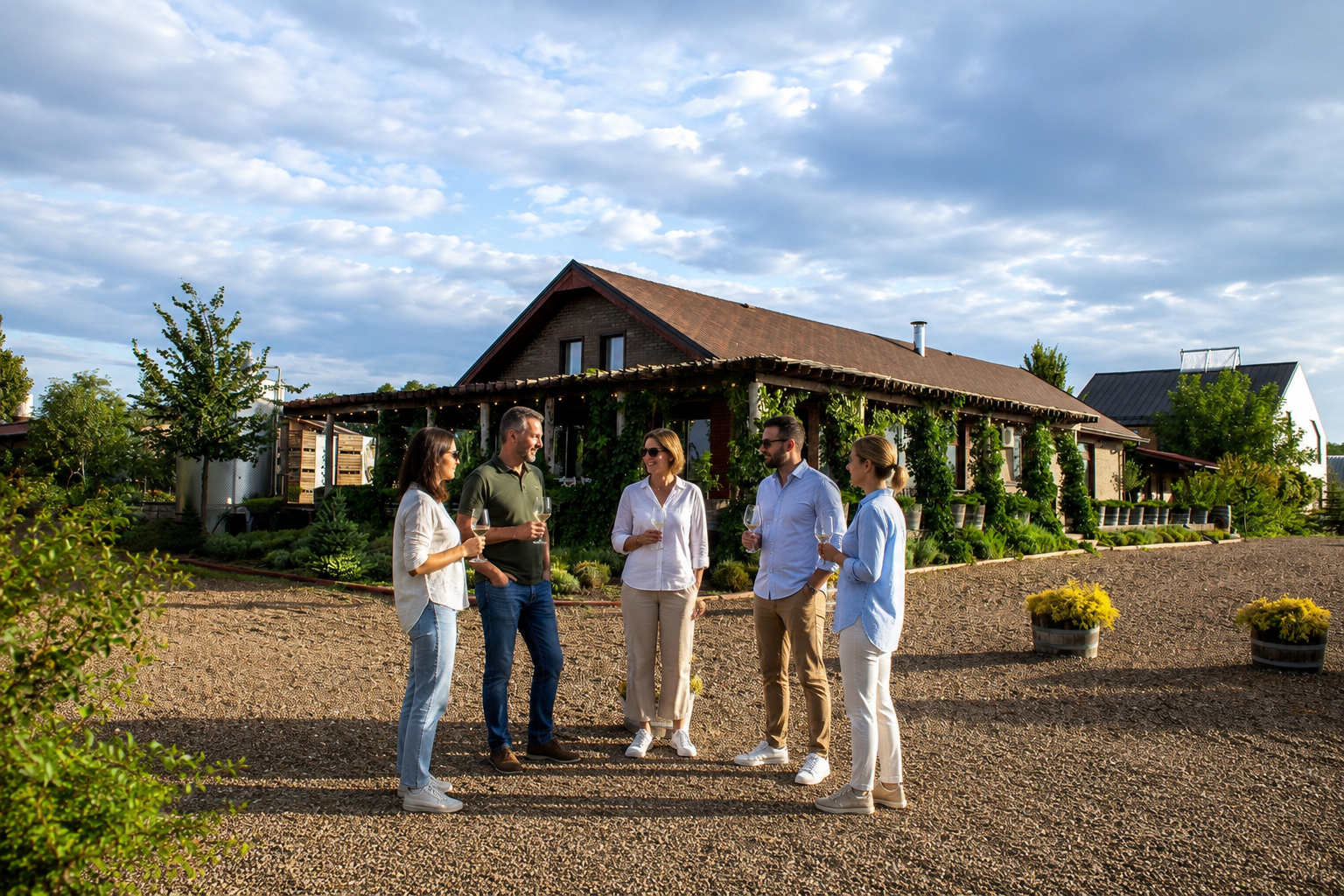
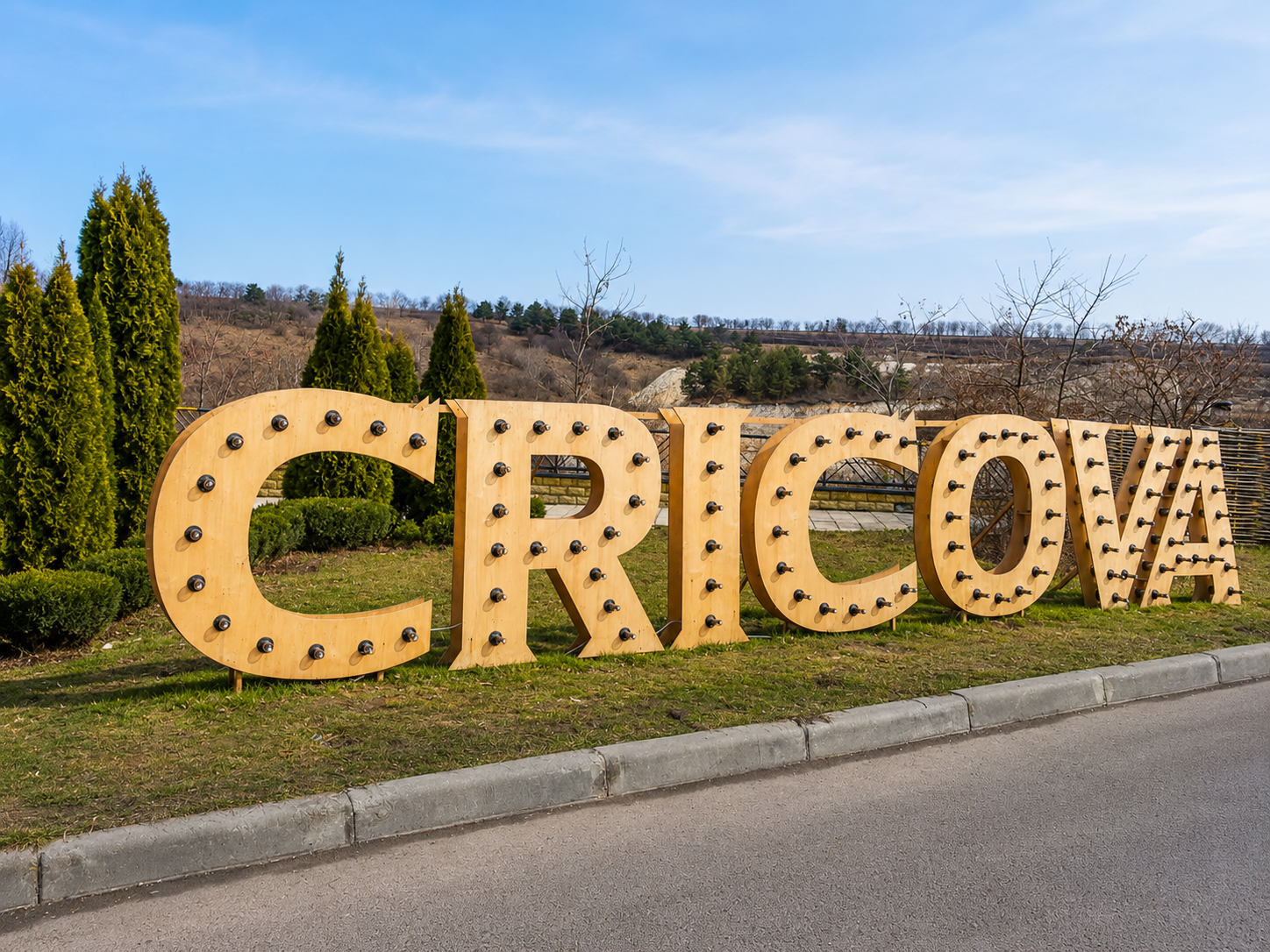
Driving to Cricova, the large arch across the road leaves no doubt that you are arriving somewhere which are large.
You are passing vineyards and winery buildings before it is opening into the area around the entrance.
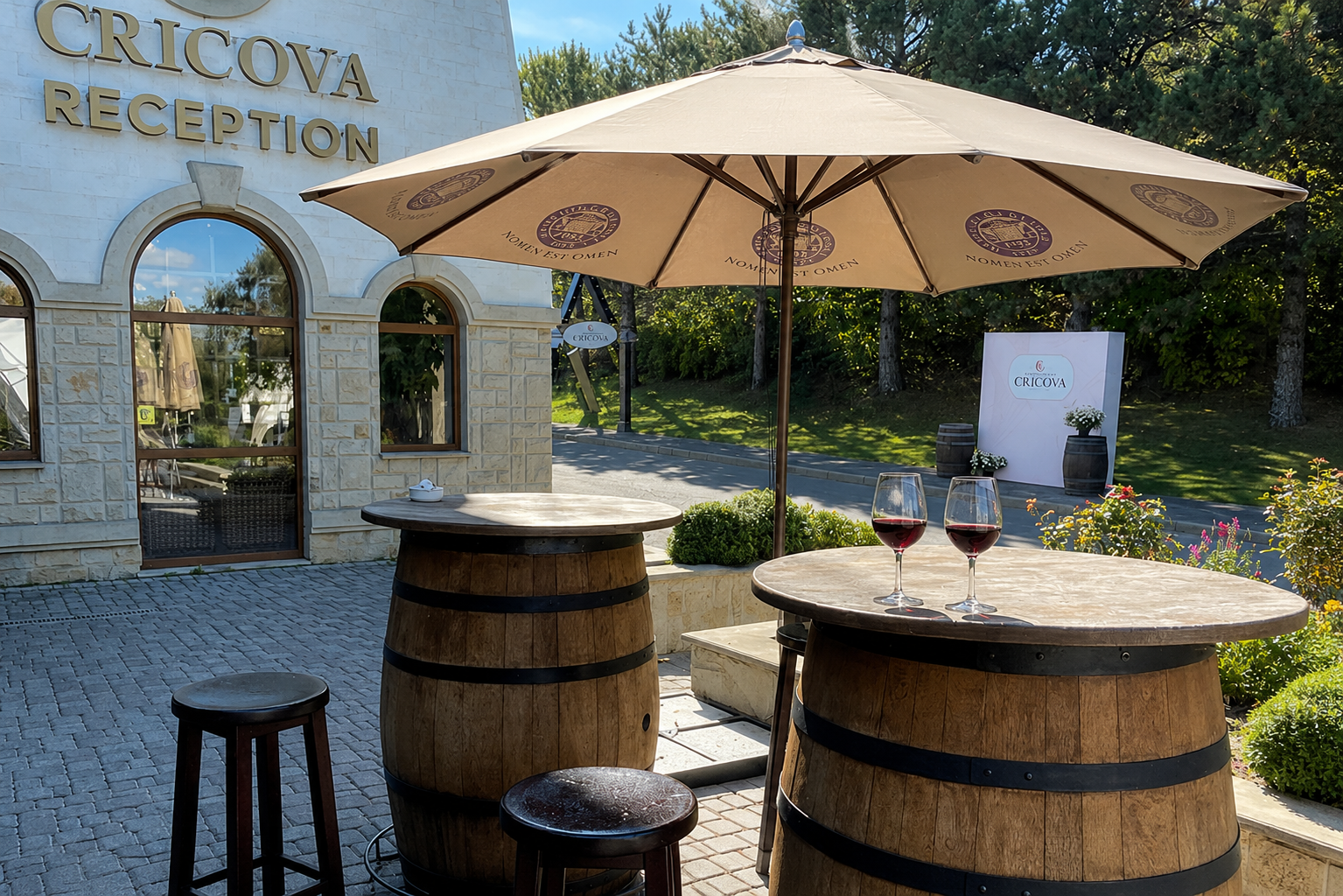
Among them, you you can't ignore the the restaurant, where many guests gather before or after their tours.
Visitors arrive, tour buses come and go, and the scale of the place quickly becomes noticeable.
At the entrance the, staff are welcomming new arriving guests, answer questions, and provide tickets for the tours.
Visitors gather before their scheduled departures while others return from the underground cellars.
It is only after arriving that you begin to understand how large Cricova really is, because from the surface, it still looks like a winery.
The real surprise waits below ground.
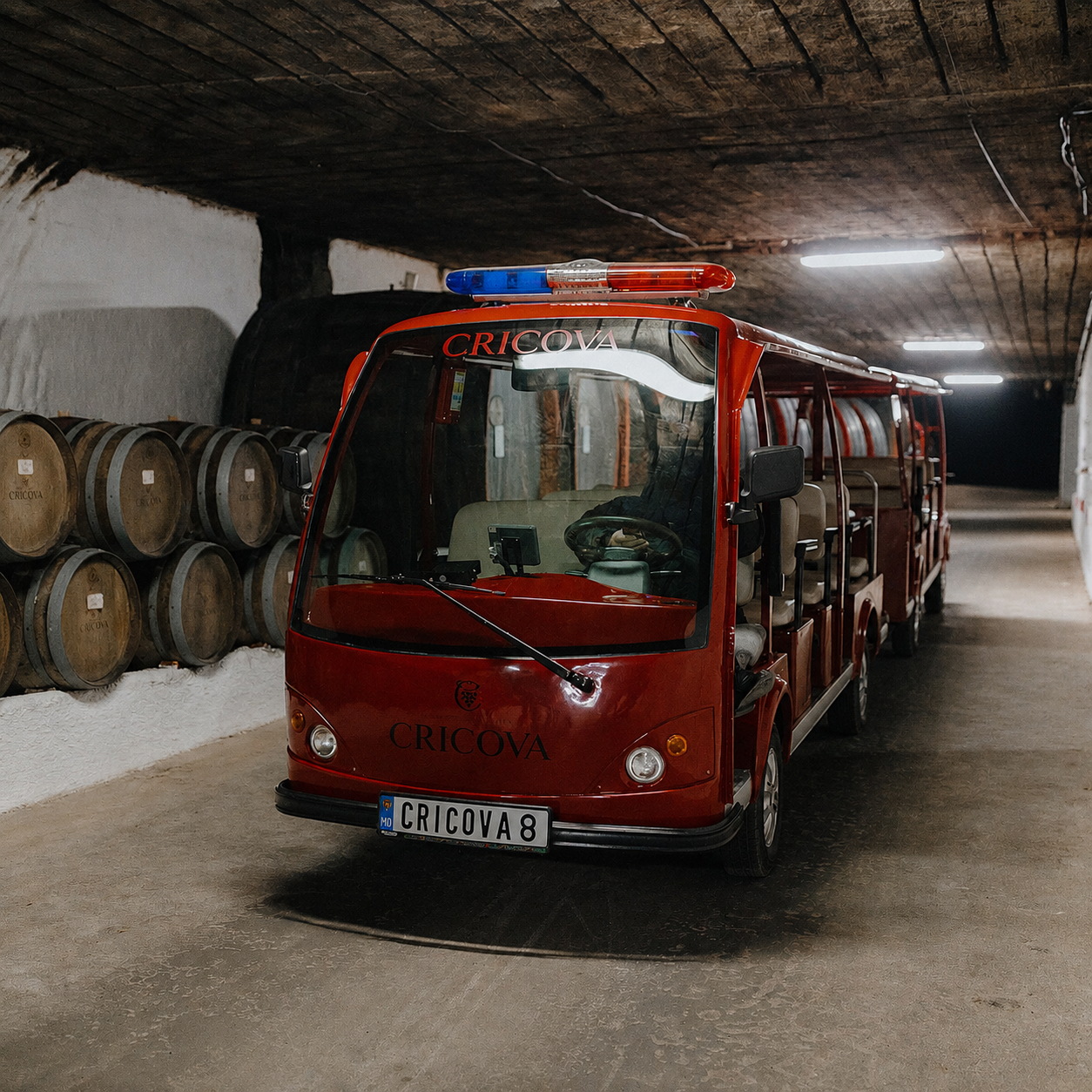
After receiving the tour pass, visitors are directed toward the small vehicles waiting near the entrance.
Passenger wagons are attached behind them and, once everyone is seated, the journey underground begins.
The road slowly slopes downward and the daylight remains visible behind for a short while before disappearing completely.
The air becomes cooler, the limestone walls move closer, and within a few minutes the winery above ground feels surprisingly far away.
Then the tunnels begin to open up and are much larger than you'll expect.
Wide enough for vehicles, they continue from one section to another like underground streets. The further you move in the tunnels, the easier it becomes to lose any sense of direction as new tunnels appear and disappear.
What looked like a winery from the surface suddenly feels like something much larger and could be taken out from a book, beneath the ground.
The tunnels come from old limestone quarries, with parts going back centuries, and in the 1950s they were developed into a winery.
Today, the underground network stretches for more than
100 kilometers, with around 60 kilometers in use, holding millions of
bottles in conditions that stay almost unchanged.
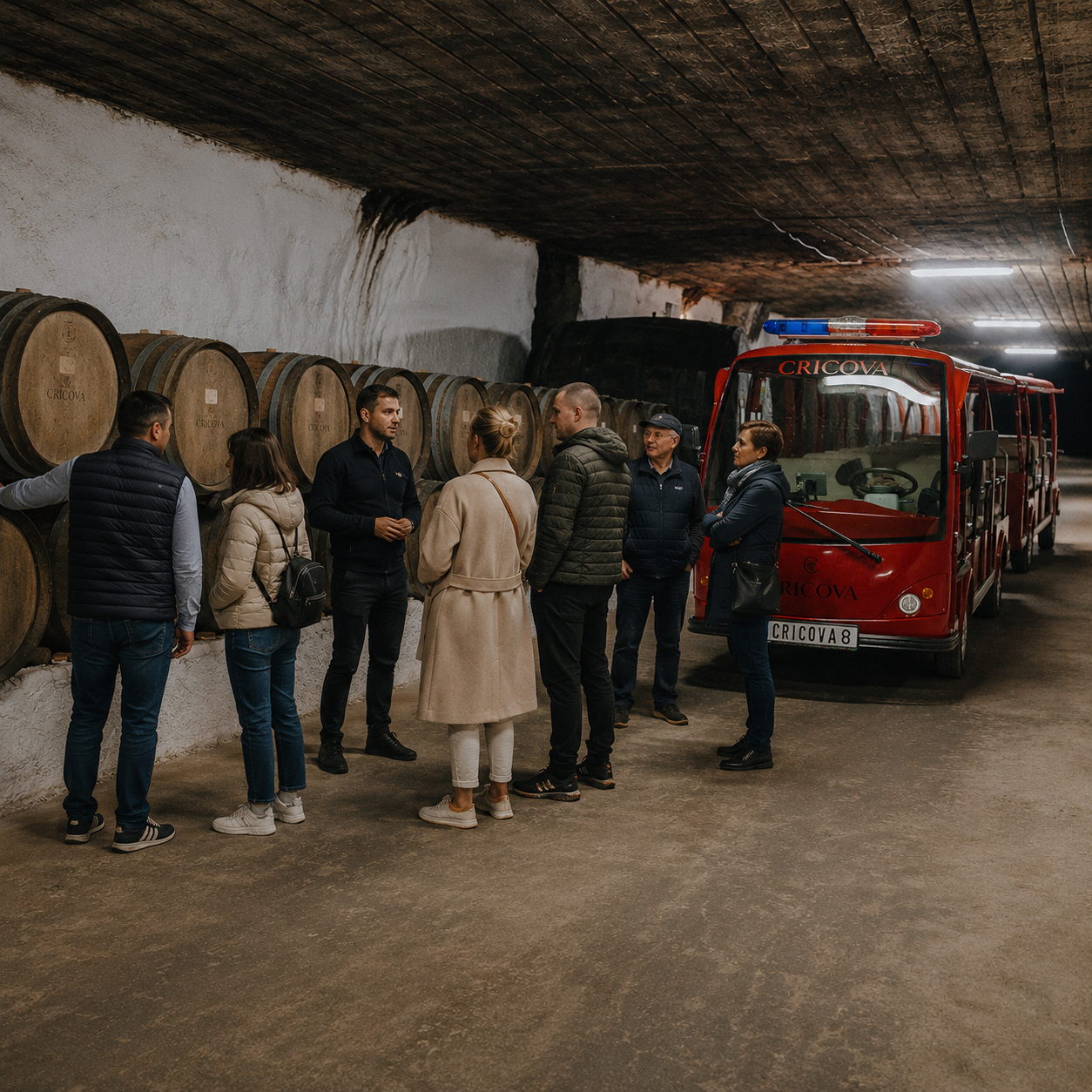
Down in the tunnels the cute little bus moves slowly, so you have the opportunity to look around and at least have time to take many of the details and impressions with you, to consume later.
Every now and then it stops and everyone leaves to explore a chamber, or the collections that are very impressive.
And then everyone gets on and you continue deeper into the tunnels and cellars.
Sometimes it becomes easy to lose track of both time and place.
There is always another tunnel, another chamber, another detail waiting for you to discover.
What makes many of the rooms memorable is that no two champer are the same.
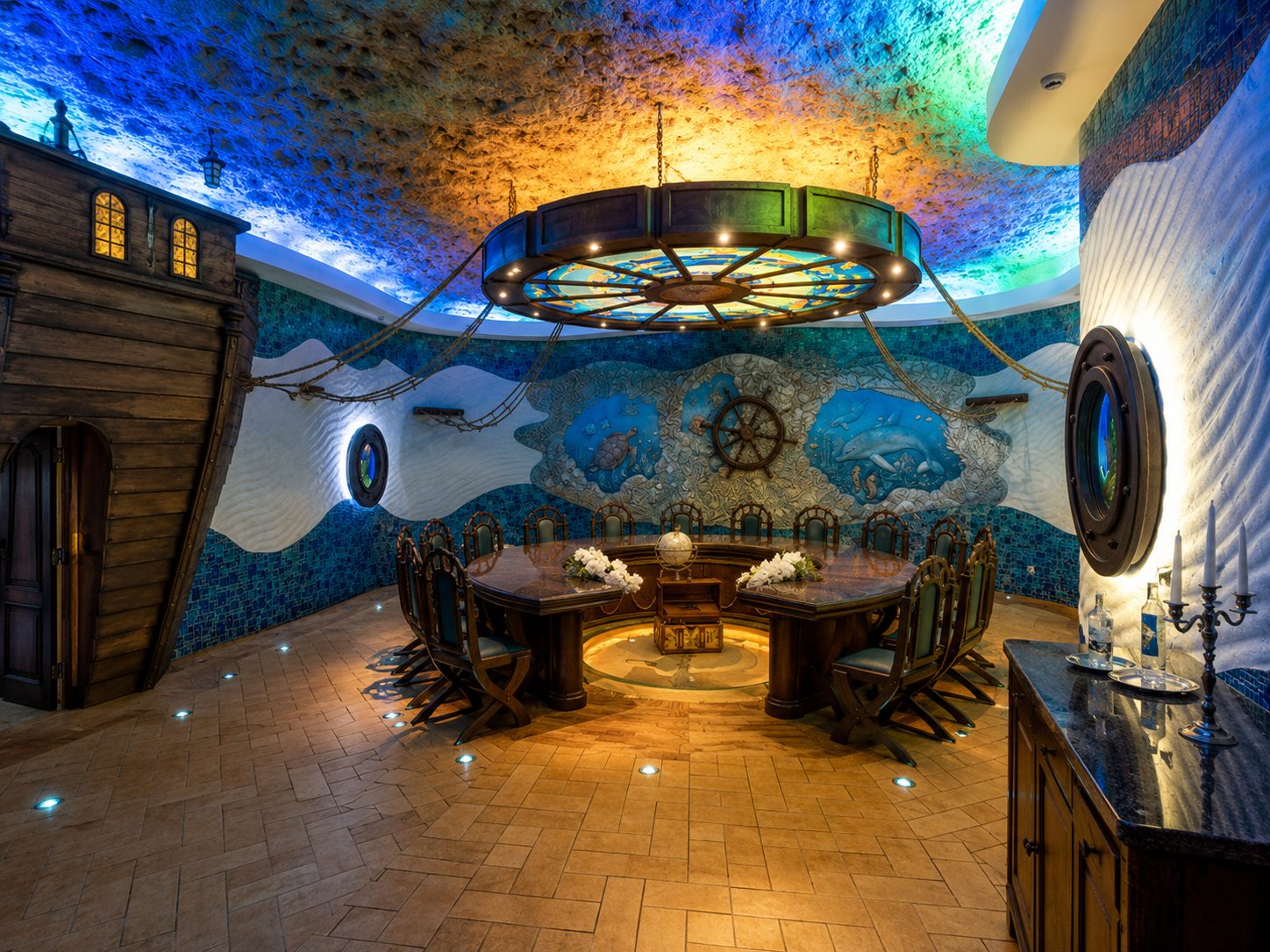
One chamber may be built around a maritime theme, with portholes, deep blue colors, and details that make it feel more like the interior of a ship than a winery.
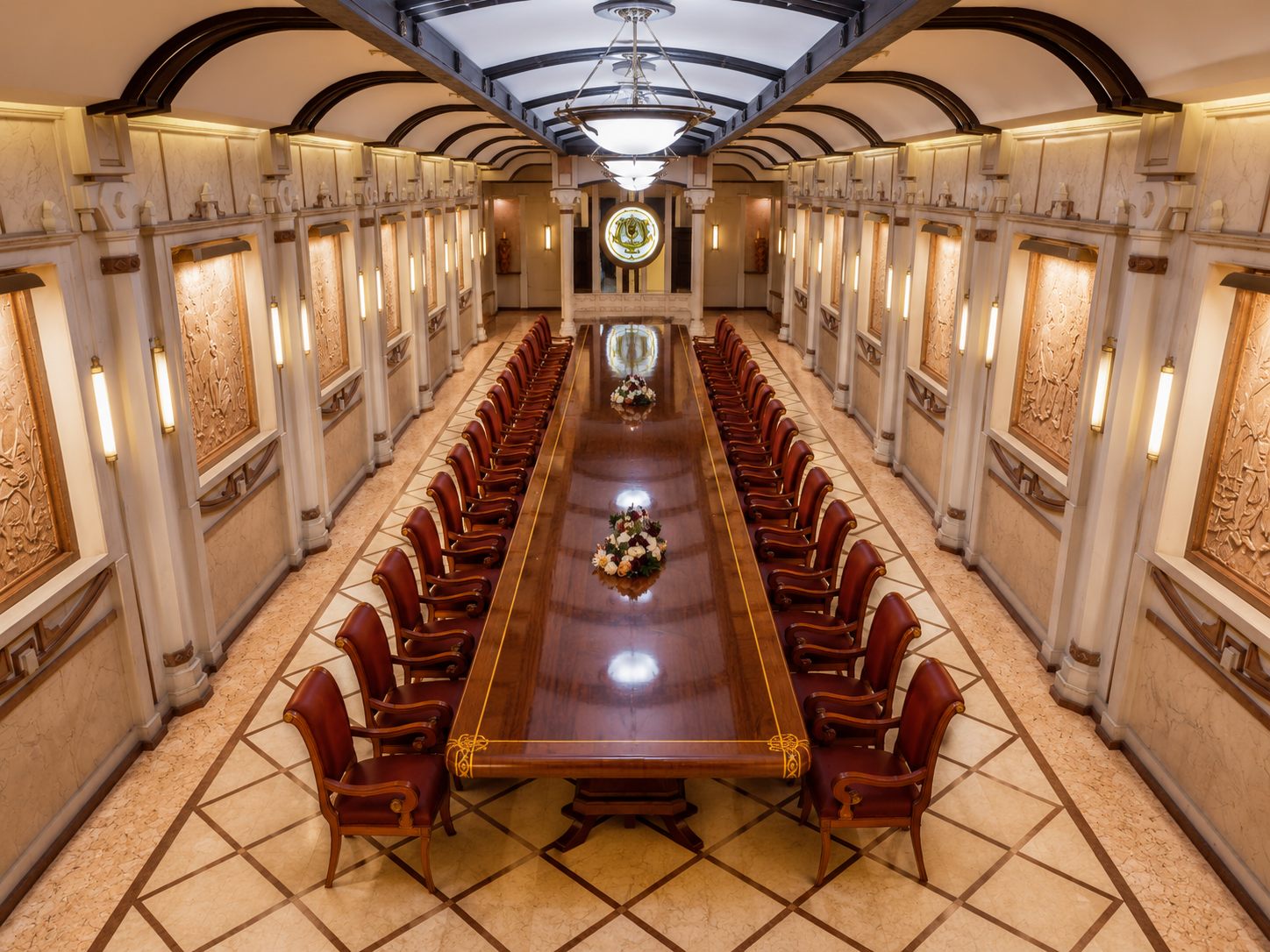
Another room appears with long polished tables, carved walls, and elegant lighting, giving the impression of a grand reception hall hidden deep beneath the ground.
Some rooms feel intimate, others surprisingly grand.
Each has its own character, its own atmosphere, and its own story and just when you think you know what the next chamber might look like, something completely different appears.
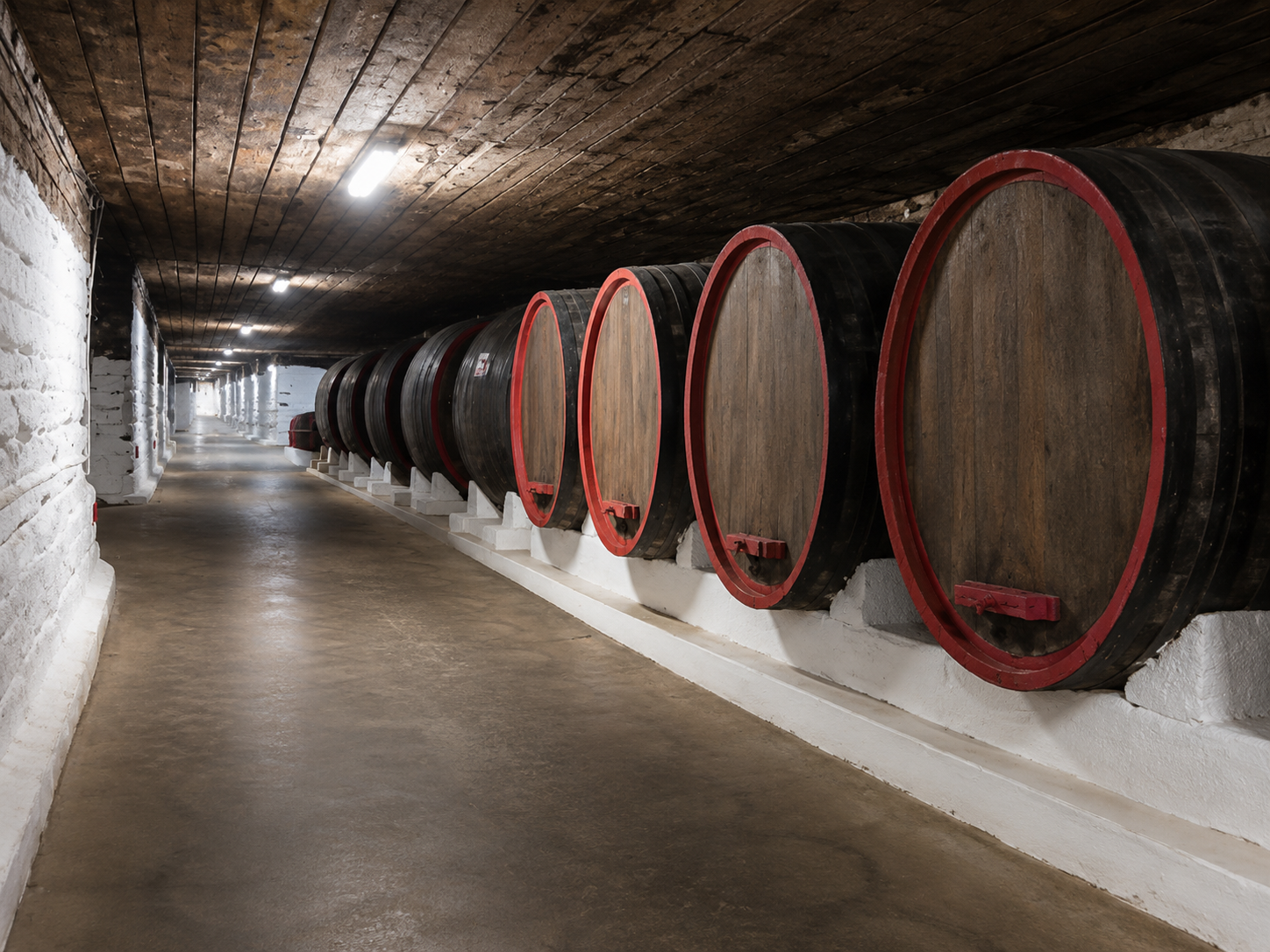
The walls are pale limestone, carved out decades ago, their surfaces marked by
tools, time, and the countless years the tunnels have existed beneath the ground and vineyards above.
Cricova's underground galleries stretch for approximately 120 kilometres.
The temperature are steady at around 12–14°C throughout the year, cool enough that a light jacket quickly feels welcome no matter what season waits outside.
The further your tour continues, the more the cellars begin to open.
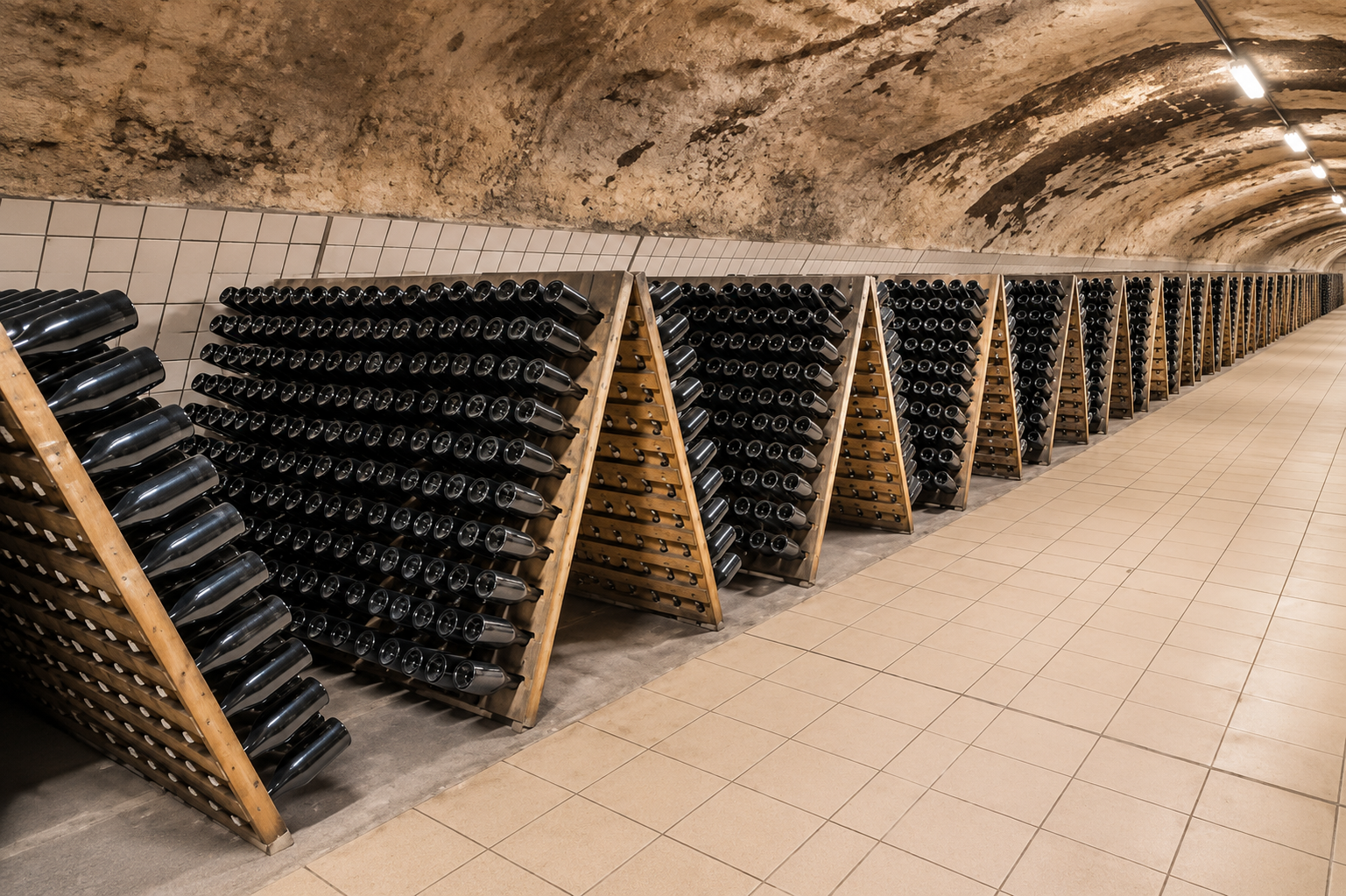
Rows of bottles stretches away into the distance, stacked carefully along the walls and disappearing into tunnels that seem to have no end.
Soft lighting reflects from glass and stone and then, just as the tunnels begin to feel familiar, everything just changes.
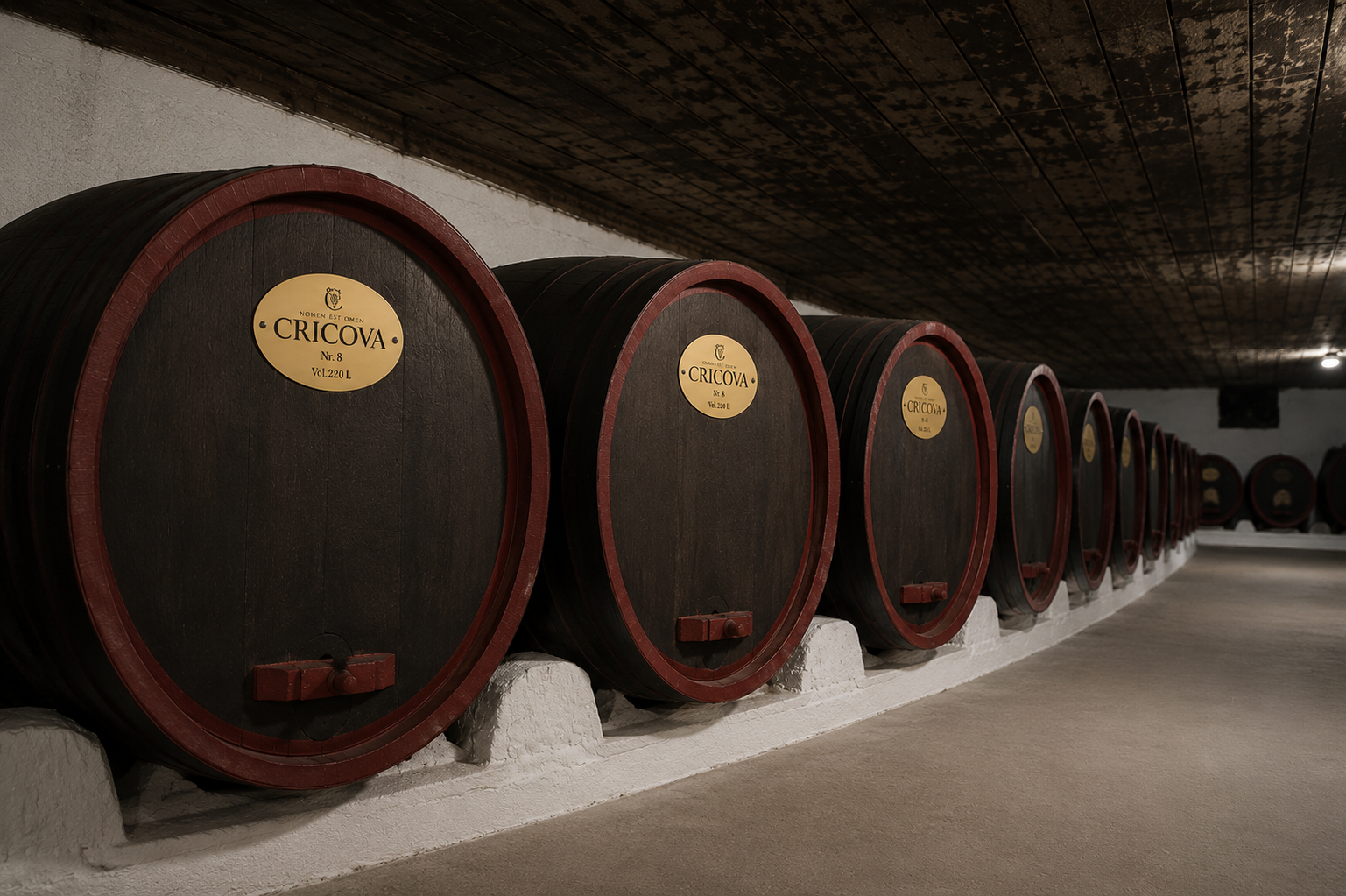
A large chamber suddenly appear before you, wooden barrels stand beneath the rounded ceilings, warm light falls across polished stone floors, and the limestone walls take on shades of gold and amber.
Further on, another room appears, different from the last, with collections of bottles resting behind glass, some covered in dust from decades of storage.
Around each corner there is a feeling that something unexpected are waiting.
Another chamber, another collection, another part of the underground world hidden beneath Cricova.
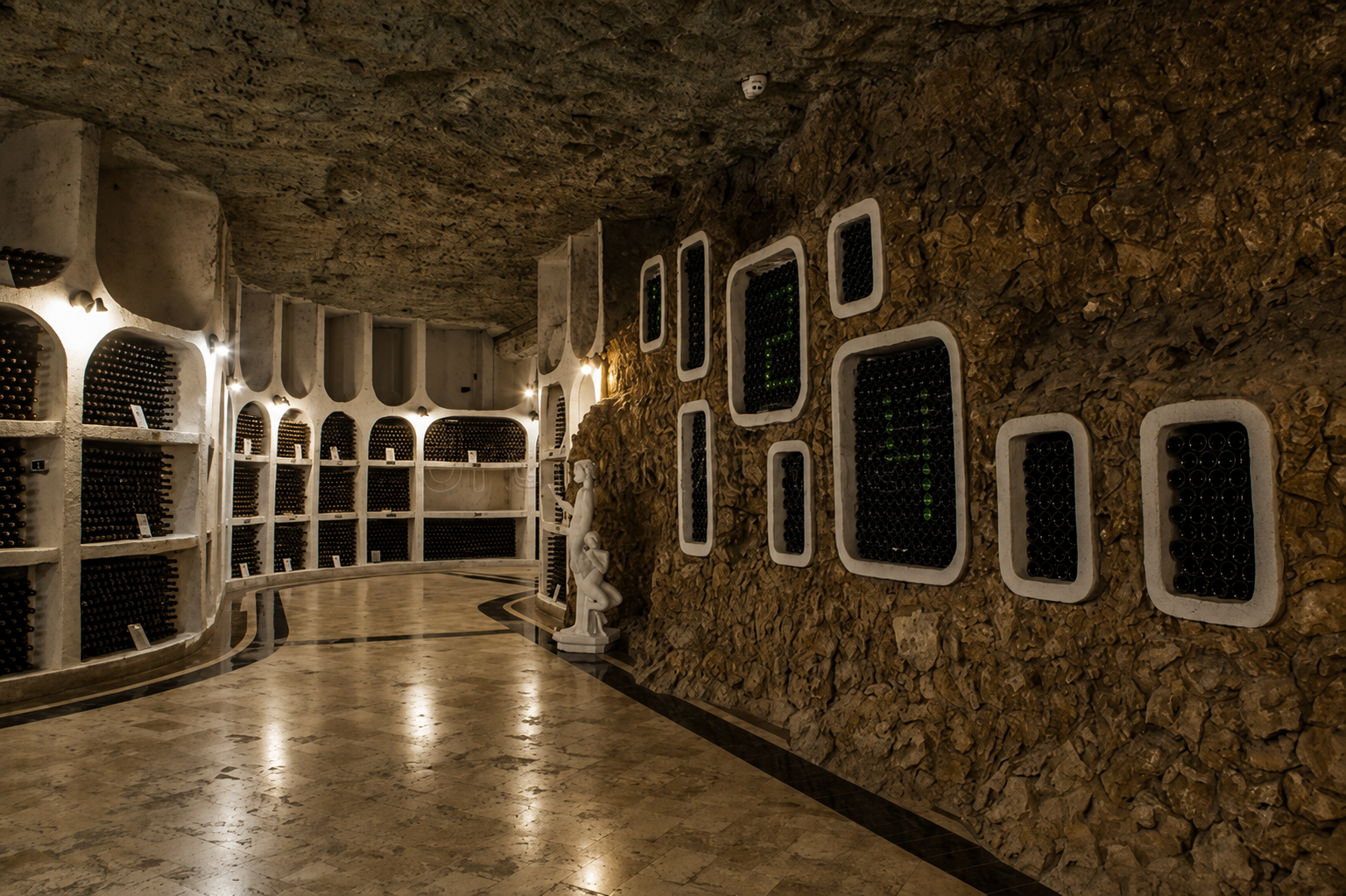
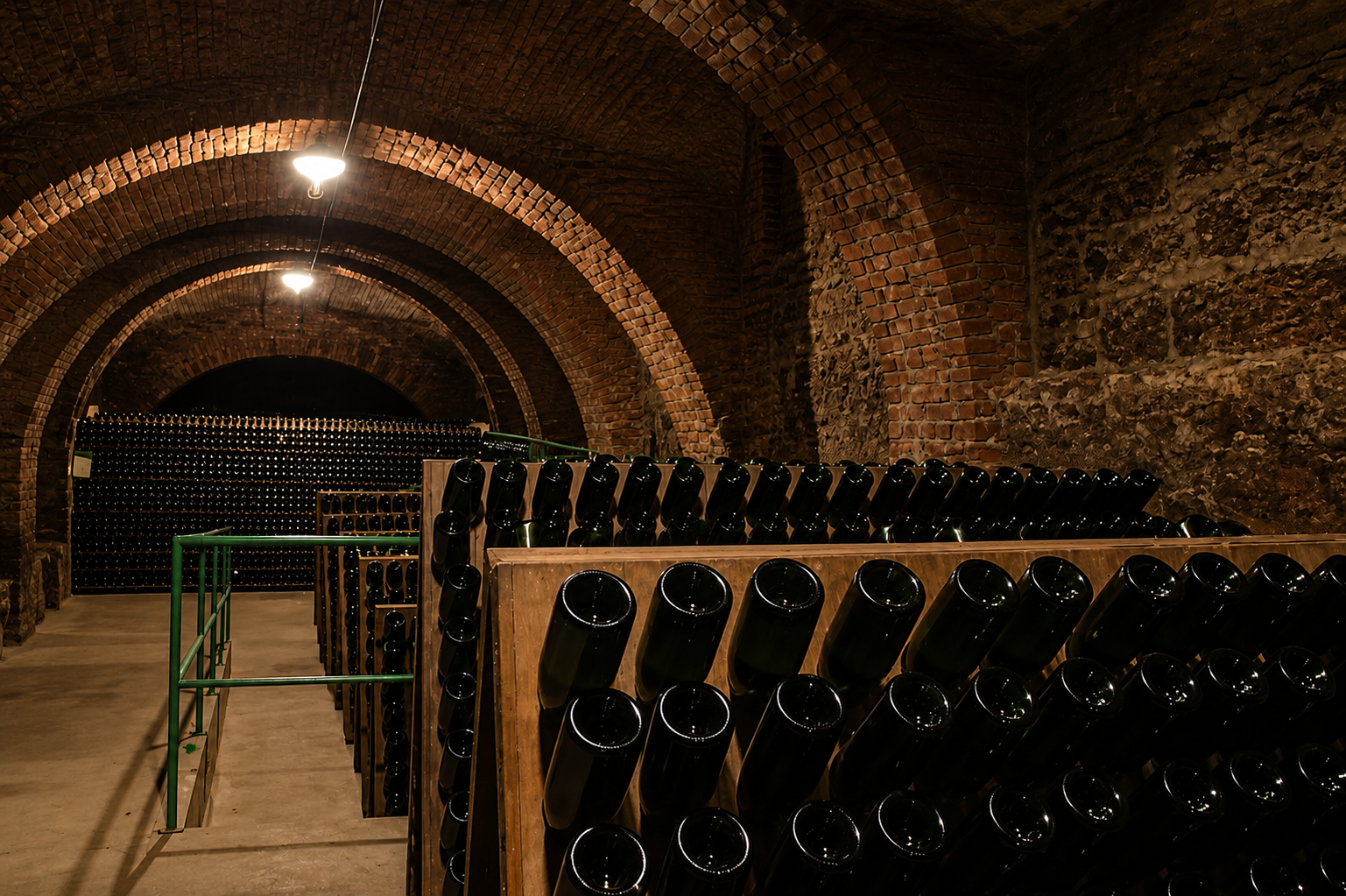
Some of the halls are carefully arranged, with warm lighting, wooden details, and decorations that make them feel surprisingly elegant.
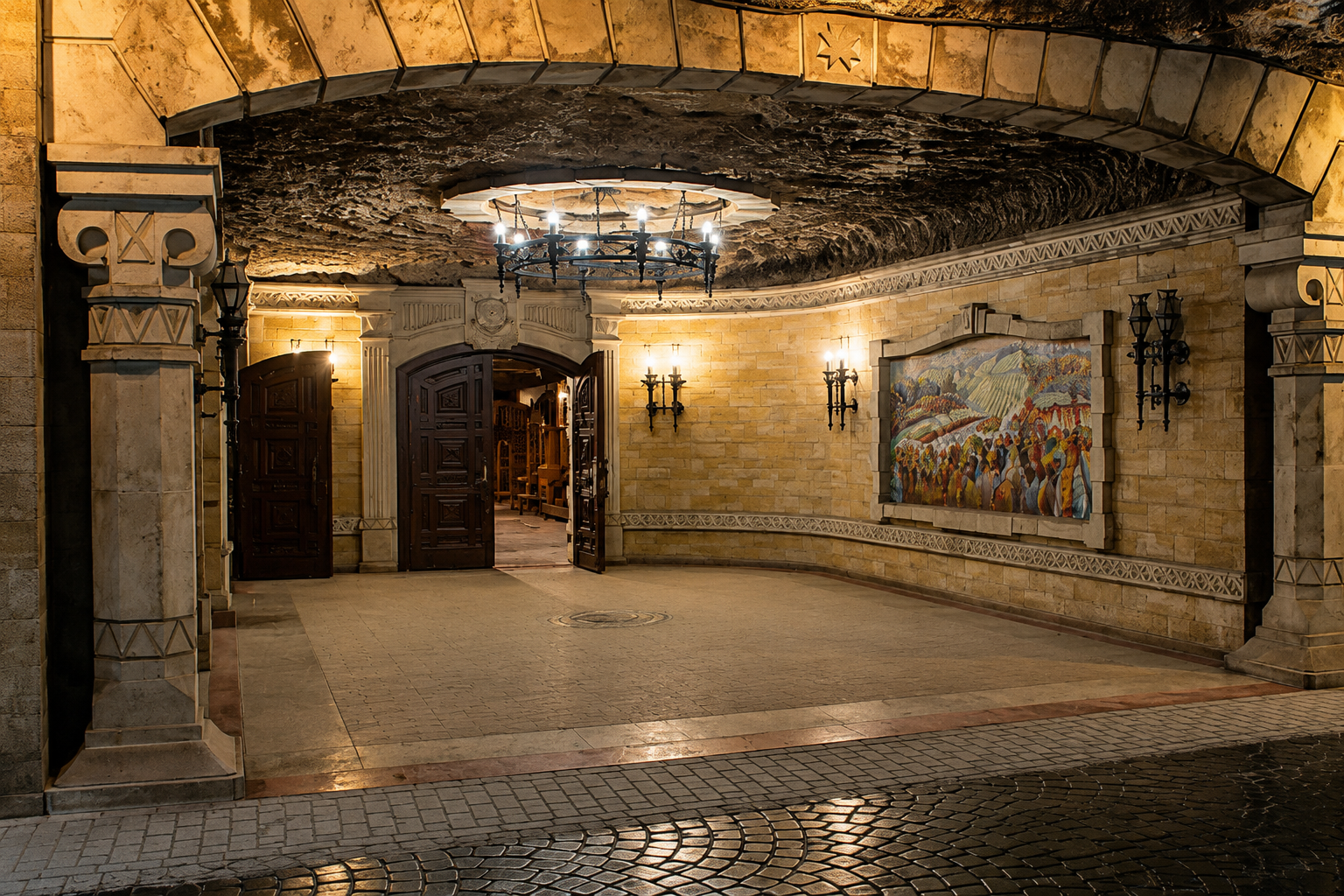
Chandeliers hang from the ceilings, tables are prepared for tastings and are set elegantly, as if you were going to dinner, or an event with the royals.
Carved details appear in the limestone walls around the rooms and are not what you would expect to find deep underground.
One moment you are driving through cool stone tunnels, the next you are standing in a hall where light reflects from polished wood, glass, and stone.
The contrast between the raw limestone and the carefully designed interiors makes the rooms feel even more remarkable.
It is one of the most visited wine cellars in Moldova, welcoming a large number of visitors every year, yet once you are inside, it never feels overcrowded in the way you might think and exspect.
The tunnels continue in every direction, chambers appear far apart from one another, and the scale of the cellars seems to absorb the visitors moving through them.
After a while, the world above begins to seem surprisingly distant.
The vineyards, roads, and buildings are still there, but they do no longer
feel, just above ground.
When you come back up, it takes a few moments, to get use to be back in real life
The daylight feels much brighter than before and the warm air almost unexpected.
Looking around, it is difficult to believe that everything you have just experienced exists beneath the ground below your feet.
Some visitors return quietly, whispering, still taking it all in, while others are already sharing their discoveries with loud voices, moving both arms and legs as they describe the rooms, the tunnels, and the things that surprised them most.
It is often easy to see who has just had an experience they did not at all quite expected.
Tip for visitors:
Even during the hot Moldovan summer, bring a light jacket or sweater. The underground galleries at Cricova stay cool throughout the year.
Se spune că timpul petrecut sub pământ curge după alte reguli, aproape stând pe loc, în timp ce timpul de la suprafață aleargă înainte cu viteză, asemenea unei autostrăzi.
-
It is said that time underground runs on a completely different
model, almost standing still, while time above is running fast, like a highway.