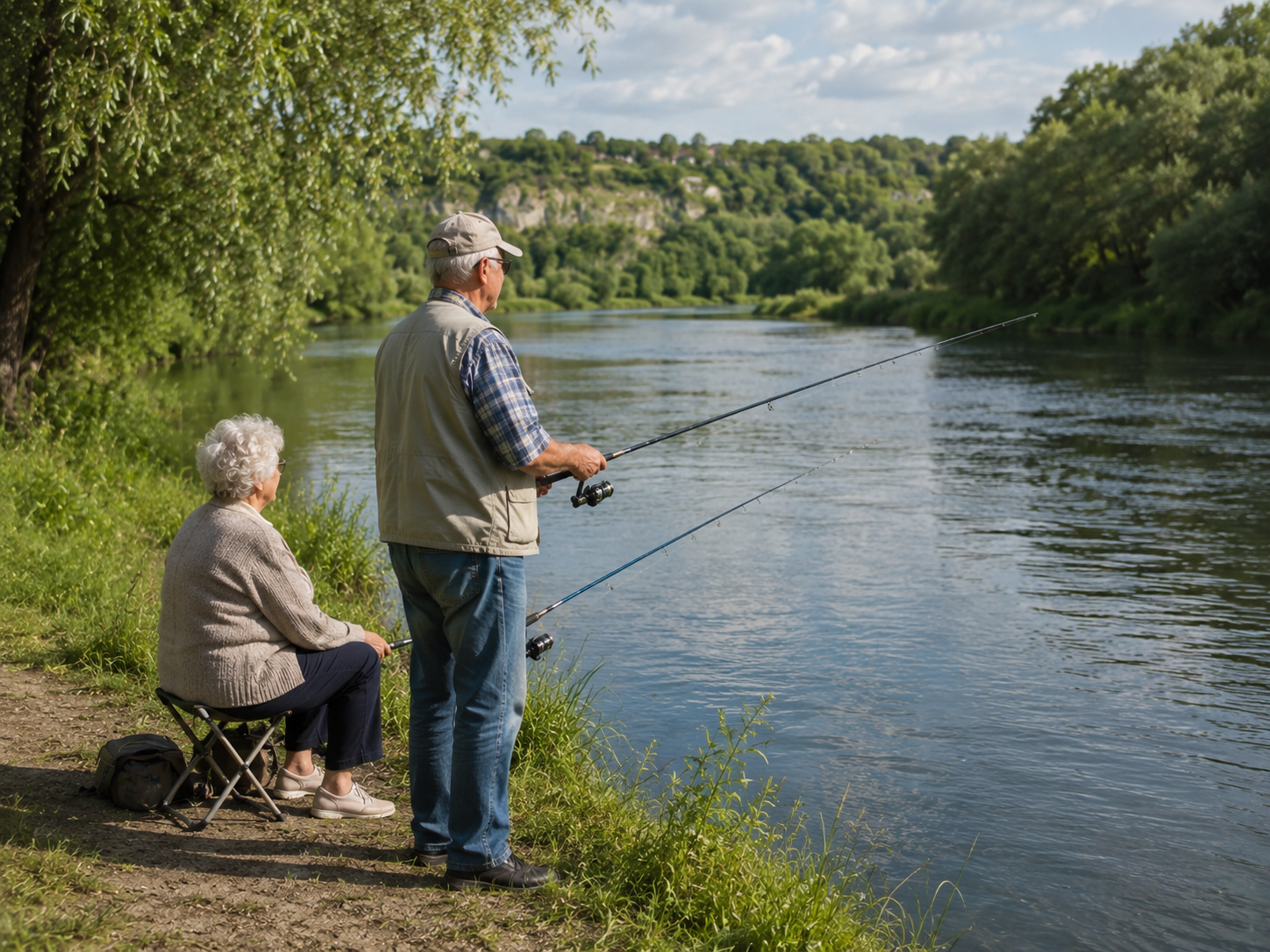
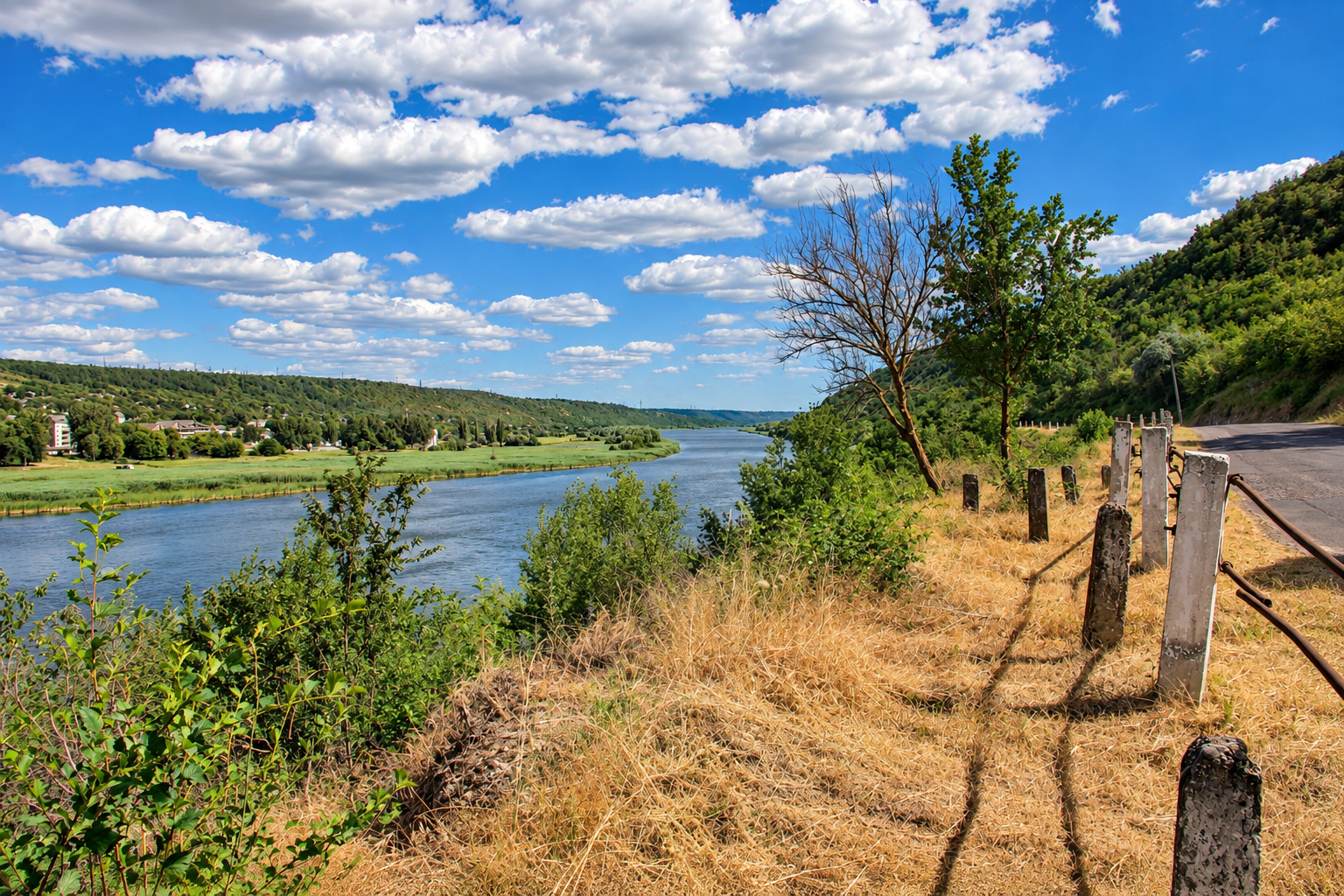
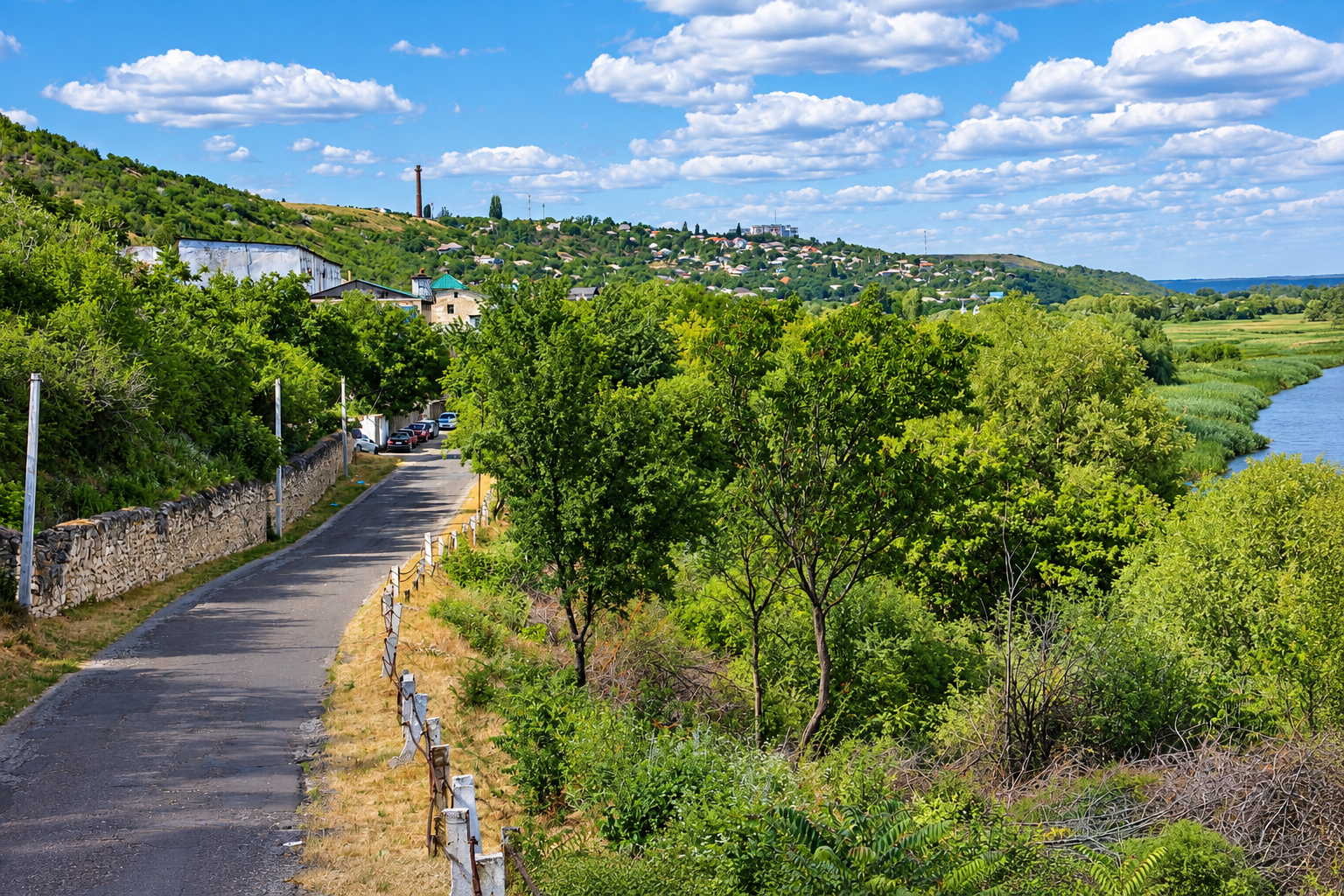
As you head towards Saharna, the road is already a part of the visit.
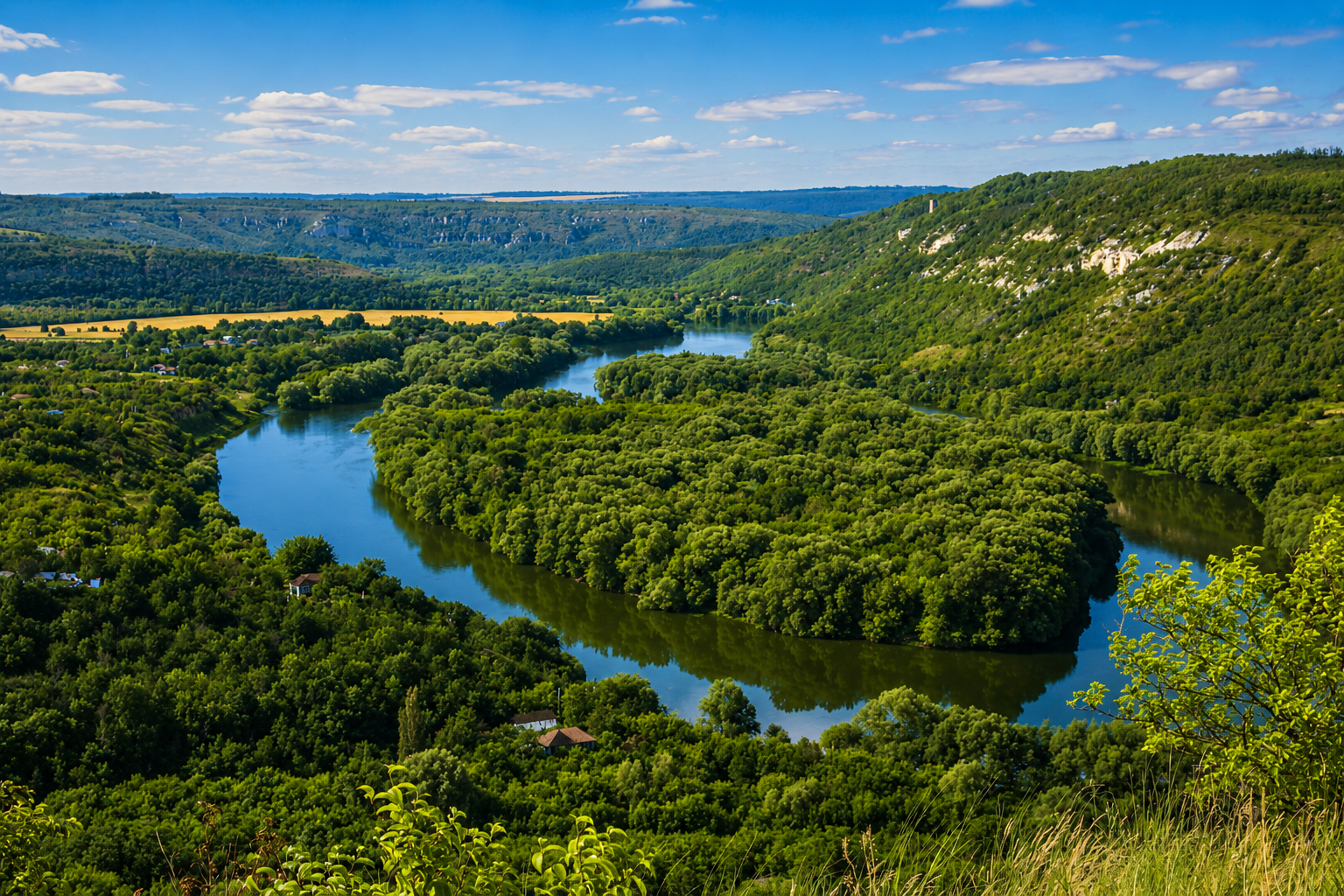
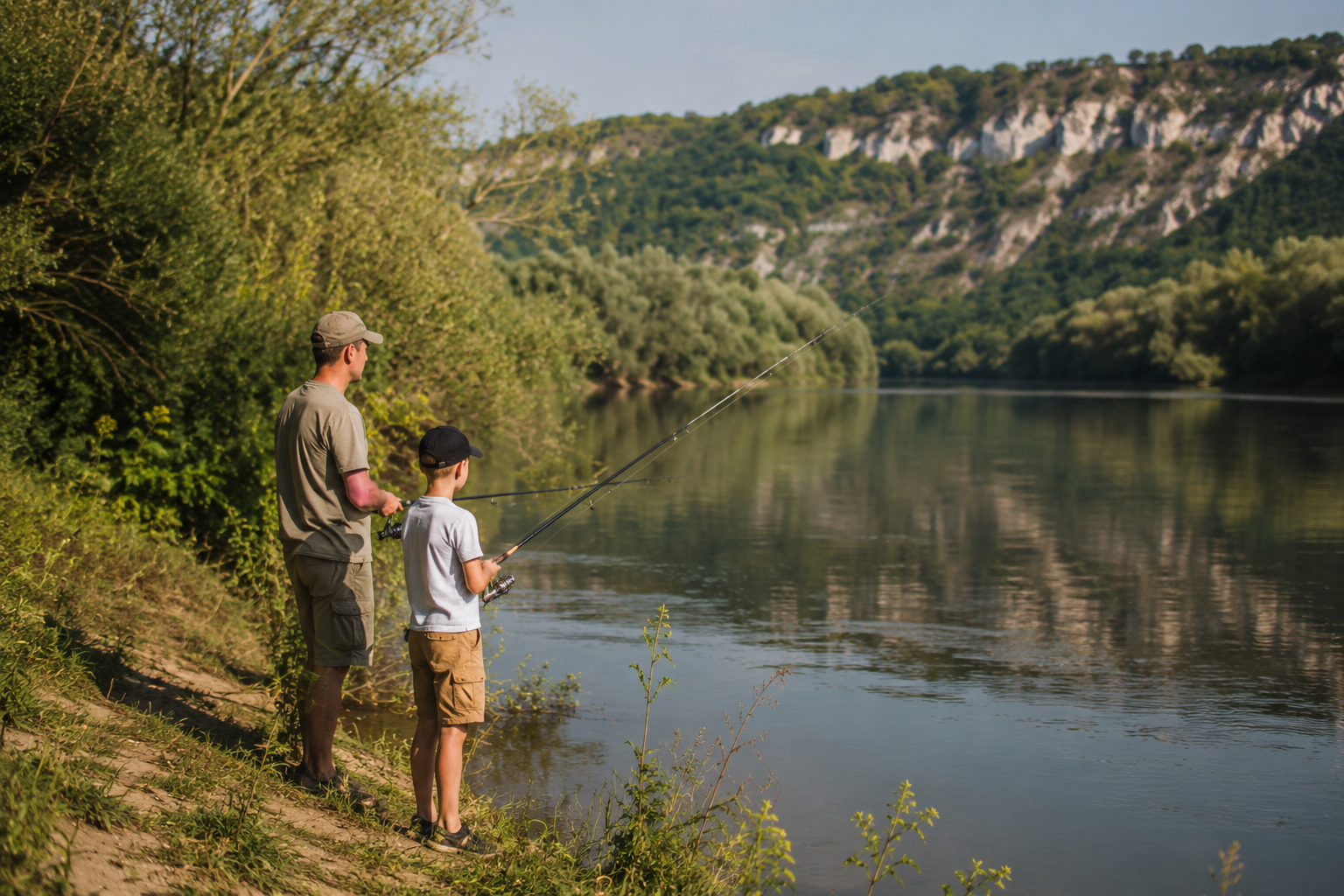
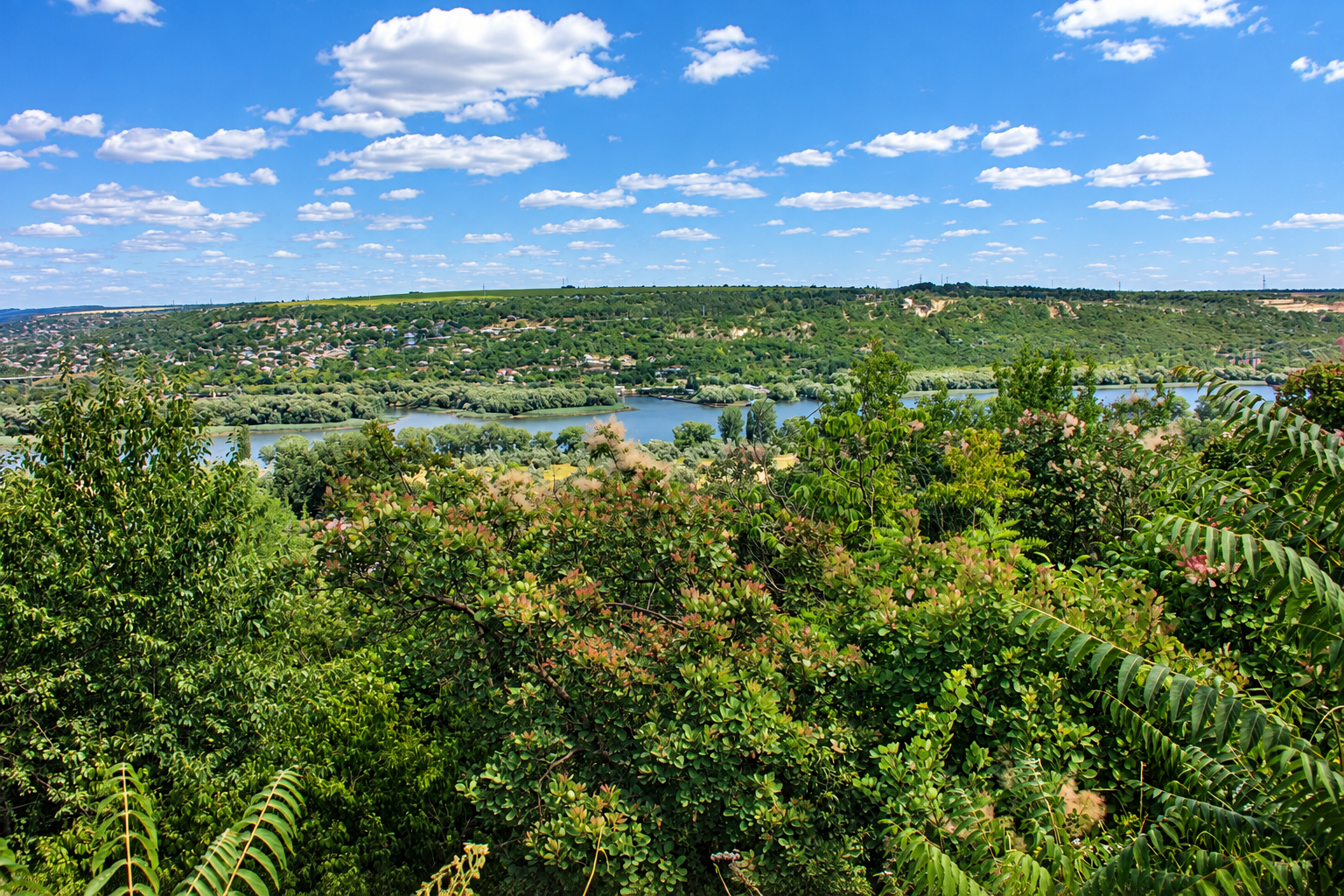
Saharna lies in Rezina District, around 110 kilometres from Chișinău, close to the Dniester River.
The village itself appears in written records as early as 1495.
Leaving Chișinău behind, the larger roads slowly give way to smaller ones as you travel north toward Rezina.
Villages appear along the road, fields stretch across the hills, and now and then you pass a horse-drawn cart, an old bus or somebody waiting beside the road with shopping bags.
Closer to Saharna, the landscape begins to change, the road becomes more uneven, the hills more noticeable and the villages smaller.
Houses, gardens, wells and fruit trees are close to the roadside, while beyond them the land drops and rises again.
There is no dramatic entrance showing that you have arrived somewhere special.
You simply continue driving through the village and then, almost before you noticing it, the monastery appears between the trees and the rocky hills around Saharna begin to show up.
The road has brought you there and now you have to continue on foot.
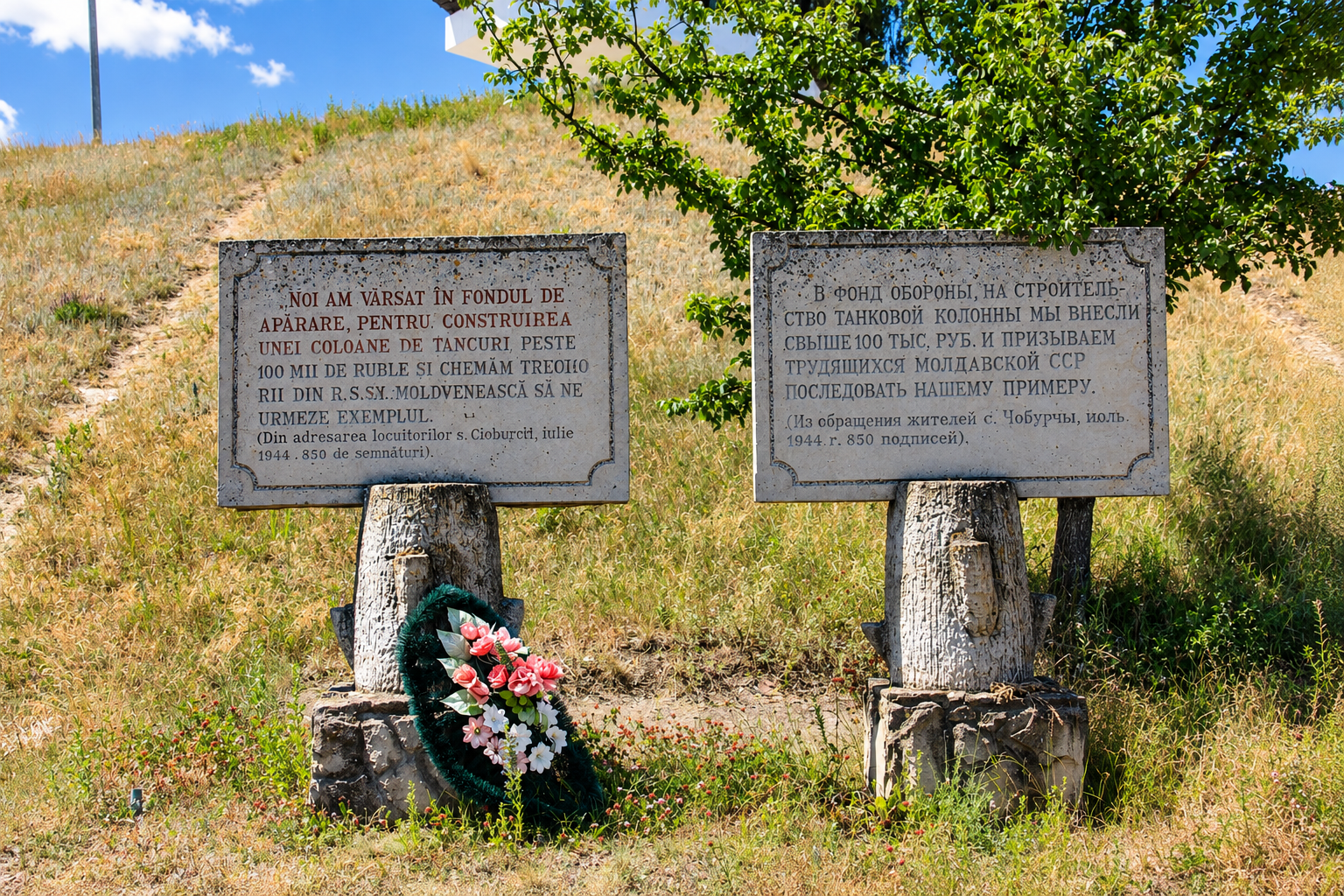
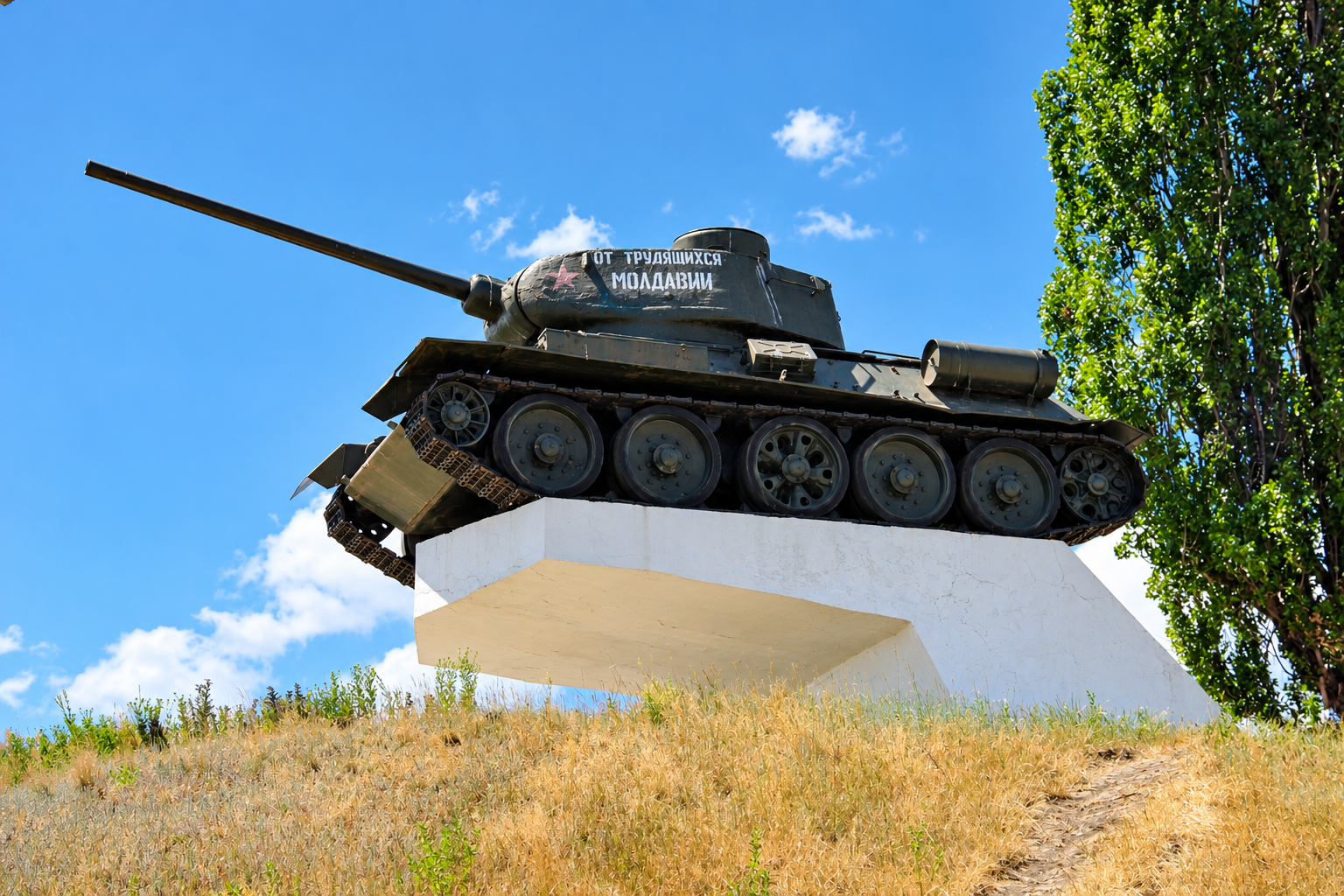
“To the Defence Fund, for the construction of a tank column, we contributed more than 100,000 rubles, and we call upon the workers of the Moldavian SSR to follow our example.”
(From an appeal by the residents of the village of Cioburciu, July 1944 - 850 signatures.)
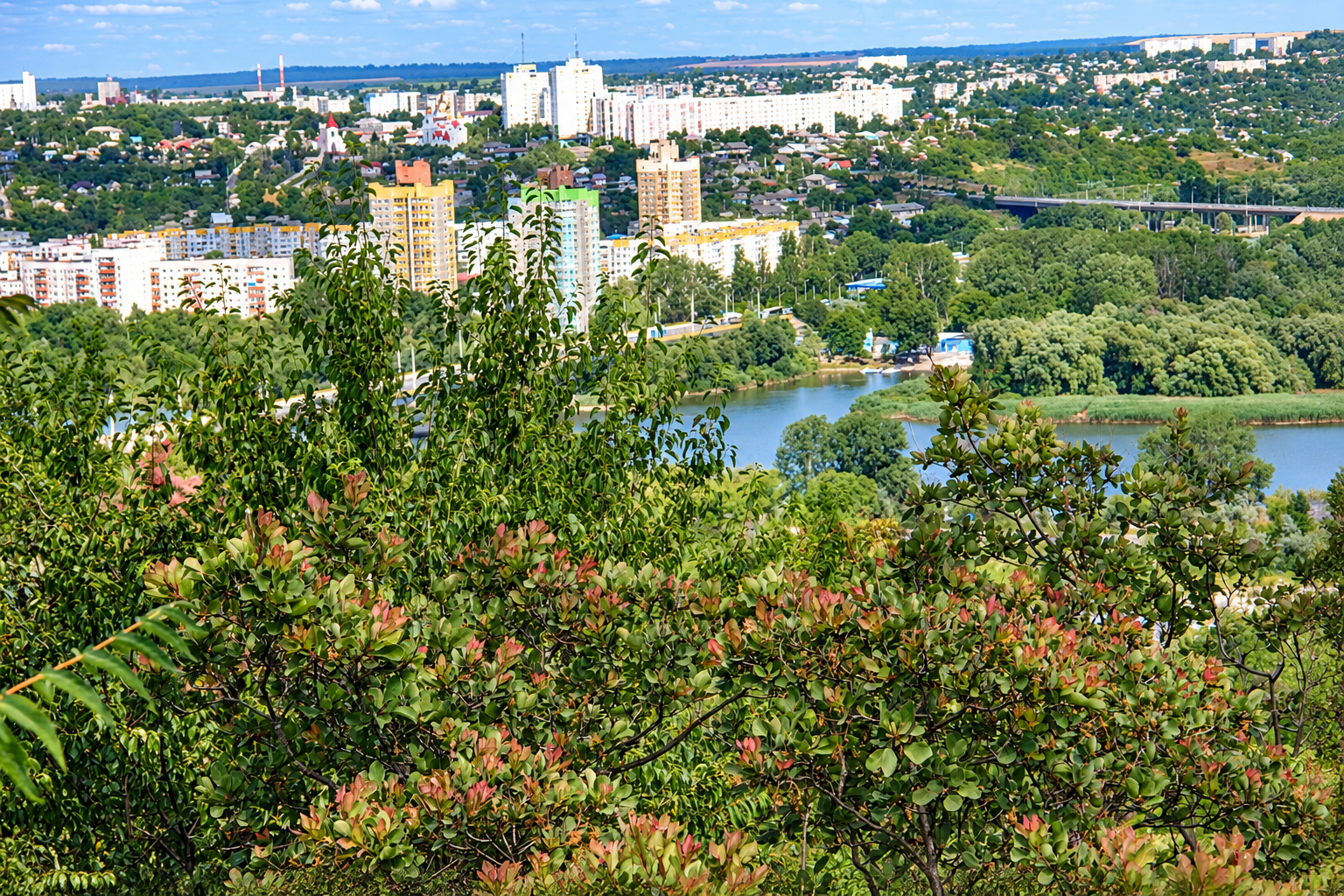
Water is another part of Saharna that keeps returning as you walk.
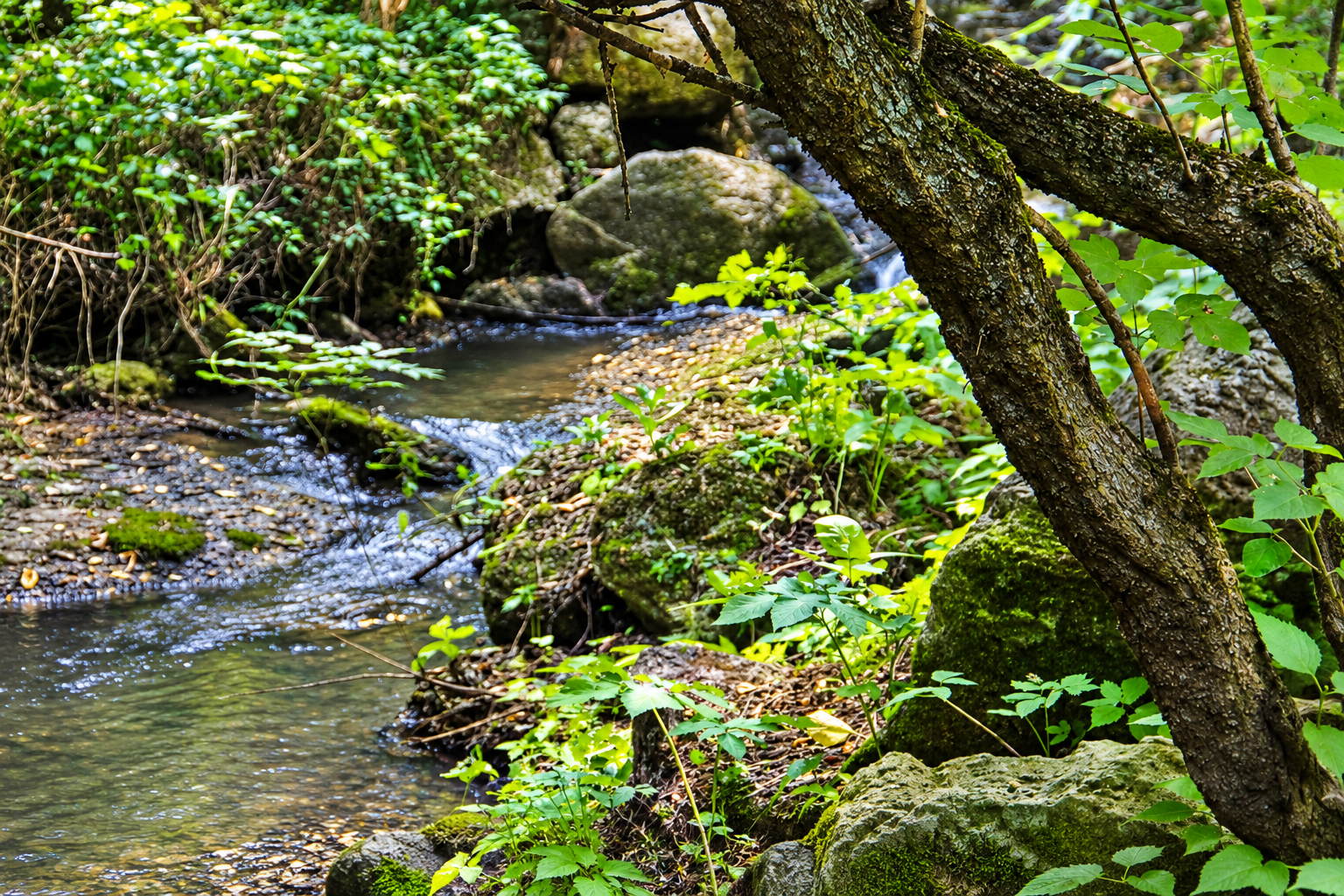
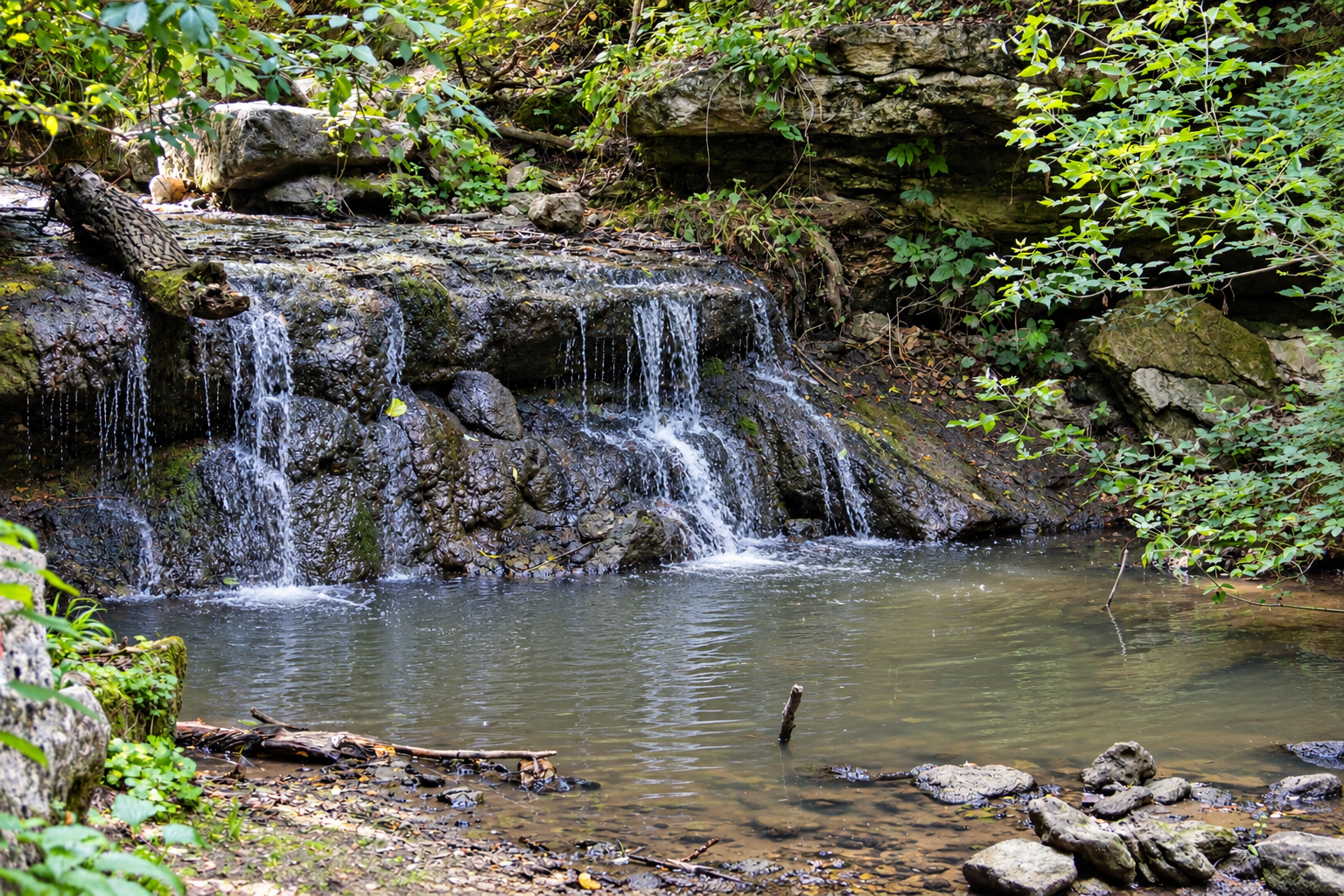
The Saharna stream passes through the rocky gorge in a series of cascades and small waterfalls on its way towards the Dniester and sometimes you see the water beside the path.
Sometimes it disappears behind rocks and vegetation, and sometimes you hear it long before you see it again.
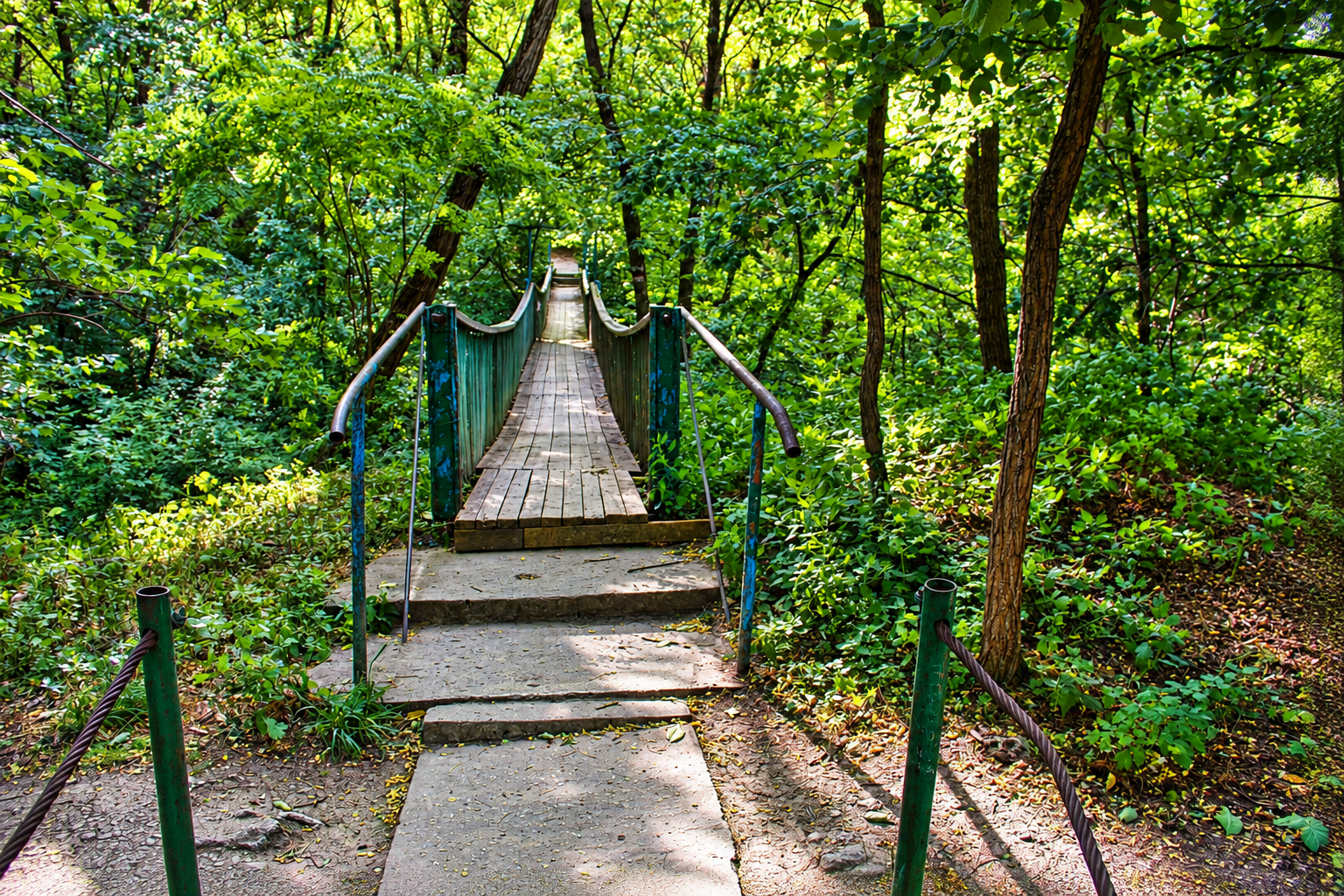
The path follows the water through parts of the gorge, going up and down between rocks, roots and trees.
Some sections are easy, while others are steeper and need a little more attention.
For children, there is plenty to look at along the way - water, rocks, small pools and places to climb.
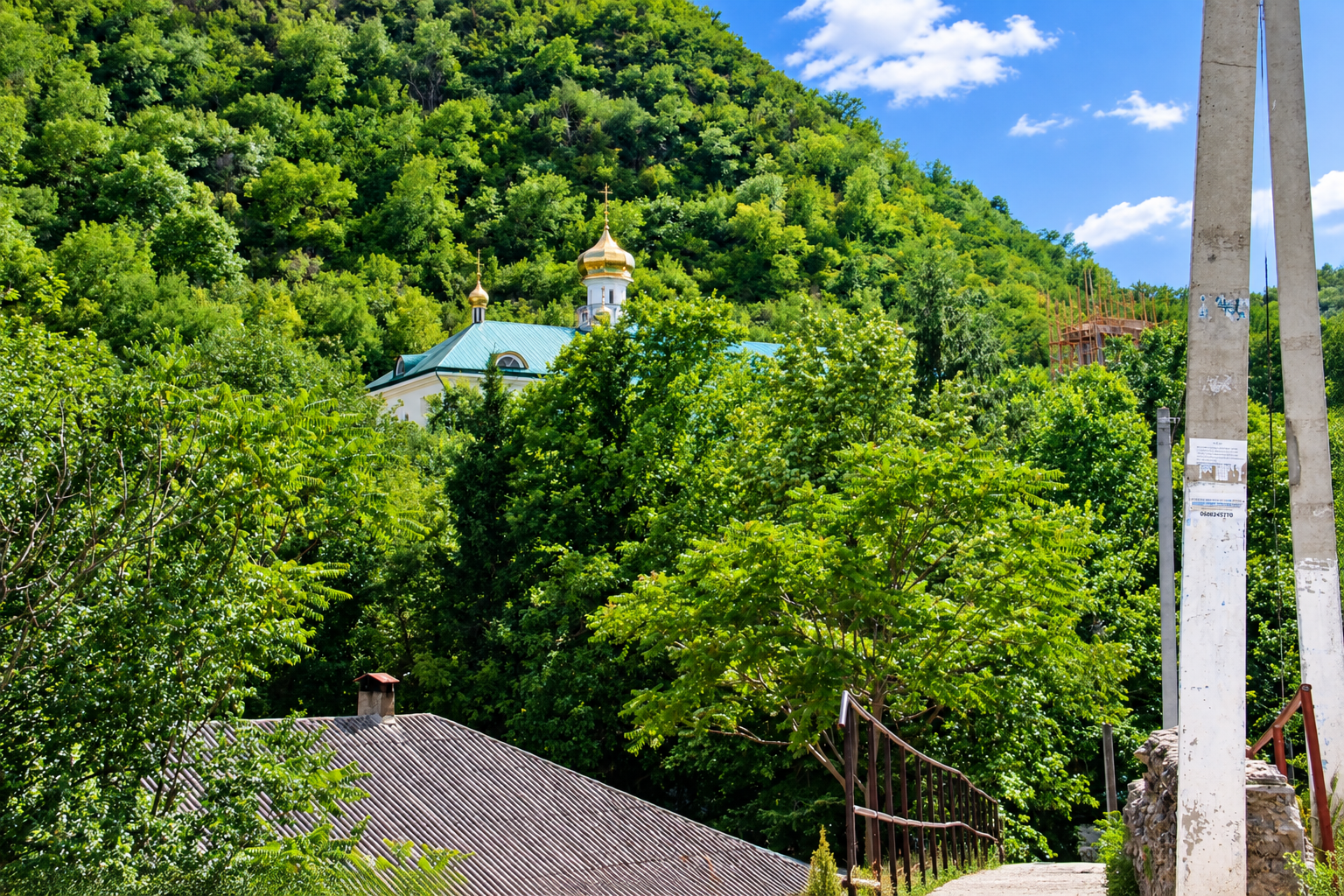
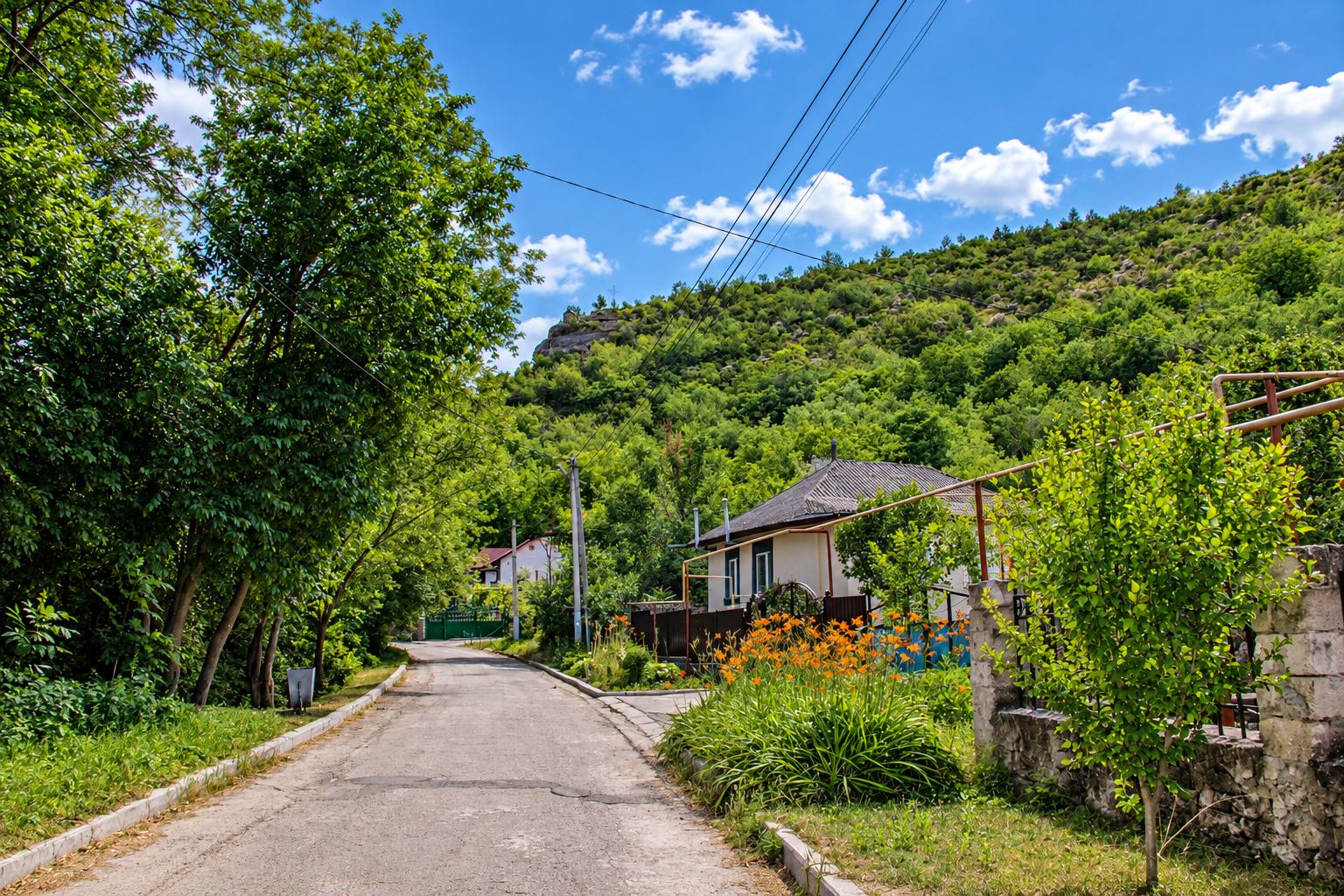
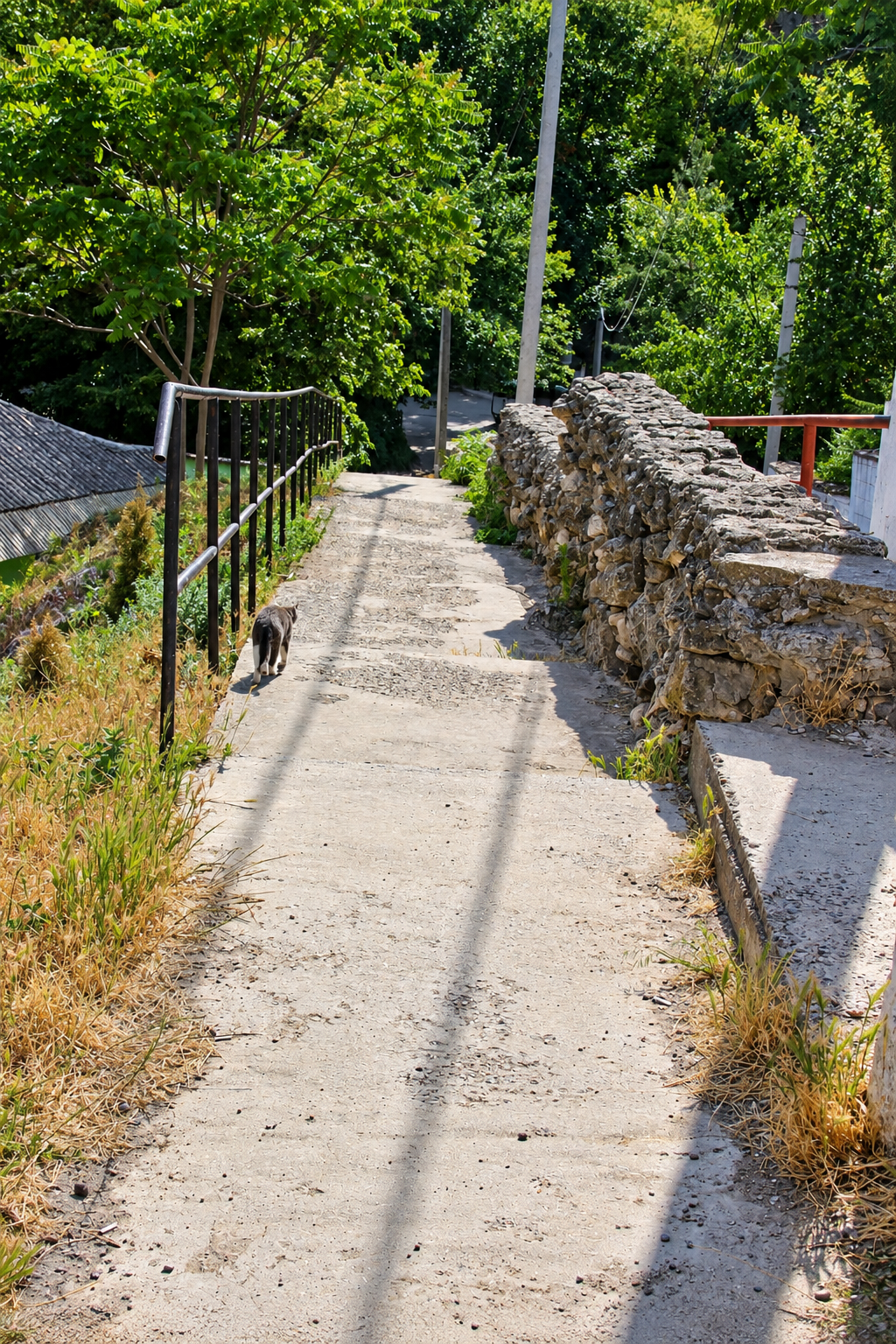
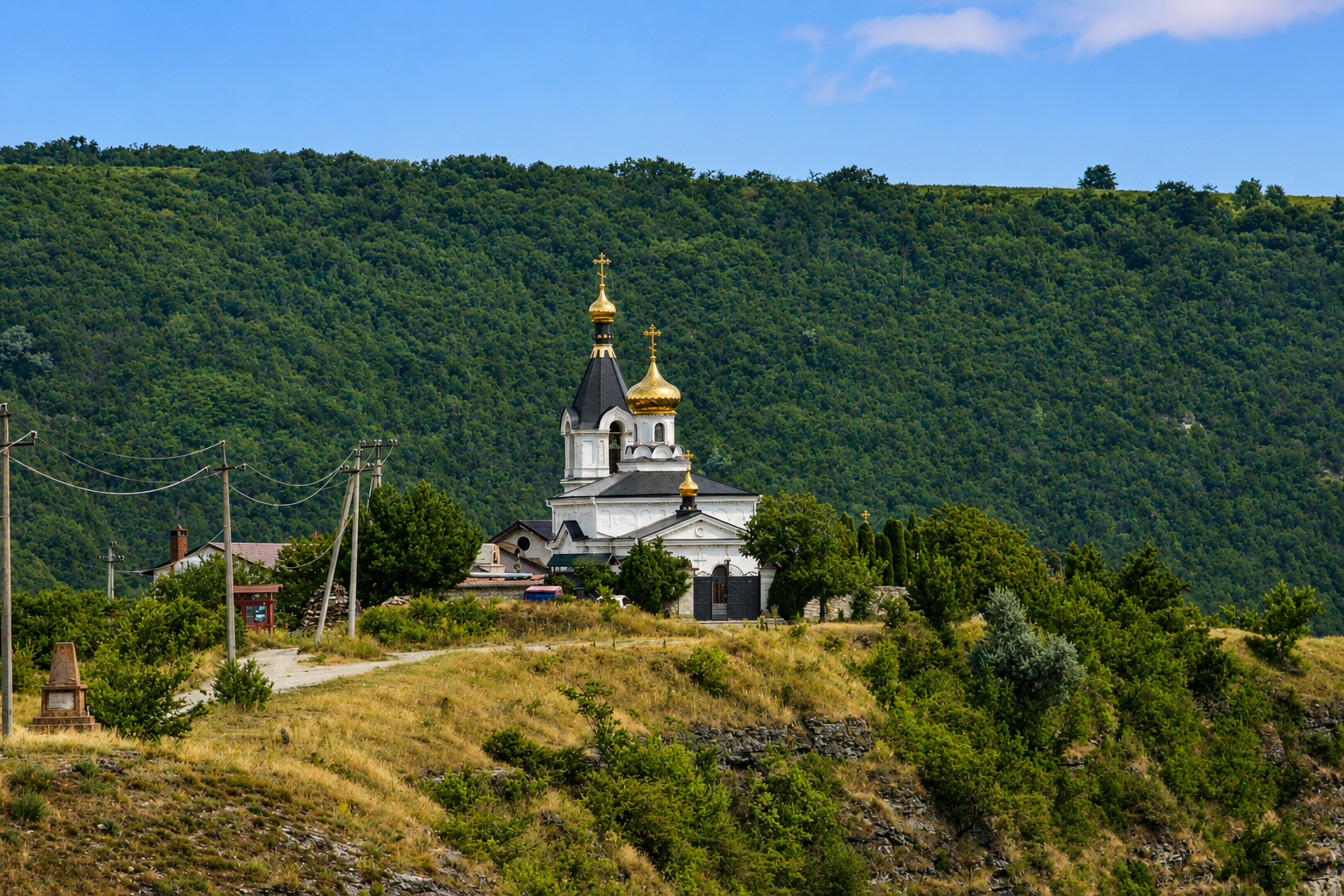
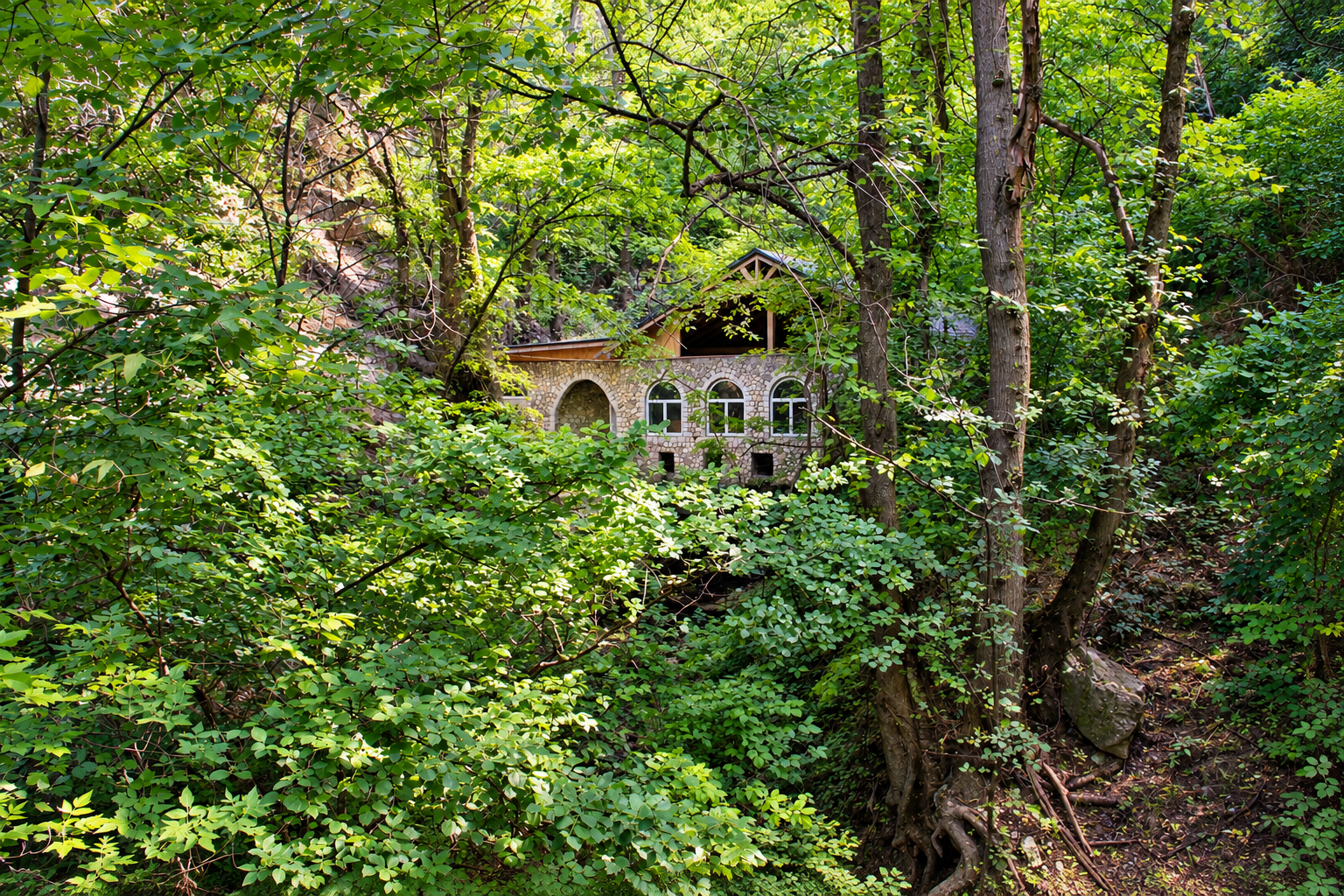
The monastery are build beneath the wooded limestone hills, partly hidden until you are very close.
The monastery above ground began developing in 1776, when the monk Vartolomeu established a monastic community below the older rock monastery.
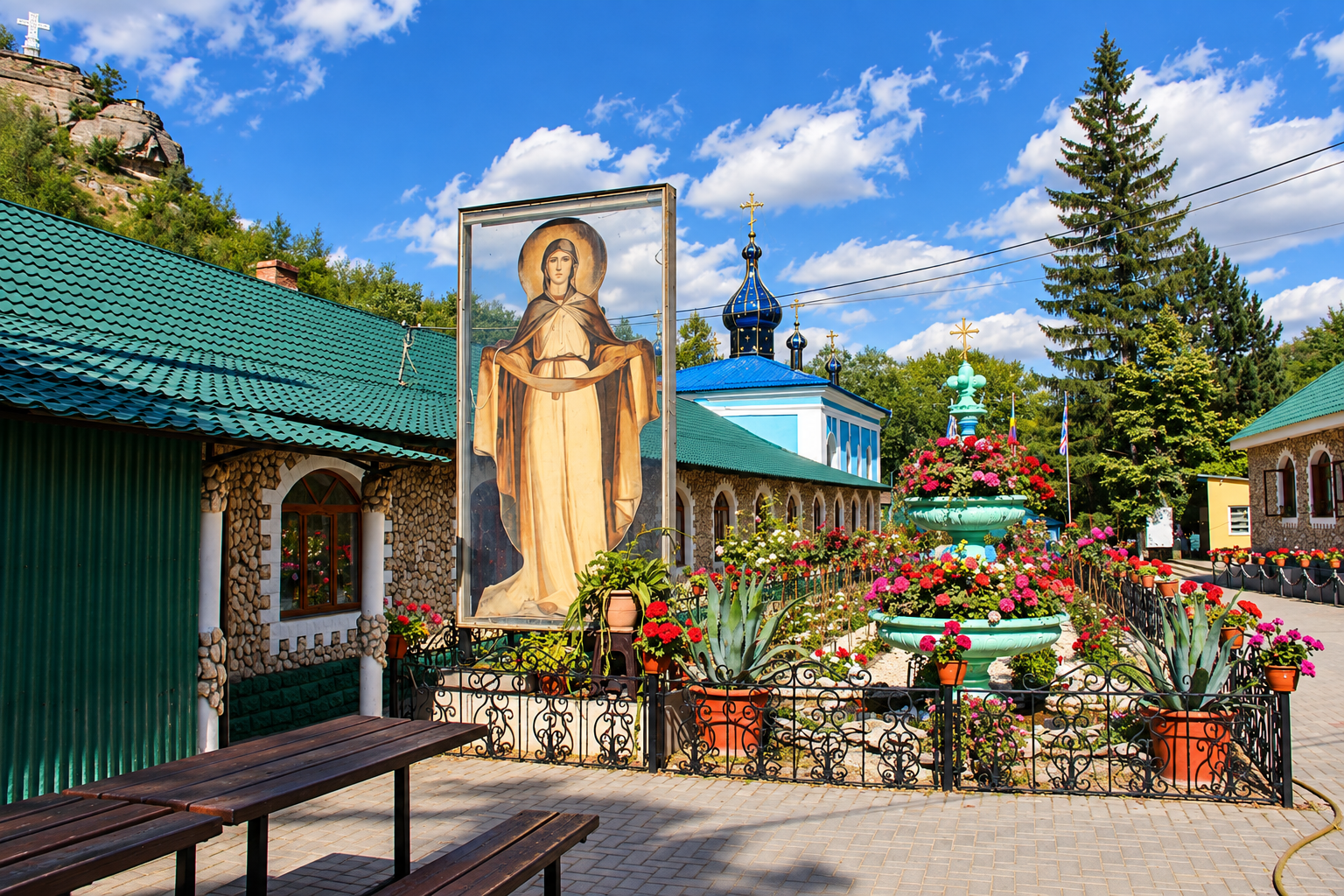
Inside the grounds, it changes quickly from the road outside.
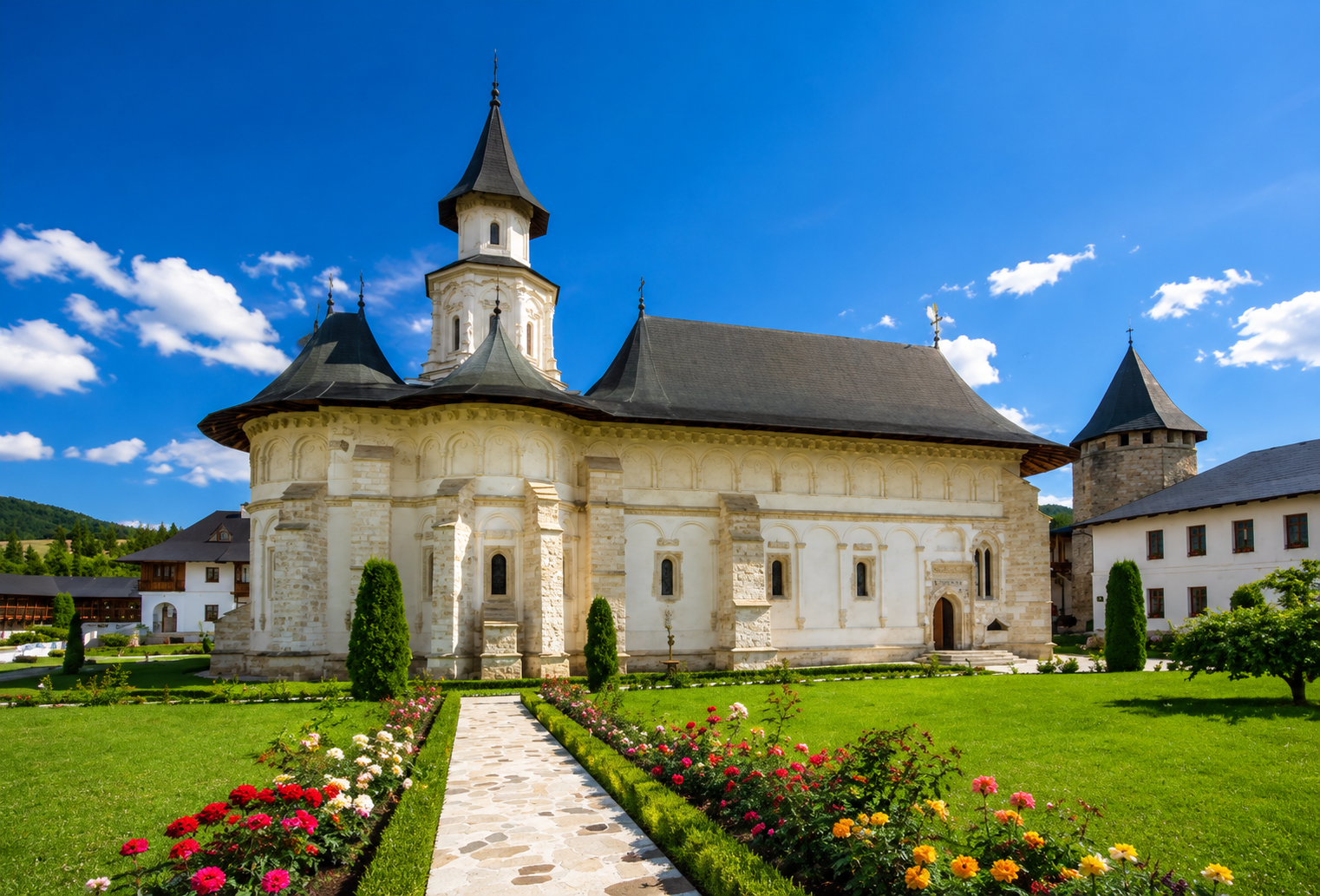
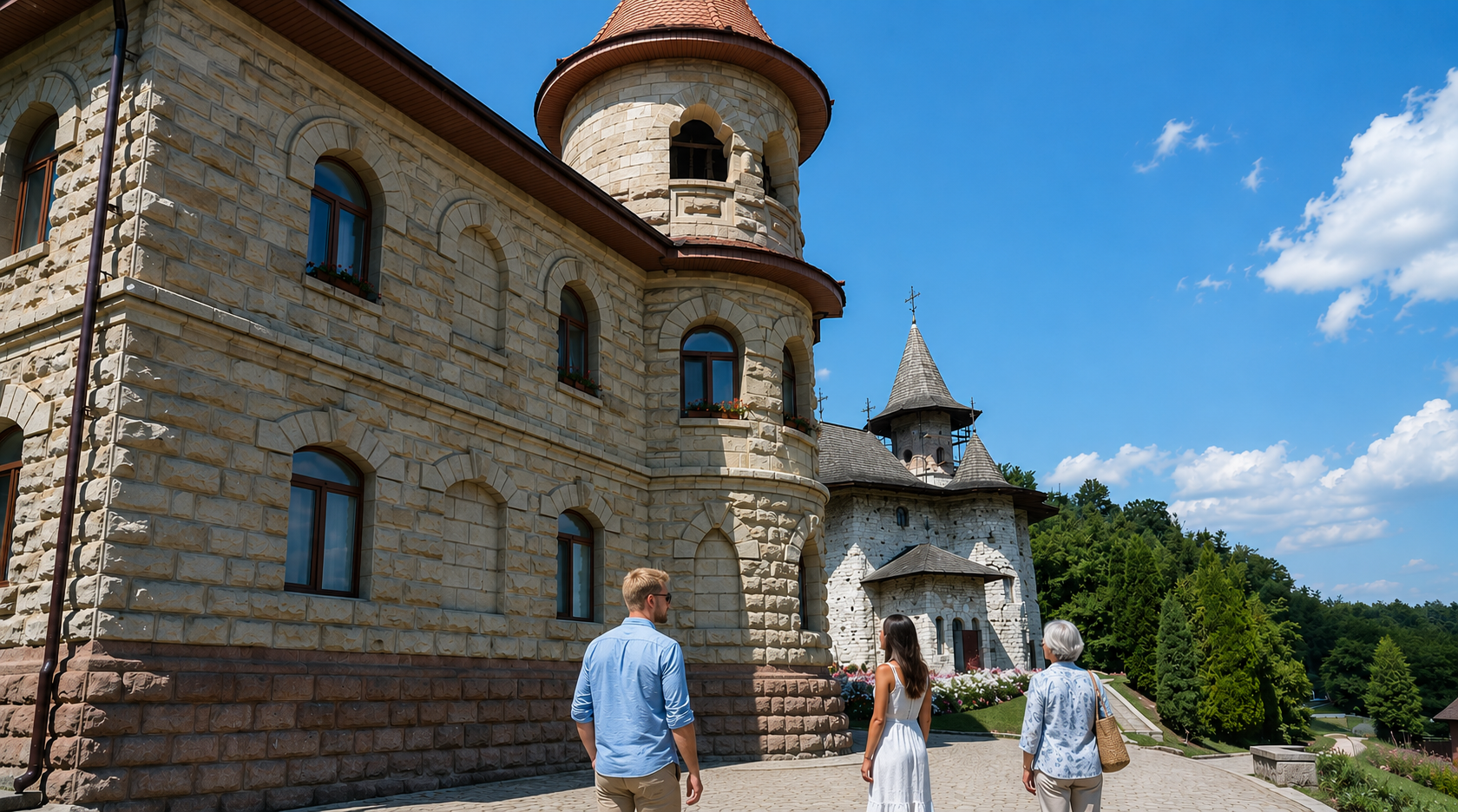
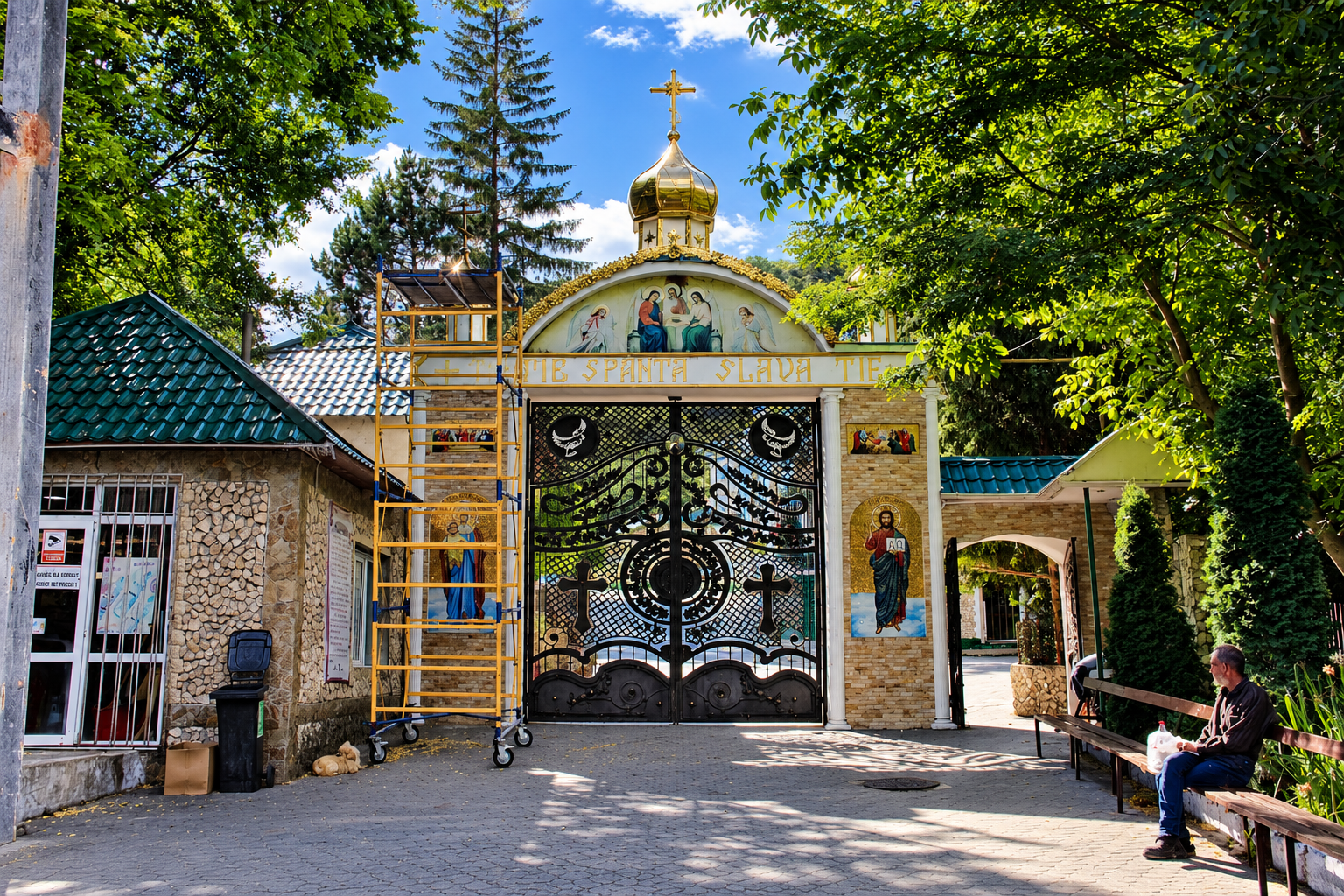
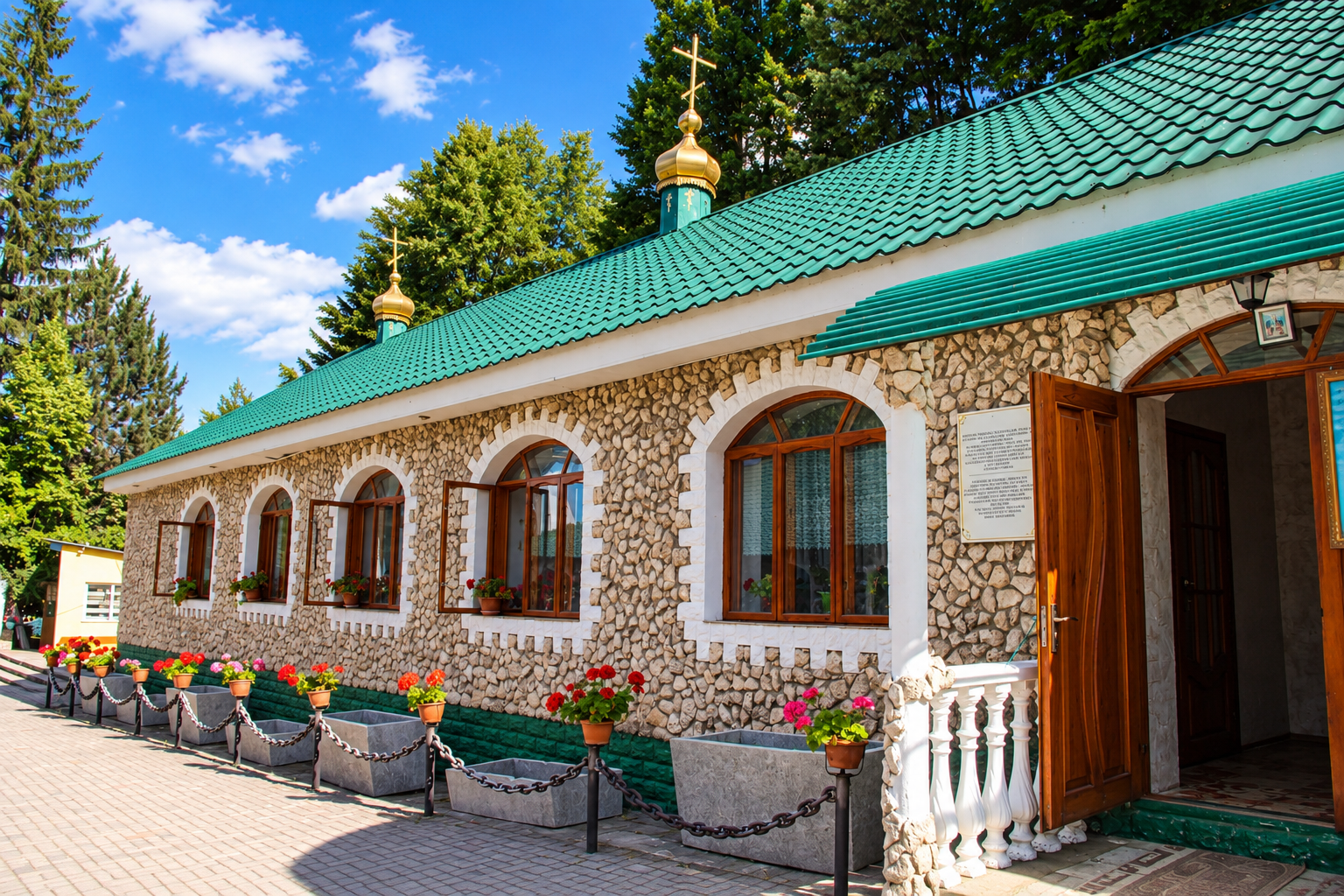
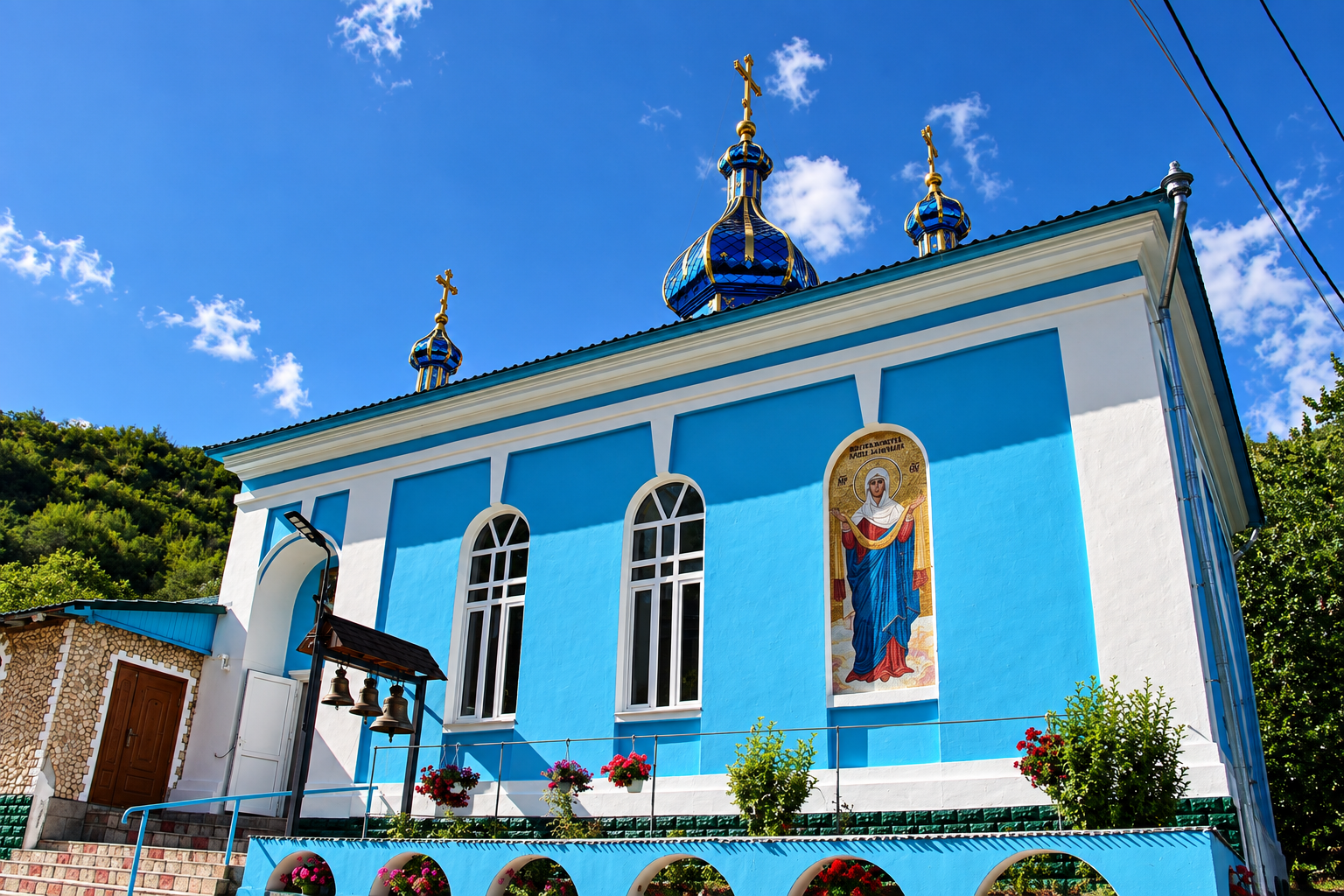
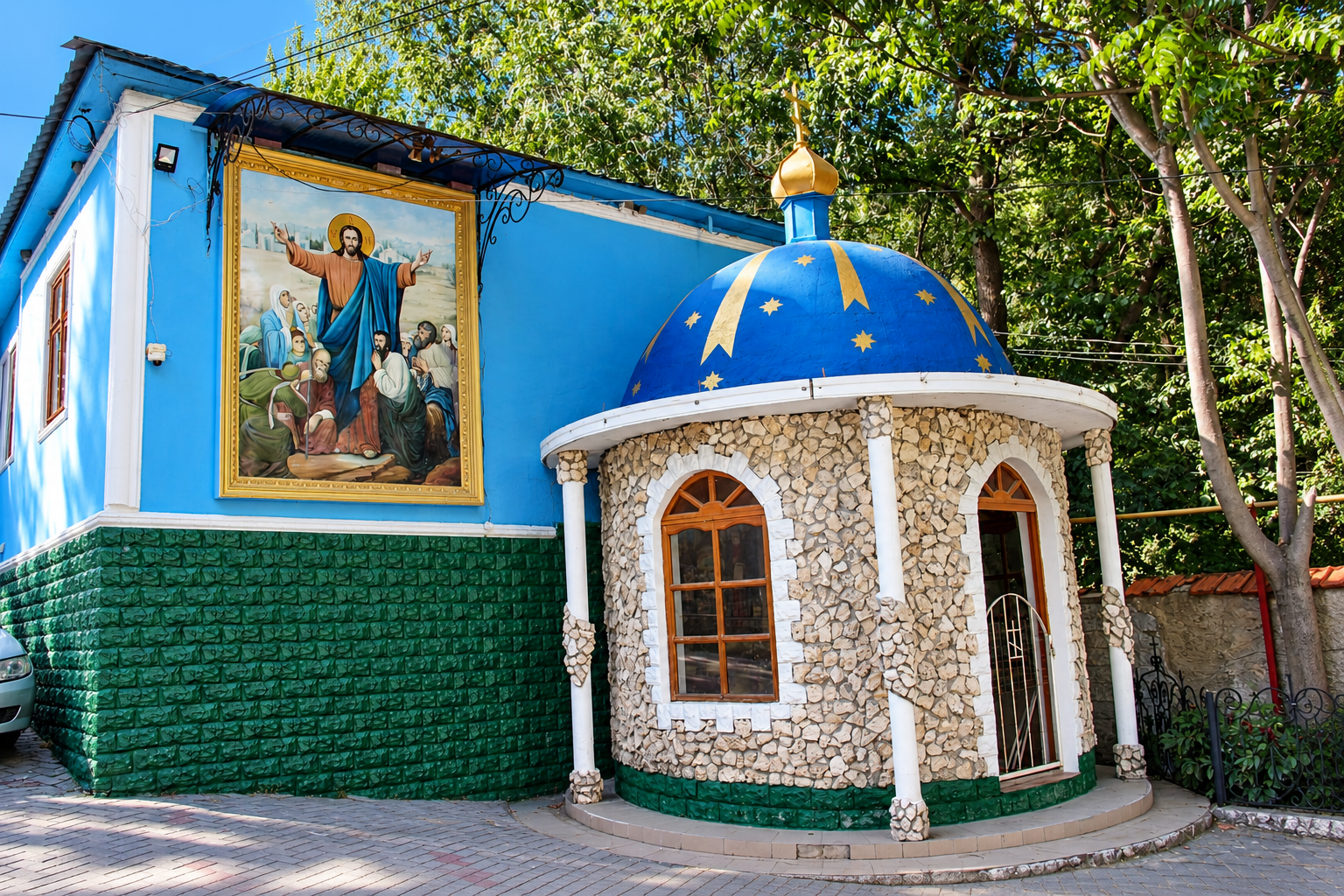
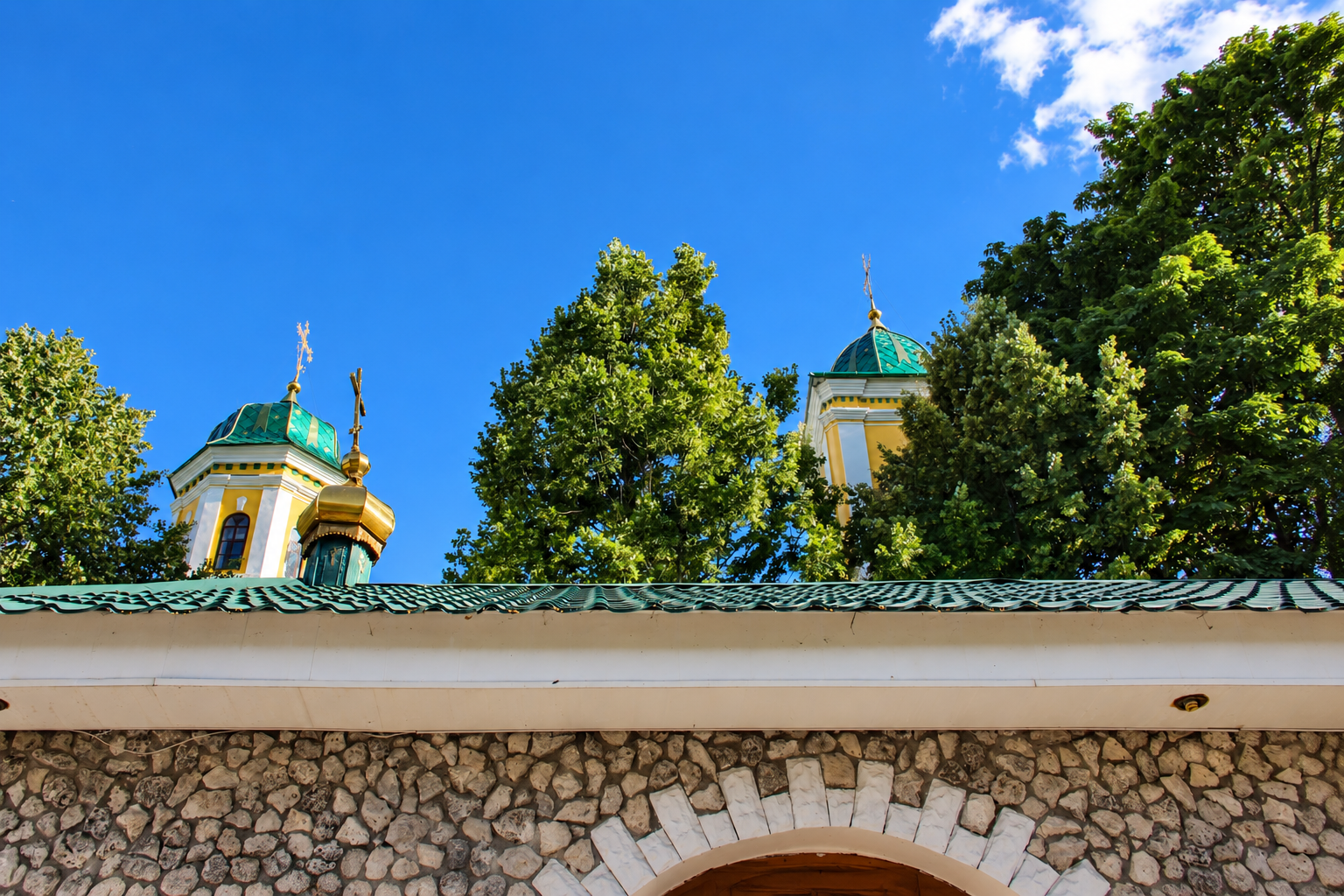
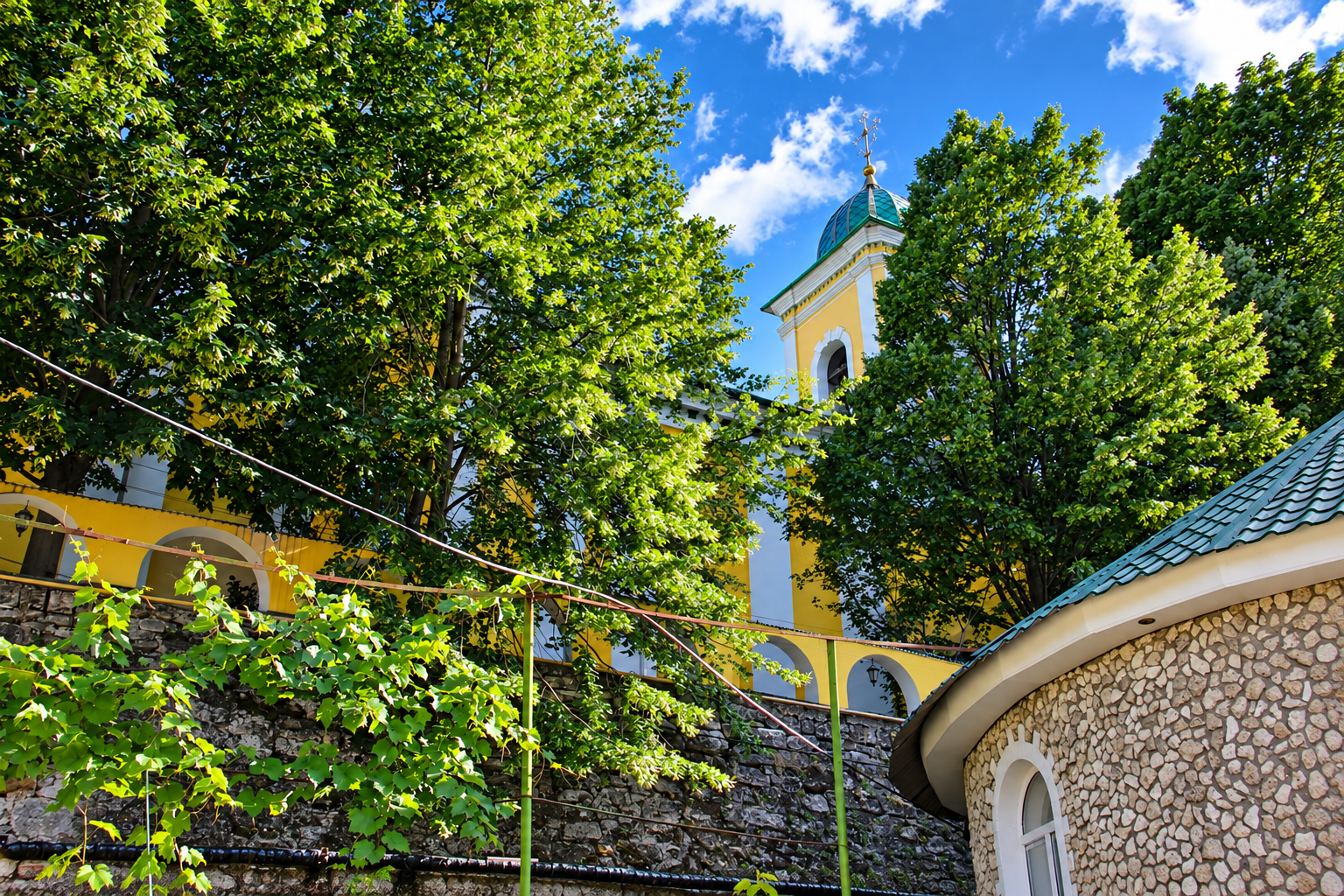
Churches with blue, green and golden roofs stand between trees and smaller monastery buildings, while flowers fill parts of the courtyard during the-
warmer months.
Saharna are still a very active Orthodox monastery for monks.
People come here to pray, attend services and light candles, while other visitors walk between the buildings, look around the grounds or simply stop for a while and you can almost feel that this not an ordinary place.
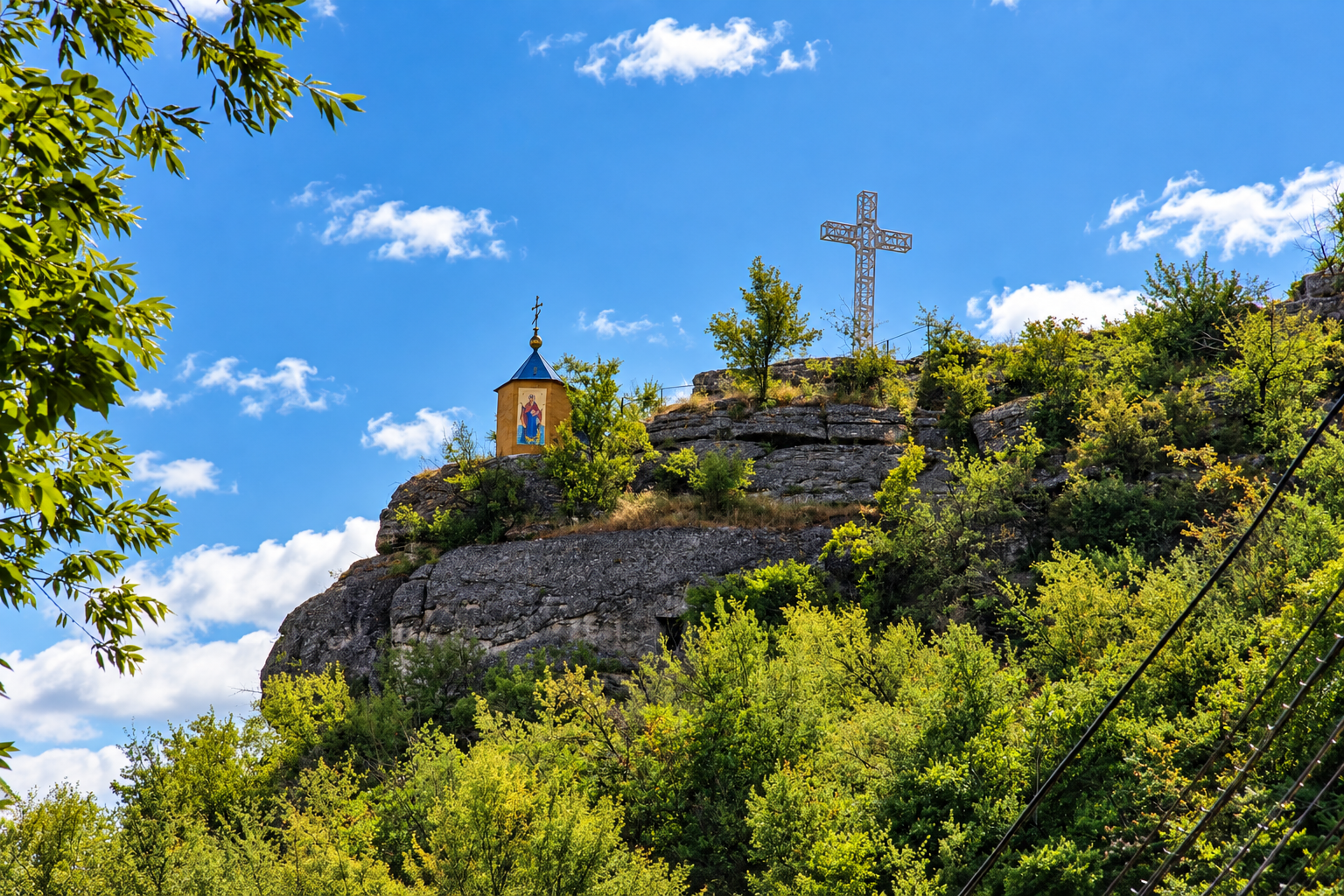
Wherever you stand, the cliffs are difficult to ignore and looking upward, the rock rises high above the trees surrounding the monastery.
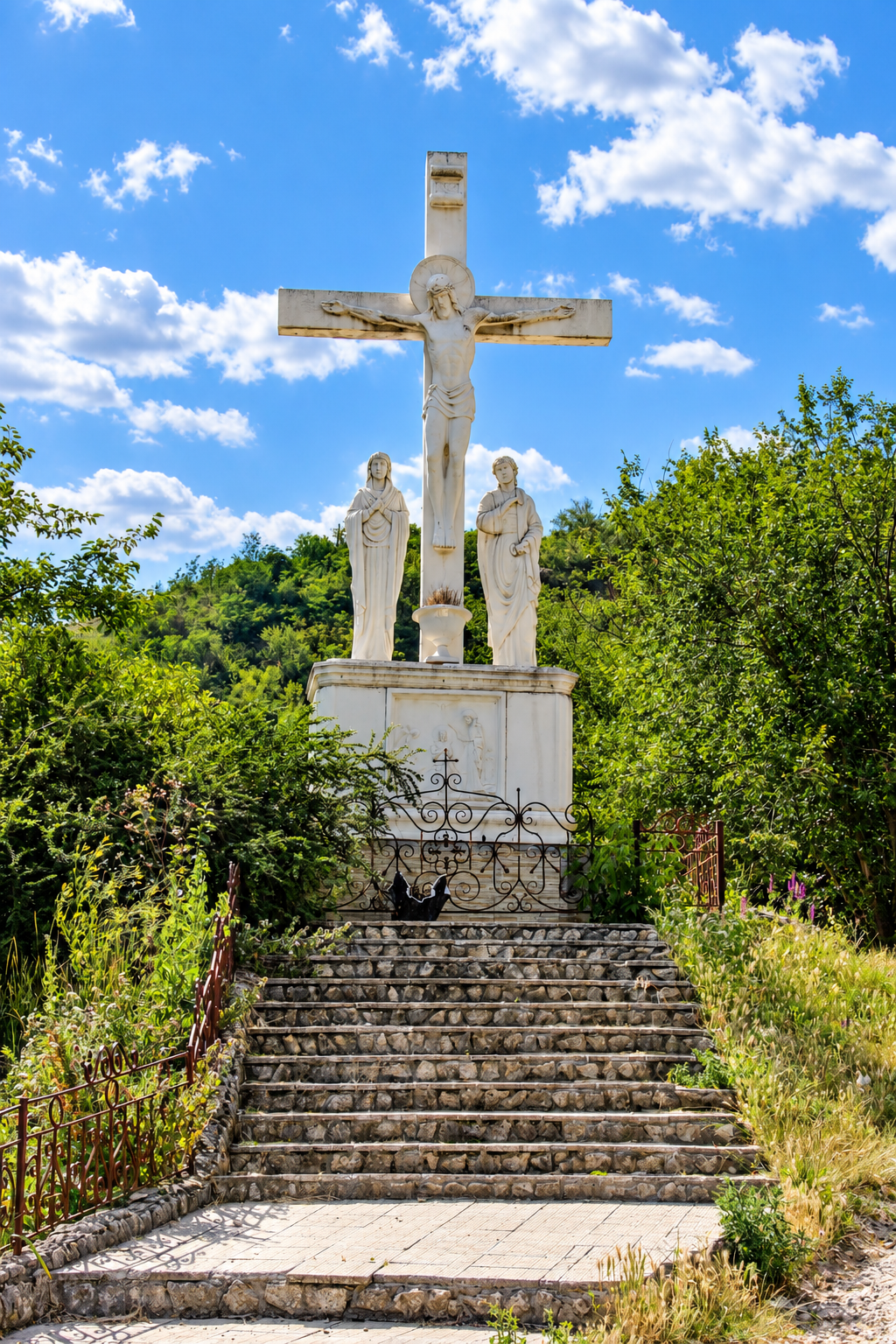
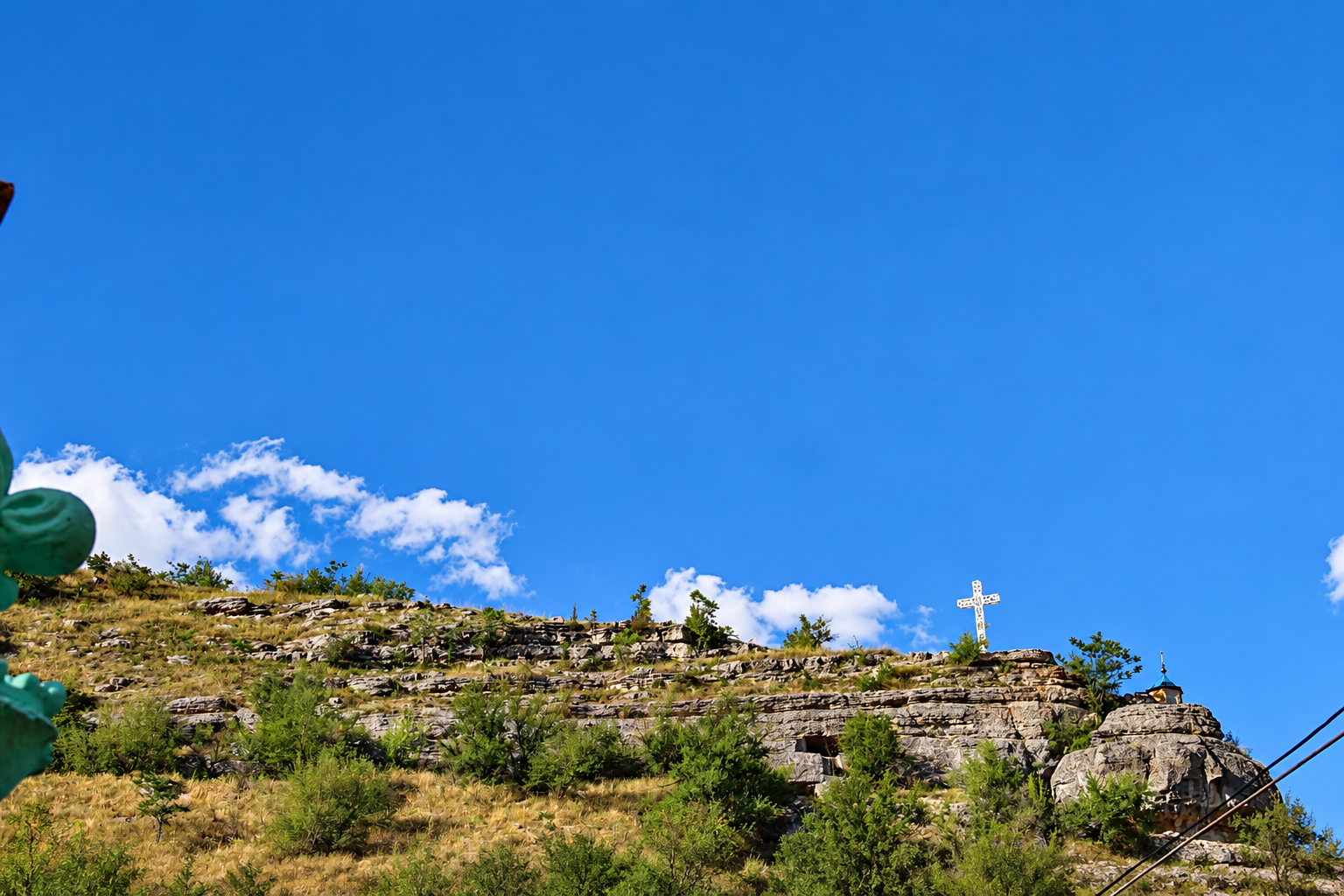
High above Saharna stands a large white cross.
From below it looks surprisingly small against the landscape, which gives you a good idea of how high the cliffs actually rise.
Paths lead into the hills and towards viewpoints above the valley, but this is where comfortable monastery walking begins turning into something rather different.
The paths become narrower, the roots and stones appear beneath your feet and some sections become steep.
Good shoes suddenly seem like a very much better idea than they did back at the
parking area.
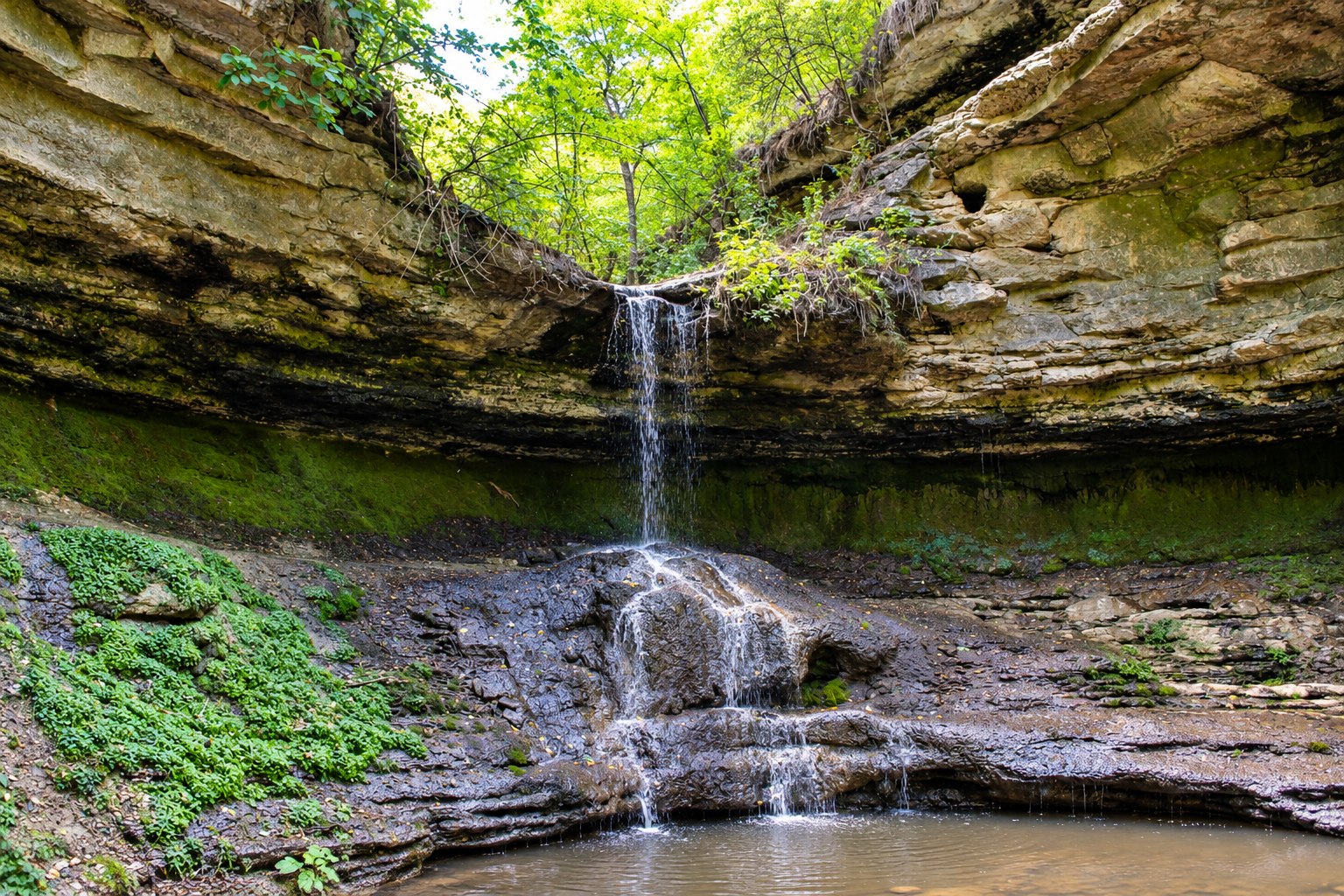
Eventually you reach some of Saharna's best-known natural features, but don't expect enormous waterfalls.
Depending on the season and recent rainfall, some may be clearly flowing while others can become little more than narrow streams dropping over
the limestone.
But that doesn't make them less interesting.
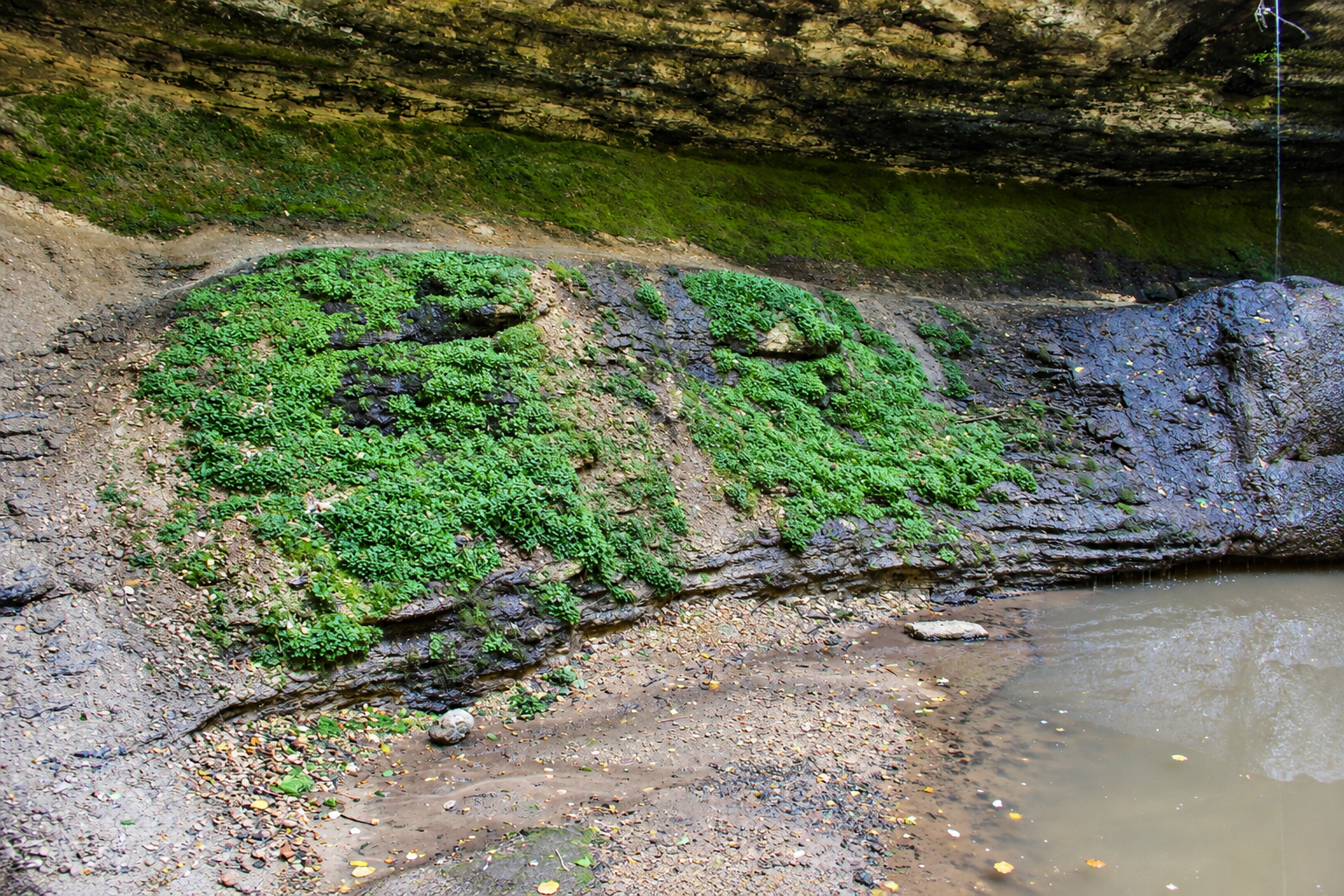
Water falls into small pools beneath the rocks, moss covers the wetter sections and plants grow wherever they can find enough soil between
the stones.
After heavy rain there can be considerably more water and during dry periods, much less.
Saharna doesn't always look exactly the same.
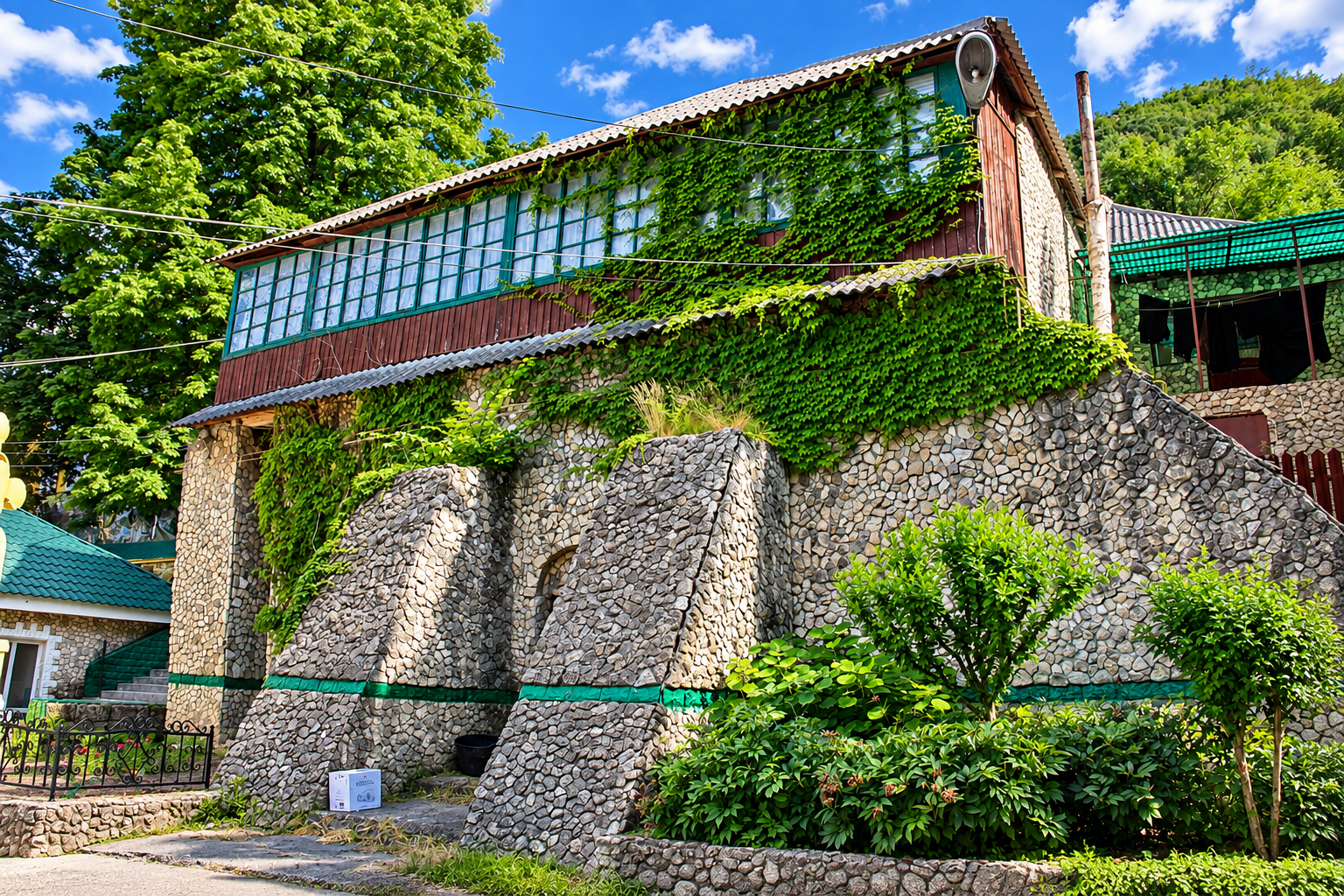
Continue walking and the geology becomes one of the most interesting parts of the visit.
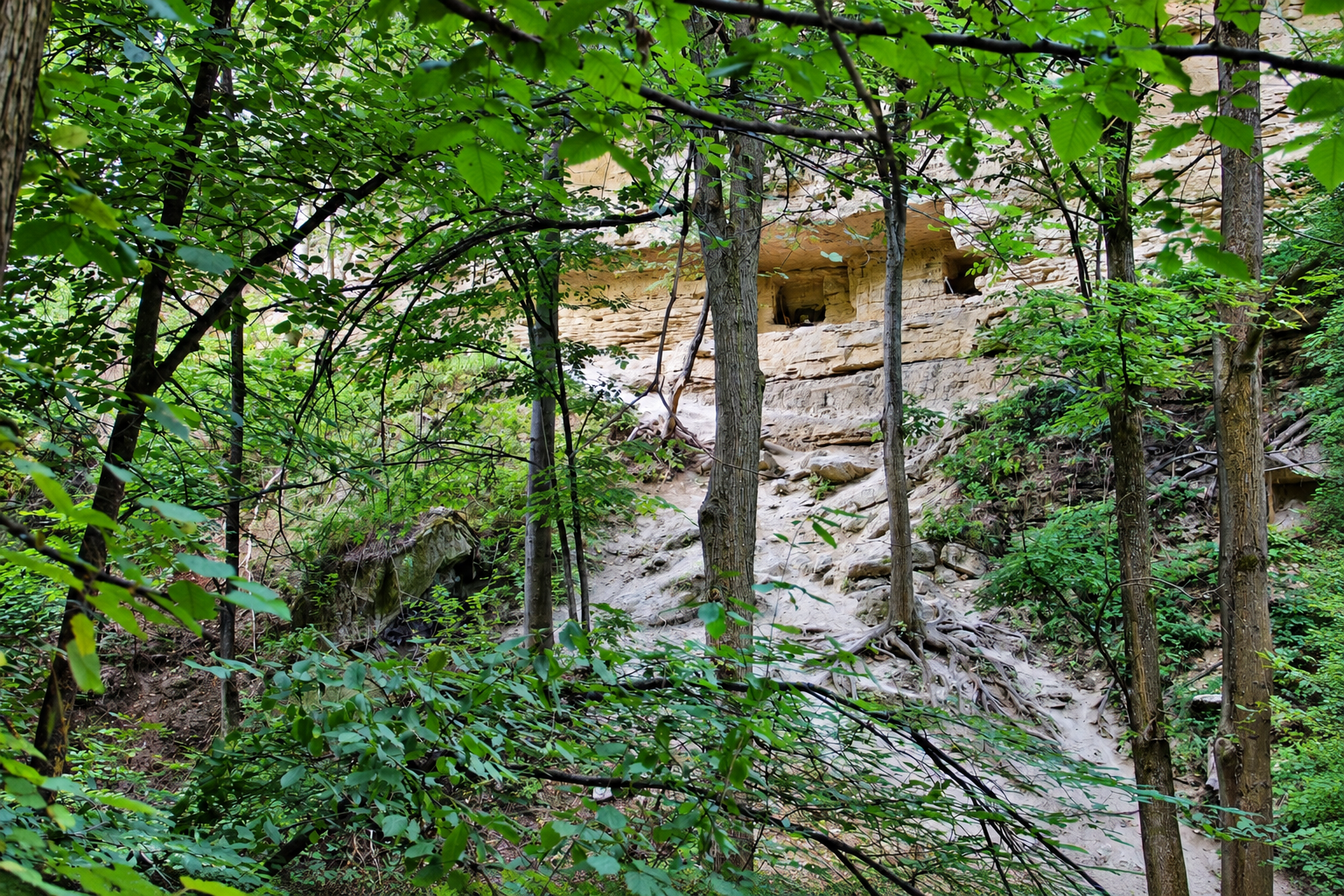
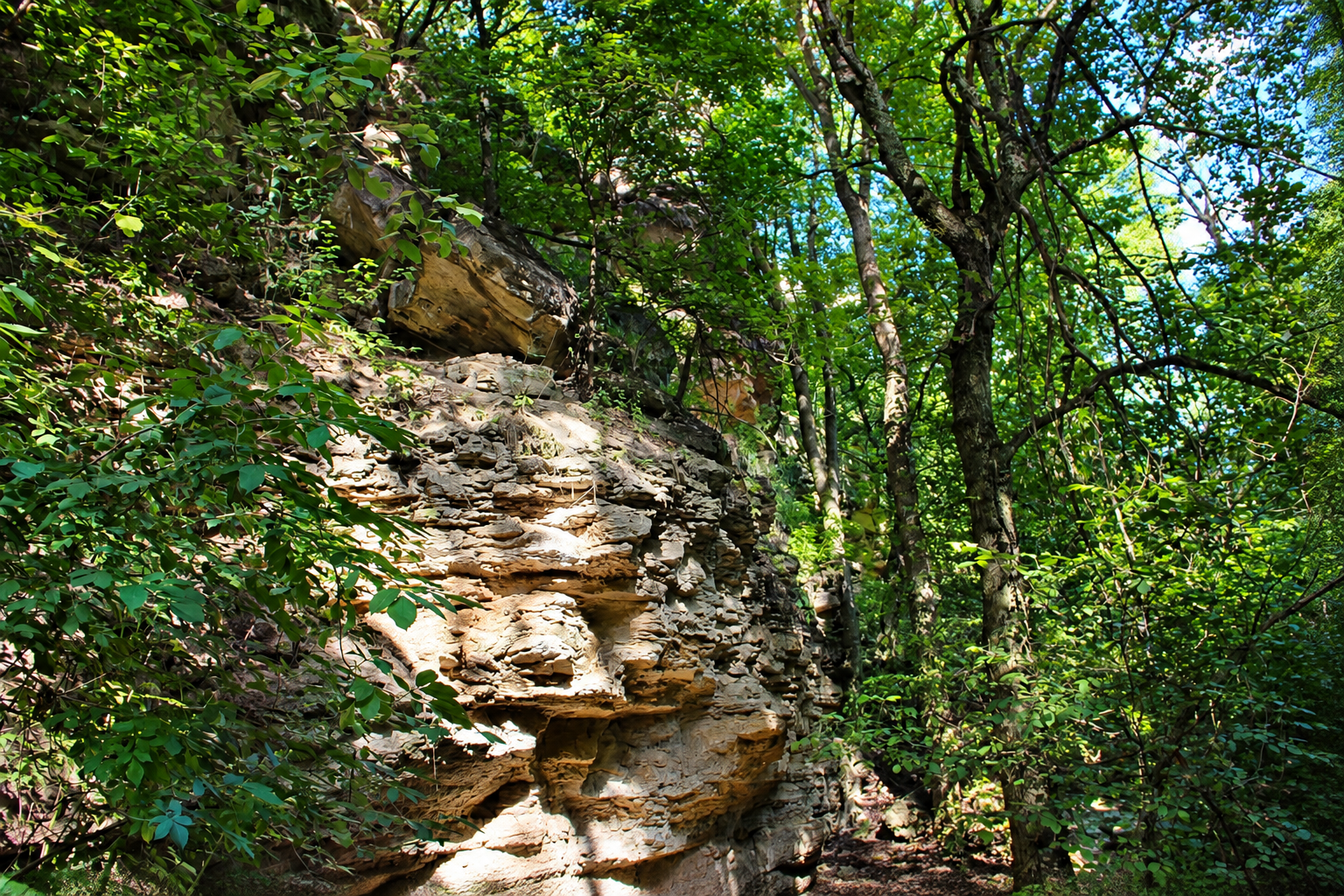
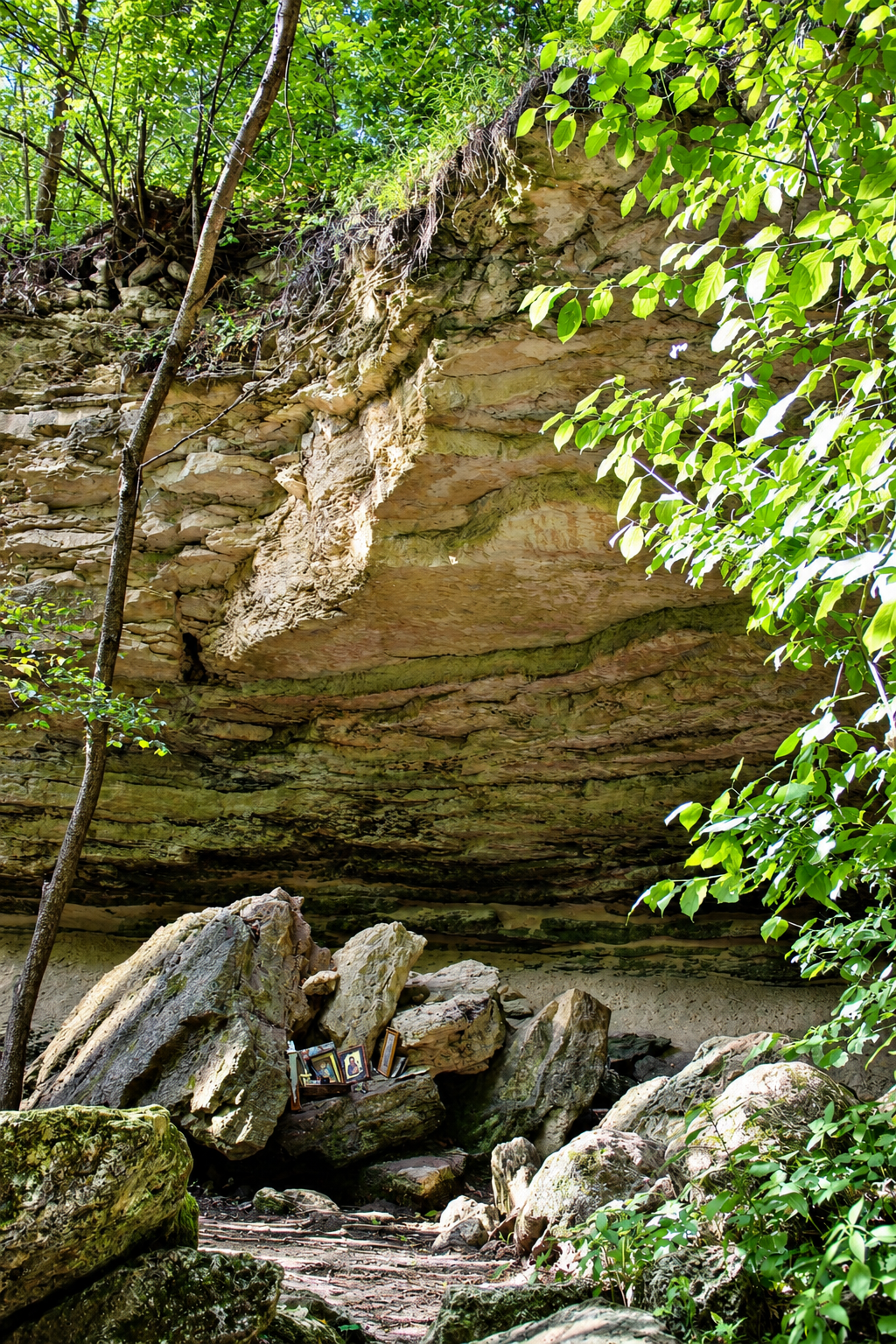
Layers of limestone are exposed everywhere.
Some form almost horizontal shelves, while other sections have broken away into enormous blocks lying beneath the cliffs.
Trees grow above them, around them and sometimes from places where there seems to be almost no soil at all.
Among some of the rocks you may also notice icons and other small religious objects.
They are easy to walk past.
But once you notice one, you begin looking more carefully and suddenly find yourself noticing things you would probably have missed a few minutes earlier.
Leave them where they are.
For some of the people coming here, these rocks and paths are more than part of a beautiful landscape.

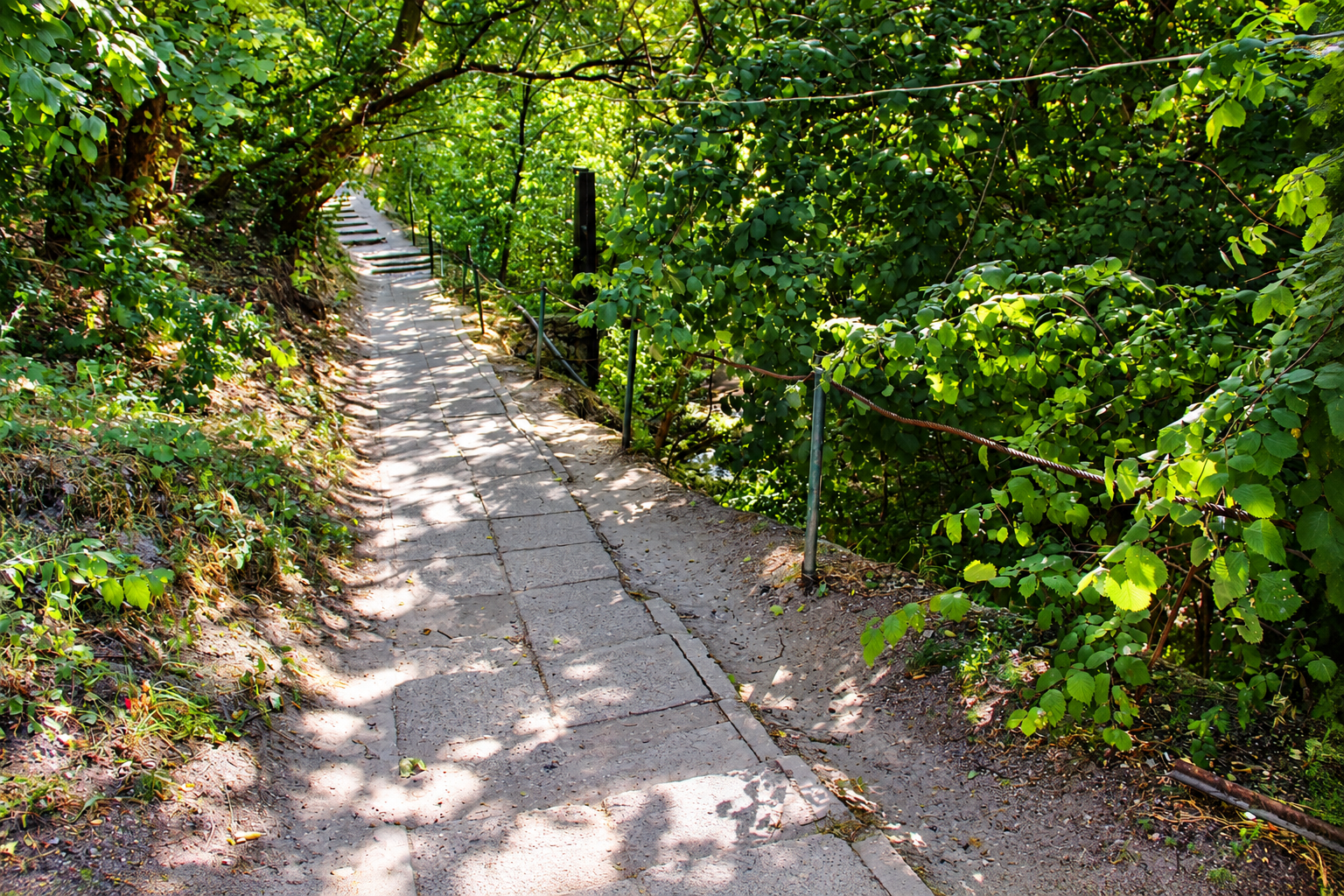
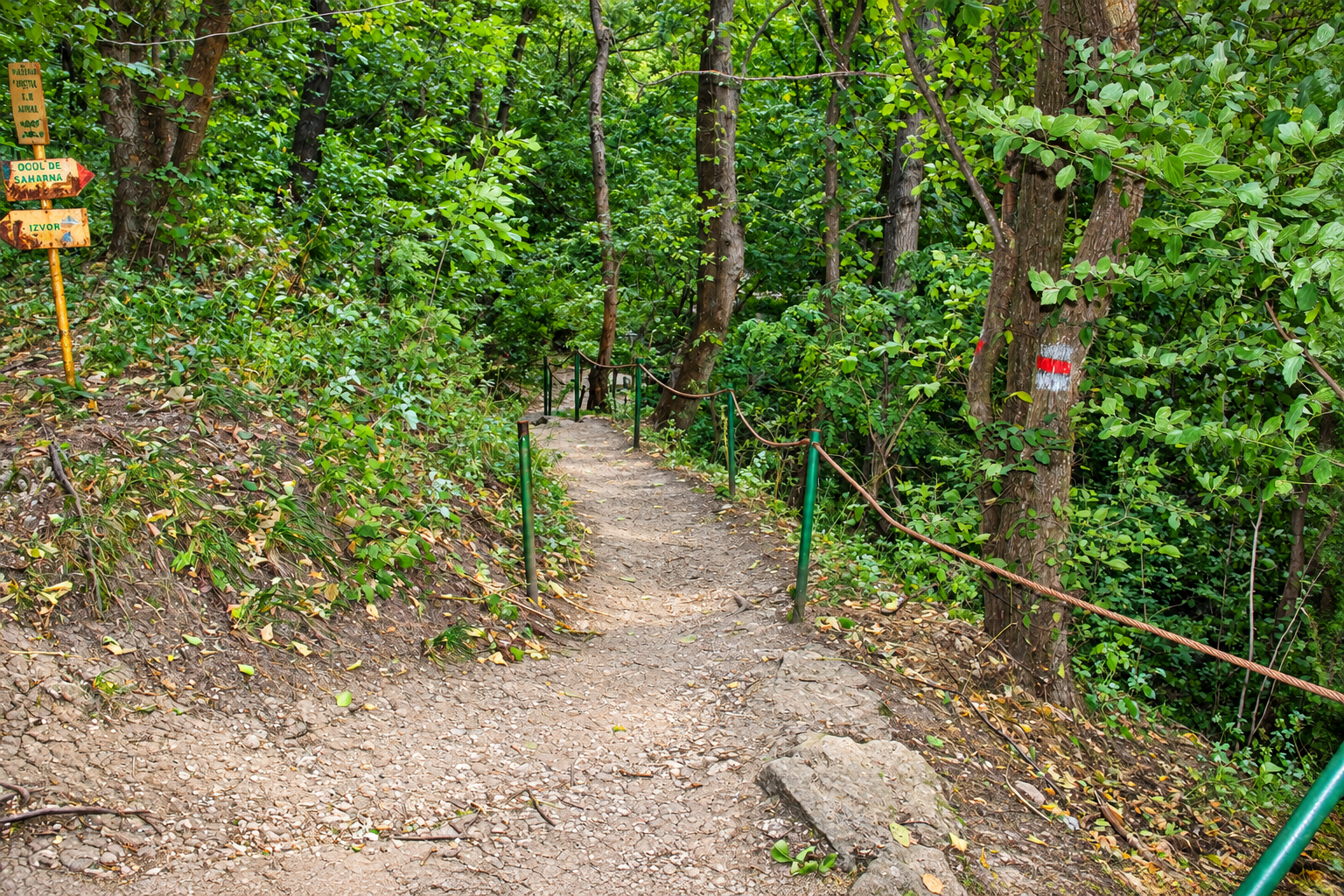
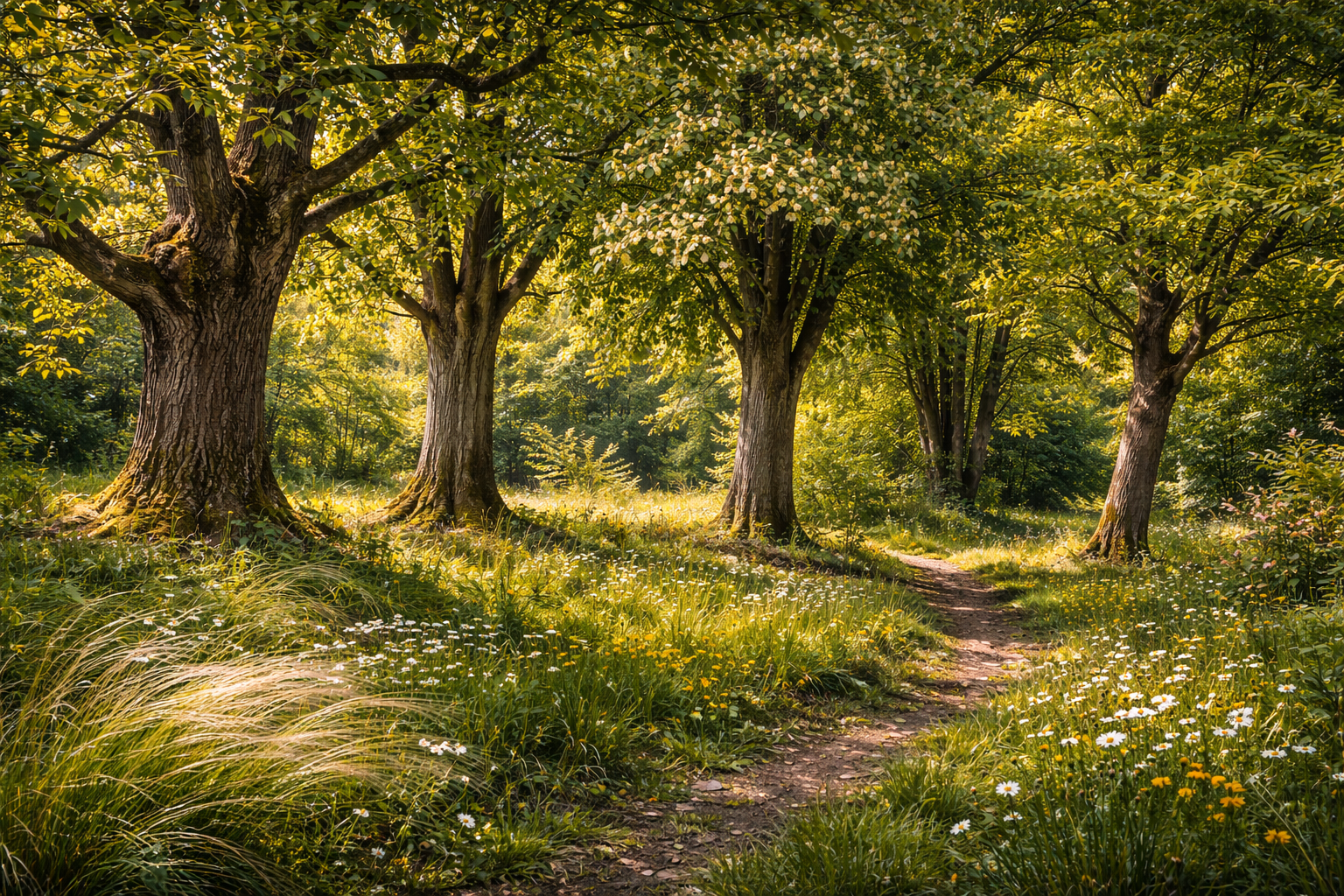
Once beneath the trees, Saharna changes again and the monastery buildings disappear surprisingly quickly and the sounds from below become weaker as the path continues between trees, exposed roots and limestone.
The religious history here is older than the monastery buildings you have just left behind.
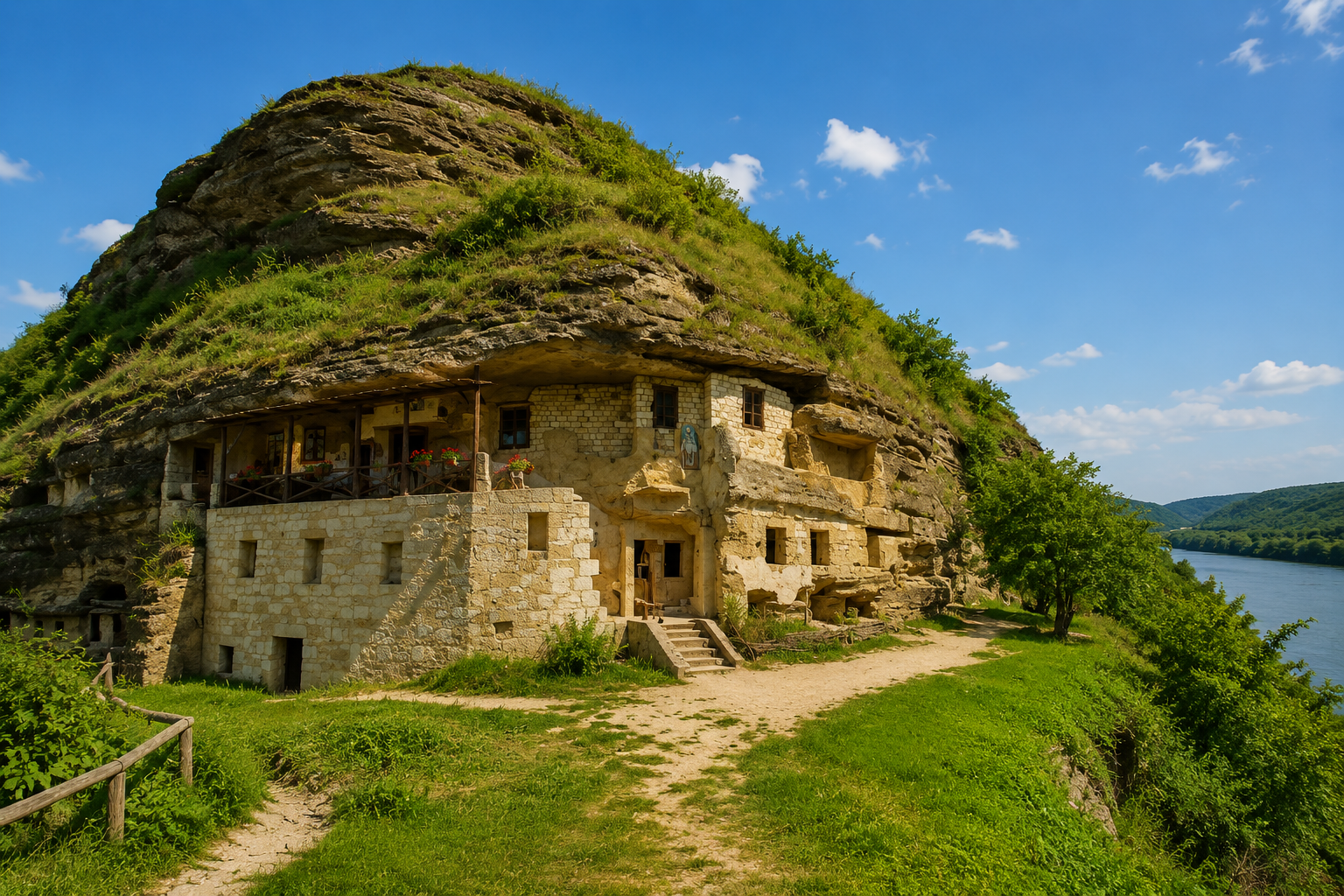
Hidden among these cliffs is an older rock monastery, although exactly when monastic life first began here remains uncertain.
In some places, the rock forms high walls beside the path.
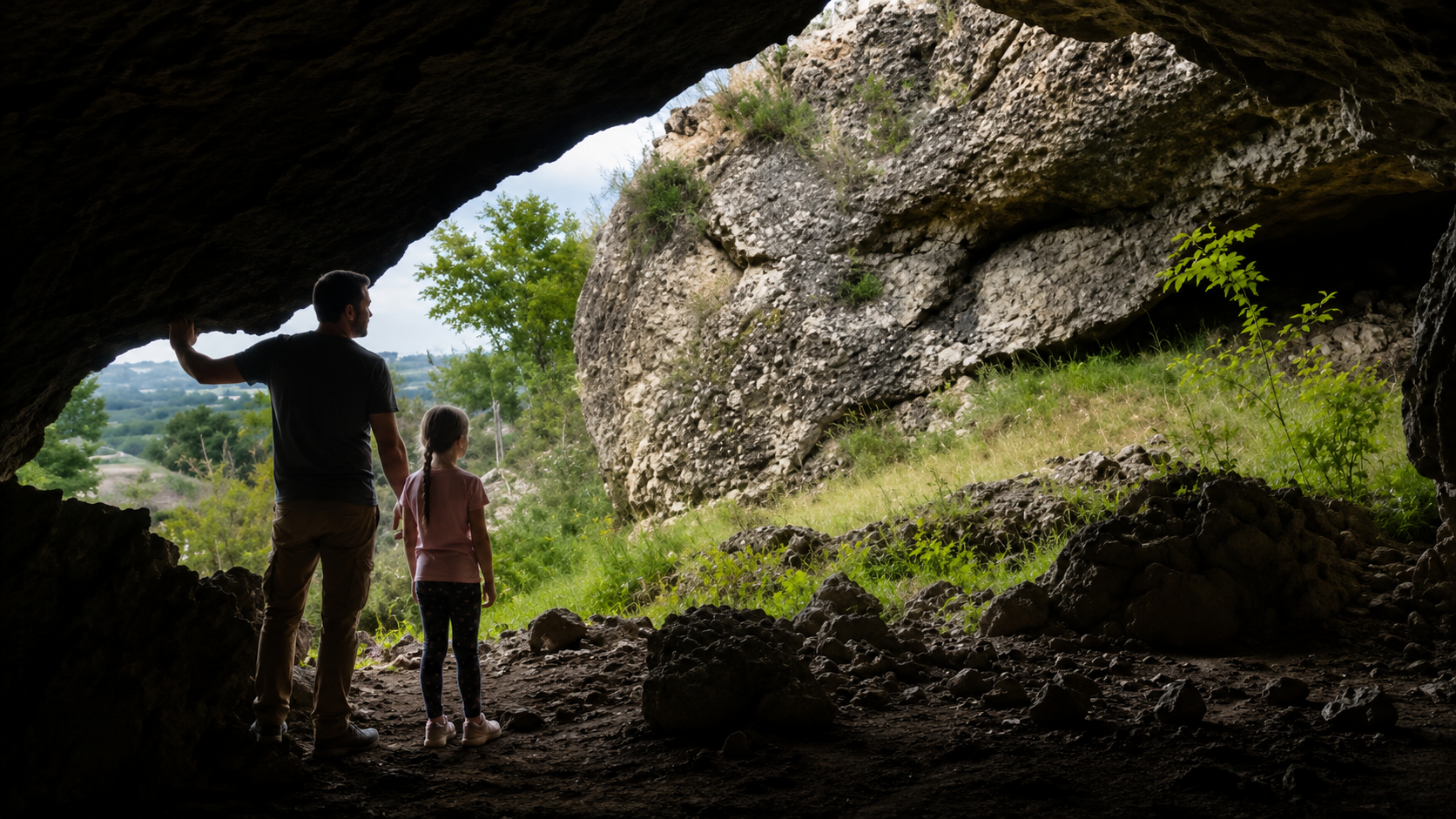
Elsewhere it hangs outward above you, creating shallow shelters and darker spaces beneath the cliffs.
The temperature can feel colder here, especially where sunlight struggles to reach the ground and this is where it is worth slowing down.
There are small details everywhere - moss growing across wet rock, water running through narrow channels, plants finding space in cracks and religious icons placed carefully among fallen stones.
Some are very easy to miss if you are only watching where the path
goes next.
One thing you should remember at Saharna is to look upward occasionally.
From the bottom of the gorge, the cliffs seem considerably larger than they did from the monastery.
Trees hang over their edges, roots reach through cracks in the limestone and sunlight enters unevenly between the branches.
Then somewhere far above, you may catch another glimpse of the white cross and that gives you a slightly uncomfortable realisation.
Yes... You really did walk all the way down here and unless somebody has secretly installed an elevator since you arrived, you are walking back
up again. ;-)
Back at the Monestary you are returning from the forest makes and the monastery feel different.
After rock, mud, water and narrow paths beneath the trees, the courtyards suddenly seem very ordered again.
Flowers surround the buildings, bells hang beside entrances and coloured roofs appear between the trees.
Take some time here rather than immediately leaving because this is still a working monastery rather than a museum created for visitors.
Services, prayer and everyday religious life continue around you.
Dress respectfully when entering the churches, keep your voice low and ask before photographing monks, worshippers or religious ceremonies.
Saharna is around 110 kilometres from Chișinău, so it can be visited as a day trip, but don't calculate your time only around the drive.
The monastery is generally open daily from 06:00 until 22:00, but if you want to explore the gorge, waterfalls and paths around it, allow yourself several hours and wear suitable shoes - particularly after rain.
You can visit only the monastery and leave again.
But if you have the time, continue beyond it, follow the paths beneath the trees and see the waterfalls even when there is hardly any water.
Look at the layers in the limestone and notice the icons between the rocks.
Stop occasionally and look back, because the monastery is only one part
of Saharna.
The rest begins when you start walking.
Unii spun că apa te ghidează, chiar și atunci când nu știi unde mergi.
Some say the water guides you, even when you don’t know where you are going.