Butuceni lies among the hills and cliffs of Orheiul Vechi, around 50 kilometers north of Chișinău.
It is a small village where daily life still follows many of the traditions that have shaped the area for generations.
Although first mentioned in the 19th century, Butuceni often feels older than the dates written in history books.
The village has changed over time, but not in a way that has erased its character.
Gardens are still tended, neighbours still know one another, and many of the customs and routines that once defined rural Moldova remain part of everyday life.
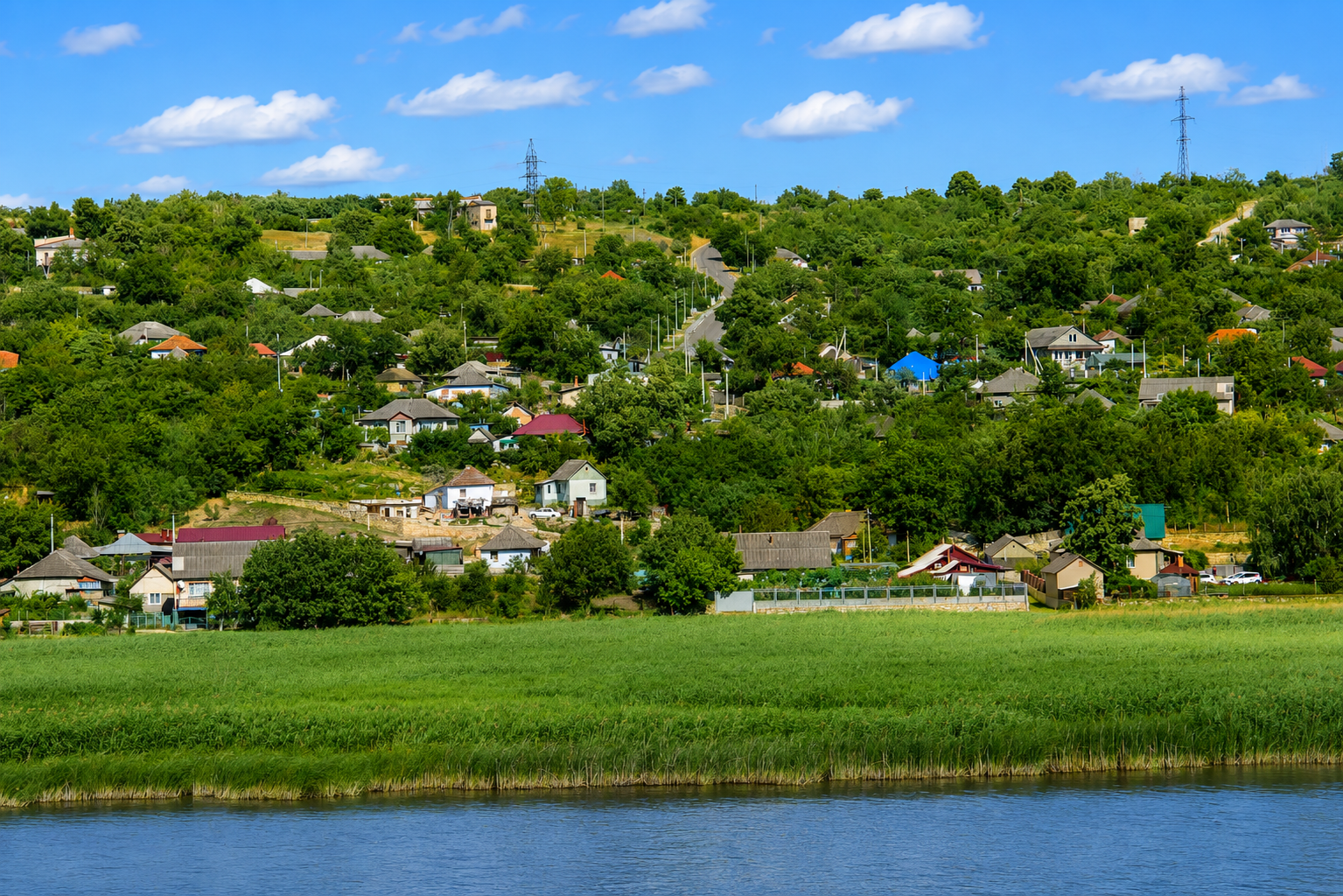
The village seems to grow naturally from the hills around it.
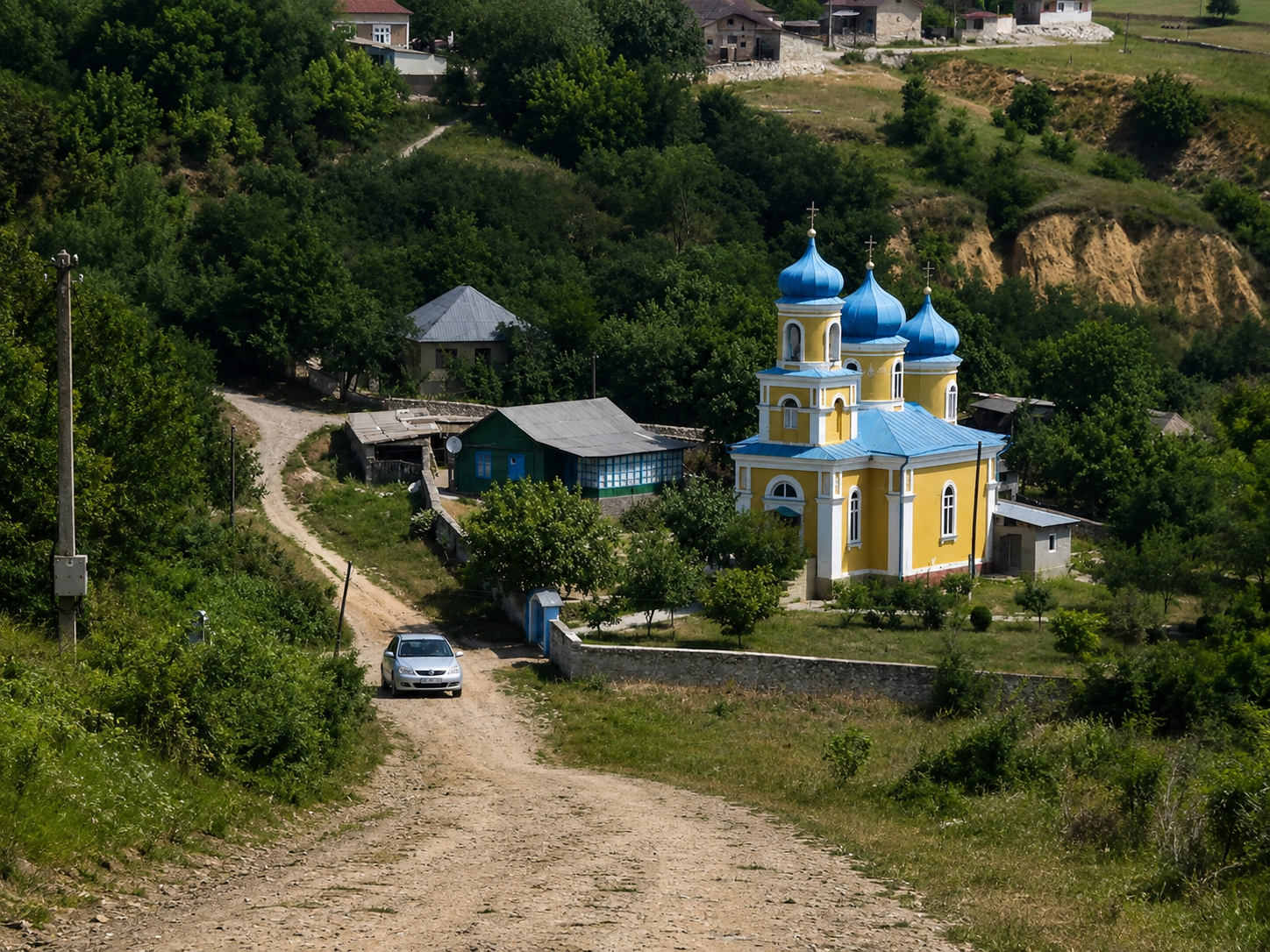
Houses stand where the land allows, following the slopes and curves of the valley rather than neat lines on a map.
White walls glow softly in the sunlight, while rooftops appear and disappear between trees, gardens, and vineyards.
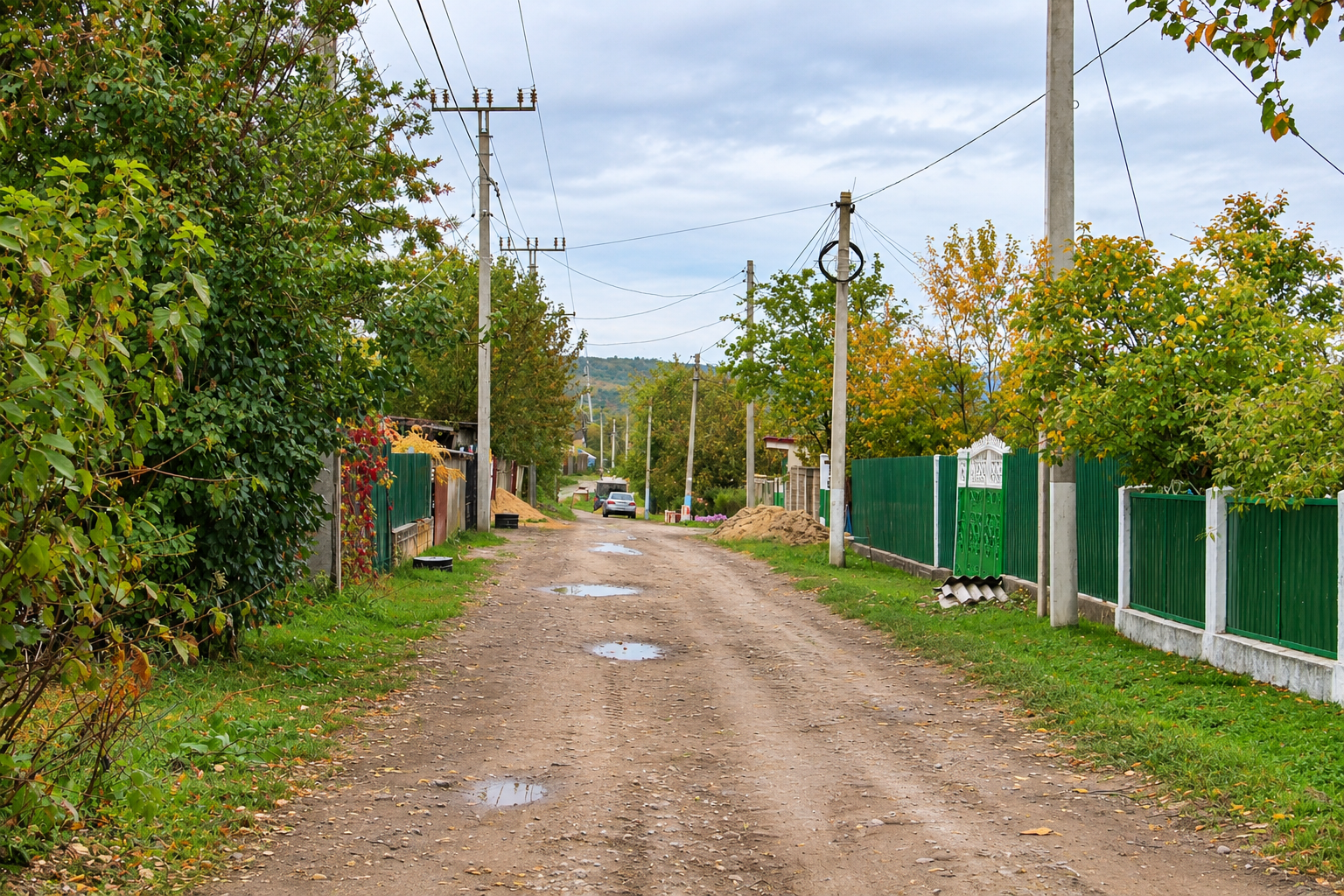
Many of the wooden gates reveal small courtyards hidden from the road.
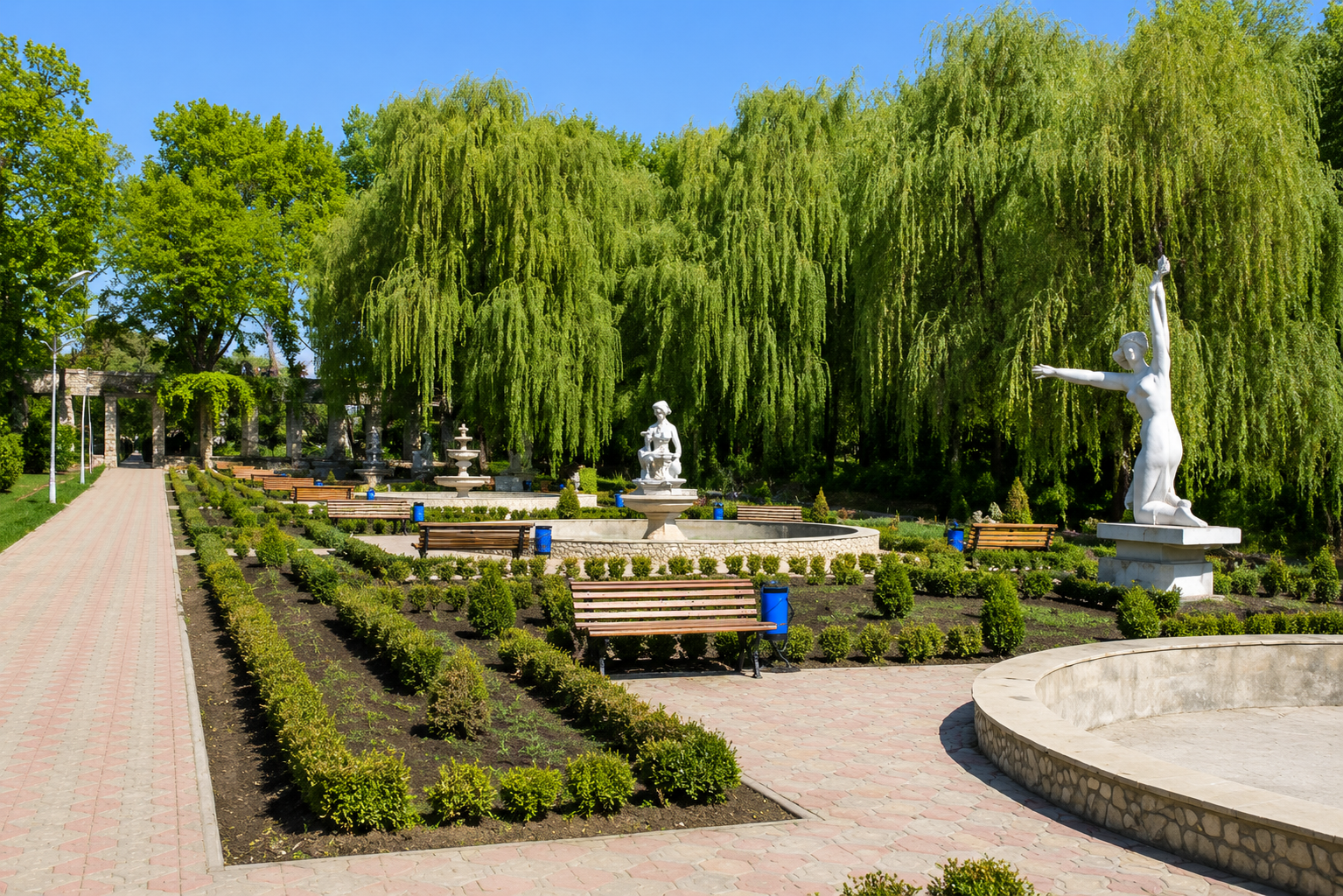
Behind them are grapevines providing shade in summer, fruit trees bending under their harvest, flowers beside the paths, and gardens that families have cared for year after year.
The gardens, trees, and shaded corners feel as though they have grown naturally over time, cared for by generations of families who have called the village home.
Nothing feels far away.
Narrow paths connect houses, gardens, courtyards, and viewpoints across the
village, inviting you to wander without really thinking about where you are going.
As you walk, it is often the small details that you remember.
A wooden gate standing open, an elderly resident working in a garden, laundry drying in the sun, a cat sleeping in the shade, or voices carrying from somewhere behind a fence.
The village is not explored through a single attraction, but through everyday moments that appear naturally as you move from one street to the next.
Just beyond the village, the landscape opens up.
The houses, gardens, and narrow roads give way to the broad valley of the Răut
River, where steep cliffs rise above the water and the countryside stretches in every direction.
From the higher points, you can look across the valley and follow the river as it winds between the hills below.It is one of those views that naturally makes people stop for a moment.
Not because it is dramatic or overwhelming, but because everything seems to fit together so naturally - the river, the cliffs, the fields, and the village resting quietly among them.
Butuceni does not stand apart from this.
It is part of it, shaped by it, and settled within it in a way that feels natural rather than planned.
The village does not try to present itself. It simply continues, holding its rhythm, its forms, and its way of life.
It becomes very easy to understand and clear to you, why people enjoy spending time in Butuceni.
The village is small, the closeness of the surroundings are never far away and the warmth of the place is felt throughout the village.
Butuceni se află într-unul dintre cele mai vechi peisaje locuite din Moldova.
Timp de secole, oameni au trăit, au călătorit, au făcut comerț și au întemeiat comunități în valea care astăzi este cunoscută sub numele de Orheiul Vechi.Satul s-a dezvoltat mai
târziu, însă a rămas strâns legat de această istorie îndelungată.
Astăzi, viața rurală tradițională continuă alături de stâncile impunătoare, mănăstirile rupestre, vestigiile arheologice și siturile istorice care au transformat zona într-una dintre cele mai importante destinații culturale ale Moldovei.
-
Butuceni are within one of the oldest inhabited landscapes in Moldova.
For centuries, people have lived, travelled, traded, and built communities in the valley surrounding what is now known as Orheiul Vechi.
The village itself developed later, but it remains closely connected to this long history.
Today, traditional rural life continues alongside the cliffs, cave monasteries, archaeological remains, and historic sites that have made the area one of Moldova's most
important cultural destinations.